avatarAlex Philippe

Free AI web copilot to create summaries, insights and extended knowledge, download it at here

1607

Abstract

e our sheet of paper into 2 zones:</p><ul><li><b>Today’s zone</b>: for the tasks you intend to do today.</li><li><b>Upcoming zone</b>: for the tasks that can wait, but that you intend to do by the end of the week.</li></ul><p id="c16b">You might be surprised that we have upcoming tasks on our daily sheet of paper. But this is an important one because we want to anticipate our next tasks.</p><p id="53ab">For example, you might want to think about an important meeting with your boss a couple of days before, so that you are well prepared for it. Or maybe you might jump on one of your upcoming tasks right away because the circumstances are great. For example, let’s say a colleague has some free time in front of him to help you solve a tricky problem, you will jump on the occasion.</p><h1 id="2a6c">Dividing your sheet of paper in 3</h1><p id="60c3">Here is how to divide your sheet of paper:</p><figure id="32dc"><img src="https://cdn-images-1.readmedium.com/v2/resize:fit:800/0*GC9jL3pwHKJB_VD2.jpg"><figcaption>Photo by the author</figcaption></figure><p id="ffac">Note that there is a lot of space left at the end of the sheet. I will tell you why in the next article of the series.</p><p id="7805">I know the space left for writing your tasks looks very slim. But it’s easy to write 6 or 7 tasks on Today’s zone, and 3 or 4 tasks on the Upcoming Zone like so:</p><figure id="0e18"><img src="https://cdn-images-1.readmedium.com/v2/resize:fit:800/1*L1576zaGmNfKf8JtRd7ujw.jpeg"><figcaption>Photo by the author</figcaption></figure><p id="09a9">And you can use abbreviations to save space. If it’s s

Options

till too slim, you might put 5 lines instead of 3 for Today’s zone.</p><h1 id="11aa">The critical tasks</h1><p id="c58a">Finally, let’s see the last category of tasks. Among Today’s list, you will typically have 2 types of tasks. First, there will be the tasks that you intend to finish, but that would not make you stay late at the office.</p><p id="ed09">Secondly, there are the tasks that must be done by the end of the day. This second category of tasks is the critical tasks.</p><p id="45ce">What I do is underline them in red :</p><figure id="6e21"><img src="https://cdn-images-1.readmedium.com/v2/resize:fit:800/1*895KjqWmQFb2h5Ln9MdJKg.jpeg"><figcaption>Photo by the author</figcaption></figure><p id="a5c6">But you can also circle them or highlight them if you like. This will help you identify them clearly in Today’s list and ensure they are done on time.</p><p id="0fa9">This concludes the 3rd article of our series. I hope this simple technique will help you have a clearer mind on the priority of your daily tasks.</p><p id="e441">Next up, I will reveal why we left so much space at the end of the sheet of paper. Clue: it will help you refine further the sequence of tasks you plan to do for your day.</p><p id="3788"><i>On February 1st, 2022, I’ve embarked on a <a href="https://readmedium.com/my-war-of-art-100-days-of-writing-d27476534e11">100 days writing challenge</a>. This is post number 16.</i></p><p id="3e71"><i>Originally published at <a href="https://alexphili.com/daily-done-a-simple-prioritizing-system/">https://alexphili.com</a> on February 4, 2022.</i></p></article></body>

TASK MANAGEMENT

Daily Done: Part 3 — a Simple Prioritizing System

How to tell which tasks to tackle first
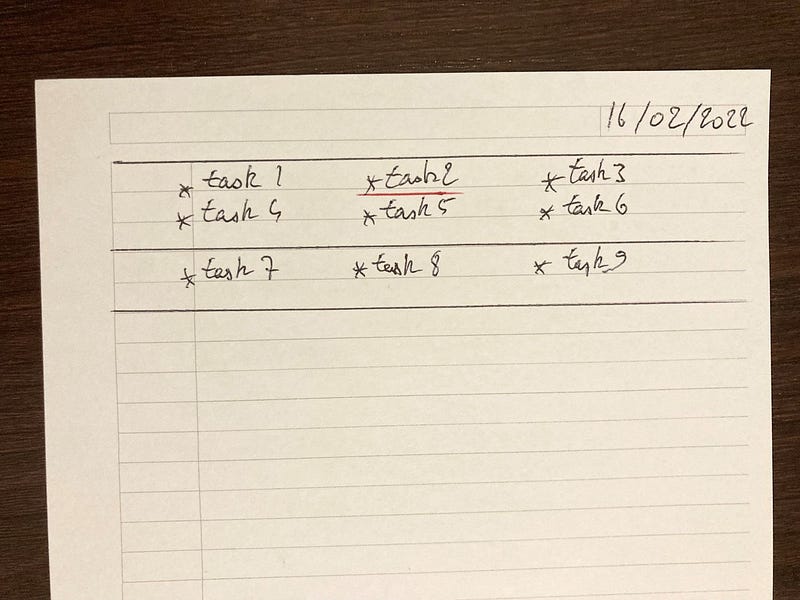
Photo by the author

This is part 3 of a series of articles that started here: Daily Done: a sustainable paper-based productivity system. As promised, today I will show you a simple way to prioritize your daily tasks. Let’s jump in.

Why prioritize our daily tasks?

It’s a great feeling to have your tasks written down on a sheet of paper. It means you will be less likely to forget one of your tasks during your day.

Imagine the peaceful surface of a mountain lake. This is what you want to accomplish with your mind. That’s what David Allen — author of Getting Things Done — refers to as “Mind like water”.

However, if you do your tasks in the wrong order, it can be disastrous for your workday. Prioritizing is a difficult job. It’s not that easy to figure out the exact order of tasks that will make sure your day is productive.

While this art goes beyond the scope of this article, we can at least attempt to simplify the process. That’s what we will do by putting our tasks in different priority categories.

Today’s tasks and Upcoming tasks

First, we will divide our sheet of paper into 2 zones:

  • Today’s zone: for the tasks you intend to do today.
  • Upcoming zone: for the tasks that can wait, but that you intend to do by the end of the week.

You might be surprised that we have upcoming tasks on our daily sheet of paper. But this is an important one because we want to anticipate our next tasks.

For example, you might want to think about an important meeting with your boss a couple of days before, so that you are well prepared for it. Or maybe you might jump on one of your upcoming tasks right away because the circumstances are great. For example, let’s say a colleague has some free time in front of him to help you solve a tricky problem, you will jump on the occasion.

Dividing your sheet of paper in 3

Here is how to divide your sheet of paper:
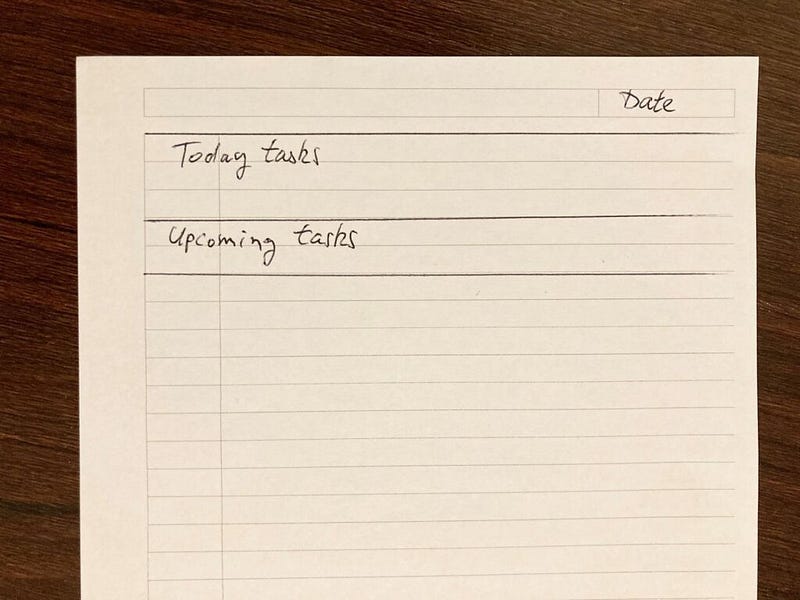
Photo by the author

Note that there is a lot of space left at the end of the sheet. I will tell you why in the next article of the series.

I know the space left for writing your tasks looks very slim. But it’s easy to write 6 or 7 tasks on Today’s zone, and 3 or 4 tasks on the Upcoming Zone like so:
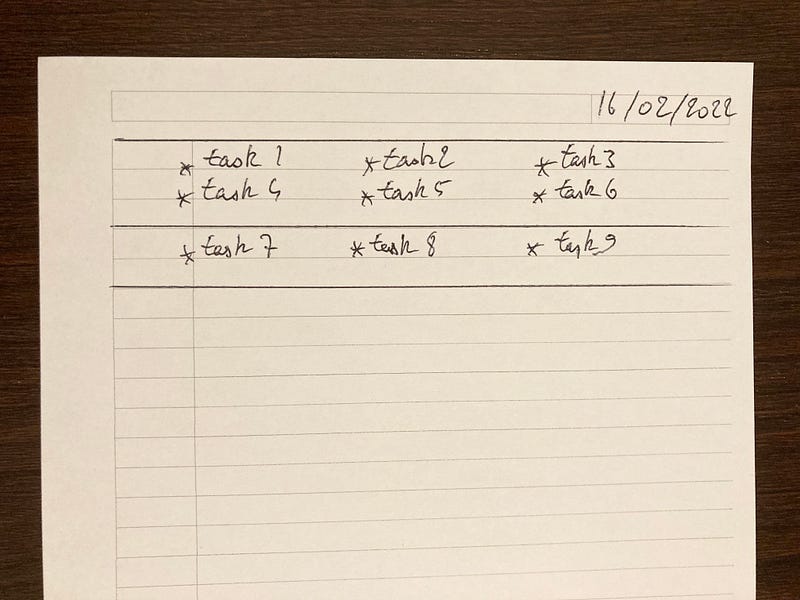
Photo by the author

And you can use abbreviations to save space. If it’s still too slim, you might put 5 lines instead of 3 for Today’s zone.

The critical tasks

Finally, let’s see the last category of tasks. Among Today’s list, you will typically have 2 types of tasks. First, there will be the tasks that you intend to finish, but that would not make you stay late at the office.

Secondly, there are the tasks that *must* be done by the end of the day. This second category of tasks is the critical tasks.

What I do is underline them in red :
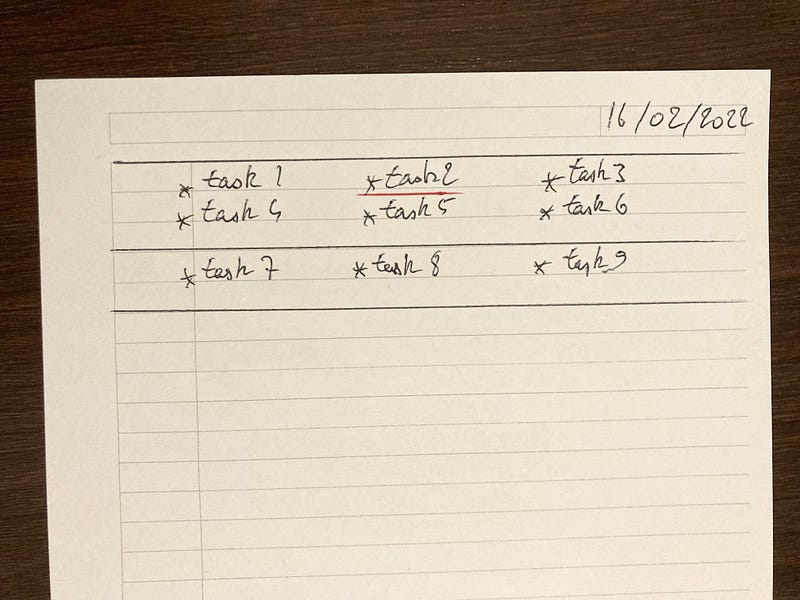
Photo by the author

But you can also circle them or highlight them if you like. This will help you identify them clearly in Today’s list and ensure they are done on time.

This concludes the 3rd article of our series. I hope this simple technique will help you have a clearer mind on the priority of your daily tasks.

Next up, I will reveal why we left so much space at the end of the sheet of paper. Clue: it will help you refine further the sequence of tasks you plan to do for your day.

On February 1st, 2022, I’ve embarked on a 100 days writing challenge. This is post number 16.

Originally published at https://alexphili.com on February 4, 2022.

Productivity
Task Management
Work
Focus
Business
Recommended from ReadMedium