Inflation is at 5% — Here’s How I’m Protecting Capital
How I’m managing my money during a time of high inflation.

In case you missed May’s inflation report, the results were less-than-stellar. Inflation for May was reported to be at 5%, which is an increase from April’s 4.16% inflation rate.
Like anyone else, I hate losing money.
I’m also in the housing market (which is ridiculously competitive right now in Austin and can take a while to find a home at a reasonable price point), and one of my greatest concerns is protecting capital for both my down payment and emergency fund.
While economists predict the high inflation rate will be temporary and is pandemic-induced, who knows how long it will last.
Even after inflation calms down and returns to less than 2%, I’ll continue to still implement the below strategies to outpace inflation and profit at the same time.
I Moved Some of My Savings Into Crypto
Full transparency: My family and friends will tell you that I’ve been one of the biggest skeptics when it comes to cryptocurrency.
We know that the stock and housing markets have historically rebounded after undergoing crashes, corrections, and minor pullbacks. We don’t have the same data around bitcoin or cryptocurrency in general.
After much debate, I finally bought a bit of BTC & ETH.
It’s important to also differeniate the difference between having your own wallet (defi) vs. cefi.
Coinbase is a centralized exchange, and given what’s going on in the industry post-FTX, I’d recommend having your own wallet/holding your own keys.
I’m Dumping More Money Into Real Estate (Syndication and Physical Property)
If you’re unfamiliar with real estate syndication, it’s crowd-funded real estate investing. You become the hard-money lender and provide the capital to investors that purchase real estate on your behalf, in exchange for a fee.
I won’t spend too much time covering real estate syndication, as I have an entire post covering Fundrise in great detail (from liquidity to returns), which you can find here:
Here are the pros for Fundrise’s platform:
- You can get started as an investor for as little as $500, which is much cheaper than purchasing a property.
- They have relatively low fees in comparison to competitors and similar investments (they take 1% of your portfolio annually).
- They have multiple plans that you can choose from, depending on your investment strategy (investing in cash flow for passive income, which typically yields lower returns; or you can invest for appreciation, which tends to produce higher returns).
- The platform is easy to use and requires minimal work on your end. You basically “set and forget”, just like you would for your 401k.
- You don’t need to build expertise in real estate or spend time looking for solid investment opportunities. You can leave finding profitable properties to trusted experts with years of experience, which I don’t have.
Here are the cons to the platform:
- You should expect to hold your investment for 5 years. If you choose to liquidate your funds before the 5-year mark, penalties depend on how soon you liquidate (they’ll vary if you liquidate in year 1 vs. year 4). In general, I always invest with the intent to hold a decade or more, so this isn’t a huge issue to me.
- This isn’t a risk-free investment vehicle. While no investment comes without risk, purchasing a physical property means that the property is yours to keep, as long as you pay the mortgage. If Fundrise goes belly-up, you can lose the entirety of your investment (which I believe to be relatively unlikely).
- The dividends you receive from Fundrise are considered non-qualified dividends. That means they’re taxed at regular income tax rates instead of the 15% rate used for qualified dividends.
- You can’t use “leverage” or finance your Fundrise investments with debt like physical real estate, in which most people take out a mortgage from a bank.
Lastly, I’ve entered the real estate market in Austin, Texas. While lumber prices are high and interest rates are low — causing some investors to panic buy, I’m being patient until the right property becomes available.
Housing has continued to appreciate in the Austin area, due to the relatively affordable cost of living, decent weather, and job market; I’d rather diversify my portfolio and bet on a housing rising over the next 5 years than leave the down payment sitting in cash in a bank account.
I’m Still Buying Stocks; I Don’t Care if the Market “Crashes”
Every day there’s a news article filled with conspiracy theories about “when” or “what” will cause the stock market to crash.
I don’t worry about any of the “noise”.
Anytime I invest (for both real estate and stock), I plan to hold for at least a decade.
The stock market is no stranger to entering bear or bull markets; we’ve had many sell-offs, pullbacks, and bear markets since the 1800s (as shown in the list I’ve compiled below).
History has demonstrated that the market has always recovered, and that’s important to remember.
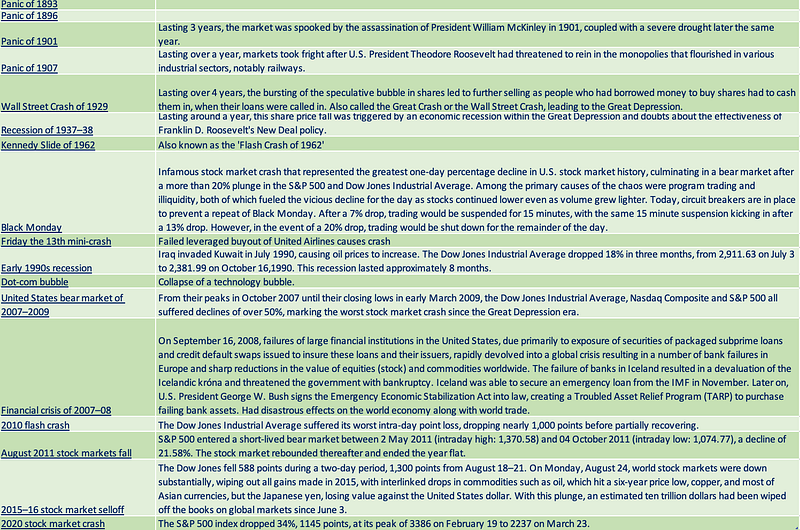
The last “crash” we experienced was at the onset of the pandemic. During this time, many investors panic-sold their stocks as the future felt uncertain.
I took Warren Buffet’s advice and decided to be greedy when others were fearful, and I pulled together as much capital as I could and simply purchased indexes and ETFs.
I’ve continued purchasing stock throughout the pandemic to ensure that I leverage my cash wisely and not miss out on potential returns or lose money due to inflation; I think we all knew higher inflation was coming as we began navigating our way out of the pandemic and the demand for consumer goods has increased.
While some other investors were panic-selling and sitting on cash, some of my ETFs earned over a 60% return this past year — I’ll take it!
I’d much rather earn 40, 50, and 60 percent returns than lose money out of fear.
If you’re wondering “what” ETFs I own, I simply purchase Vanguard’s growth, large-cap, and sector ETFs. They all have relatively low expense ratios (in comparison to the industry standard). You can find the full list of ETFs and their returns here.
Lastly, I’ve continued purchasing index funds in my 401k. Since I have a Fidelity account, I leverage the “Zero Funds” which have no expense ratios (I highly recommend them).
I specifically buy the large-cap, total market, and extended market funds. These funds mimic any other major index fund without the expense ratio or fees attached (there’s also no investment minimum) — I like the word “free” much better than “fee”!
Final Thoughts & Inflation Checklist:
✓ Check out cryptocurrency banks to hold stablecoins (the crypto equivalent of cash) if you haven’t already. Banks like BlockFi have excellent APY’s that you won’t find at a traditional bank.
✓ Real Estate Syndication can be a great option for both accredited and non-accredited investors that are looking to add diversity to their portfolio, without the hassle of dealing with tenants or pulling a mortgage for an investment property.
✓ Ignore the Wall Street “noise” about the market crashing and continue investing as you normally would. Nobody has a crystal ball and has any insight to where “the bottom” of the stock market is; remember, even after a crash, the market has always recovered.
I’d love to hear from you — what are your favorite ways to beat inflation? Tell me in the comments below!
If you enjoyed this article, you may like:
All investments come with risk. The above references an opinion and is for information purposes only.