Curved Disk Around a Black Hole: Unusual Phenomenon Observed Thanks to Amateur Astronomers.
The disk around a black hole doesn’t have to be perfectly flat, as confirmed by recent observations. What caused the curvature of the disk around a black hole located nearly 10,000 light-years away from Earth?
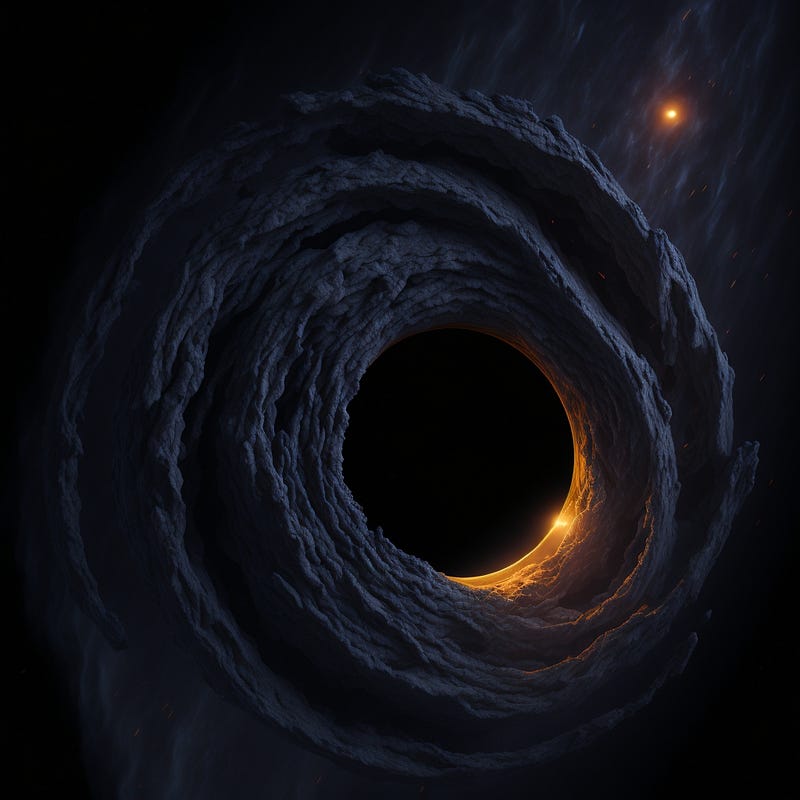
A team of astronomers from South Africa, the United Kingdom, France, and the United States made a significant discovery concerning the brightness changes of one of the nearest black holes to us, located at a distance of 9,600 light-years. According to researchers, the fluctuations in brightness provide evidence that the disk around the black hole is curved.
The Disk near a Black Hole
A black hole is an object so massive that nothing, not even light, can escape from it. However, traces of matter falling into the black hole can be observed. As this matter accelerates to tremendous speeds, it emits radiation, mainly in the X-ray range.
The disk around a black hole can form only when there are clouds of dust or gas nearby. However, black holes can also form in binary systems when one of the stars exhausts its fuel. With no nuclear reactions left, the star collapses under its gravity, forming a black hole. Around such a black hole, a disk of matter is created, drawn from its companion star, which is still active.
The Unusual Object MAXI J1820+070
MAXI J1820+070 is a complex object composed of a black hole and a star that experienced an X-ray outburst in March 2018. It was detected by a Japanese telescope on board the International Space Station. This discovery allowed scientists to determine that the star has approximately the mass of the Sun, while the black hole is about eight times larger.
Researchers published their analysis of this binary system in the scientific journal “Monthly Notices of the Royal Astronomical Society.” These observations were quite extraordinary as they were largely carried out by amateur astronomers, who are part of the American Association of Variable Star Observers (AAVSO).
MAXI J1820+070 is one of the brightest variable X-ray binary systems. It is relatively close to Earth and is not located in the plane of the Milky Way disk, which means that fewer dust and gas clouds obscure its observation. This allowed amateur astronomers to observe it as well.
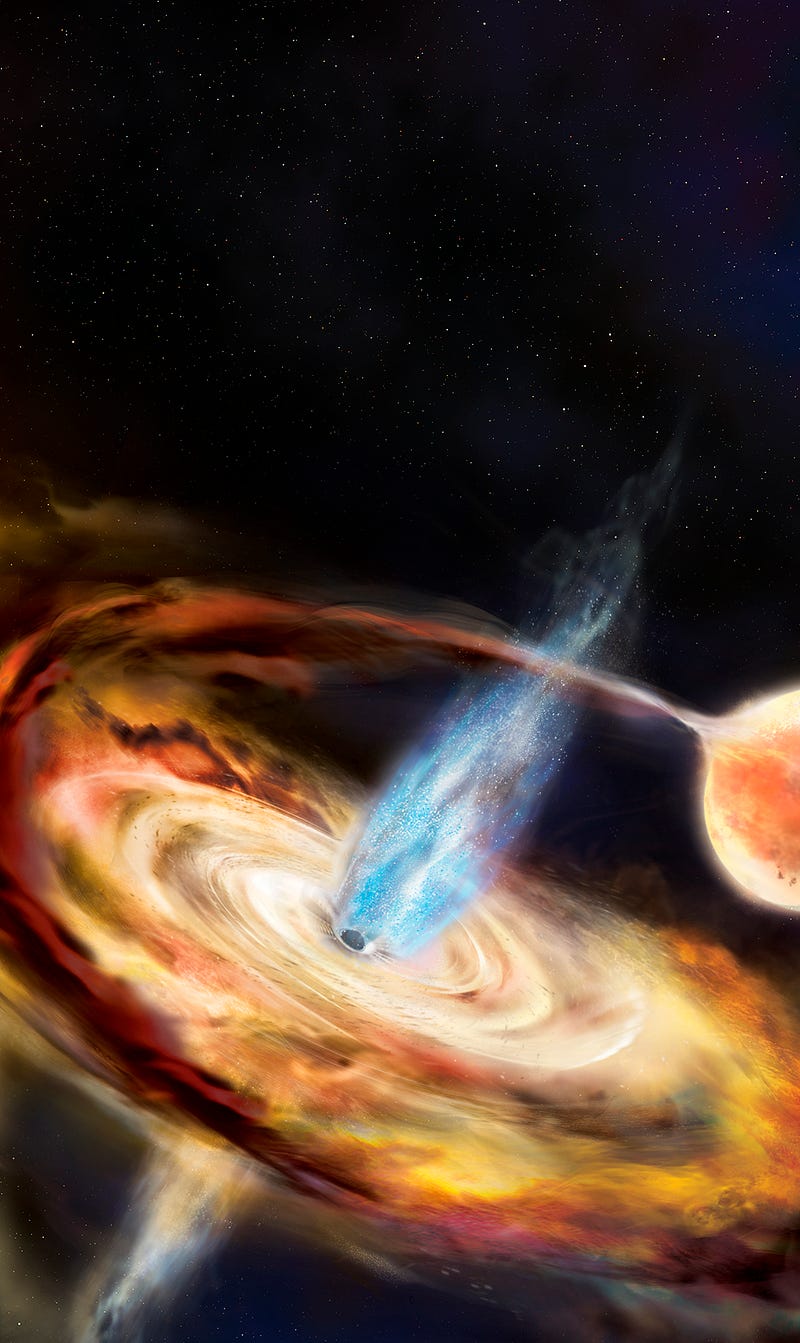

Prof. Phil Charles from the University of Southampton explains that these X-ray outbursts occur when material drawn from the star by the black hole heats up and becomes unstable. This is a highly chaotic and unpredictable phenomenon, lasting from fractions of a second to weeks. In this case, it lasted long enough (several months) to be accurately observed.
Researchers have prepared a simulation that shows how a burst near a black hole emits X-ray radiation. This, in turn, heats up the surrounding matter in the disk to about 10,000 degrees Celsius, causing it to glow.
Unexpected Brightness Changes in MAXI J1820+070
Three months after the outburst of the MAXI J1820+070 system, unexpected changes in visible light brightness began to appear. Every 17 hours, the brightness level would decrease and then increase again. However, the level of X-ray radiation remained constant.
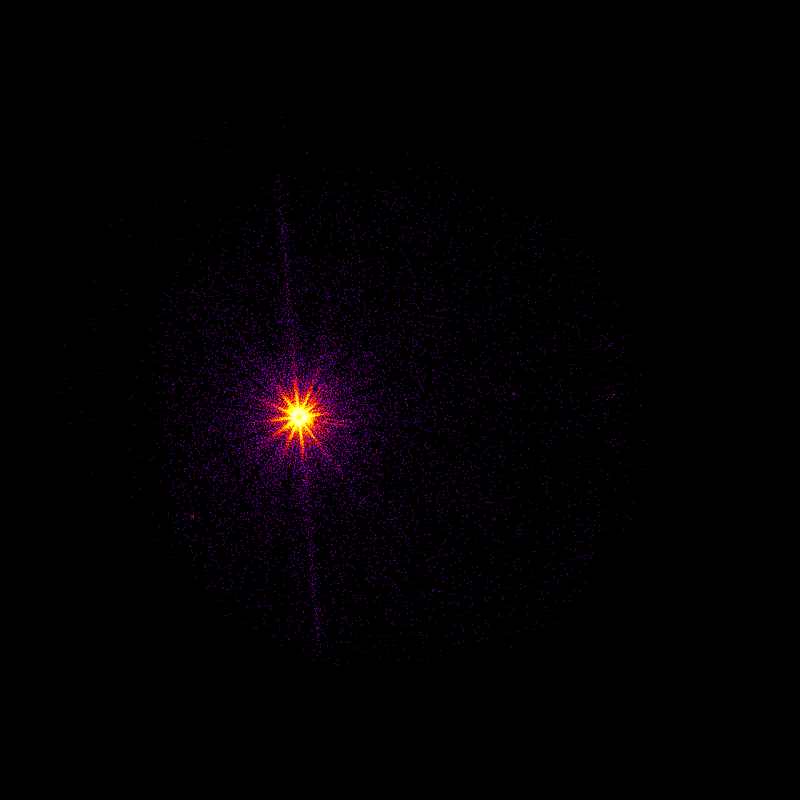

Similar brightness changes have been observed in other variable systems before, but they were never as significant. Researchers believe that the cause of this phenomenon may be the intense emission of X-ray radiation, which warped the disk of matter. This caused us to observe light emission from a larger portion of the surface compared to a flat disk.
Such a phenomenon has been observed in systems consisting of massive stars before. However, it had never been observed in the case of small stars from such a close distance and with such precision.
Seven years ago, a program of precise observations of variable X-ray systems was initiated using the Southern African Large Telescope (SALT). This telescope, located in the Republic of South Africa, is the largest single optical telescope in the southern hemisphere. It has provided valuable observations of compact binary systems like MAXI J1820+070.
Thank you for reading! If you enjoyed this content, please consider giving it a clap, leaving a donation, or offering a tip to support my work. Your generosity helps me continue creating valuable content.