avatarOliver Ding

Summary

The article discusses the development and application of the "Mapping Thematic Dialogue" method, utilizing the "WXMY" meta-diagram and introducing the "Host-Guest" mode, as part of the Thematic Engagement project.

Abstract

The author introduces a novel approach called "Mapping Thematic Dialogue," which is grounded in the "WXMY" meta-diagram, a tool for interdisciplinary curation. This method is exemplified through the author's personal journey of "Activity — Opportunity" Thematic Dialogue. The "Host-Guest" mode, a new concept introduced by the author, allows for switching perspectives within the diagram to facilitate thematic engagement. The article also touches upon the use of secondary diagrams, such as a new style of timeline diagram, in conjunction with the primary "WXMY" diagram, reflecting the idea of "Diagram Blending" previously introduced by the author.

Opinions

  • The author emphasizes the utility of the "WXMY" meta-diagram as a foundational tool for the "Mapping Thematic Dialogue" method.
  • The "Host-Guest" mode is presented as a recent innovation by the author, enhancing the flexibility and applicability of the "WXMY" diagram.
  • The article suggests that the combination of primary and secondary diagrams, as per the concept of "Diagram Blending," is essential for a comprehensive mapping of thematic dialogues.
  • The author values the creation of new diagramming practices, such as the timeline diagram, to support the Thematic Engagement project's methodology.

[Curativity Center] The “Host-Guest” Mode of “WXMY”
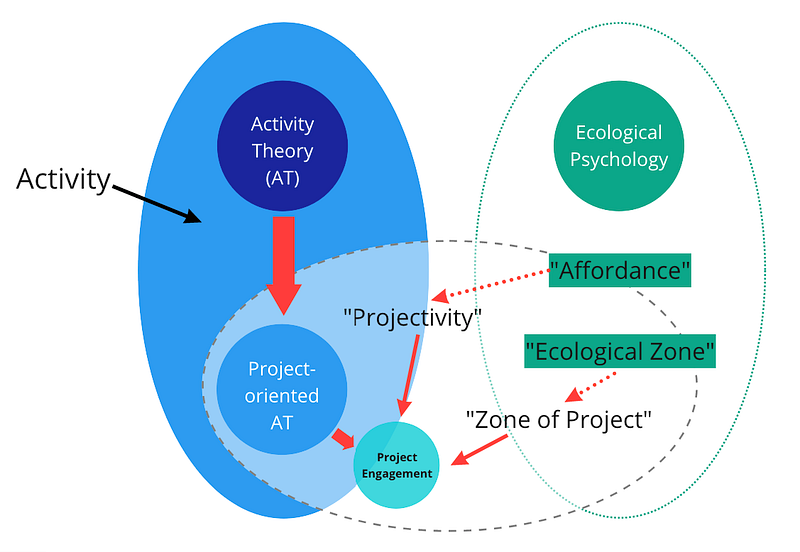
Today I work on developing a new method called “Mapping Thematic Dialogue”. I use my journey of “Activity — Opportunity” Thematic Dialogue as an example.

I don’t develop a new diagram or map for this method because it is based on the “WXMY” meta-diagram.

The above link is an introduction to the “WXMY” meta-diagram. Though it discusses several details of the spatial structure of the diagram, it doesn’t mention the “Host-Guest” mode.

Why?

I just wrote the notion of “Switch between Host and Guest” this morning.

[Thematic Engagement] The Activity — Opportunity Thematic Dialogue

The diagram below is the other example of the “Host-Guest” mode of the “WXMY” diagram.
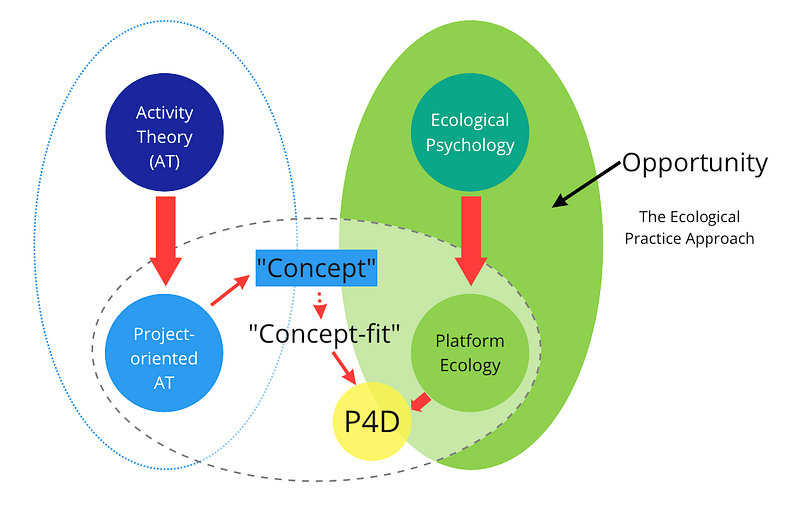
The WXMY meta-diagram is not the only diagram I used for the method.

For example, I also develop a new style of timeline diagram.
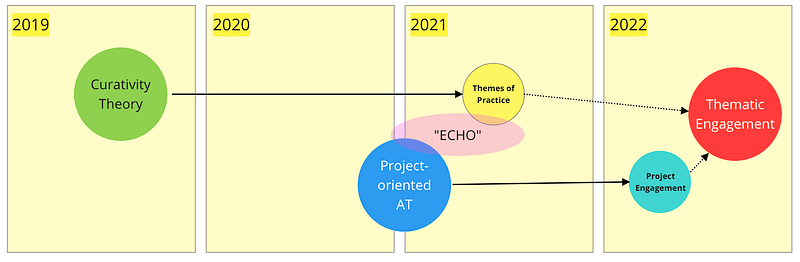
This month I develop several mapping methods for the Thematic Engagement project.

For each method, I tend to use one primary diagram with several other secondary diagrams. This pattern echoes the notion of “Diagram Blending” I coined last year.

Recommended from ReadMedium