CS/R — ESG 15 Alibaba — China’s “Common Prosperity”, Political stability, and Corporate Sustainability Initiatives
Part 1 Context of China’s economic development, and one company’s social responsibility initiatives (Part 2 includes brief case studies of Broad Group and Starbucks-China’s sustainability and CSR work)

In this series of 24 articles on the alphabet soup of corporate citizenship, I’ve pondered the changes in how we make impact; laid out some history & definitions of some concepts; shared a few examples of small and large companies leading the way; and delved into how individuals, companies and governments are influencing others and taking action to make companies more efficient and positively impactful. I want you to see how the pieces fit together, and examples to follow, and be inspired to take action.
In this two-part article, I address the push for sustainability in a country known for its social engineering and authoritarian government. I’ll briefly describe the context, then share a brief profile on the efforts of Alibaba, the Broad Group, and Starbucks-China. And leave you to reflect on the complexity of judging the motivations and actions of companies in a complex market, which has committed human rights abuses, demanded party loyal behavior, jailed journalists & dissidents, and lifted 770 million people out of poverty.
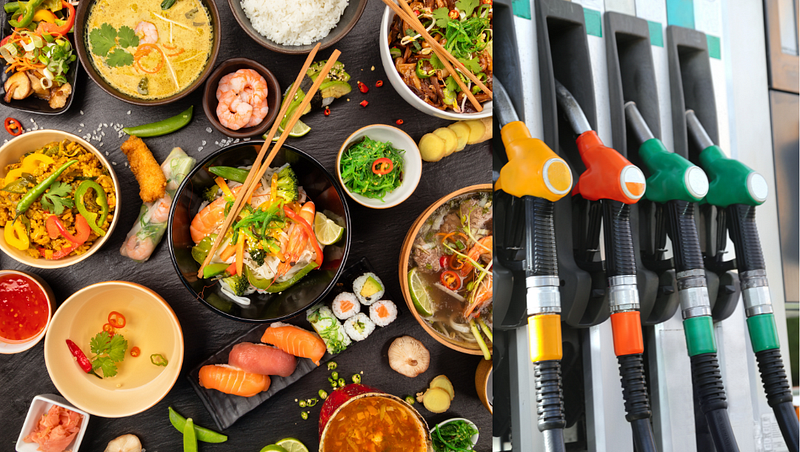
CONTEXT: The largest, most robust economies — the USA, China, most of Western Europe –developed on the back of cheap energy… They had coal, oil, and other fossil fuel (and a bit of HEP and solar energy) to empower their manufacturing and economic growth. This enabled their economies’ diversification, creation of a large middle class, and a higher quality of life for the majority of their populations.
Smaller economies would like to follow a similar trajectory. They would like to possess affordable energy to power their economic growth and diversification, and bring their populations out of poverty. However, the way the large economies grew, based primarily on cheap fossil fuel energy, also fueled climate change… and the current urgency in shifting to renewable energy, and regenerative or circular economy approaches. Quite literally, energy fuels development, and the persistent lack of energy, or high cost of it fuels persistent wealth inequality, and political instability. I briefly touch on these complex energy development, technology transfer, and economic development topics in this article.
It is in this context that China has made increasing attempts in the last decade (or few) to increase and diversify its energy sources, and to ensure food for its population by buying lands (& mining deposits) in Sub-saharan Africa to farm. They are tackling the energy and nutrition challenges, and are working to address the social ones — undertaking growing efforts to avoid (or quell) social unrest.
In 2008, the Chinese government recognized the value of corporate social responsibility practices (and funds), and passed a law requiring all companies to “bear social responsibilities.” And, in late 2021, in the face of growing social unrest and recognition of the continuing wealth inequality the government of China announced that all businesses would participate in the “common prosperity” initiatives (and both before and since, the PRC has used the 2008 law as an unpredictable hammer, resulting in flashy displays of generosity).
As with all balancing initiatives the words are said in a publicly palatable way, and the motivations and impact are less clear, and often less pure. Whether greenwashing, a power play, or an authentic caring effort to the improve the lot of people in the hinterlands (and/or cool the threat of political instability, caused by wealth inequities) , the sustainability and social responsibility efforts still have much in common with those of large companies in other countries — much to question, as well as much thought to be inspired by and learn from.
I’ll share examples of how one large Chinese company (see part two of this article, which includes profiles of a second Chinese company and a Chinese-American partnership), is practicing or developing their corporate citizenship of ESG practices, and why. All three of these examples have made a big difference, have involved trade-offs, and have the power to impact quality of life in rural and urban settings across China (and the world).
Fyi, according to Fortune’s Global 500, China has 136 of the 500 largest companies by revenues. A quick look through that list shows a mix of privately-owned, publicly traded, and state-owned businesses, across several industries (banking, insurance, petrochemical, mining, internet services & retail, etc).
Alibaba debuted on Fortune’s Global 500 list at #463 in 2017, in 2021 was #62, and in 2022 was at #55, which is remarkable growth. The company is an ecommerce juggernaut, based in China, and was founded by Jack Ma & 17 friends, in 1999. The company has been publicly traded on the NYSE since September 2014 (and in HongKong since 2019 ). Daniel Zhang took over as CEO in 2015. I see a few interesting stories in this example — the personal business story of Jack Ma, the business of Alibaba itself, and the speed with and context in which Alibaba developed its “social responsibility” policy and set of practices.

Fortune’s Executive Editor for Asia, Clay Chandler, interviewed Alibaba’s CEO, Daniel Zhang at the Fortune Global 500 summit in October 2021 and they discussed the rise of Alibaba, some of the current initiatives, and the reasoning behind them.
“Our mission is to make it easy to do business anywhere. So, our mission is to help the SMBs help consumers, to help the SMBs have a better, more efficient business, and help people to make a better life… This new value creation is not only for business but also for the entire society. So, as a platform company, as a responsible company in the market, you have to think more about the social impact and about social responsibility. So that’s why we said we need to do more.”
Just a few weeks before this interview, the Chinese government had announced its “Common Prosperity” goals, pressing businesses into service of narrowing the stubborn wealth gap. Alibaba was encouraged to develop its commitment and strategy, within three months. In response, Alibaba set aside $15.5B towards reducing economic inequalities. This is equivalent to 2/3 of Alibaba’s 2020 net income, and is the biggest single pledge by a Chinese company.
Allocating ~66% of net income to common prosperity is commendable and … ummm, surprising generosity and alignment with the Chinese government goals. The company’s scaled-up program was being designed as of Q4–2021 (normally takes 6–18 months to design) and at that point, Zhang stated, “we have a large group working out the big plan and implementation, relevant to our current and future business.”
Zhang elaborated on the plans in development, and their guiding values. “We will focus on helping SMB expand overseas, helping build businesses in low-income areas, and will focus on long term investment, and 10 initiatives (not detailed in the interview). Alibaba will partner with many stakeholders and local, regional and national organizations. For example, the healthcare access initiative in villages will be partnering with social welfare organizations.
ESG and common prosperity are the two main strategies we want to add on top of our existing strategies of consumption, technology and globalization. ESG is our global work, and common prosperity is the national strategy for the next decade in China.”
The vision and likely results are lovely; the speedy roll out belies i) Chinese regulators’ heavy hand in this development, and ii) the coincidental timing, close to the Chinese regulatory crackdown on Jack Ma’s business empire (google Jack Ma fintech Ant Group to learn more), following anger at his criticism of financial regulators, in a public speech.
It is noteworthy also, that while Alibaba has been able to distance itself from it’s politically embattled founder, Jack Ma, and been allowed to continue its profitable operations, it has also created a software that the PRC could use to identify Uighurs and other ethnic minorities, as well as a popular propaganda app that “could double as a spy tool” granting backdoor access to Alibaba’s 100 million users.

As you see, it’s complicated — the business issues, the political and power-struggle ones, the data privacy, human rights, environmental and poverty issues; the intentions, strength-of-will, and naivete of different parties, etc. How do you make impact and stay sufficiently below the radar to avoid capricious power plays or to survive them? Does one make more positive change by speaking out and risking being kicked out, or by staying and making things better how they can, while being forced to support questionable practices (or at a minimum turning a blind eye)?
Check out part two of this article , which includes briefs on the sustainability and social responsibility activities of The Broad Group and Starbucks-China.
#ESG #China #sustainability #CSR #longtermstrategy #criticalthinking #greenwashing #propagandaorauthenticimpact #mandated
***
I hope you found the article (and others in the series) helpful. If you’d like to discuss leadership in a fast changing world, resilience and related “alphabet soup” corporate citizenship issues please leave a comment or reach out.
Rachel E Patterson helps innovative SMB and their leaders navigate change and grow ethically, so that they manage their minds, their impact, and their long term bottom line.
***