<iframe class="" src="https://cdn.embedly.com/widgets/media.html?src=https%3A%2F%2Fwww.youtube.com%2Fembed%2FKartNo8EDWY%3Ffeature%3Doembed&display_name=YouTube&url=https%3A%2F%2Fwww.youtube.com%2Fwatch%3Fv%3DKartNo8EDWY&image=https%3A%2F%2Fi.ytimg.com%2Fvi%2FKartNo8EDWY%2Fhqdefault.jpg&key=a19fcc184b9711e1b4764040d3dc5c07&type=text%2Fhtml&schema=youtube" allowfullscreen="" frameborder="0" height="480" width="854">
</div>
</div>
</figure></iframe></div></div></figure><p id="42e0">However, the challenge with Khirbat es-Sar is that, unlike southern Jordan, the area around Amman had little military value to the rulers of the Principality of Transjordan. Therefore, its historical records are practically non-existent. Information about this area is extremely limited.</p><p id="03e5">Only William of Tyre mentions a castle called Ahamant (or Haman) under the year 1161, which presumably refers to Amman. It wasn’t until over a century after the fall of the Kingdom of Jerusalem and the Principality of Transjordan, in 1321, that the geographer Abu’l Fida recorded Amman as a “very old city.” It was said to be located on fertile land surrounded by cultivated fields. Other sources specify that wheat, olives, and pomegranates were cultivated in this area.</p><h1 id="6461">Crusaders and Their Residence on the Outskirts of Amman</h1><p id="2281">It is therefore plausible that the Khirbat es-Sar site was a feudal estate focused on agricultural production during the Crusader era. If the hypothesis that the cross-decorated block discovered by us belonged to a hall that was part of the Crusaders’ building is correct, then this structure certainly did not have a military character. It was more likely a residence.</p><p id="7e73">Researchers also found another block with a barely visible cross decoration used as a lintel in a construction utilizing a Roman arch arcade. The form of this cross is decidedly Byzantine, known from many sites in Palestine and Jordan.</p><figure id="34cd"><img src="https://cdn-images-1.readmedium.com/v2/resize:fit:800/1*q-Hd7QVwqQ9vy0a4Vgv-xw.jpeg"><figcaption>[Photo: <a href="https://pixabay.com/pl/users/fabiovaleggia-1655170/?utm_source=link-attribution&utm_medium=referral&utm_campaign=image&utm_content=1052249">Fabio Valeggia</a> from <a href="https://pixabay.com/pl//?utm_source=link-attribution&utm_medium=referral&utm_campaign=image&utm_content=1052249">Pixabay</a>]</figcaption></figure><p id="7739">Scientists are hoping to clarify whether the Crusaders indeed had a residence in this location. Research is planned for the spring of 2024.</p><p id="257b">The extensive Khirb
Options
at es-Sar site had never been subject to archaeological investigation before the University of Warsaw mission initiated excavations there. Thus, the potential Byzantine buildings’ locations in relation to the current hilltop under excavation are still unknown.</p><p id="8643">Khirbat es-Sar has been described by travelers and researchers from the late 19th century to the present day. However, no archaeological work was conducted there until 2018. In that year, the first geophysical surveys by the University of Warsaw mission revealed the outlines of structures buried underground.</p><p id="95b7">In 2019, archaeologists carried out excavations within the central architectural complex on the hilltop. It consists of a square building made of massive blocks of flint, in front of which was a large rectangular courtyard flanked by two rows of limestone arches. These two components date from different periods, with the first from the 7th century BCE and the second from the early centuries CE. The gods worshipped there have not yet been determined.</p><div id="127b" class="link-block">
<a href="https://readmedium.com/dogs-in-ancient-egypt-among-the-known-names-brave-northern-wind-and-useless-b8cdf5d32da9">
<div>
<div>
<h2>Dogs in Ancient Egypt. Among the known names: Brave, Northern Wind, and… Useless.</h2>
<div><h3>Greyhounds, spitzes, mongrels, dachshunds — many breeds of dogs were already known in ancient Egypt. The dog was not…</h3></div>
<div><p>medium.com</p></div>
</div>
<div>
<div style="background-image: url(https://miro.readmedium.com/v2/resize:fit:320/1*db9AANopbzOwZ6dkgzrPCw.jpeg)"></div>
</div>
</div>
</a>
</div><h1 id="70da">Attention all readers!</h1><p id="722f"><b><i>As content creators on Medium.com, we face minimal compensation for our hard work. If you find value in my articles, please consider supporting me on my “<a href="https://www.buymeacoffee.com/oconnel">Buy Me a Coffee</a>” page. Your small contributions can make a big difference in fueling my passion for creating quality content. Thank you for your support!</i></b></p><figure id="8921"><img src="https://cdn-images-1.readmedium.com/v2/resize:fit:800/0*dOj3T7X7NAruGClR.png"><figcaption><a href="https://www.buymeacoffee.com/oconnel">https://www.buymeacoffee.com/oconnel</a></figcaption></figure><figure id="65e9"><img src="https://cdn-images-1.readmedium.com/v2/resize:fit:800/0*5F_pT43Mz7pAXUTx.png"><figcaption><a href="https://www.buymeacoffee.com/oconnel">https://www.buymeacoffee.com/oconnel</a></figcaption></figure></article></body>
Crusaders in Jordan: Archaeologists on the Trail of Warrior Knights’ Residence
Among the medieval ruins on the outskirts of Jordan’s capital, archaeologists have discovered a block with a cross sign. Could the Crusaders have built an unknown residence there in the 12th century, previously undocumented by historians?
Researchers from the Department of Archaeology at the University of Warsaw conducted excavations at the site of Khirbat es-Sar (also known as Sara), located on the outskirts of Amman, the capital of Jordan. This site was inhabited between the 7th century BCE and the late Middle Ages, but its history is not fully known. It’s not even clear what the settlement was called in the past.
The Mysterious Cross Block
This year, archaeologists came across a block with a carved cross sign during their excavations. It was found amidst the debris of a massive medieval structure. It was once an extensive hall with a barrel-vaulted ceiling.
This block may indicate the presence of Crusaders in this area, who established the Principality of Transjordan in the region for several decades in the 12th century. There is also another possibility that it was reused and previously belonged to an older Byzantine building.

Researchers lean towards the first possibility. The period of Crusader rule in the area investigated by Warsaw archaeologists dates from 1118 to 1189. The Principality of Transjordan, which was a vassal of the Kingdom of Jerusalem, existed there. Its Frankish rulers built castles along the so-called King’s Highway, connecting Egypt to Syria.
After the Islamic conquest in the 7th century CE, this road also served as a pilgrimage route to Mecca for Muslims. The most important of these castles were Krak de Montreal (Shobak), the capital of the Principality from 1115 to 1140, and Kerak (Al-Karak), serving as the capital from 1140 to 1188. The fictional siege of Kerak was depicted in the Hollywood blockbuster “Kingdom of Heaven.”
However, the challenge with Khirbat es-Sar is that, unlike southern Jordan, the area around Amman had little military value to the rulers of the Principality of Transjordan. Therefore, its historical records are practically non-existent. Information about this area is extremely limited.
Only William of Tyre mentions a castle called Ahamant (or Haman) under the year 1161, which presumably refers to Amman. It wasn’t until over a century after the fall of the Kingdom of Jerusalem and the Principality of Transjordan, in 1321, that the geographer Abu’l Fida recorded Amman as a “very old city.” It was said to be located on fertile land surrounded by cultivated fields. Other sources specify that wheat, olives, and pomegranates were cultivated in this area.
Crusaders and Their Residence on the Outskirts of Amman
It is therefore plausible that the Khirbat es-Sar site was a feudal estate focused on agricultural production during the Crusader era. If the hypothesis that the cross-decorated block discovered by us belonged to a hall that was part of the Crusaders’ building is correct, then this structure certainly did not have a military character. It was more likely a residence.
Researchers also found another block with a barely visible cross decoration used as a lintel in a construction utilizing a Roman arch arcade. The form of this cross is decidedly Byzantine, known from many sites in Palestine and Jordan.
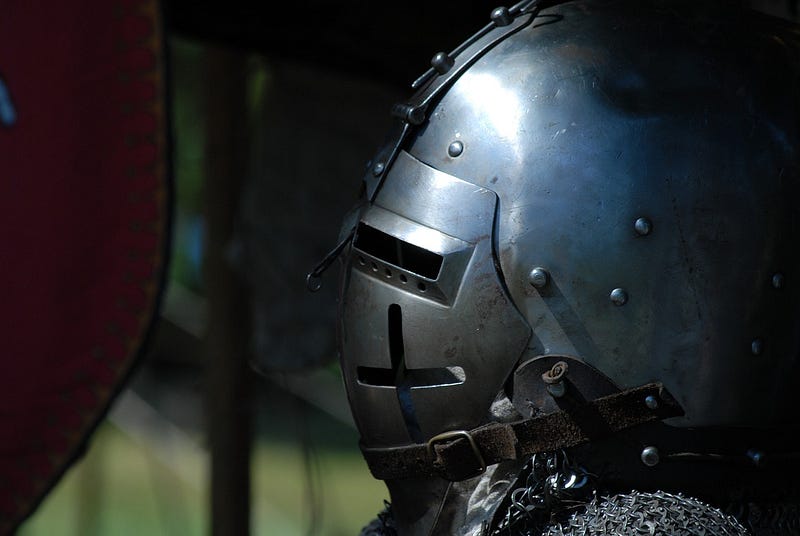
Scientists are hoping to clarify whether the Crusaders indeed had a residence in this location. Research is planned for the spring of 2024.
The extensive Khirbat es-Sar site had never been subject to archaeological investigation before the University of Warsaw mission initiated excavations there. Thus, the potential Byzantine buildings’ locations in relation to the current hilltop under excavation are still unknown.
Khirbat es-Sar has been described by travelers and researchers from the late 19th century to the present day. However, no archaeological work was conducted there until 2018. In that year, the first geophysical surveys by the University of Warsaw mission revealed the outlines of structures buried underground.
In 2019, archaeologists carried out excavations within the central architectural complex on the hilltop. It consists of a square building made of massive blocks of flint, in front of which was a large rectangular courtyard flanked by two rows of limestone arches. These two components date from different periods, with the first from the 7th century BCE and the second from the early centuries CE. The gods worshipped there have not yet been determined.
As content creators on Medium.com, we face minimal compensation for our hard work. If you find value in my articles, please consider supporting me on my “Buy Me a Coffee” page. Your small contributions can make a big difference in fueling my passion for creating quality content. Thank you for your support!