
Crunches Are Not A Good Idea If You Want A Well Developed Physique
They will give you abs, but the dangers can’t be ignored.
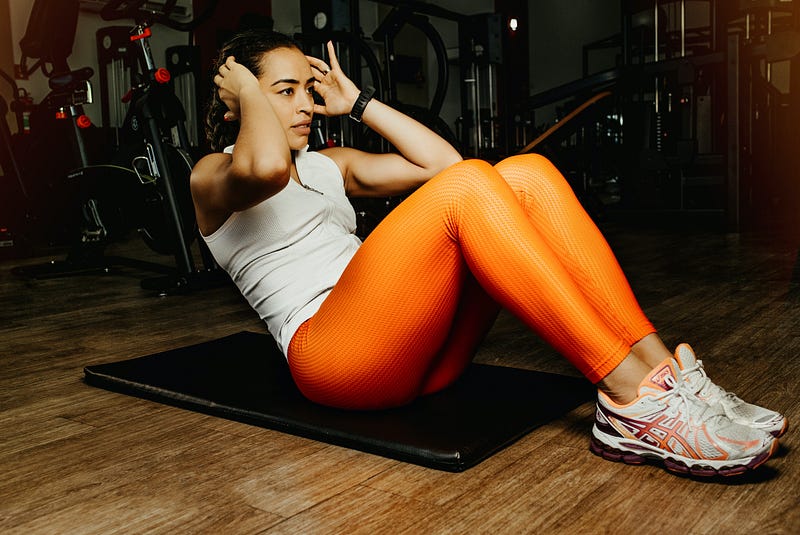
What’s the most common exercise that people do to train their abs? Crunches, right?
What is the worst exercise you can ever do to train your abs? Crunches, but many of us don’t know this. I too got to know it recently. By crunches, I am referring to the upper body crunch, not the lower body crunch.
In fact, the military forces, who have incorporated crunches in their training routine for a long time are now replacing it with other exercises too. I don’t have proof of it though, I just got to know it from a physical instructor in our military hospital.
What he told was this, “I don’t know why people use to train their core by doing crunches, crunches should never be a part of one’s training routine. It’s only for beginners who can’t do any difficult core exercise.”
Why not do crunches?
The reasons he stated for not doing crunches are as follows:
Crunches age your spine
He puts it like this, “In simple words, we can say that our spine can perform a fixed number of flexions, and we don’t know the exact number yet.”
And what do we do with our spine during crunches? We flex the spine, and not just that, but with a lot of loads too.
Research has shown that crunches exert a crazy amount of force on your spine which can result in herniated discs, which is not at all good for you. In fact, numerous articles are published regarding lower back pain due to crunches or sometimes called sit-ups.
So, to avoid spine-related injury, and if you have one, it is highly recommended to avoid crunches.
Lower back pain
The sit-up involves the working of a muscle called the psoas, which is a hip flexor muscle. The contraction of this muscle tilts the pelvis anteriorly which can increase the compressive forces on the disks resulting in stress and pain in the lower back.
So if you are one of those who suffer from lower back pain, or in general if you don’t want to fall in that category, please stop doing this exercise and focus on some real core exercises.
Crunches reinforce bad posture
When you crunch, you kind of, go into a fetal position, which is not at all a good thing for a good posture.
The same is true for sitting, just that we don't squeeze too hard while we sit.
What do you do during crunches? You curl yourself like a ball, closing the front part of your body.
But for a good posture, you need to go against closing off your front part.
To attain a good posture, you pull your shoulder blades backward and strengthen your posterior chain to allow your body to return to its upright position. And crunches do just the opposite.
Crunches don’t work your core
It works your “abs,” that too not in a great way, but it doesn't work your core. It just hit the superficial midsection muscles, i.e., the rectus abdominis only. It does not work muscles around the spine at all.
To get a strong body, you need a strong core, not a six-pack ab.
You aren’t engaging the deep muscle fibers and the obliques at all while doing crunches.
Remedy
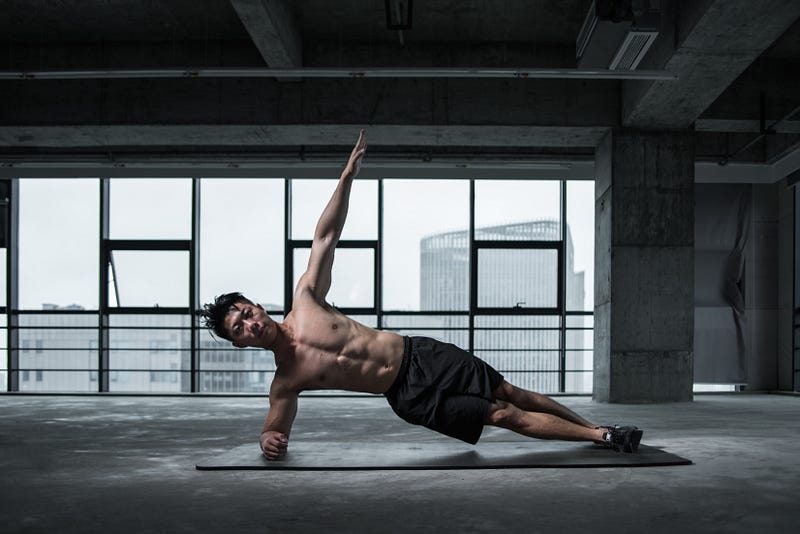
There are plenty of core exercises that are a lot more core-engaging as well as a lot safer.
Some of them are,
- Leg raises, lying or hanging, for lower abs.
- Russian twists for obliques.
- Reach ups for upper abs, if required (because a lot of exercises which are done with free weights, engages your core too, especially the upper part).
I have written an article on abs exercises too, it contains some of the best exercises you can do to build a strong core, with progressions. You can check it out.
To summarize,
- Our spine can perform a fixed number of flexions and by doing crunches we are pushing our spine to that limit.
- We increase the risk of lower back pain by doing crunches.
- Crunches are a major contributor to a bad posture.
- Crunches don’t work your core.
- There are a lot of other core exercises that are far better, core-engaging, and safer than crunches. Some of them are, * Leg raises, lying or hanging, for lower abs. * Russian twists for obliques. * Reach ups for upper abs, that too, if required.
I hope you found this article useful.
Thanks for reading!!

You just read another post from In Fitness And In Health: a health and fitness community dedicated to sharing knowledge, lessons, and suggestions to living happier, healthier lives.
If you’d like to join our newsletter and receive more stories like this one, tap here.