avatarGena Vazquez

Free AI web copilot to create summaries, insights and extended knowledge, download it at here

1384

Abstract

ous plans a reality.” - Jim Bridenstine (NASA Administrator)</p><p id="75a0">This isn’t the first time that space technology has been used in Hollywood filmmaking. In 2011 I spoke to the cinematographer, Dean Cundy who shot Ron Howard’s Apollo 13 starring Tom Hanks, Kevin Bacon, and the late Bill Paxton. They shot the movie in NASA’s “zero-gravity” plane, nicknamed the Vomit Comet.</p><p id="8eaf">The film crew and actors had to take between 500 and 600 parabolic arc flights in NASA’s KC-135 airplane to achieve authentic weightlessness. The arc only netted them 23 seconds of zero-gravity. It took a total of 13 days to film.</p><p id="6634">The aeronautical science behind it is quite fascinating. The plane climbs and dives, coasting over the top of an invisible parabolic arc. When the spacecraft reaches the bottom of a rollercoaster-like dive, the plane slowly pulls out of its parabolic dive and the zero-gravity environment disappears. As the plane climbs again, the cast and crew got into position. When gravity took hold of the Apollo 13 cast, the well-trained NASA crew would hold on to the actors so they wouldn’t crash on top of the cameras or each other. According to Cundy, this made Kevin Bacon extremely sick during filming.</p><figure id="2a7f"><img src="https://cdn-images-1.readmedium.com/v2/resize:fit:800/1*JAda9QpZq94mo-QVgfAFiA.jpeg"><figcaption>Dean Cund

Options

y at IndieCon with a fan in July 2011. Photo by Author.</figcaption></figure><p id="26a3">Tom Cruise’s costly new venture will take place in Space entirely with most scenes in the space station. In 2002, the actor narrated an IMAX documentary film <i>Space Station 3D</i>, which was filmed by astronauts during the assembly of the International Space Station. According to a directive and price list released by NASA last year for use of the International Space Station’s facilities, the use of life-support equipment and the toilet were listed at 11,250 per day. Food, air, and other provisions were priced at 22,500 per day.</p><p id="0f0a">No doubt the first of its kind film will be exciting for all audiences to watch as we see Tom Cruise go where no actor has gone before.</p><p id="676a">© Gena Vazquez 2020</p><p id="4efa">Thank you for reading! If you enjoyed this article, feel free to read similar articles I have written.</p><p id="62fa"><a href="https://readmedium.com/hollywood-on-pause-e0fd51cebfa"><b>Hollywood on Pause</b></a></p><p id="30d4"><a href="https://readmedium.com/hollywood-is-it-the-final-frontier-for-a-production-company-2272e970aaf0"><b>Hollywood — Is it the final frontier for a production company?</b></a></p><p id="9aee"><a href="https://readmedium.com/hollywoods-one-man-show-1c3348686cf2"><b>Hollywood’s One Man Show</b></a></p></article></body>

Cruising to Space

Mega Star, Tom Cruise is going to star in a film shot entirely in space.
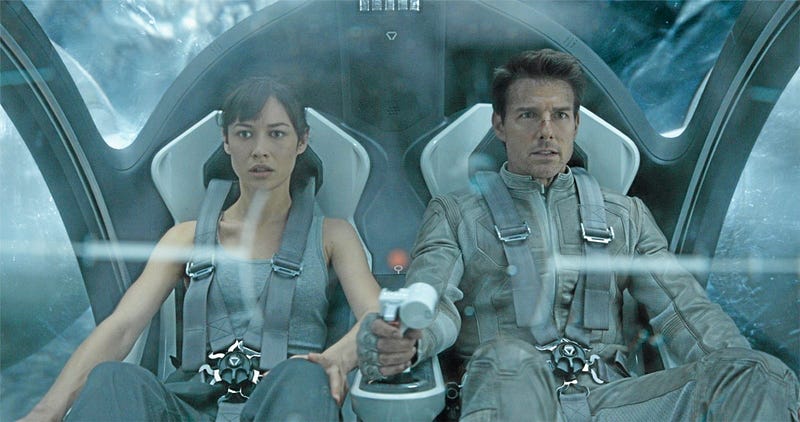
Tom Cruise in Oblivion 2011. Photo Courtesy of Universal Pictures

For four decades we’ve watched Tom Cruise light up the silverscreen racing cars in the Indy 500, flying a “MiG-28” Northrup F-5 aircraft, falling out of an airplane, uncovering espionage rings in foreign countries, seducing beautiful women, marching at a military academy, fighting for America in the Vietnam war, and showing Movies Studios the money with hit after box office hit! Now he is taking his act into space.

Earlier this week it was reported that one of Cruise’s lifelong goals is going to come true: he is going to film a movie in space. Both Elon Musk’s SPACE-X and NASA will be partnering with the star to make the film happen! NASA director Jim Bridenstine confirmed the news on Twitter.
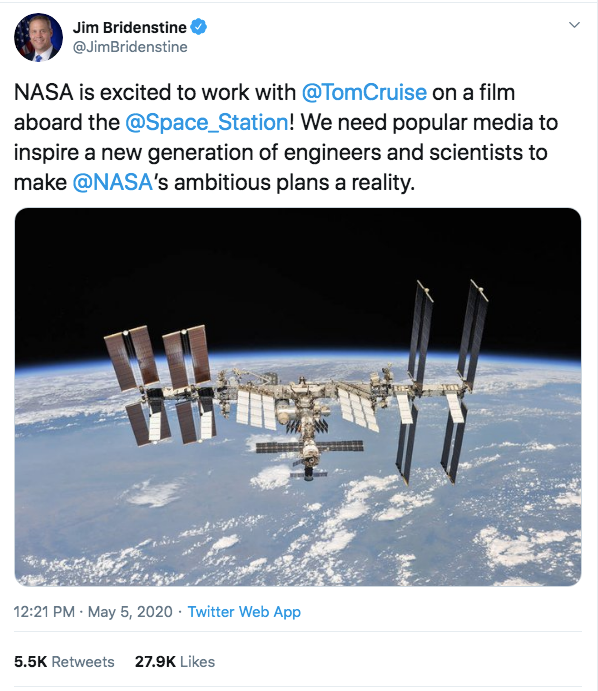
Jim Bridenstine on Twitter

“We need popular media to inspire a new generation of engineers and scientists to make @NASA’s ambitious plans a reality.” - Jim Bridenstine (NASA Administrator)

This isn’t the first time that space technology has been used in Hollywood filmmaking. In 2011 I spoke to the cinematographer, Dean Cundy who shot Ron Howard’s Apollo 13 starring Tom Hanks, Kevin Bacon, and the late Bill Paxton. They shot the movie in NASA’s “zero-gravity” plane, nicknamed the Vomit Comet.

The film crew and actors had to take between 500 and 600 parabolic arc flights in NASA’s KC-135 airplane to achieve authentic weightlessness. The arc only netted them 23 seconds of zero-gravity. It took a total of 13 days to film.

The aeronautical science behind it is quite fascinating. The plane climbs and dives, coasting over the top of an invisible parabolic arc. When the spacecraft reaches the bottom of a rollercoaster-like dive, the plane slowly pulls out of its parabolic dive and the zero-gravity environment disappears. As the plane climbs again, the cast and crew got into position. When gravity took hold of the Apollo 13 cast, the well-trained NASA crew would hold on to the actors so they wouldn’t crash on top of the cameras or each other. According to Cundy, this made Kevin Bacon extremely sick during filming.
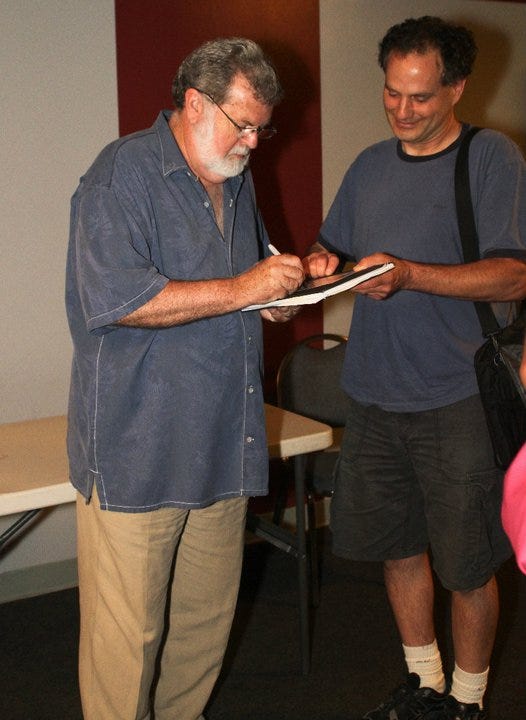
Dean Cundy at IndieCon with a fan in July 2011. Photo by Author.

Tom Cruise’s costly new venture will take place in Space entirely with most scenes in the space station. In 2002, the actor narrated an IMAX documentary film Space Station 3D, which was filmed by astronauts during the assembly of the International Space Station. According to a directive and price list released by NASA last year for use of the International Space Station’s facilities, the use of life-support equipment and the toilet were listed at $11,250 per day. Food, air, and other provisions were priced at $22,500 per day.

No doubt the first of its kind film will be exciting for all audiences to watch as we see Tom Cruise go where no actor has gone before.

© Gena Vazquez 2020

Thank you for reading! If you enjoyed this article, feel free to read similar articles I have written.

Hollywood on Pause

Hollywood — Is it the final frontier for a production company?

Hollywood’s One Man Show

Film
Hollywood
Space
NASA
Spacex
Recommended from ReadMedium