
Cricoid
Prepare your throaty voice to read this article
Today’s New York Times Spelling Bee letters:
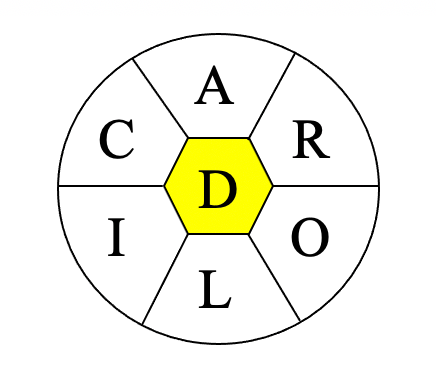
A, C, I, L, O, R, and center D (all words must include D)
Merriam-Webster says…
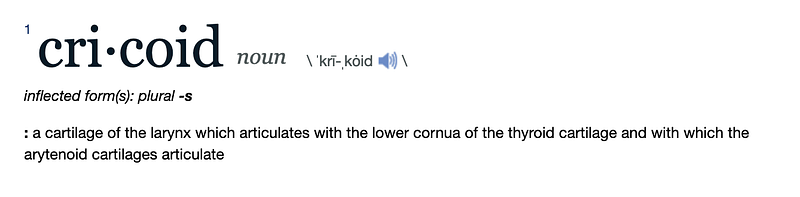
Silly little dictionary! Don’t you know cricoid can’t possibly be a word if the New York Times says it ain’t?
For further fascinating facts, check out the Spelling Bee Master.
What’s your favorite dord* from today’s puzzle?
My Two Cents
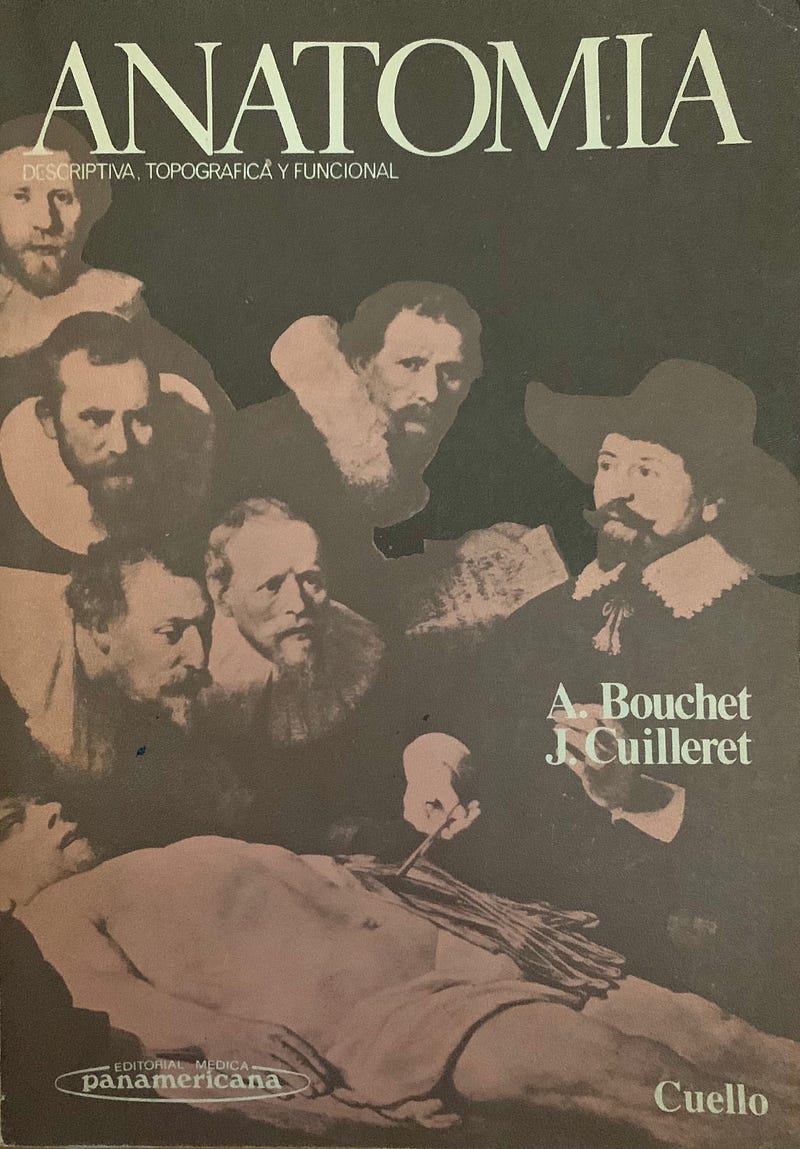
The book cover in the top photo shows the famous Rembrandt oil painting, The Anatomy Lesson of Dr. Nicolaes Tulp, from 1632. The book was printed almost 350 years later, and no, Dr. Tulp is not speaking Spanish. Here is the complete, colorized version of the artwork:
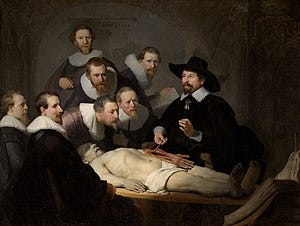
The guys on the far left are not missing from the book; they were just relegated to the back cover, which I’m not going to show here. You’re just gonna have to trust me on that one.
That anatomy textbook is a Spanish translation of the French Anatomie: descriptive, topographique et fonctionnelle — Le cou, which translates as “The author of this column is trying to show off his knowledge of French or obscure books, or both.”
The reason I have an anatomy book in Spanish that was translated from the French is because I went to med school in Venezuela, where it was more practical to study in Spanish than in French, or English, for that matter. Yes, I know… showing off again.
Because human anatomy does not evolve much as a science, it’s perfectly fine to use old textbooks to study it — as opposed, say, to physiology, biochemistry, or even surgery. Not having a ton of money back then, that is exactly what I did: buy old, used books. The Bouchet books (actually authored by two guys, Alain Bouchet and Jacques Cuilleret) were much cheaper than their fancier counterpart, Leo Testut’s Traité d´anatomie humaine (Treatise on Human Anatomy). This latter book was a closer equivalent to the one used by many American medical students: Gray’s Anatomy.
Bouchet’s book was actually a set of seven books. The one in the photo is a volume dealing exclusively with the neck. That’s it. More than 250 pages just on that one part of the body that your mom always claimed helped you not lose your head.
Don’t stab that throat with a pen!
I’m sure you’ve seen this in a movie: someone is choking, the Heimlich maneuver doesn’t work, and either a doctor or a med student or someone who thinks they know what they’re doing rushes in, ballpoint pen in hand, stabs them in the throat, and miraculously saves the chokee (chokent? chokeree?) by performing a gritty tracheotomy.
Alternatively, the hero(ine) may use a fountain pen if the scene takes place in the 19th century.
This is known as a “trope” and has made its appearance in assorted movies and TV shows. I have yet to see it done live in a play, although that would be quite interesting. I’m sure they’d need a ton of understudies for the role and would probably have to pay through their nose or, in this case, through their throats for their services.
In any case, this is how the actor choking would have to pose. The other actor, the one stabbing people with a pen, would have to carefully read the labels placed around the chokee (I’ve decided to stick with “chokee”), find the one that says Cricoid cartilage — hint, it’s on the left, right on top of the shoulder — and then jab the pen just above it, right smack in the middle.
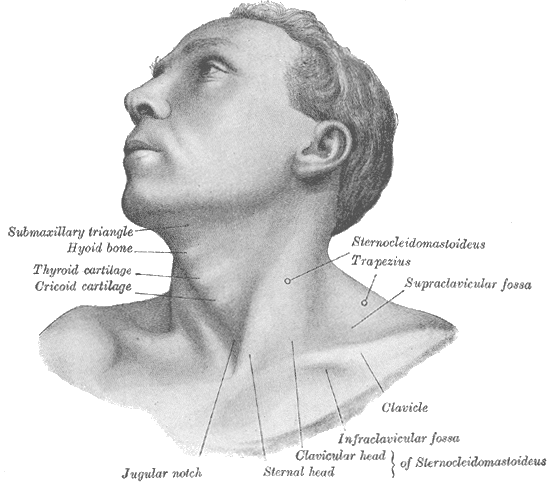
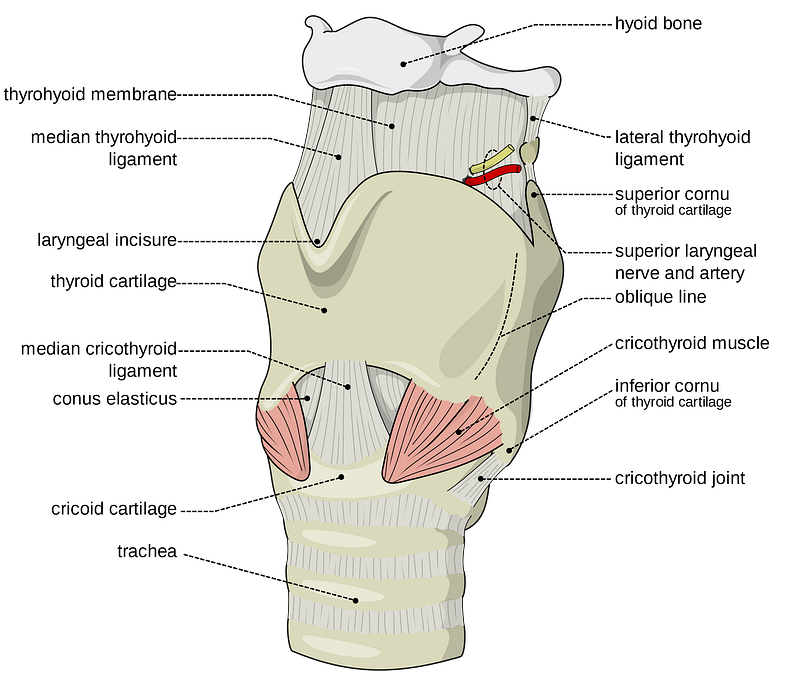
Yeah, I know, the above image is not very useful. The one below might help you visualize the cricoid better, although in order to see it you’d have to peel off the actor’s skin, which can sometimes be painful.
And because I took the trouble to dig up my old anatomy book and take pictures of it, you’ll have to suffer through the anterior, lateral and posterior views of the cricoid… and in Spanish, to boot.
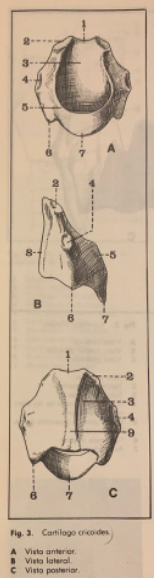
The dictionary tells us that the word cricoid comes from the New Latin cricoides, itself from Greek krikoeidēs, meaning “ring-shaped”. It is the only complete ring of cartilage around the trachea. As such, forms the back part of the voice box and is the attachment site for muscles, cartilages, and ligaments involved in opening and closing the airway and in producing speech.
You may have noticed earlier that I said the pen should be stabbed into the throat above the cricoid. Now, to be clear, I do not endorse stabbing anyone anywhere with any type of pen. But what you often see in moves, in those “outside hospital environment” procedures, is not a tracheotomy, but a cricothyrotomy.
One of the main distinctions is the cricoid, of course. That’s why I’m writing an entire article about it today.
Tracheotomies are performed below the cricoid, and usually with a scalpel, as the space between the cartilage in the trachea is narrow. A tracheotomy is a more “surgical” procedure and done with long-term purposes in mind. Cricothyrotomies, on the other hand, are easier to perform because you have a much larger area available above the cricoid in which to jab a tube.
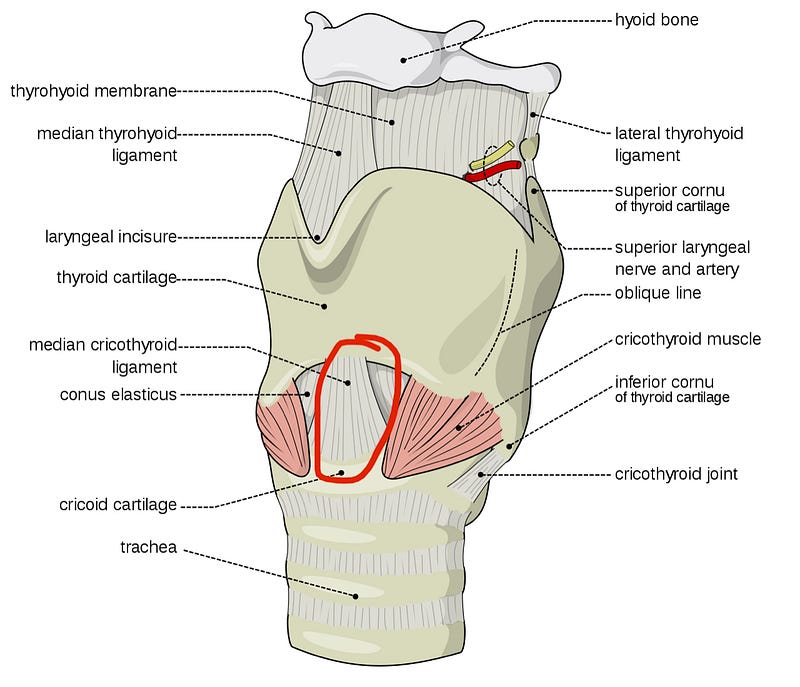
Yeah, that red circle is your target (though, again, I do not recommend anyone perform this procedure without appropriate training). It’s the comparatively soft median cricothyroid ligament, which joins the cricoid below and the thyroid cartilage above it.
Now you know! Next time you see a movie in which someone tries to impress their significant other by performing a tracheotomy in a restaurant, you can proudly tell your significant other that it was actually a cricothyrotomy… and have the rest of the movie theater shush you up.
[Credit goes to my bromance, Dr. Bob, for his technical assistance on the technical aspects of this technical subject.]
The aggressive mustache
There is a technique that has been used during endotracheal intubation that is supposed to reduce the risk of the patient throwing up. Throwing up is not just inconvenient, but can also be dangerous if the food winds up going down the trachea and into the lungs, known as bronchoaspiration.
That technique is known as the Sellick maneuver. It involves applying pressure to the cricoid cartilage at the neck to close up the esophagus which passes directly behind it.
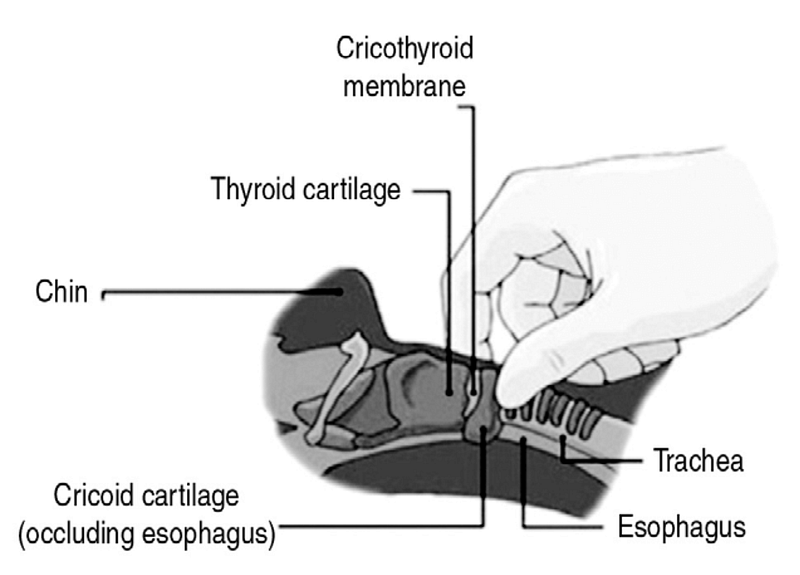
This is not to be confused with the Selleck maneuver, which involves a private detective in Hawaii pretending he’s investigating cases while seducing women with his aggressive mustache:
I’m not making up the “aggressive mustache” part. That’s what the show was called in Venezuela, where I grew up: Magnum, el bigote agresivo. Magnum, the aggressive mustache.
Clearly they never noticed his violent chest hair…
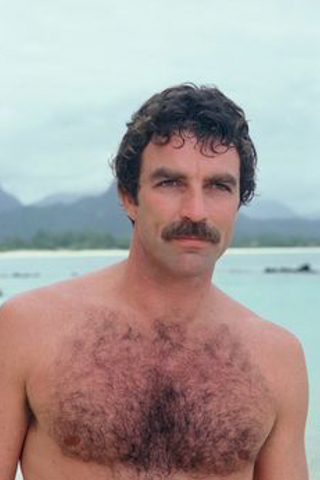
Despite the importance of the cricoid in two different emergency throat procedures, and despite the fact that there is a maneuver whose name is very similar to a 1980s TV icon, the editors of the Spelling Bee decided that the word cricoid is a dord*.
You can check out my previous entry on another dord* here:
*What the heck is a dord, you ask? Here’s the answer: