
Creative Minds Never Rest
A restless, imaginative mind never rests, nor does it want to.
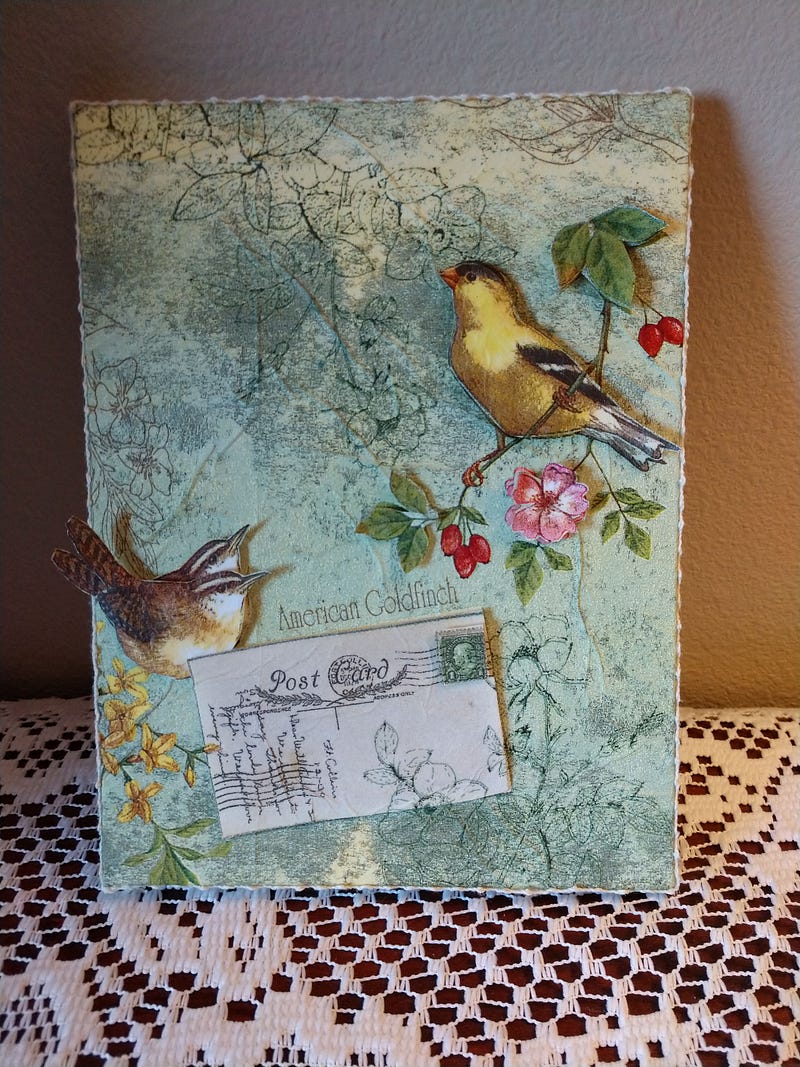
I sometimes feel like my mind is in a constant state of art construction or story creation. For some, I suppose this continual idea churning would be exhausting. For me it feeds my soul because my brain is wired to create.
Creativity Solves Problems
I see it as an asset because creative minds are problem solvers. At least I think so. When I see a challenge, it quickly turns into an opportunity. It’s as if I automatically try to take a negative and turn it into something useful, usable, or pretty. We are all creative thinkers. I just think that for some it’s a lifestyle and for others it’s just part of their day.
In high school, instead of getting a weekend job, I went to restaurants and asked them for all their wine bottles. The empty ones of course. I painted them with glass paint and sold them at a flea market. I would have made a bunch more money if I just worked at the restaurants, but it wasn’t as much fun.
Creativity Is Thrifty
I love thrift store shopping. It’s like walking into a bottomless treasure box. I love that people donate half a pack of unused napkins from a kid’s party or vintage postcards. Some postcards have messages on them. The mystery behind the few words peaks my love for the unknown.
I found an old cookbook the other day for 50c — a bargain. Every page is now in a collage or journal; repurposed as pockets, envelopes, or tags. An embroidered pillowcase is now a book cover and a packet of scrap pieces of ribbon continue to add flare to gift tags.
I caught my mom red handed as she almost threw out an old blouse. It’s ok. Tragedy was averted because I rescued it. The blouse is a book cover now. That was a close one. Whew!
I did a little dance when I found a bag of large puzzle pieces. I just can’t wait to beautify them all. The ideas are flowing — gift tags, bookmarks, front and back of a little notebook.
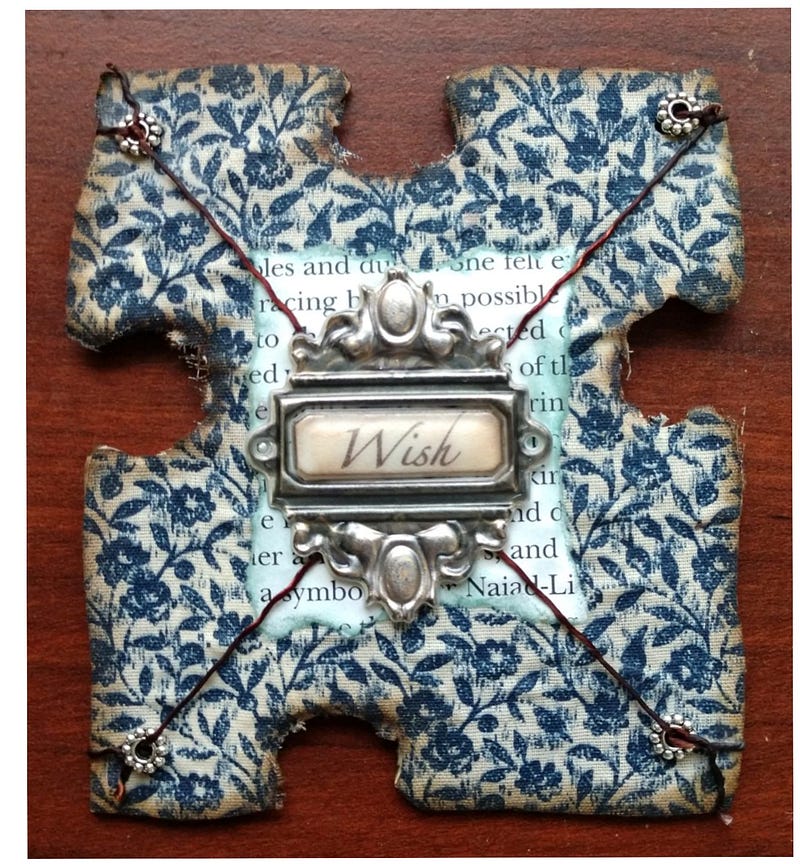
Creativity As Internal Therapy
Someone once suggested that this ability to repurpose was my form of internal therapy. I guess it makes sense but there is a downside too. I want to be resourceful and take care of my environment by upcycling things. In my quest to be environmentally responsible, I save everything. My family learned some time ago to check with me before they throw out a label or a box. Maybe it’s packaging paper or ribbon from a gift box. I’m an art hoarder. Ok, there, I said it aloud.
Creativity Helps The Environment
My struggle is not what to create. It’s how to use up all the ‘stuff’ I saved. It’s piling up. In our consumer world I’m overwhelmed by how much paper, string, ribbon, tags, magazines, envelopes (always from junk mail), that comes through my door. It’s incredible that I have access to all this free collage project material and embellishments for my junk journals. What is not so incredible is how awful I feel when I do throw out some of it. I just can’t use it fast enough. No matter how hard I try, I can’t keep everything out of a landfill. It’s frustrating.
Creativity Idea Reset
So, I’m taking a step back to reset. I must accept that I’m doing my part. When I cut up a plastic bag to use as a drop cloth for art projects, I keep it out of the trash can for a few more days. Silly me, it still goes to the landfill. This time it’s covered in glue and paint. Yay, chemicals.
Who am I kidding? Am I really helping the environment? Not always, but by trying I sometimes succeed. I welcome the constant influx of creative thoughts and ideas especially when they involve upcycling or recycling. If I keep a tag out of the trash, then my art supply box wins. The environment wins and I feel a small sense of accomplishment.
Many small acts like this make a big difference. If art is not your thing, consider asking your local community center if they can use some of the items I mentioned in this article. A senior center, the library, an elementary school teacher. I will bet you a dollar that some may be only too happy for the donations.
So, there is my reset. I’m not going to throw out my excess supply. I’m calling places and people and will be doing a few drop offs soon.
In her article, ‘7 Things We Worry About and Why We Can Safely Ditch Them All’, Melissa Frost says, ‘The truth is we can’t solve it all,’ and that is the lesson I’m taking with me from now on.
Thank you
Thank you for reading my article. I really appreciate your support and interest. To read more of my articles click here. https://medium.com/@cwstoryteller
Join Medium
Please consider joining Medium for $5 a month to get full access to all the incredible writers on the platform. Your membership supports writers like myself to continue doing what we love most. To write and entertain.
Please click on my referral link below to join.
Another article from Celeste that you might enjoy reading.


