
SOUTH OF FRANCE TRAVEL
Cracking Marseille’s Street Tough Exterior
French city has some of the best street art in the world
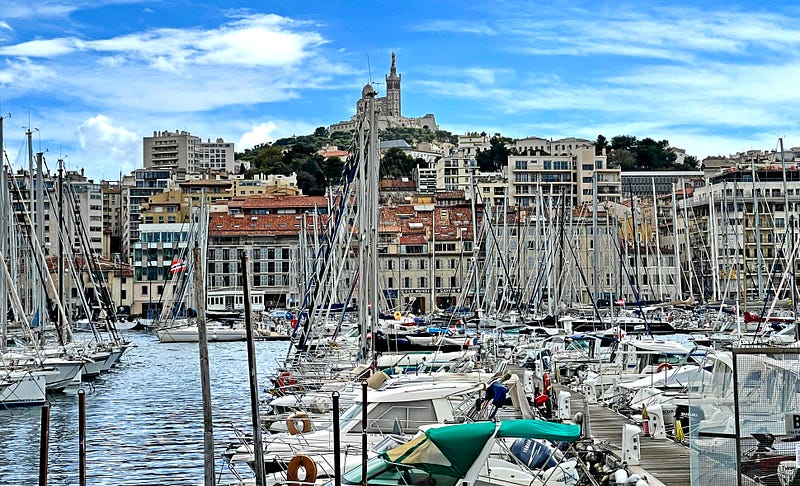
If Marseille was a person it would be a tough-talking street fighter, who creates captivating art when one is looking.
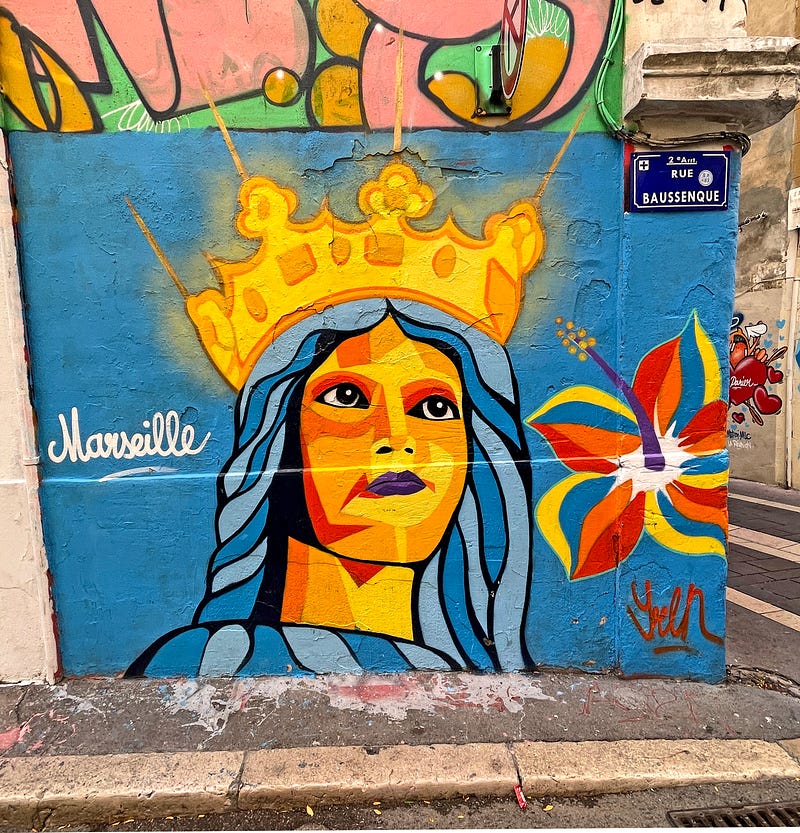
Marseille is a massive port city on France’s southern coast, and is one of the main entry points for a large percentage of the country’s new immigrants. Waves of newcomers travelled from across Europe and the Mediterranean in the nineteenth and twentieth centuries settling in Marseille and spreading out across France. Many have had to struggle with nothing but their strength and determination, often in low-income blue-collar jobs to survive in their new home.
While Marseille is at the northern edge of the Cote d’Azur it is worlds away from the beaches of Cannes and Nice. It’s the second largest city in France but it’s also the poorest.
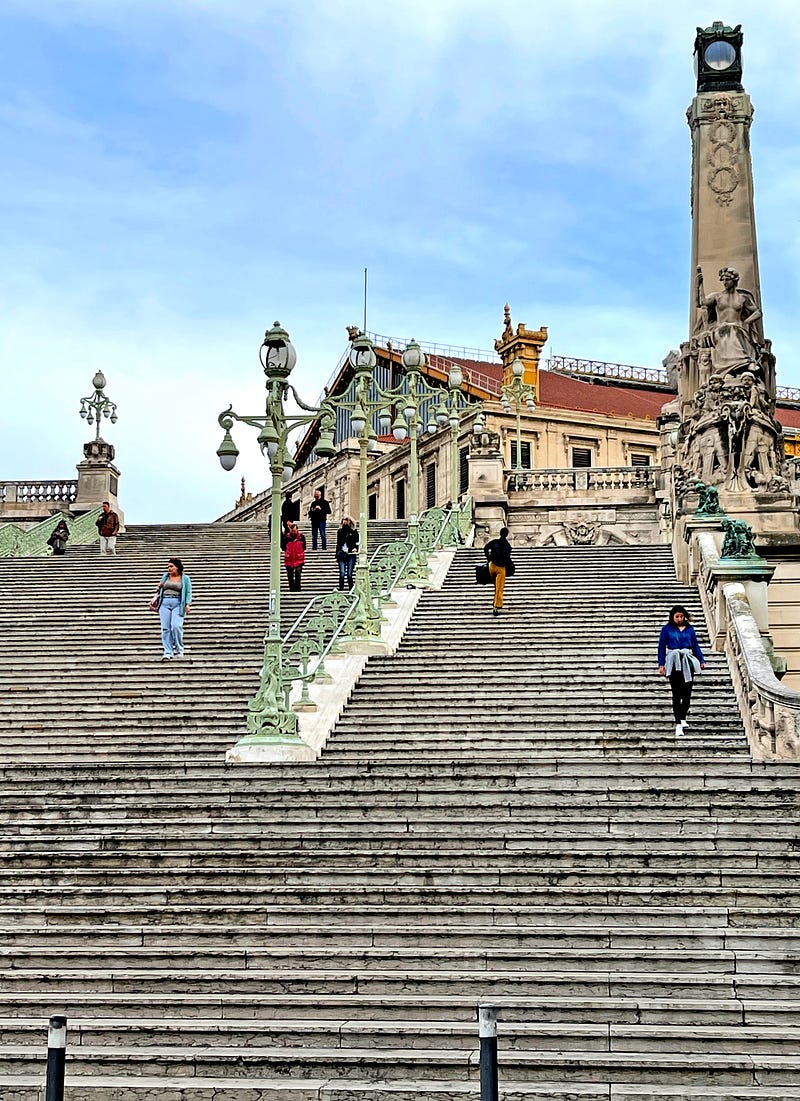
When my friend and I arrived in Marseille on a train from the French Riviera we began dragging our suitcases down a massive stone staircase to the street that would lead us to our hotel. These streets were grittier and edgier than what we were used to and I warned my friend to be careful with his things. We dragged our suitcases up several blocks using Google Maps to take us in the right direction. And as we got closer to the hotel these gritty streets just got grittier.
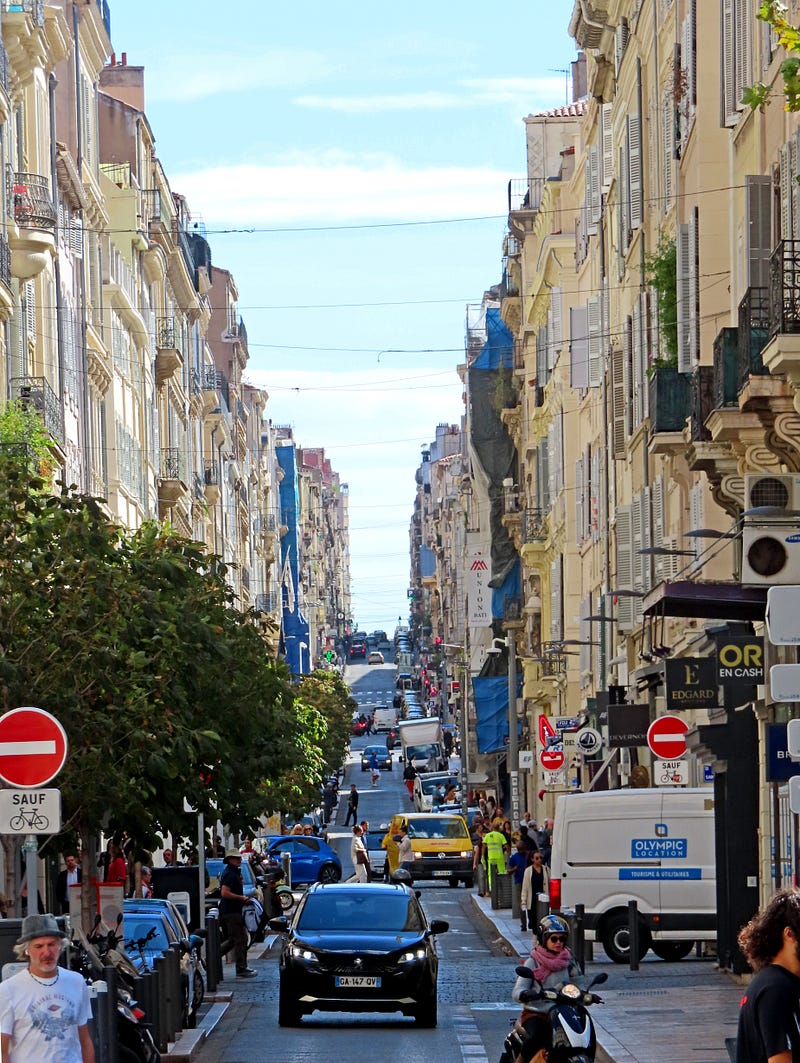
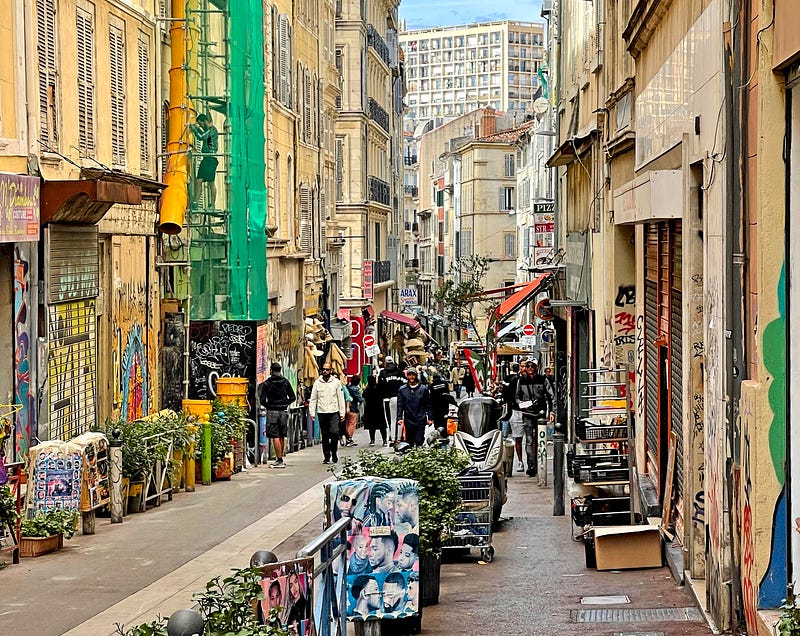
It wasn’t all bad once we got out exploring we realized that Marseille had lots to offer.
There were shops and restaurants along the narrow winding street where our hotel was located, along with open fruit and vegetable markets with stalls for halal meat and fresh fish. It was like Marseille’s own medina.
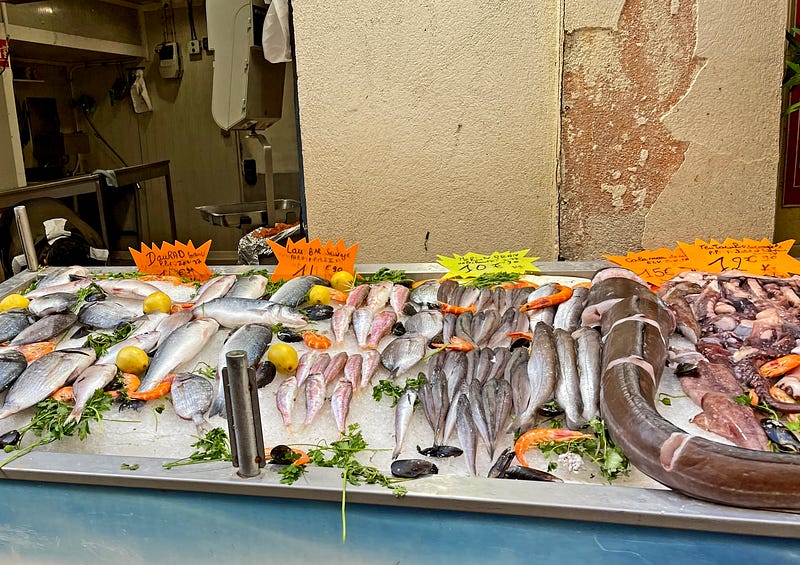
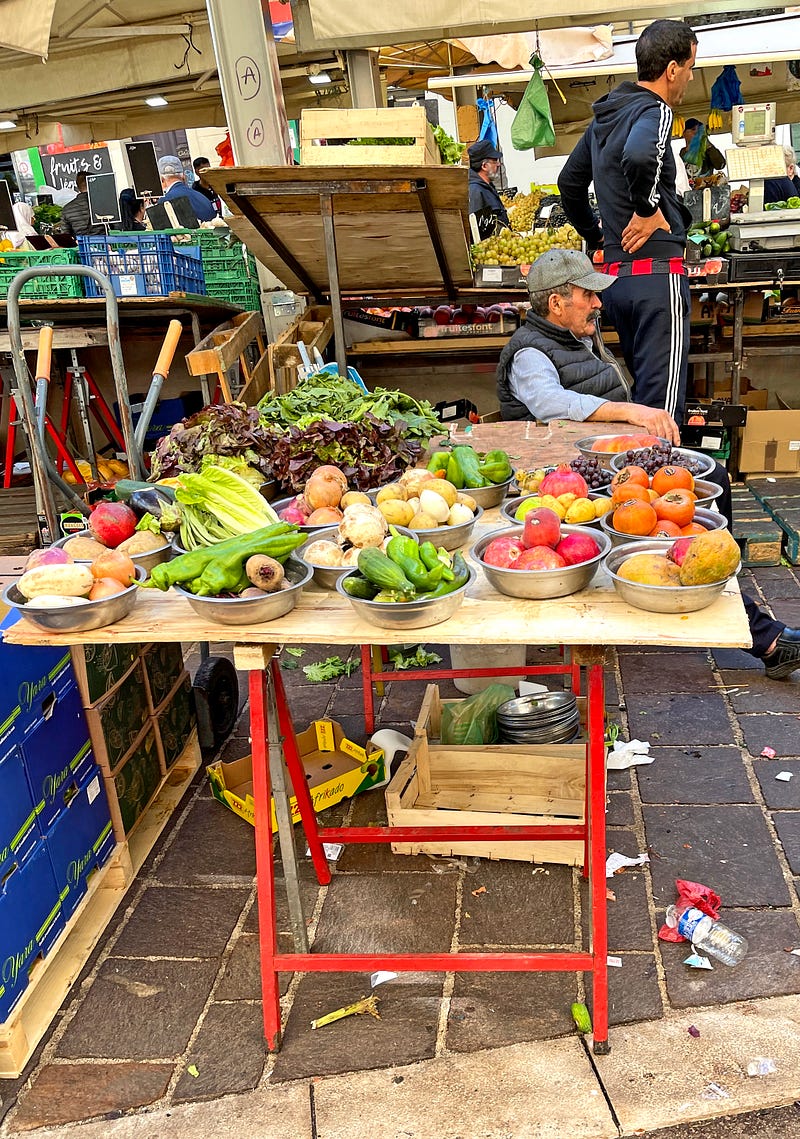
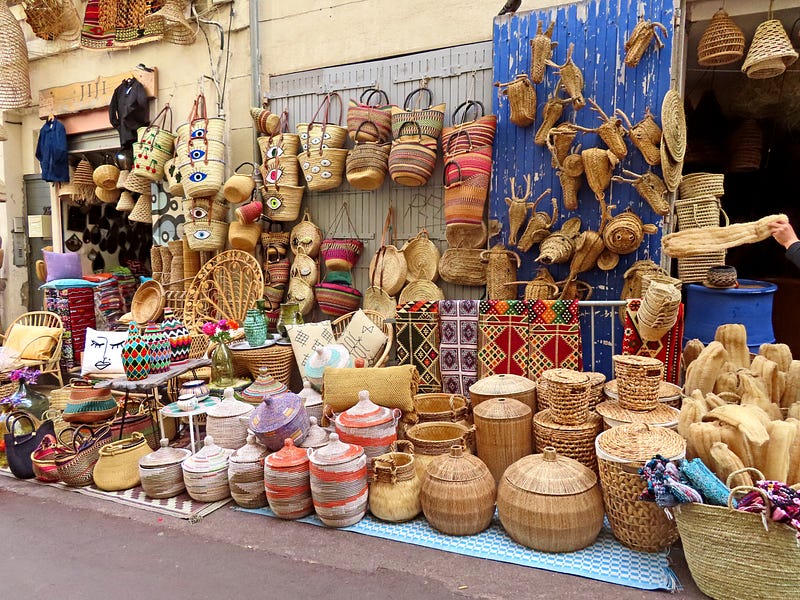
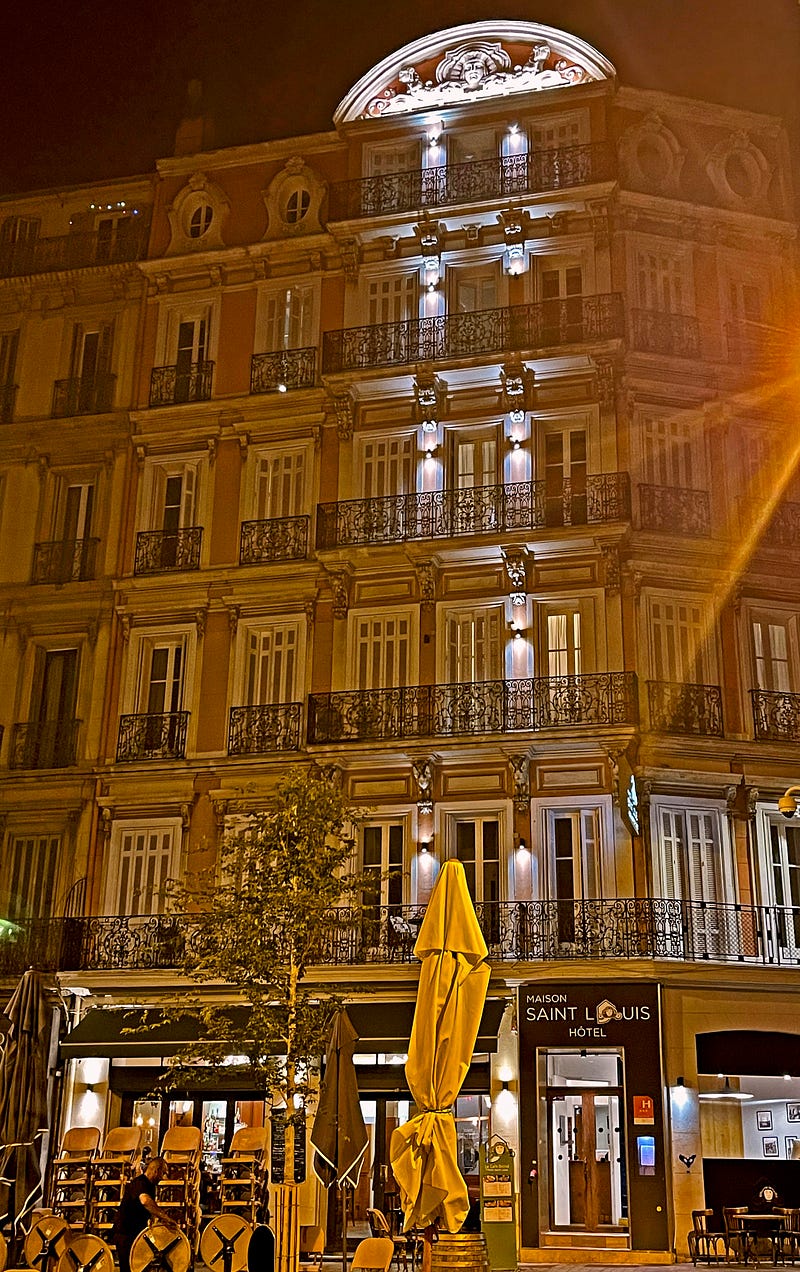
The hotel had a good online rating and is typical of Europe — ornately decorated and about five or six stories tall with only a few rooms per floor. Luckily there was a small elevator to get our bags upstairs.
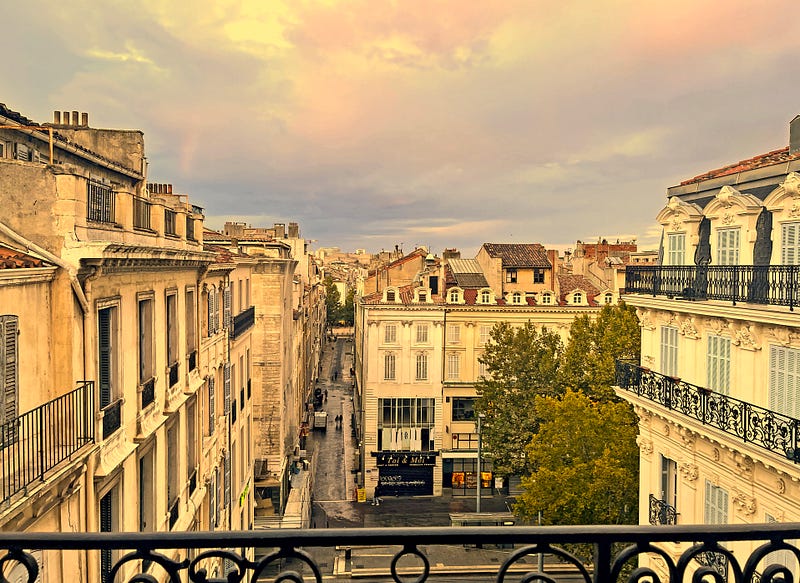
The light came on in the hallway when the elevator door opened but with its dark-colored carpeting and the long shadows that were cast by the overhead lights, it was spooky. And then when we opened the door to our room it was filled with light. Big windows opened onto a Juliet balcony facing onto a side street that let us see almost all the way to Vieux Port (the Old Port area).
Some of the streets in the neighborhood were seedier than others. In one market area near our hotel, I clearly saw a guy out of the corner of my eye who was watching me and moving along with us. My friend saw the man too and just as he started to tell me about the guy I turned and glared with my baddest tough guy look. He obviously wasn’t expecting it because he backed off although he didn’t stop watching us.
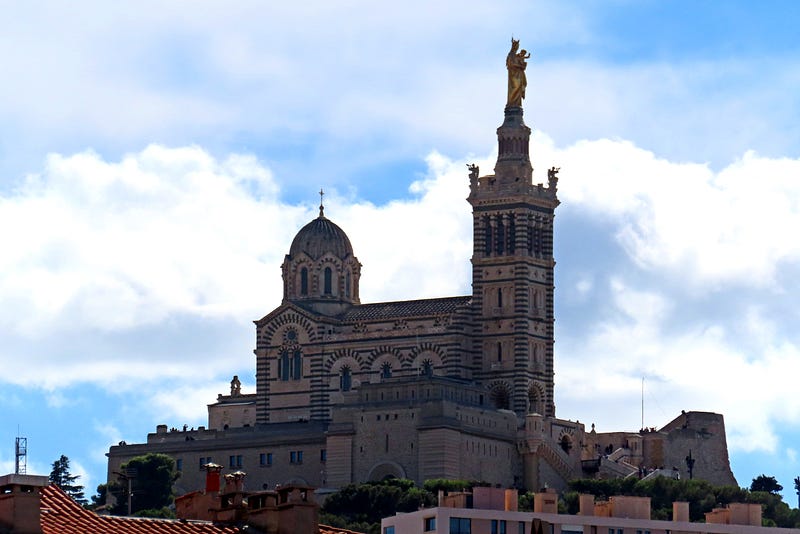
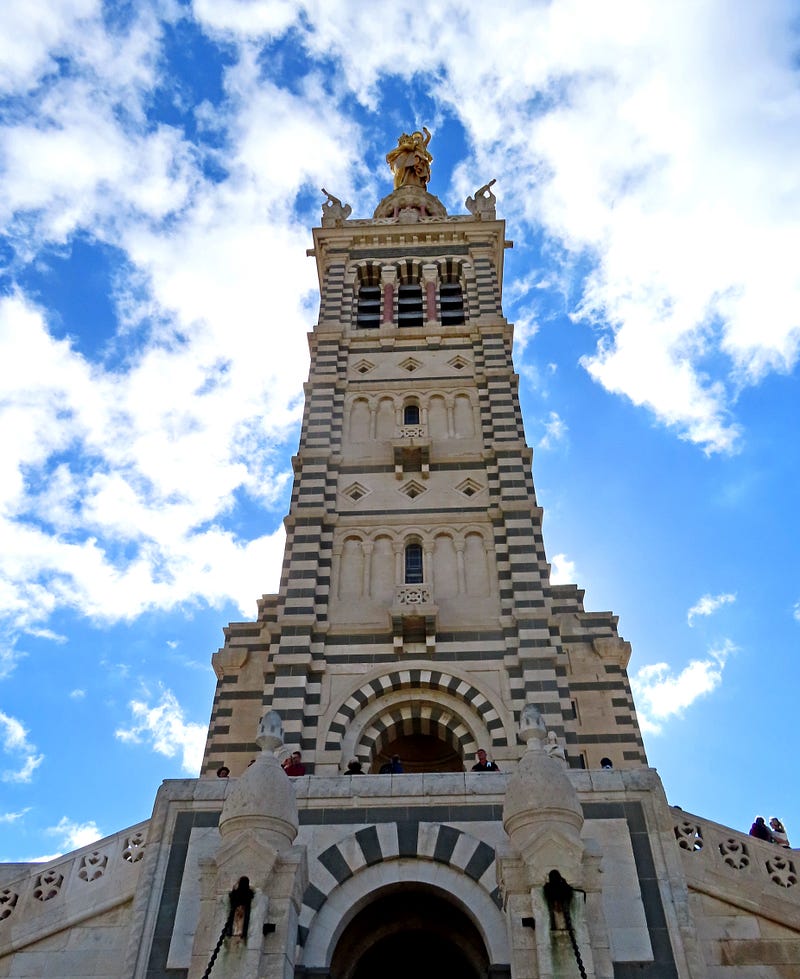
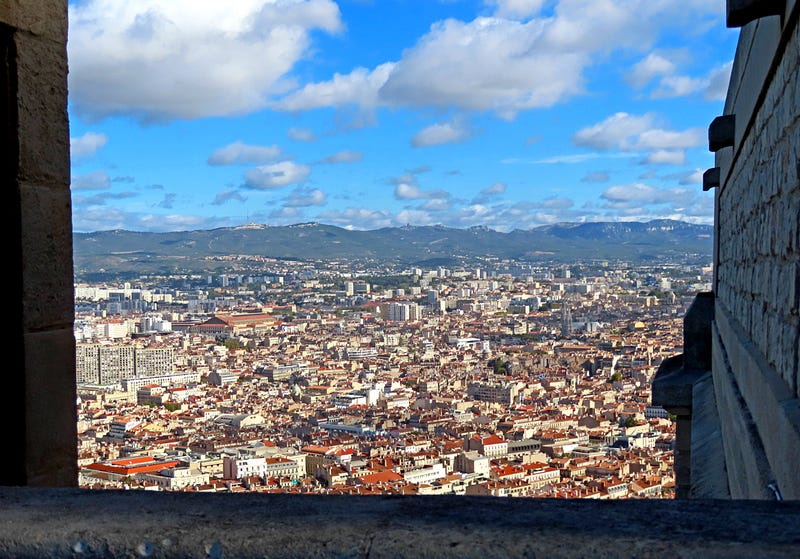
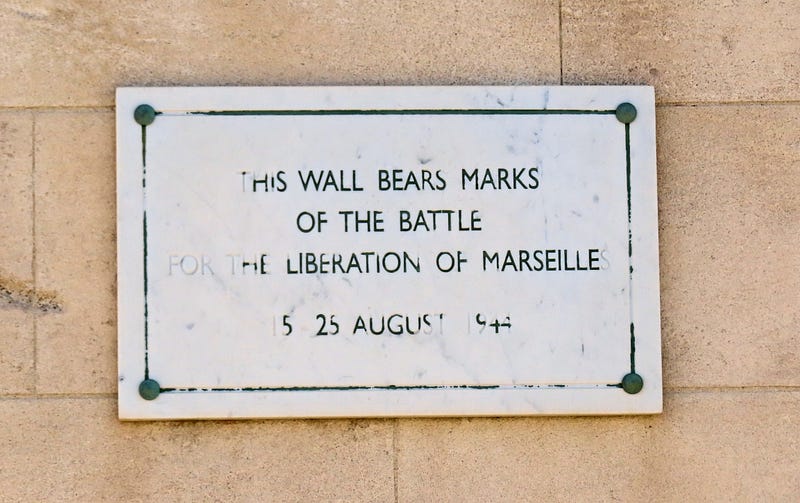
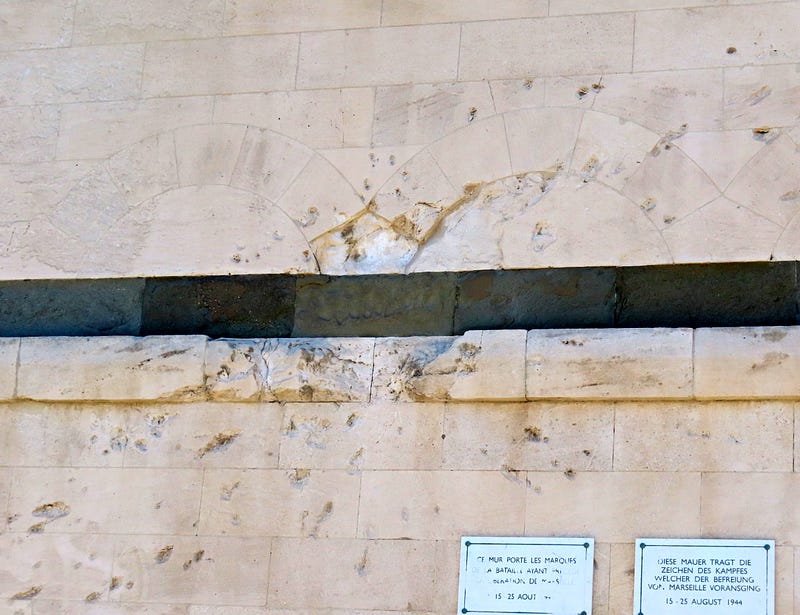
On our one full day in Marseille we took a bus tour to see some of the city’s highlights. We visited Notre Dame du Mont, a large cathedral at the top of a mountain overlooking Marseille. The views from the church were magnificent, with Marseille spread out all around us. And if you look closely at the outside walls you will see pockmarks from bullets and mortars that hit the building during the battle for the liberation of Marseille from the nazis in 1944.
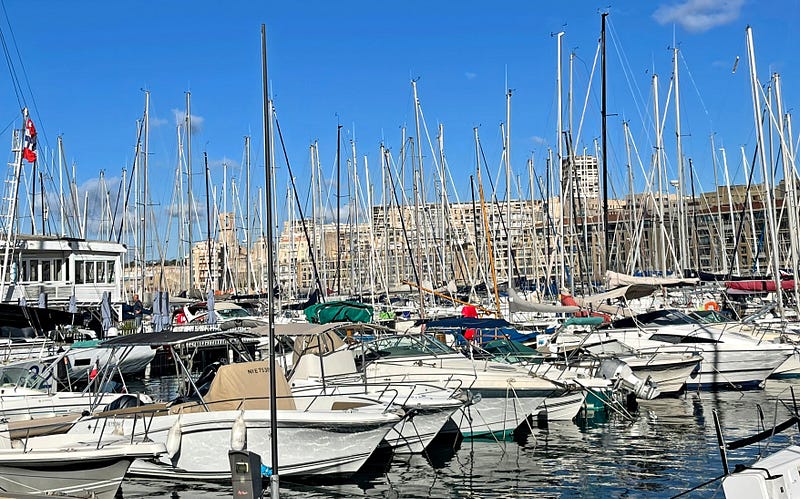
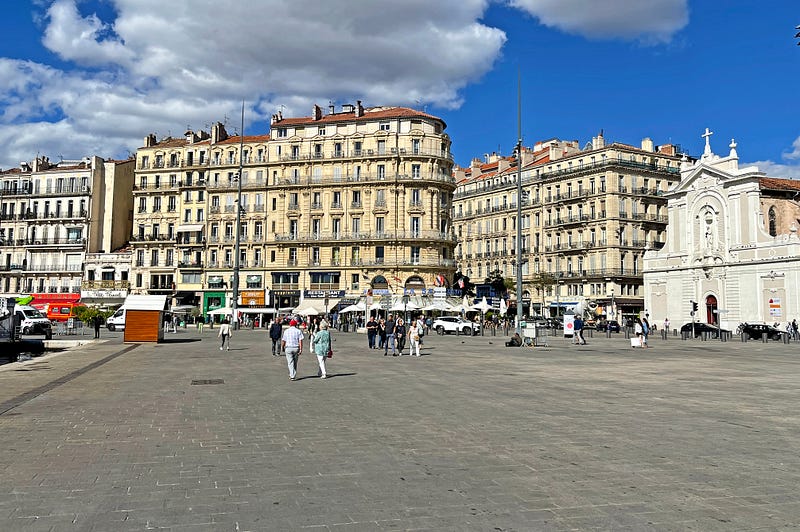
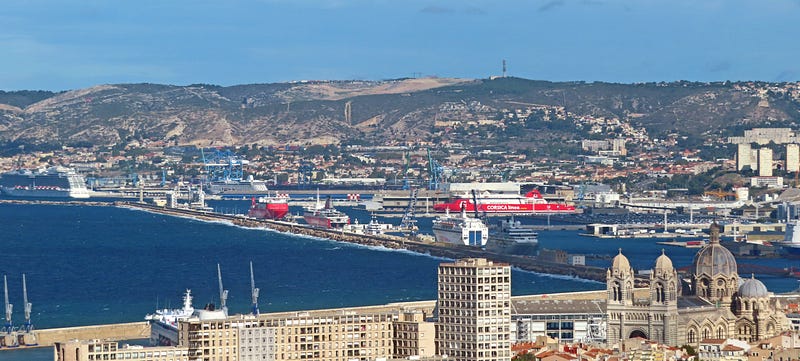
We wandered around the Vieux Port (Old Port) area which has been a working harbor since 600 BC when Greek settlers set up a trading post. Just outside the inner harbor is Fos Port, the largest seaport in France, but unless you are a mariner it’s not really a place for tourists.
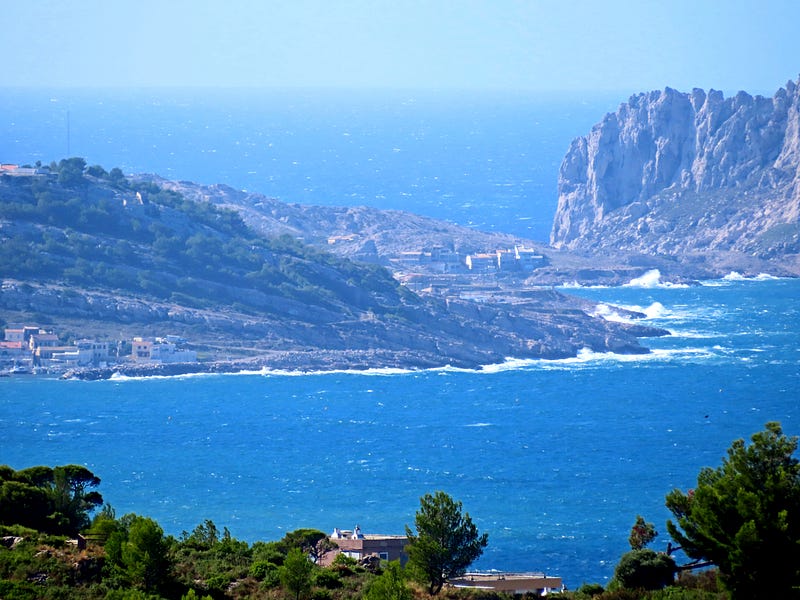
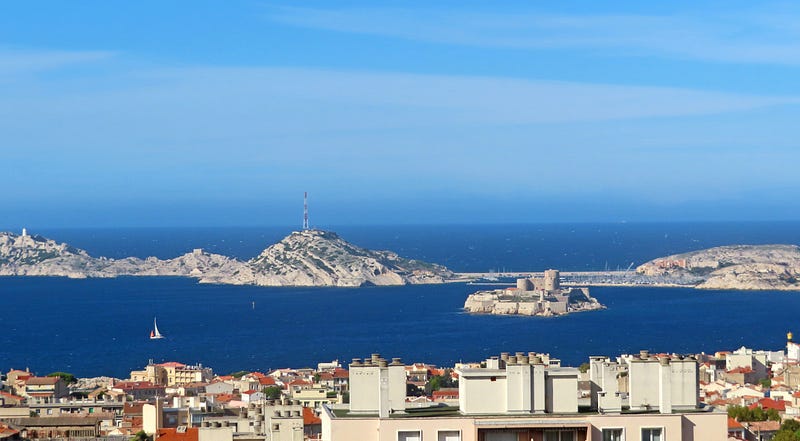
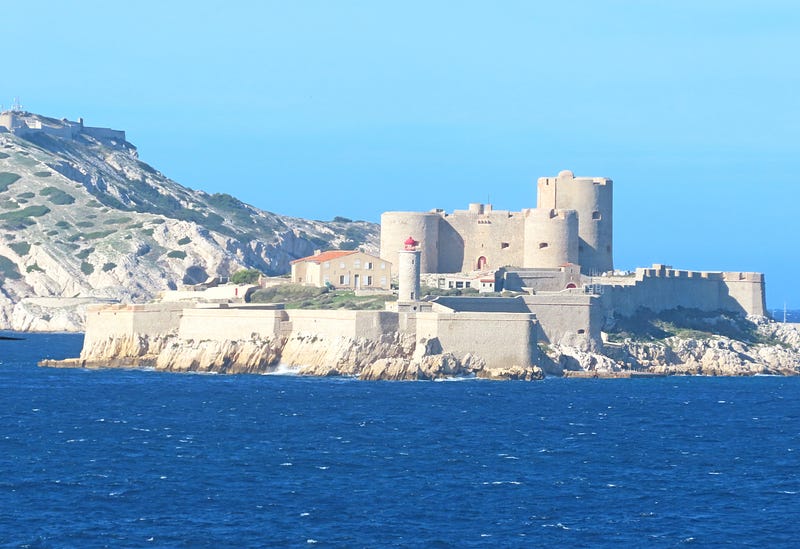
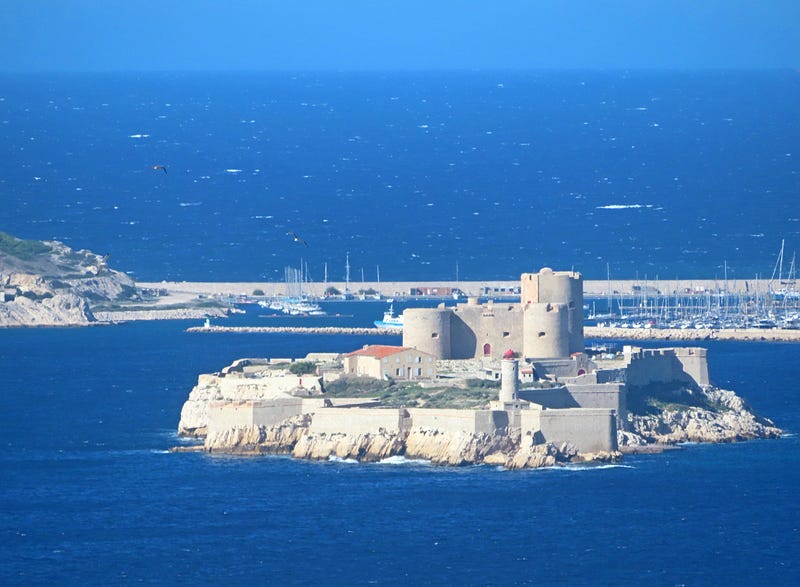
As we drove along the coast we could see a small fortified island offshore, part of the Frioul archipelago. It was the infamous Chateau d’If, an island prison that writer Alexandre Dumas made famous in “The Count of Monte Cristo.” The main character in his book served many years in prison for a crime he was wrongly convicted of.
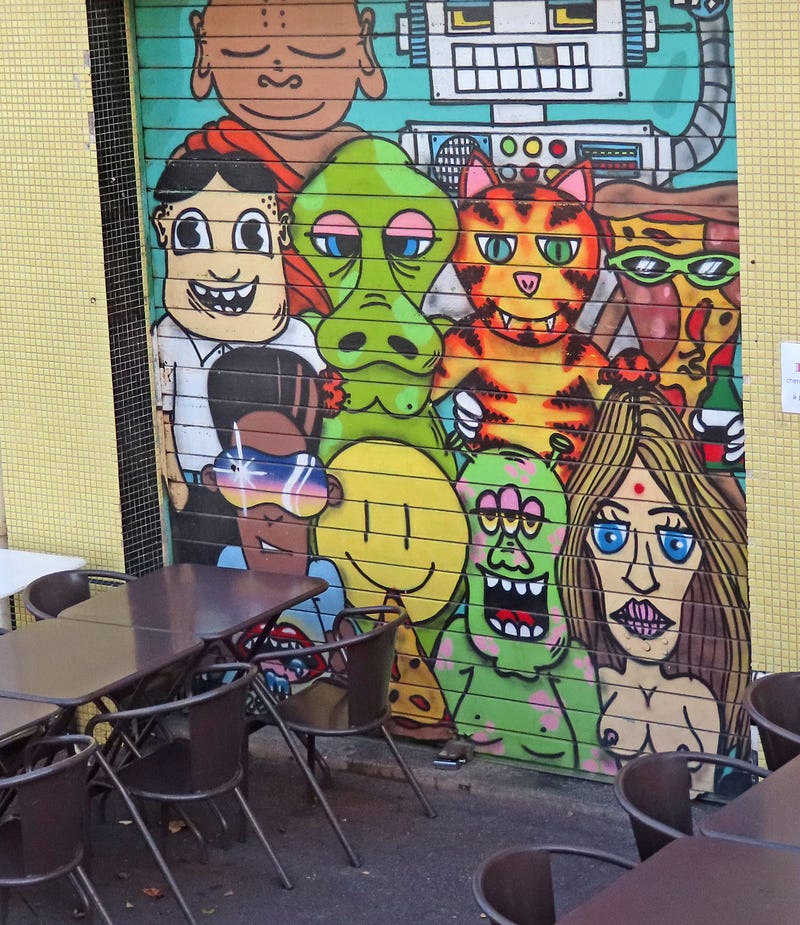
One of the reasons I wanted to see Marseille is because of the street art culture. Many of France’s and Europe’s most famous street artists got creative in Marseille. Unfortunately, we missed seeing much of the artwork in Le Cours Julien neighborhood which is next to Notre Dame du Mont. I didn’t realize how much there was until after we left. But I was determined to find the area called Le Panier which I had read would be a treasure trove of creativity.
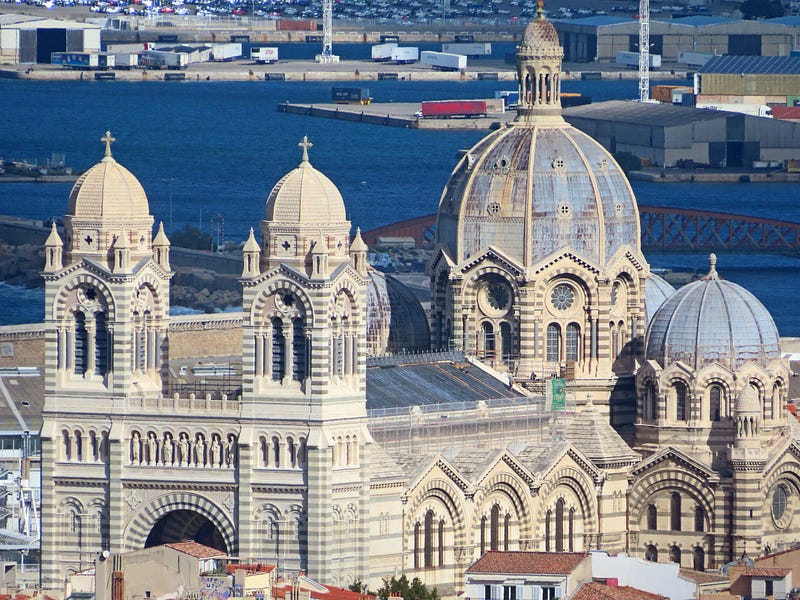
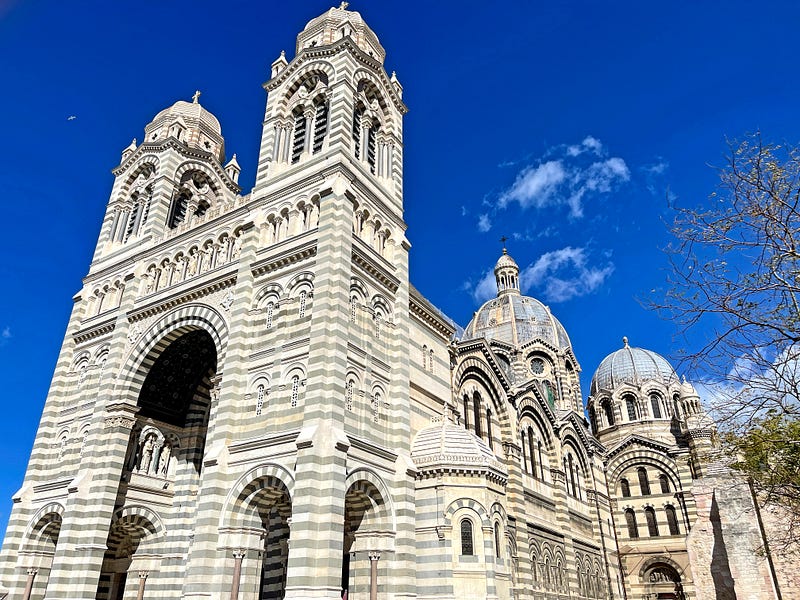
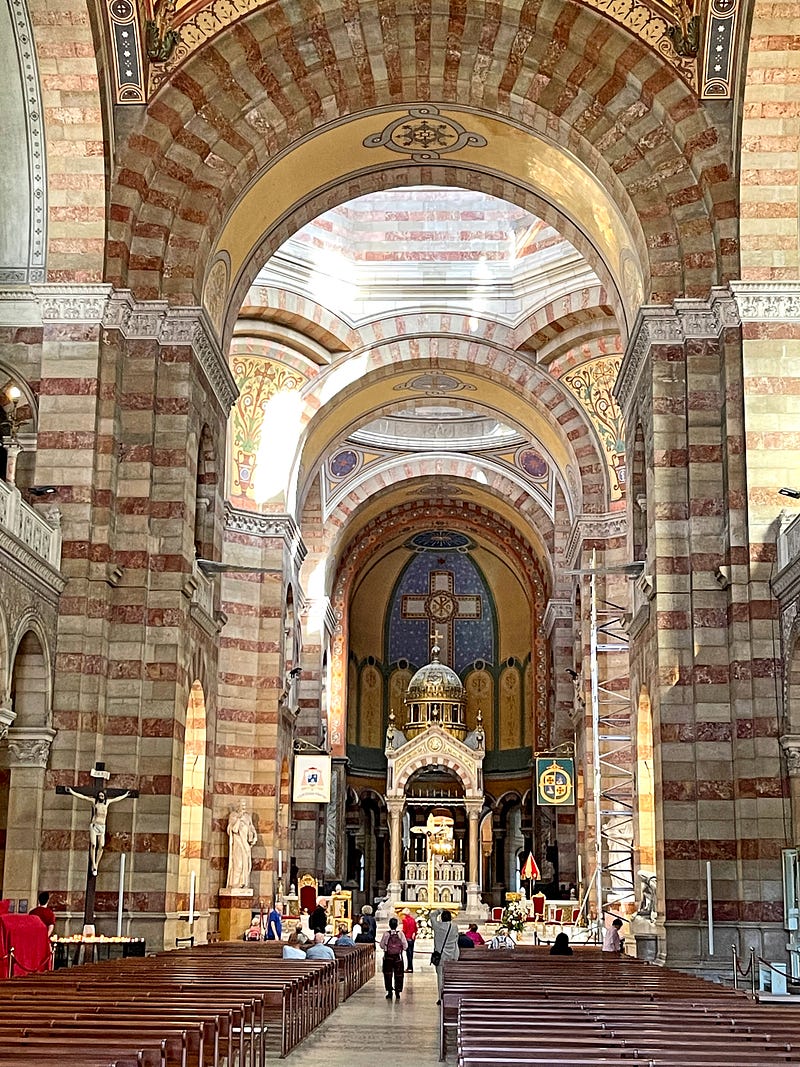
I knew we were close when we came to the monstrous Cathedrale La Major, an ornate 19th-century basilica that is the heart of the Marseille Archdiocese. It’s one of the largest cathedrals in the world and is the same dimensions as St. Peter’s Basilica in Vatican City. The center dome is 70 meters high and the exterior’s black, green, and white striping are made with the finest stones from Italy like Carrara Marble.
As we left the church I needed my phone’s GPS to help me find what I was looking for. Le Panier is a series of narrow, hilly streets that all come together in neighborhood squares, like the spokes of a wheel.
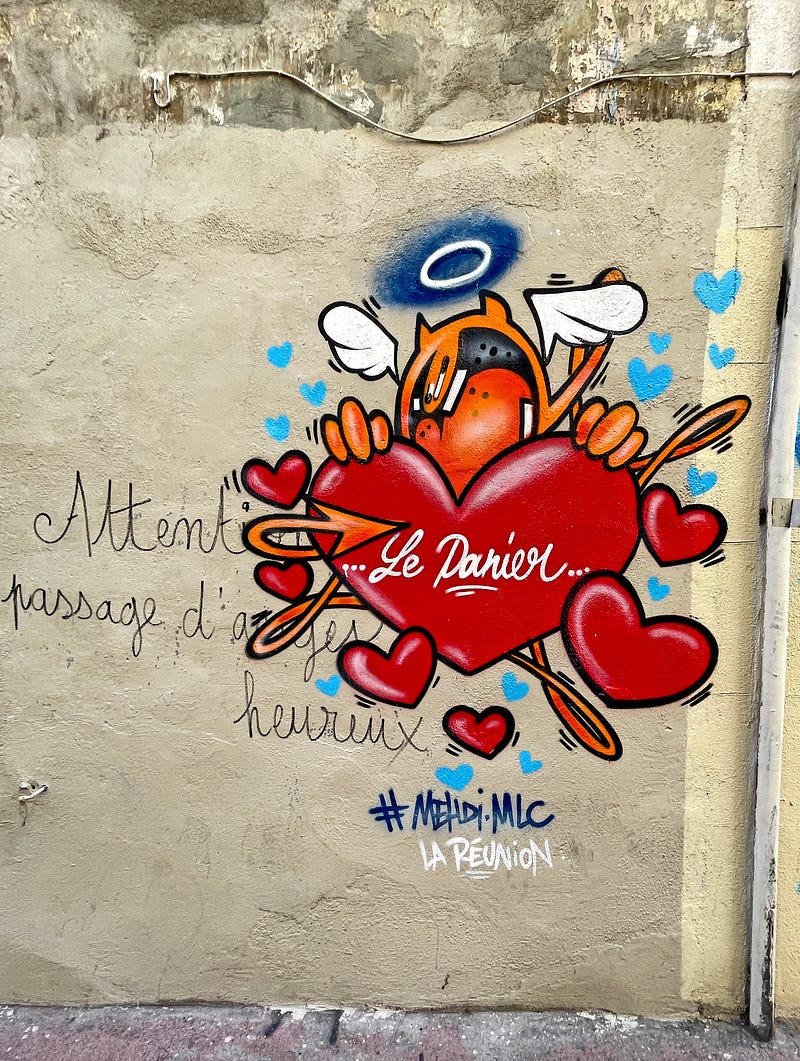
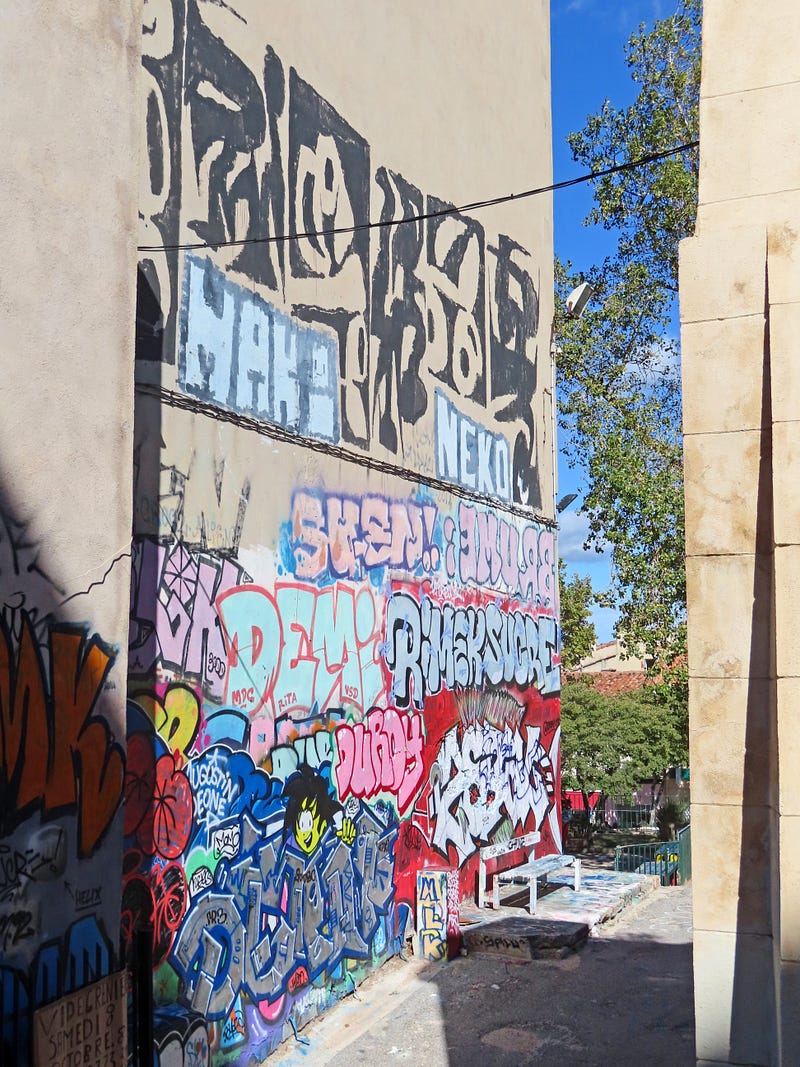
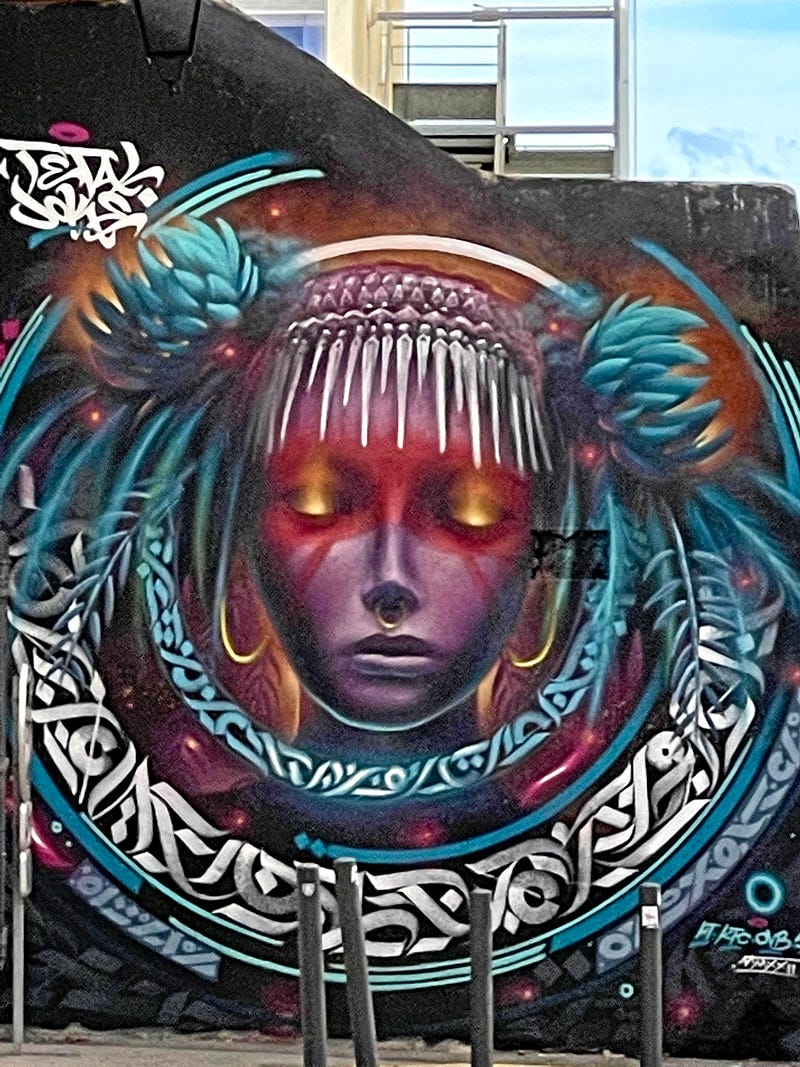
Panier is French for basket and the tie that binds this Bohemian community together is its street art, with the colorful stories from immigrants spraypainted across its walls. I ran from one design to the next, like an art aficionado set loose in a famous art museum.
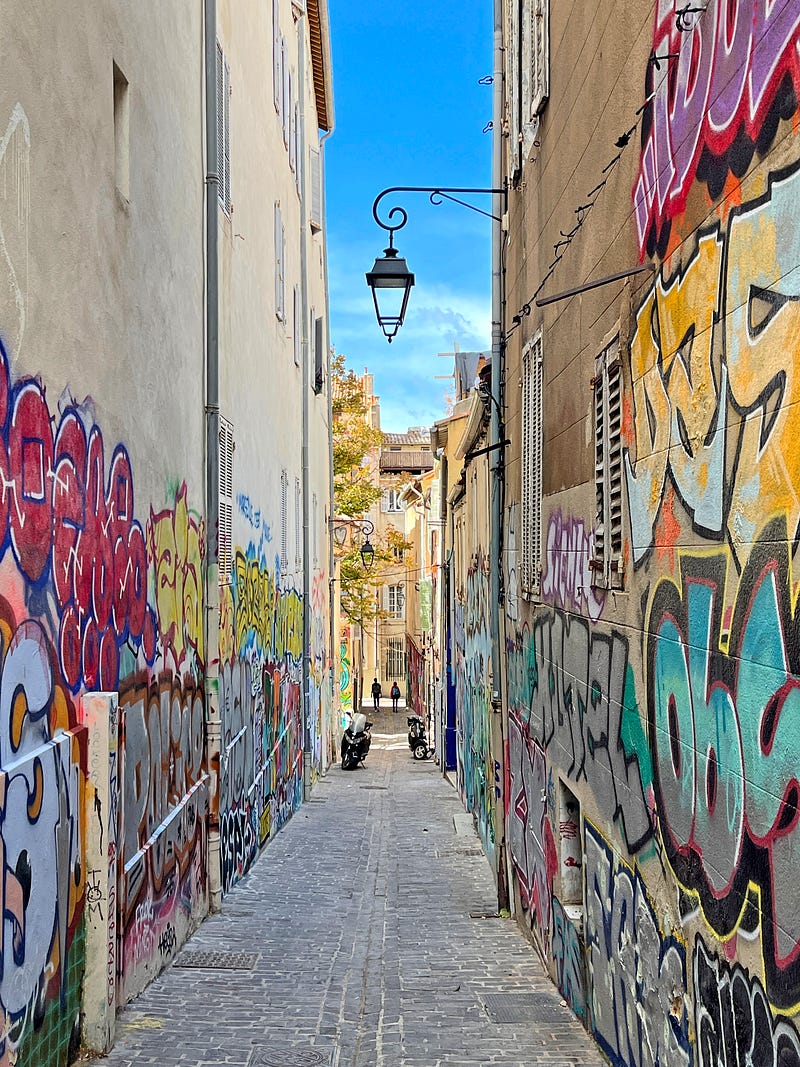
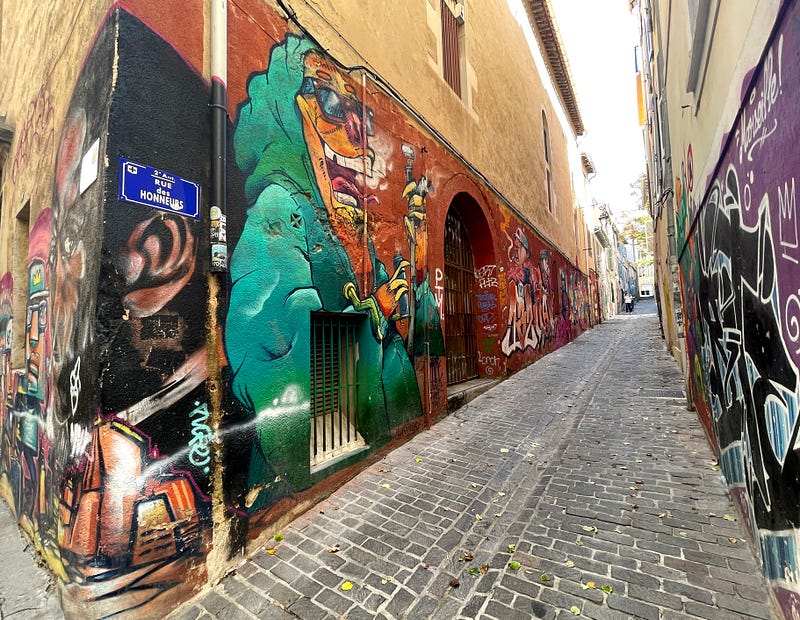
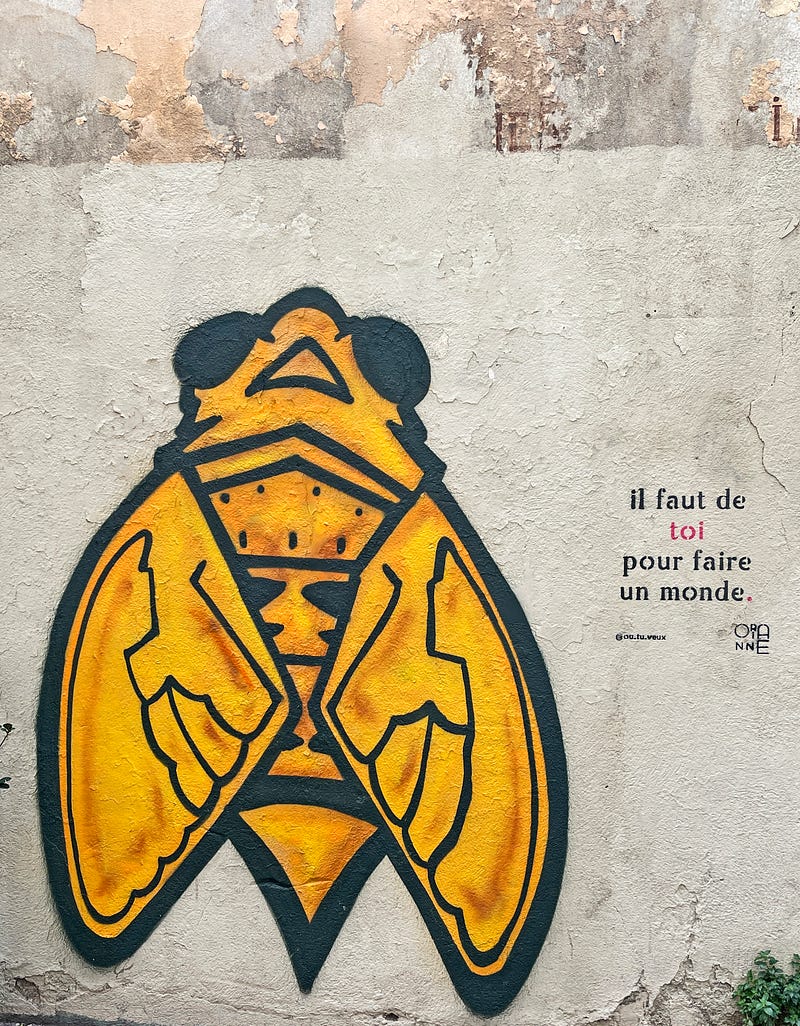
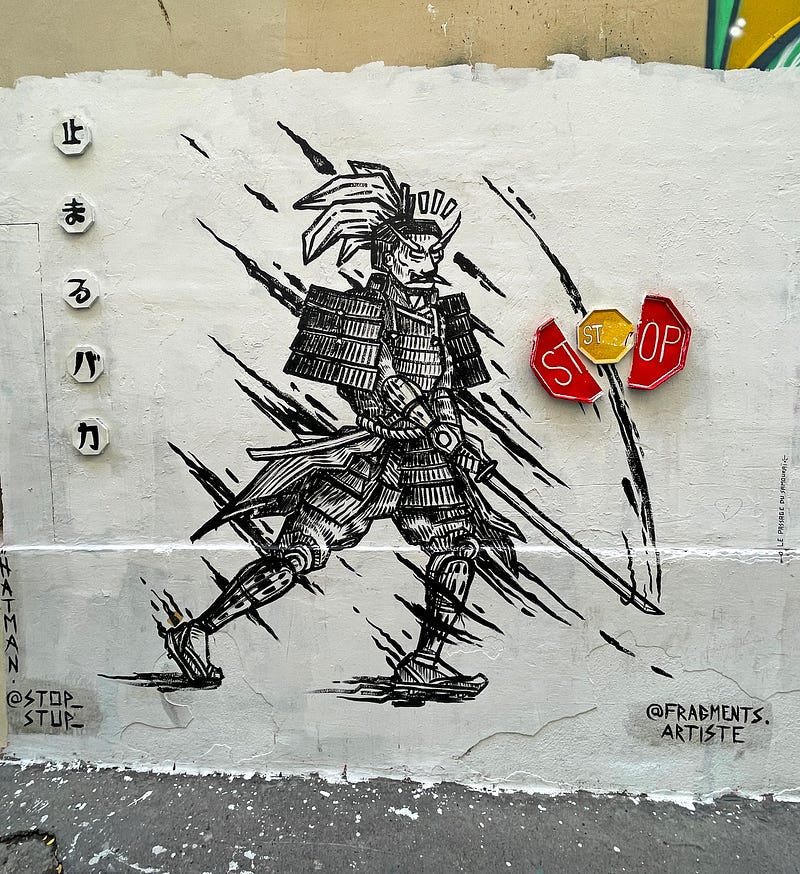
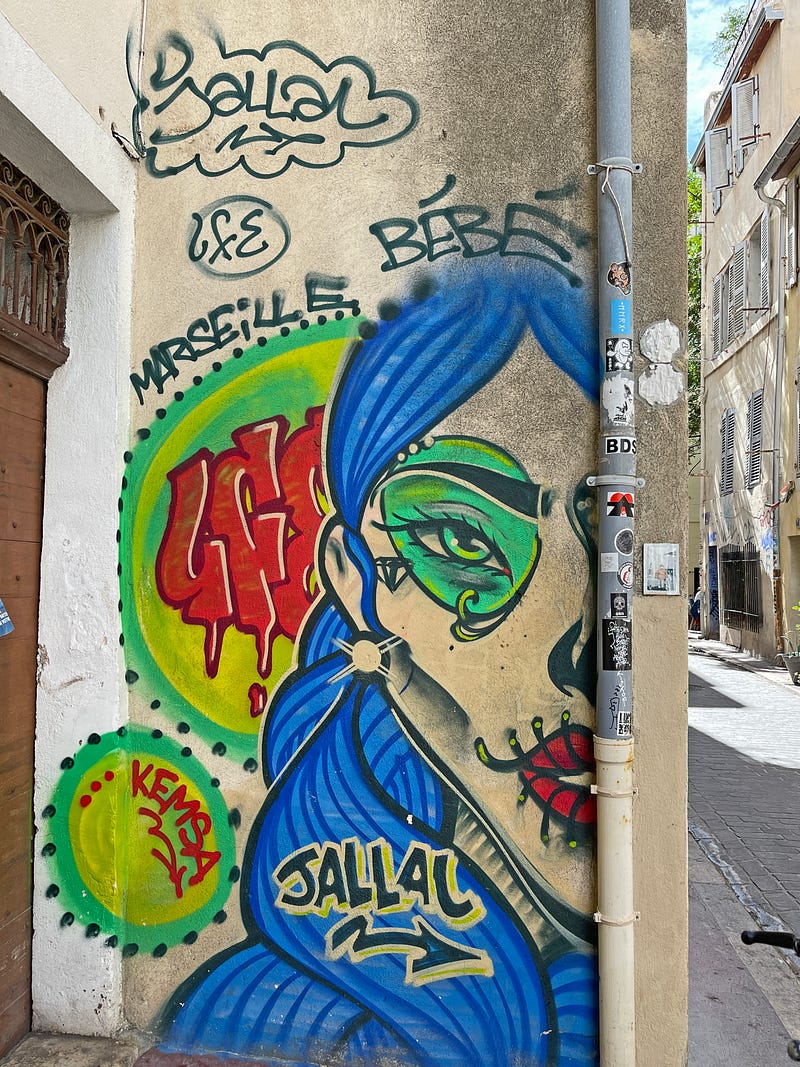
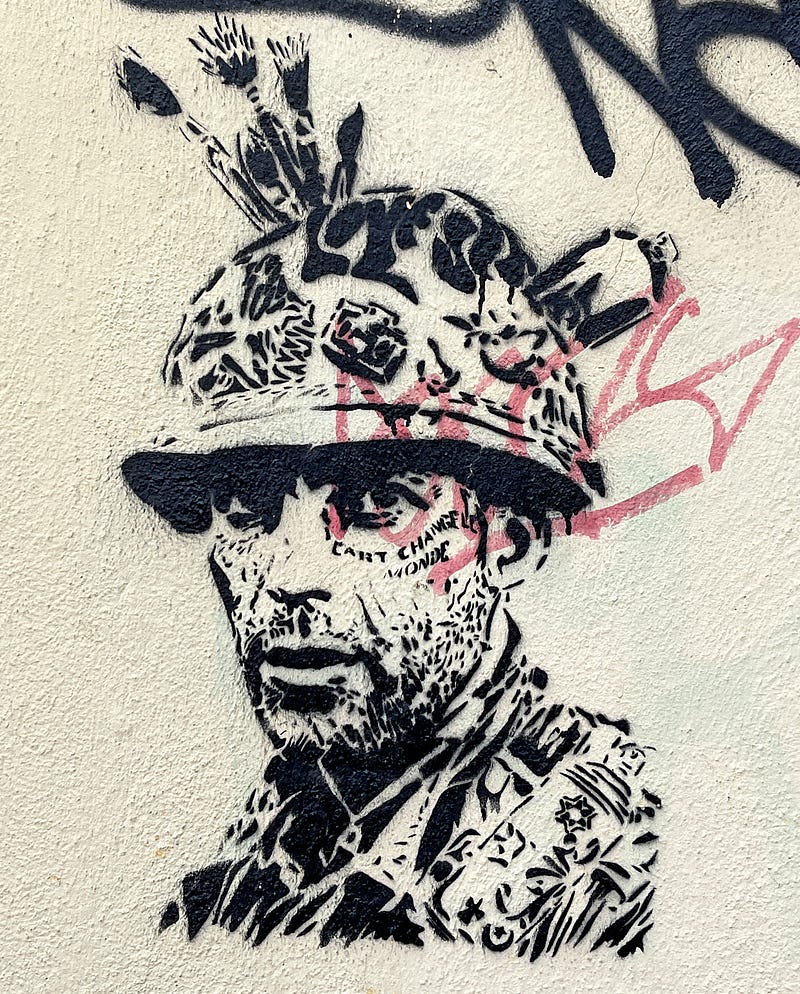
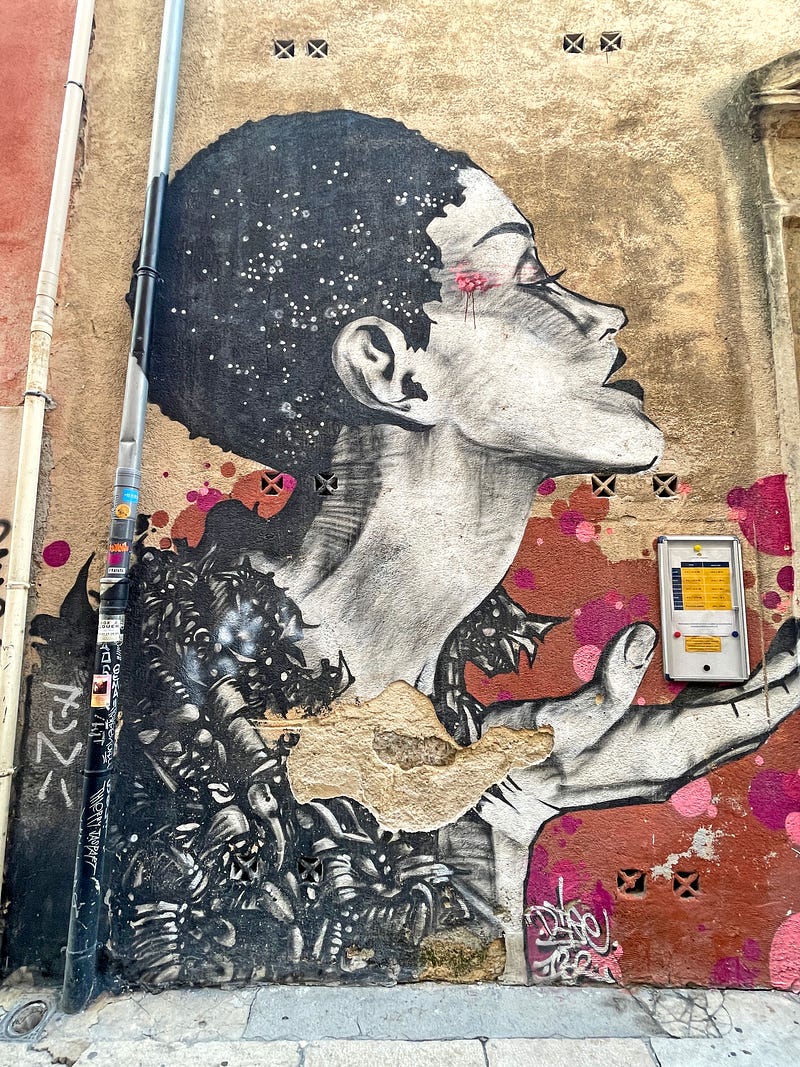
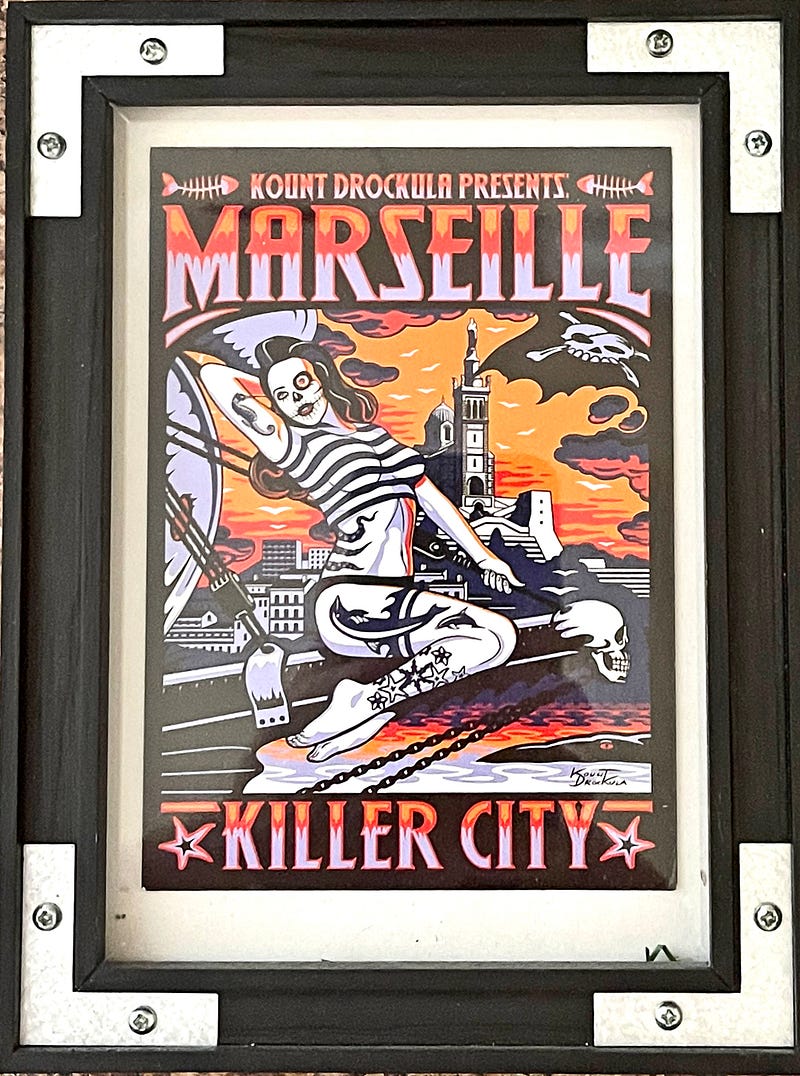
One of the first places we found was the UndartGround Gallery, which is a shop/gallery displaying the works of many of the neighborhood’s most famous street artists. I could have come home with enough art to plaster my walls, but I showed restraint and bought just one small piece that I have framed and sitting in my living room.
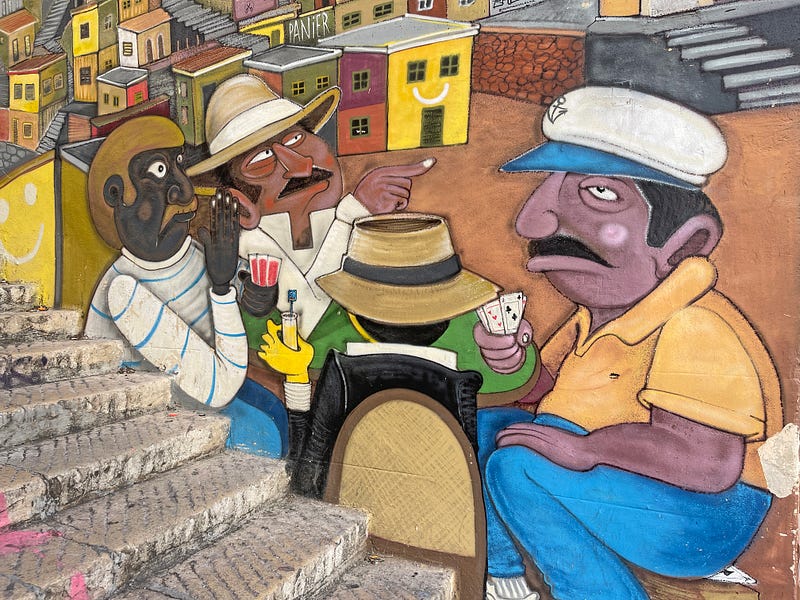
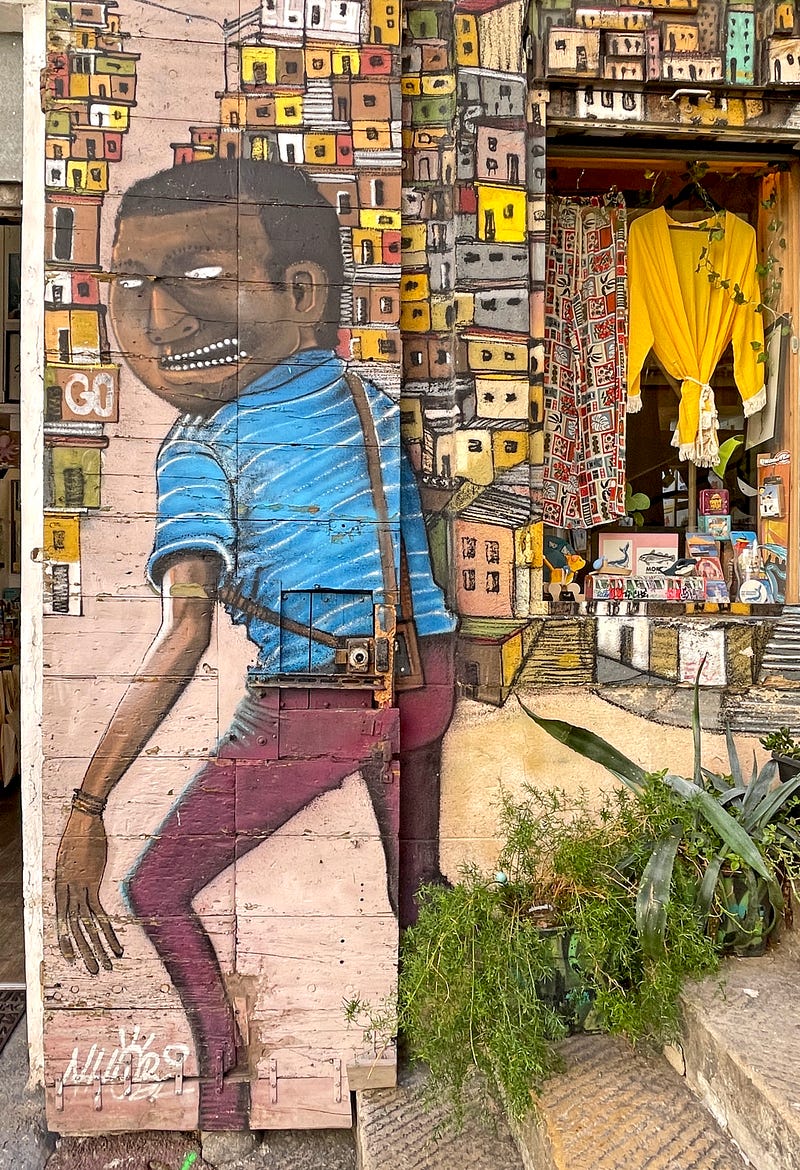
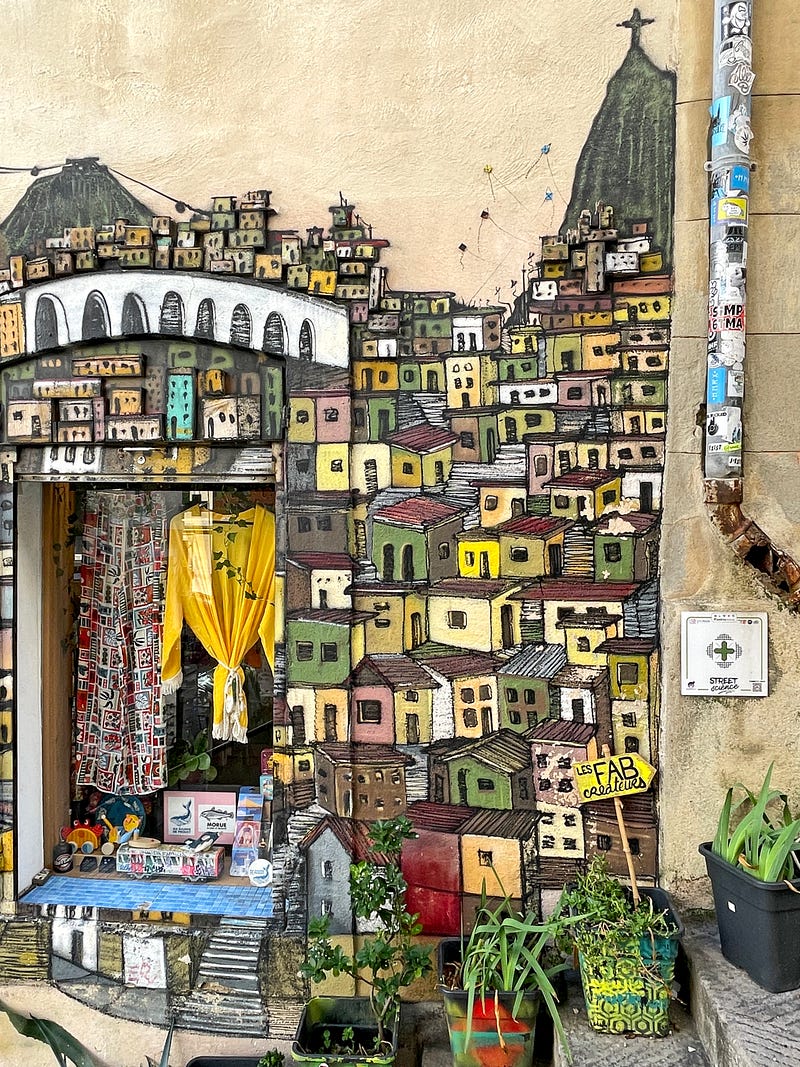
We lucked out when we found an outdoor cafe, Bar des 13 Coins, for lunch just before the lunch crowd arrived. A juicy burger (the best I have ever eaten) and a cold beer hit the spot, plus we had a front-row seat to a busy little square surrounded by street art. There was even a narrow alley off the square that was lined with paintings. A local artist was using the alley as his personal gallery.
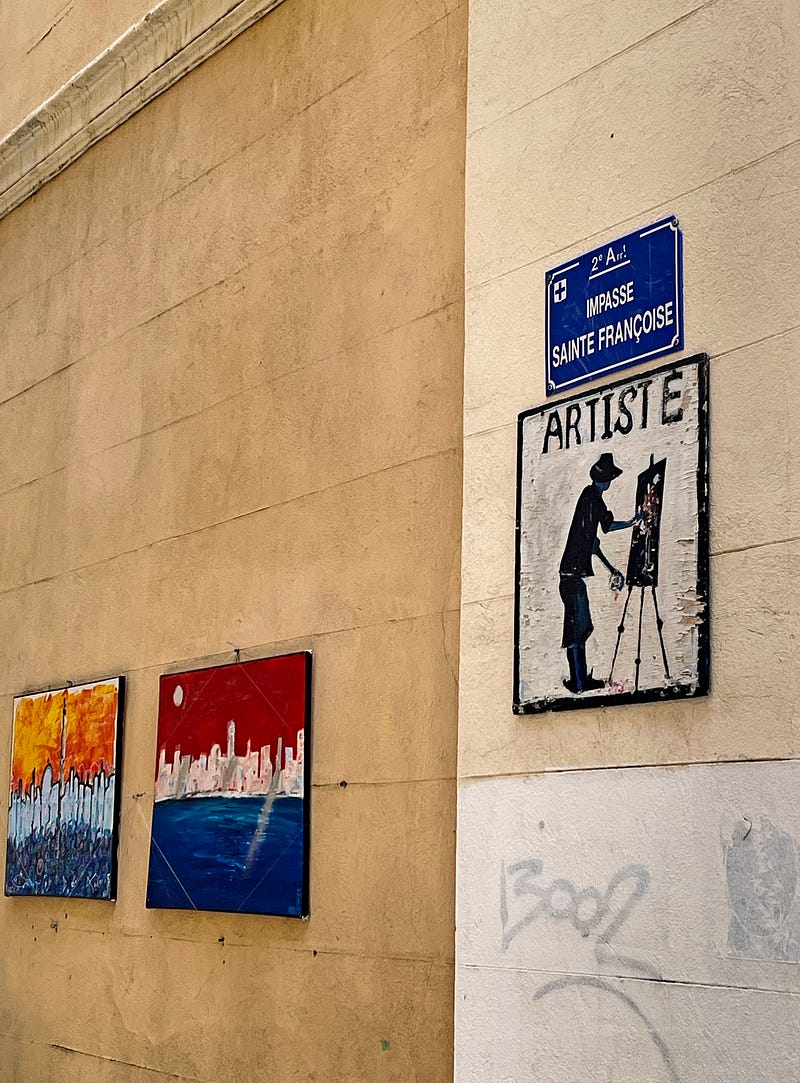
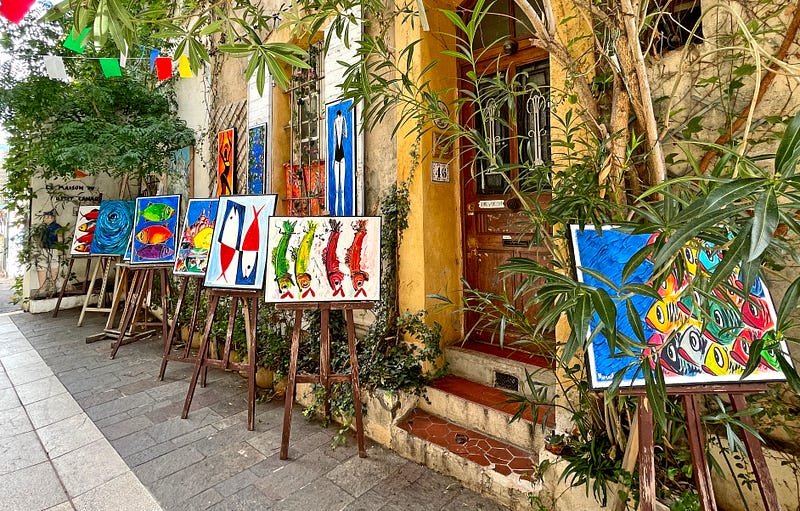
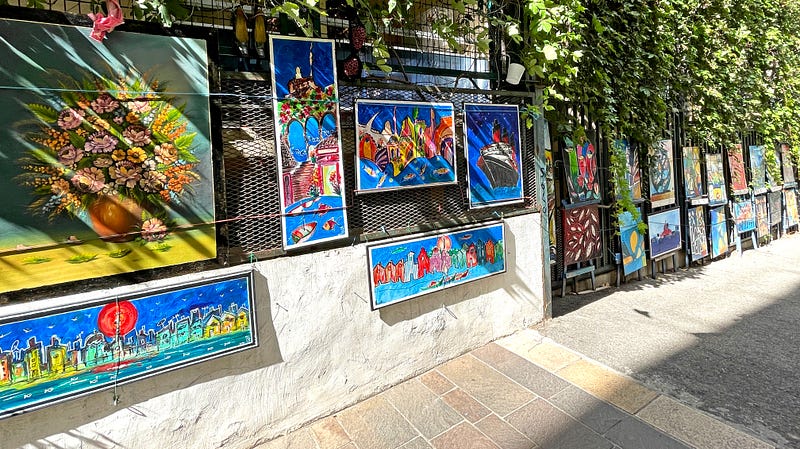
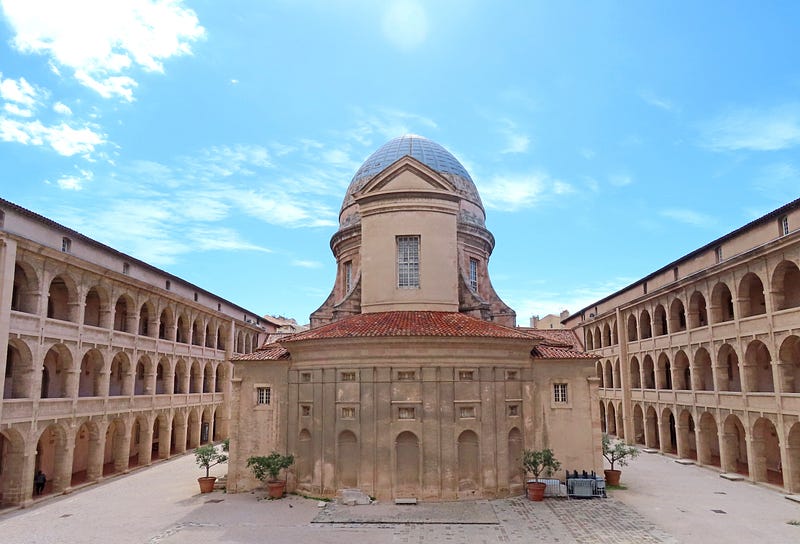
As we wandered the narrow colorful streets we came to a large square with a large sandstone structure. La Vieille Charite is a 17th-century institution to house the destitute. It’s been converted into an archeology and art museum with a cinema, but when we visited most of it wasn’t open although we were allowed to wander around the site.
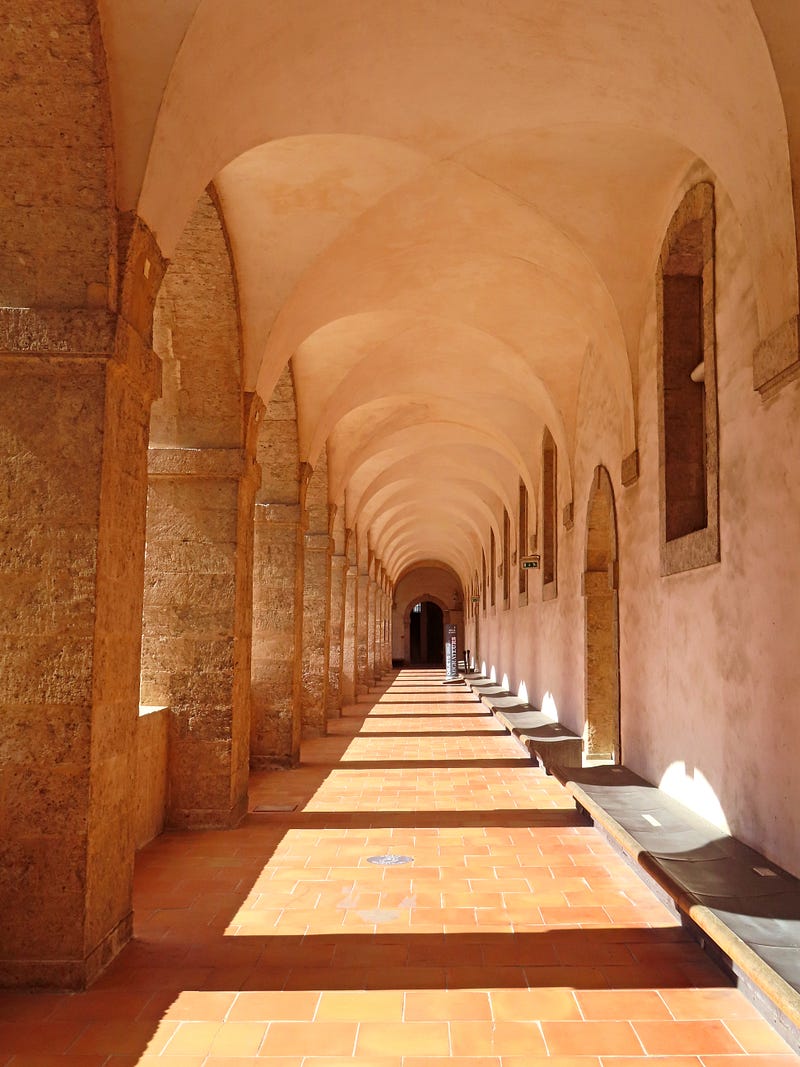
Le Panier was a highlight of my visit to Marseille. It softened some of the rough edges of the city and its street art showed off some of the creativity and humor that help to define the people who live there. I would go back to Marseille again now that I know what to expect and where to find the good stuff.
Thank you for reading. Not far from Marseille is Arles. I found another city that celebrates its art, and especially its most famous resident, Vincent Van Gogh.


