
In Search Of Van Gogh In Arles
Arles most famous resident left his mark across the city
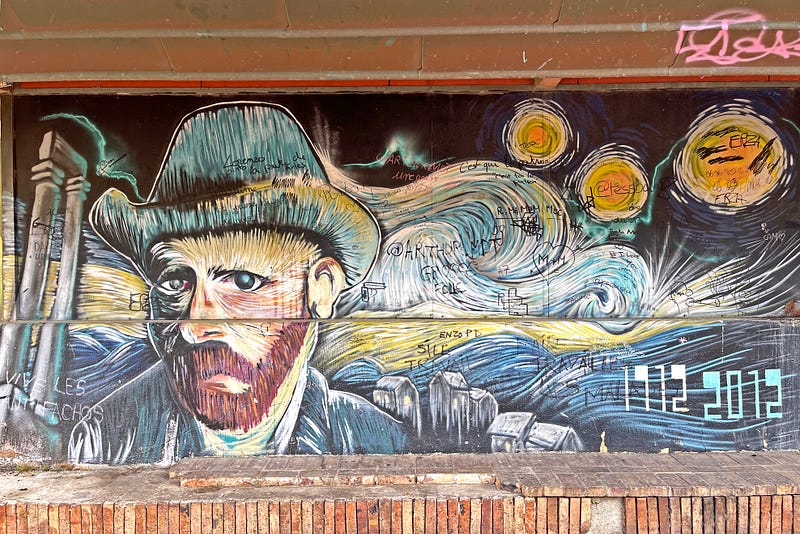
Vincent Van Gogh is Arles’ most famous resident.
He lived there for just over a year from February 1888 to May 1889 — 444 days. But it was a very important year in his life. Not only did he produce more than 200 paintings (including many of his most famous masterpieces like Sunflowers) plus 100 drawings and watercolors, but he also had a serious mental health breakdown that a year after leaving Arles, resulted in his death.
Arles is the city where he famously cut off part of his ear and presented it to a cleaning woman at a brothel. He had just had a major blowup with his friend Paul Gaugin. The pair had been living together in the famous “yellow house” (which has since been demolished). They drank heavily and worked feverishly at their art, churning out new paintings every couple of days. After only a week or so after Gaugin arrived, the pair had a confrontation and a furious Van Gogh sliced off “part” of his ear with a razor. (There’s still nothing confirmed if it was part or all of his left ear, that’s still contentious.)
After his self-mutilation, he was admitted to the hospital in Arles where he was allowed to set up an easel in the courtyard to continue creating his artwork. He later voluntarily moved to Saint-Paul-De-Mausole, an asylum in Saint-Rémy-de-Provence. A year after leaving Arles he moved to Auberge Ravoux in Auvers-sur-Oise north of Paris where Van Gogh committed suicide by shooting himself in the chest. He was entombed in that city but Arles has been forever connected to the artist’s biography.
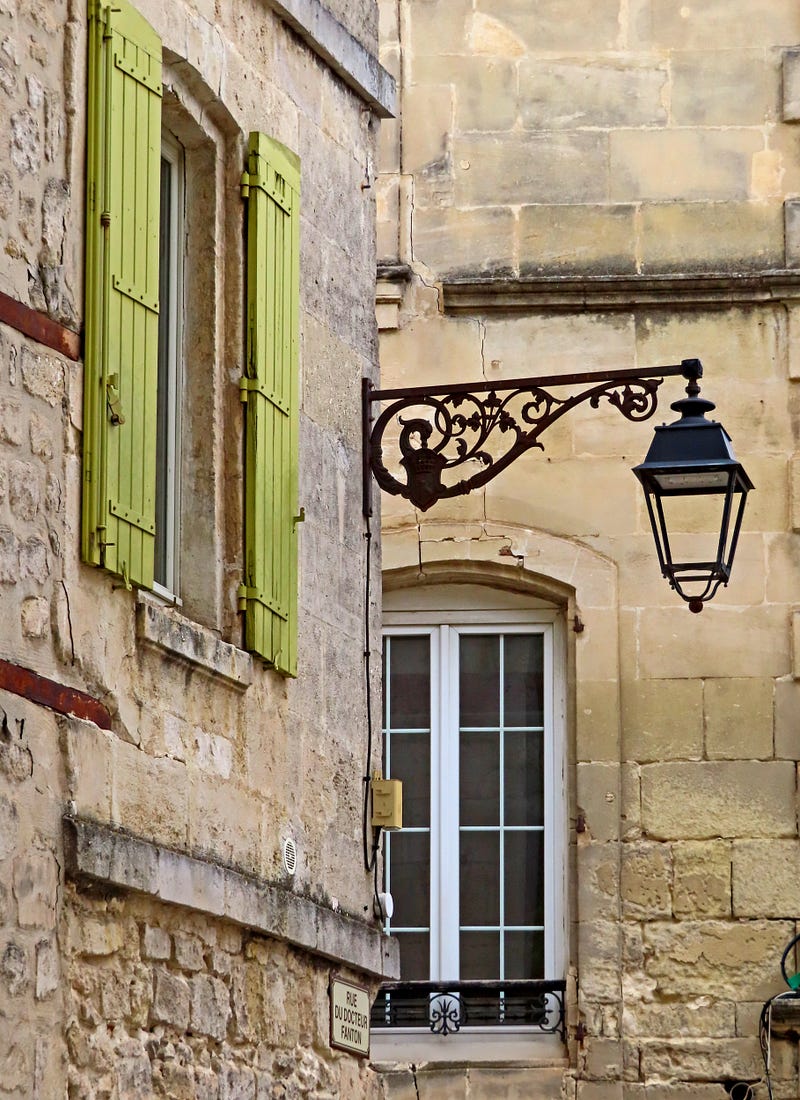
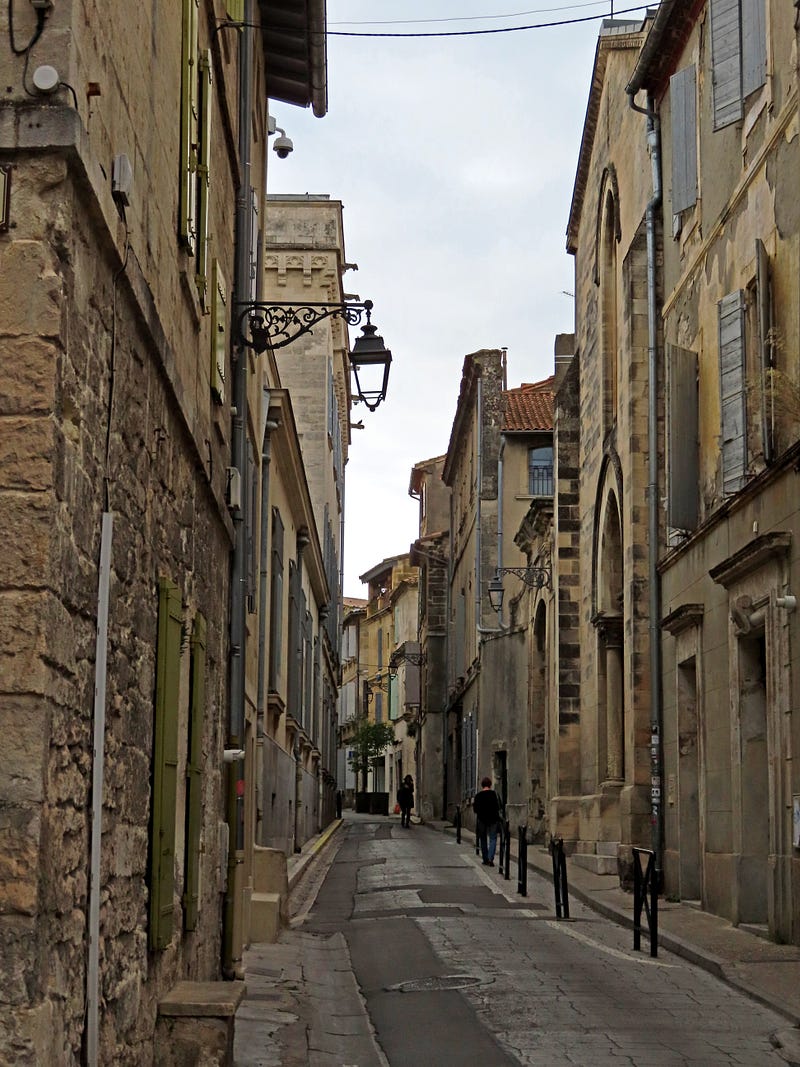
Arles is an ancient Roman city in southern France (it was once a Roman provincial capital), bisected by the mighty Rhone River. There is still evidence of the city’s Roman history, including the massive amphitheater that resembles the Coliseum in Rome. But it was Van Gogh, one of my favorite artists, who brought me to this city. So as my friend and I set out to explore Arles, I was on the lookout for anything connected to Van Gogh, either the subjects he painted or the places and things he may have seen.
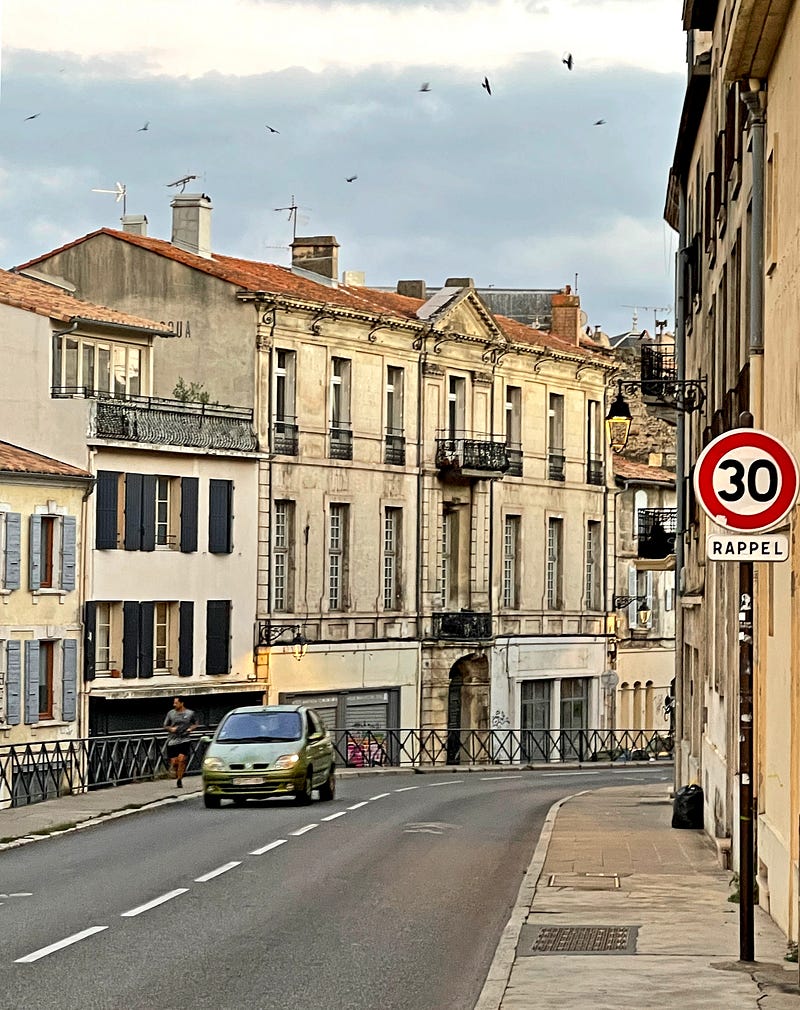
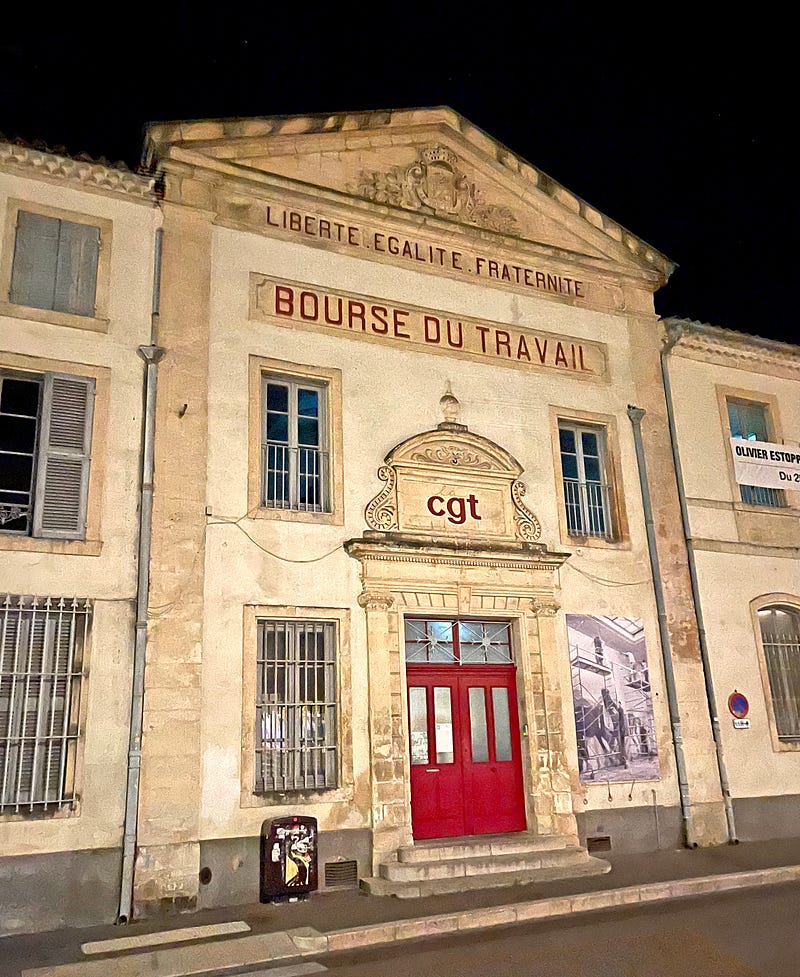
With only about an hour of sunlight remaining when we arrived in Arles, we headed for the Rhone River bank for a look at the same area where Van Gogh was focused when he painted Starry Night over the Rhone.
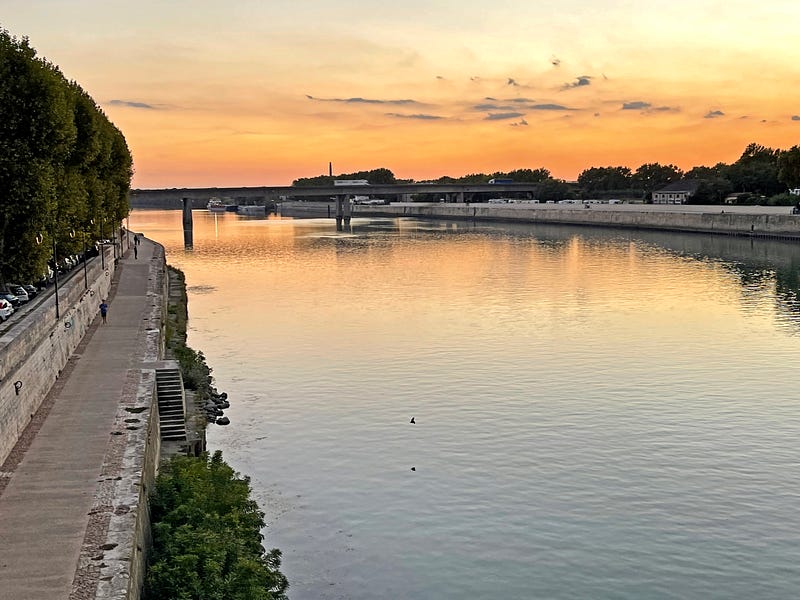
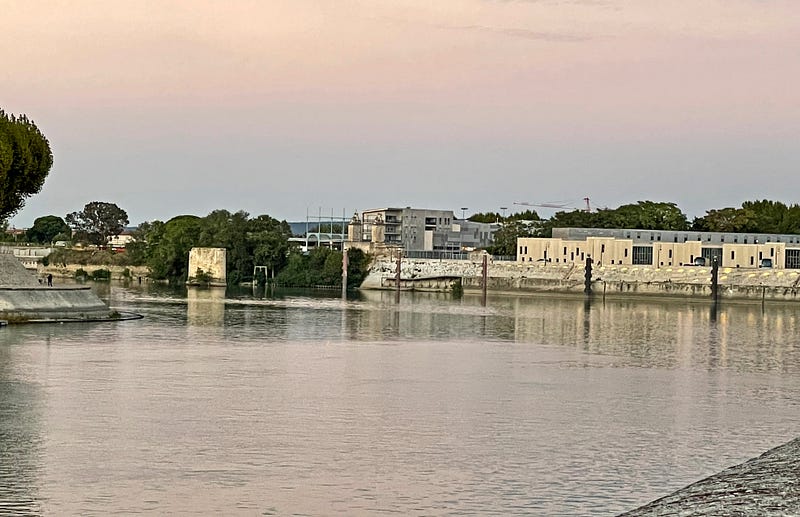
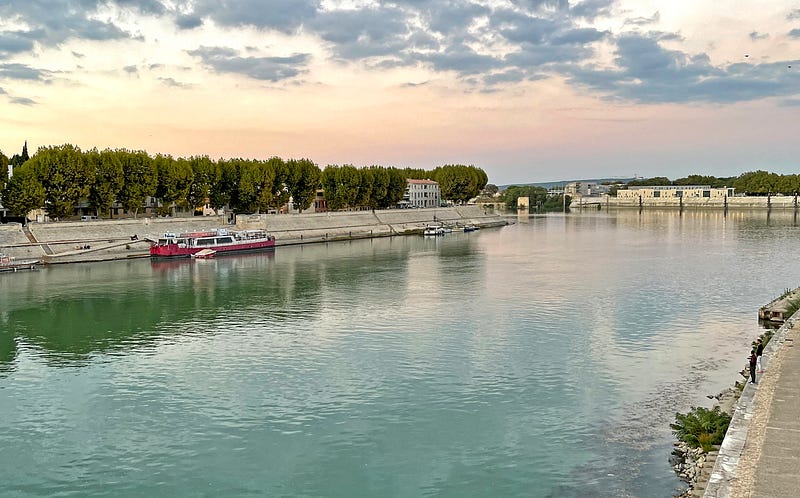
The next day we had only a few hours before we had to leave but I planned to make the most of it, seeing as much of the city as I could squeeze in and try to discover more about its connections to Van Gogh.
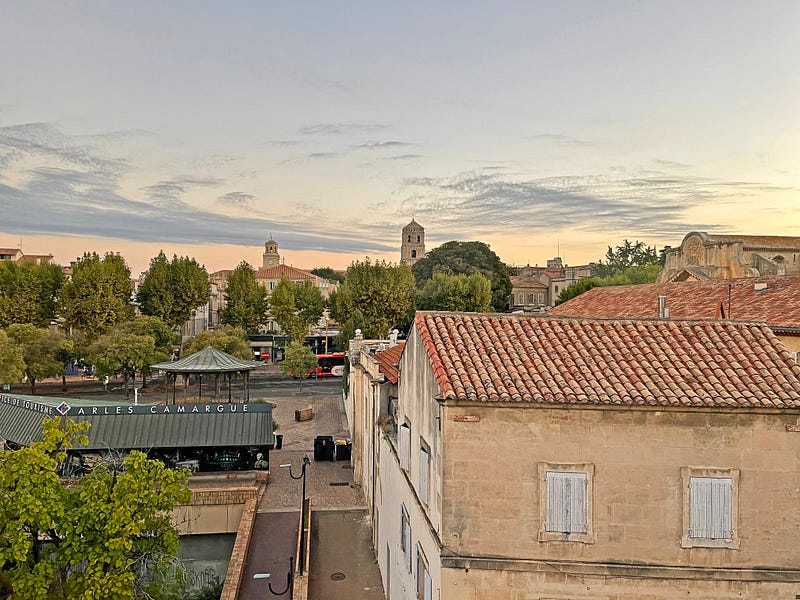
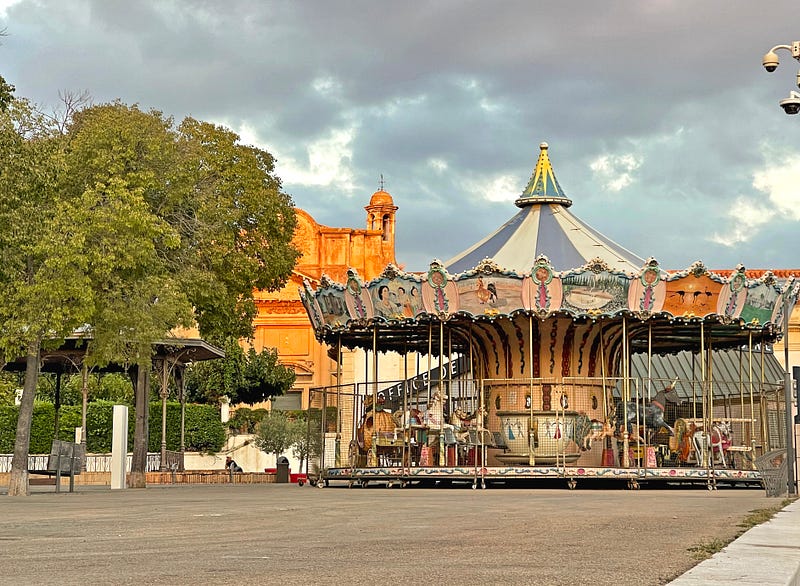
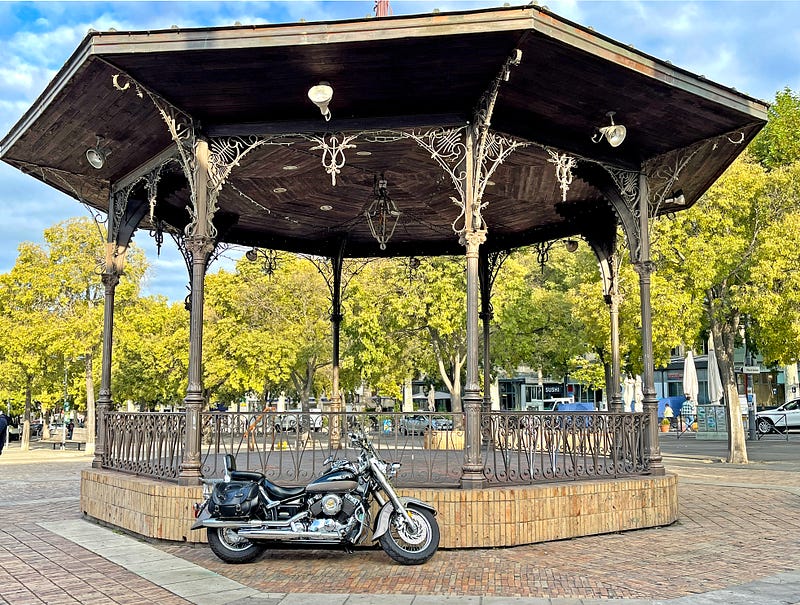
The next morning we headed north from our hotel in the heart of Old Arles. Right across the street is a town square with a rotunda in the center of it and some street art including the one of Van Gogh (at the top of this article). It also featured a carousel, like just about every other town and city we have visited in France.
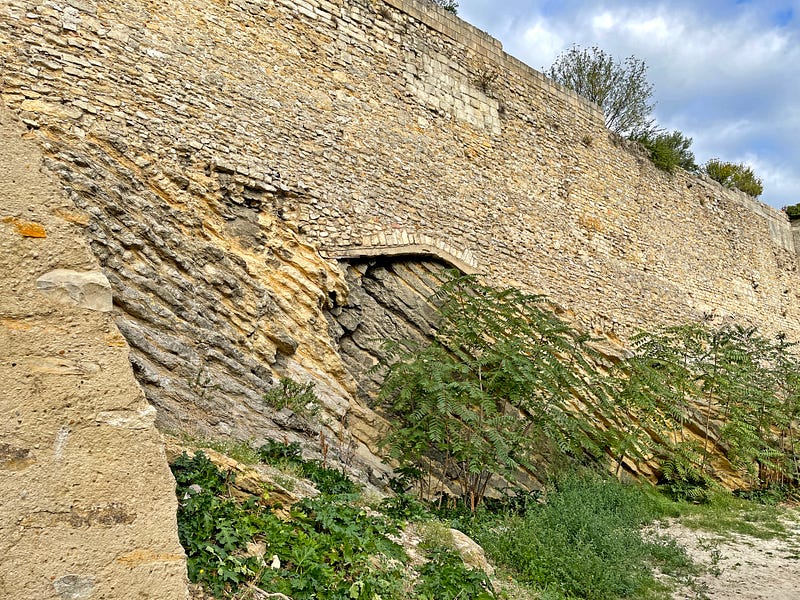
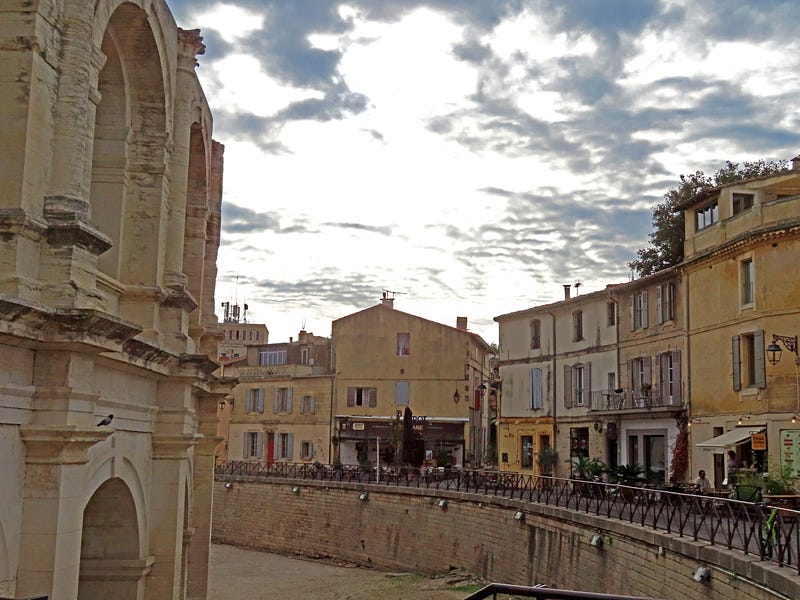
As we moved north we came right up against the massive city walls and the ramparts which surround part of the old town and the Arles Amphitheater site.
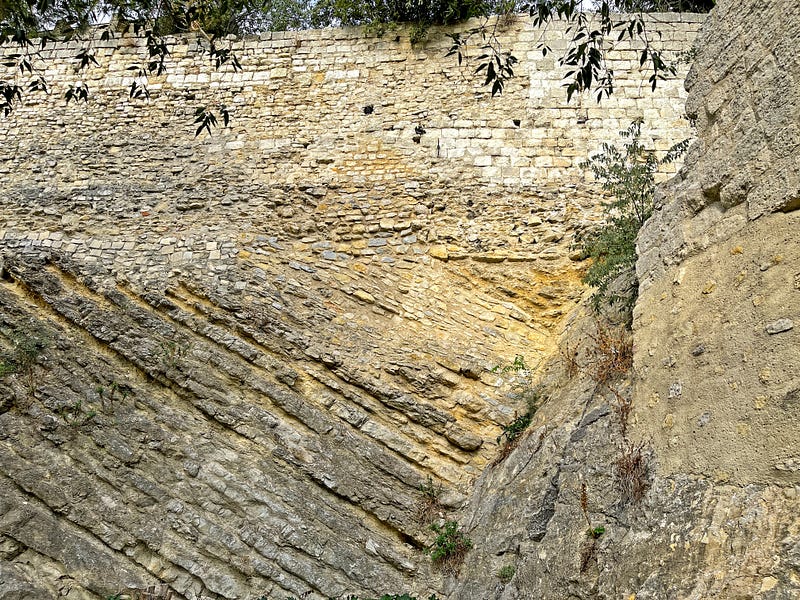
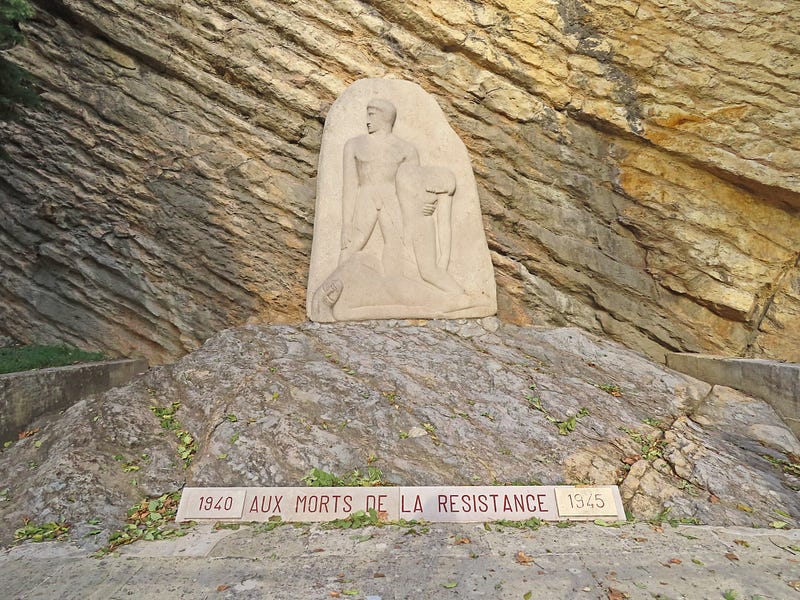
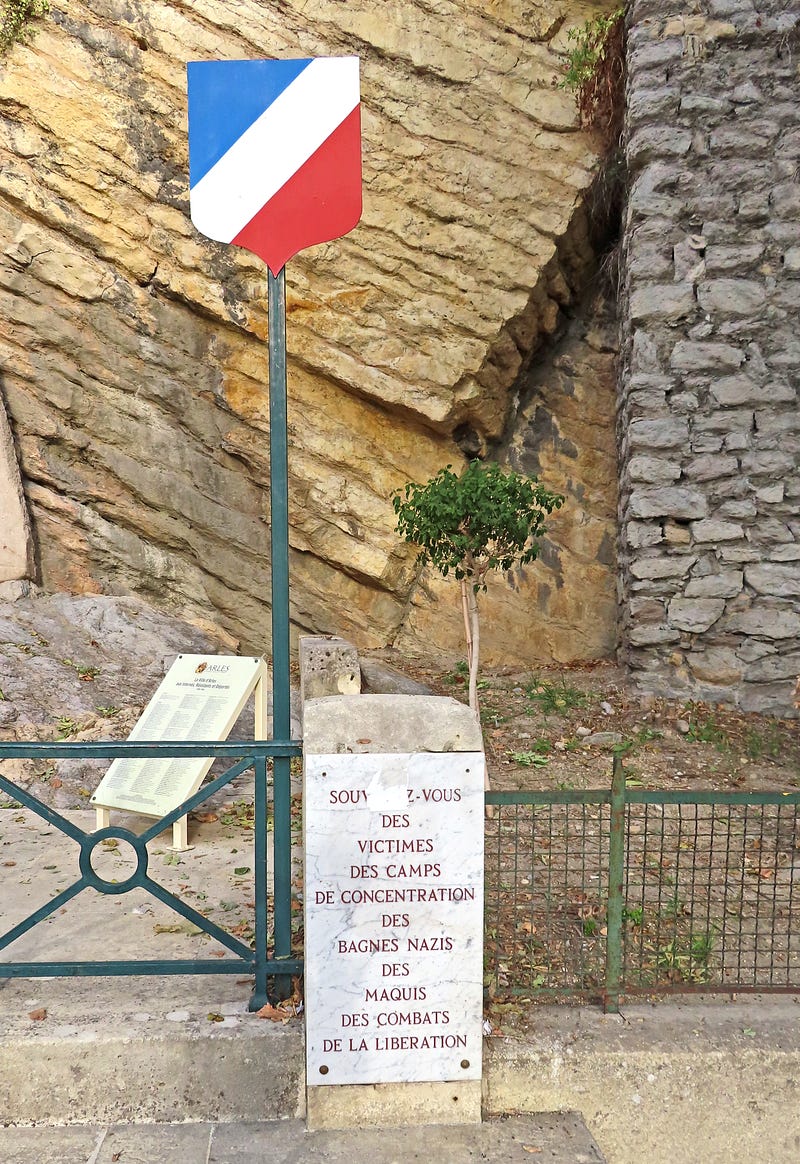
On one section of the stone wall was a sign marking a memorial to the victims of the Nazi Resistance from 1940 to 1945 and another sign paying tribute to the victims of the Concentration Camps.
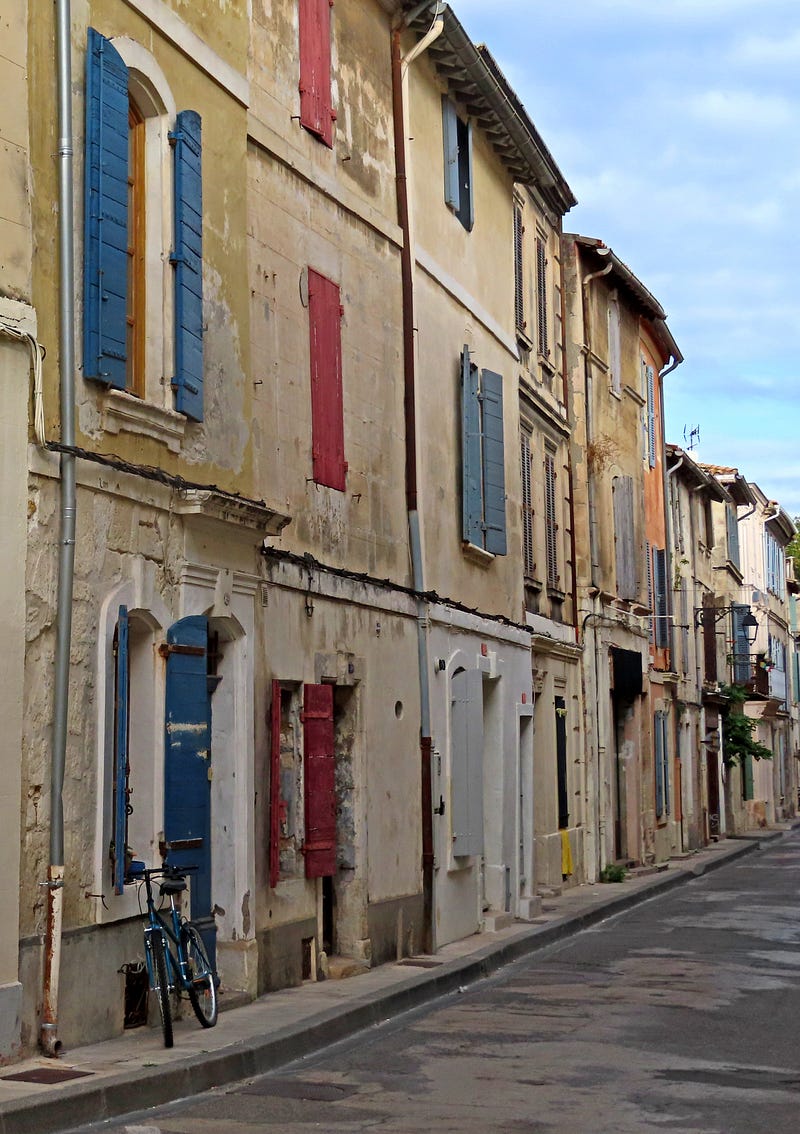
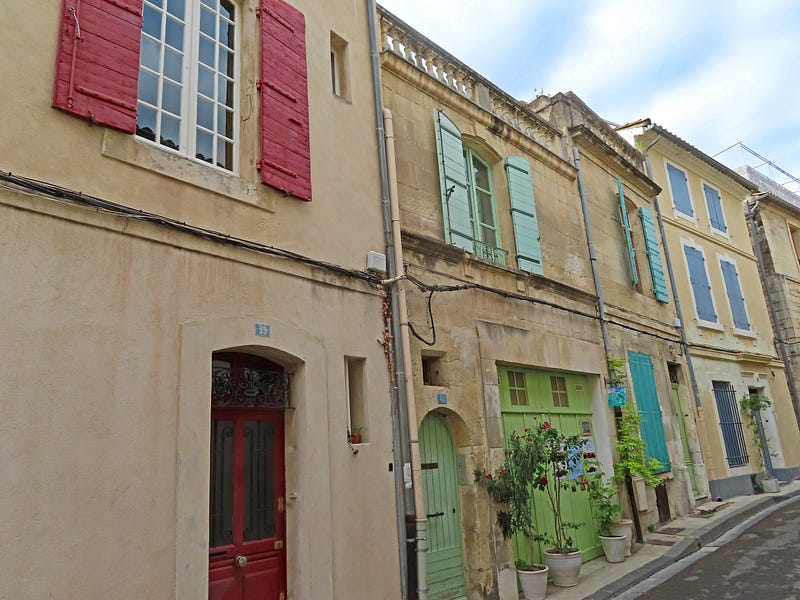
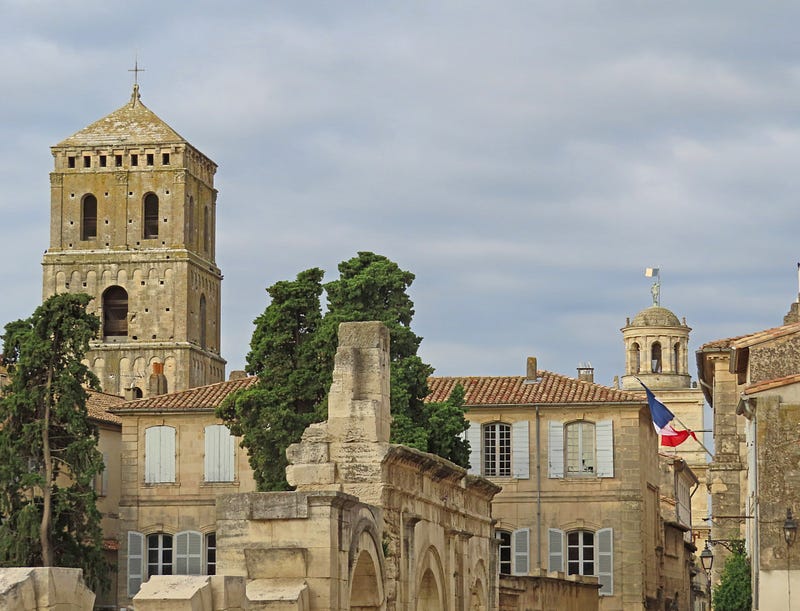
As we meandered our way through the streets, I was struck by what a beautiful city Arles is. The old wooden shutters are painted in lively pastel colors and its history is reflected in the homes and buildings in this part of the city.
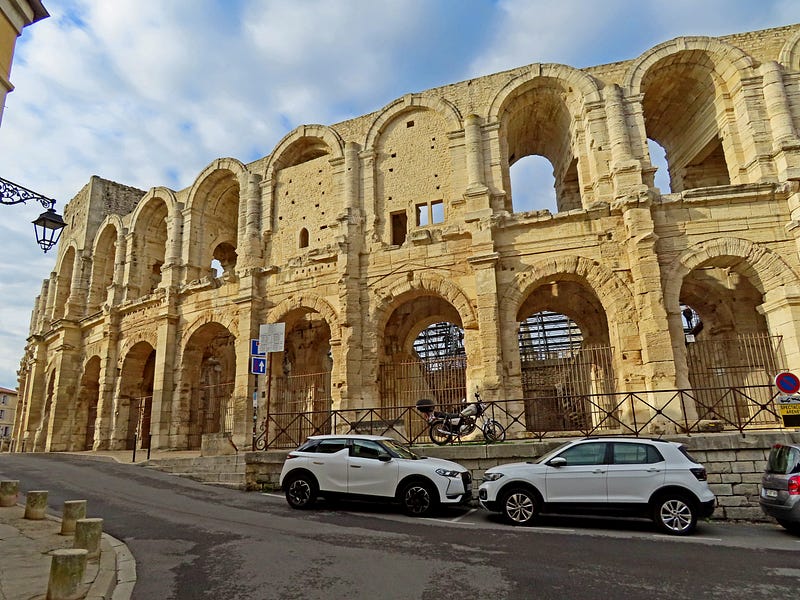
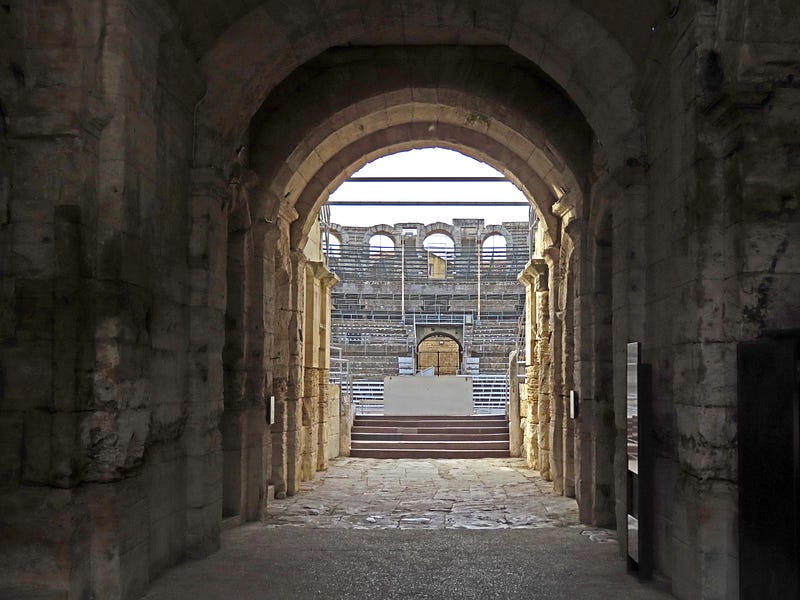
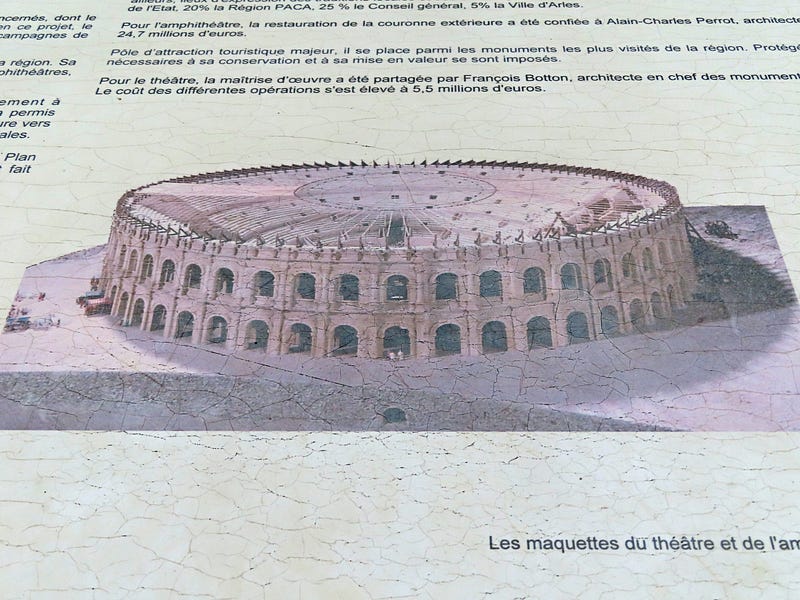
As we turned a corner we saw evidence of the city’s ancient history, the Amphitheatre.
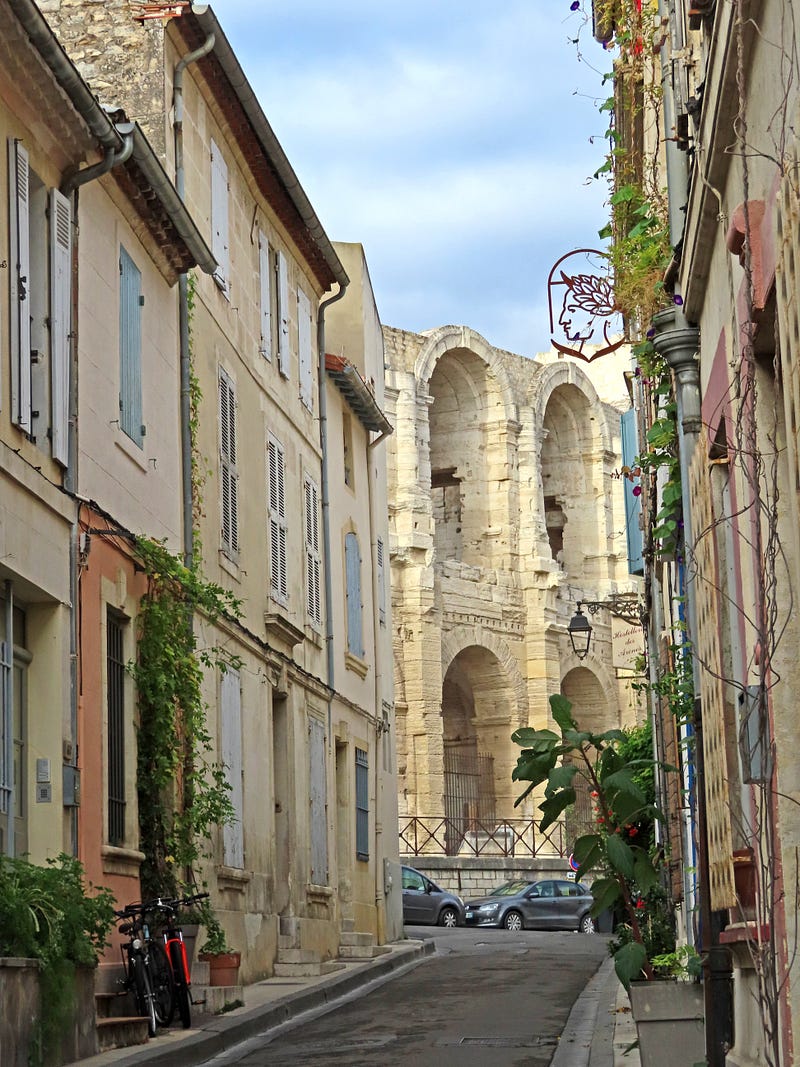
It’s an impressive sight but was undergoing renovations (as much of France seems to be doing). Because of that and time limitations, we decided to skip a tour inside and instead admired the massive structure from the outside.
As we headed down a side street we turned a corner and found ourselves in front of a large bright yellow cafe, draped in colorful plastic flowers. I knew that I had seen it before, and sure enough, there painted on the wall was, “Cafe Van Gogh”.
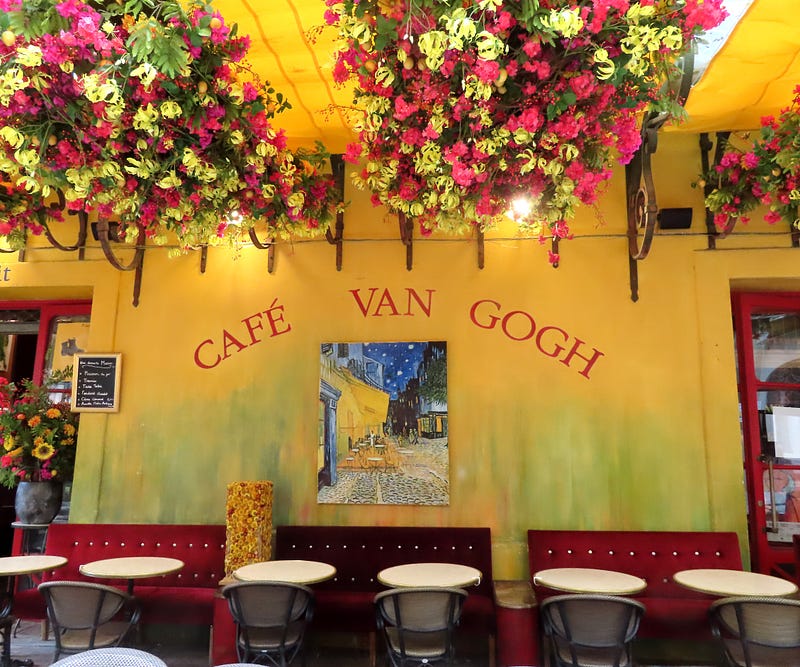
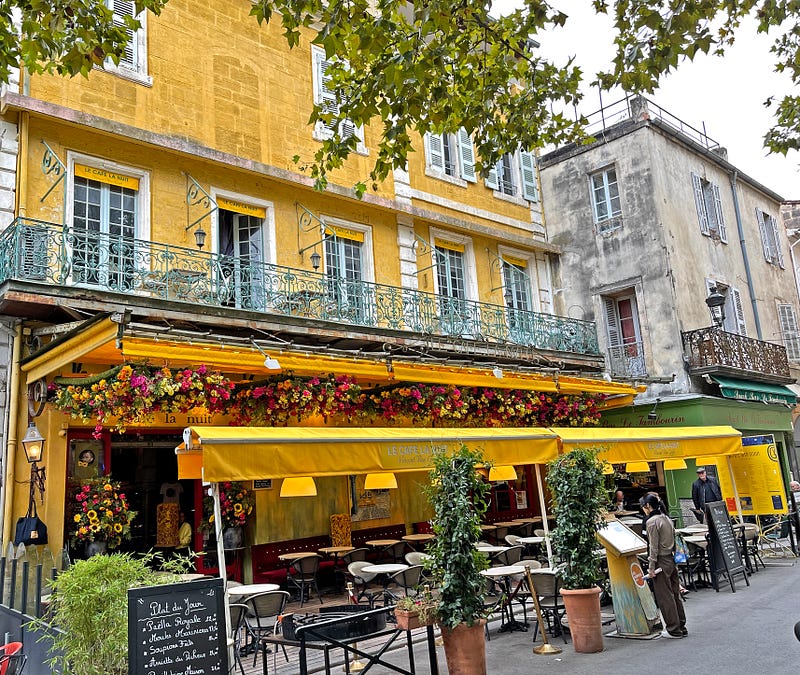
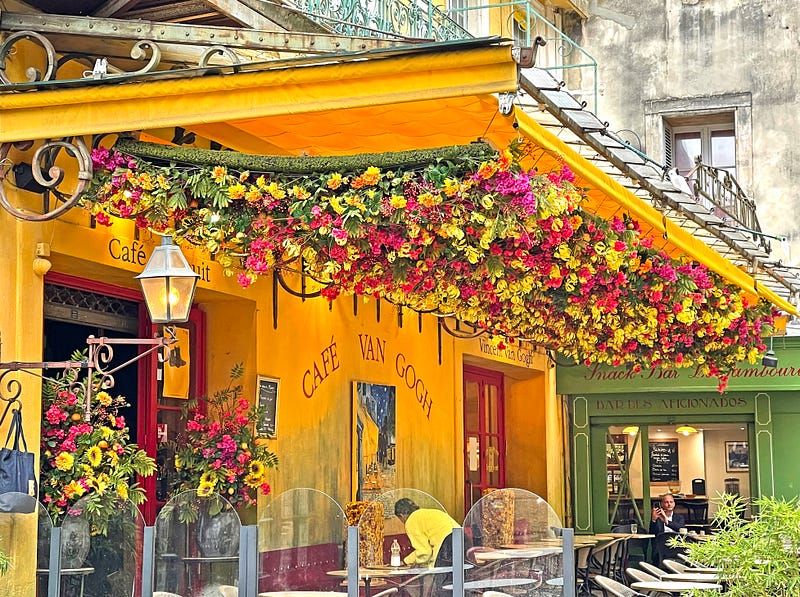
There was a plaque out front that explained,
Our restaurant is designated a historical monument since Vincent Van Gogh depicted it on one of his famous paintings, ‘Le Cafe de Nuit’ which became an essential reference for art and painting lovers. The masterpiece was realized between the 9th and 12th of September, 1888. According to Vincent Van Gogh this painting is the only one showing the night without any black color. Only blue, violet, green, light ochre, and lime green colors were used.
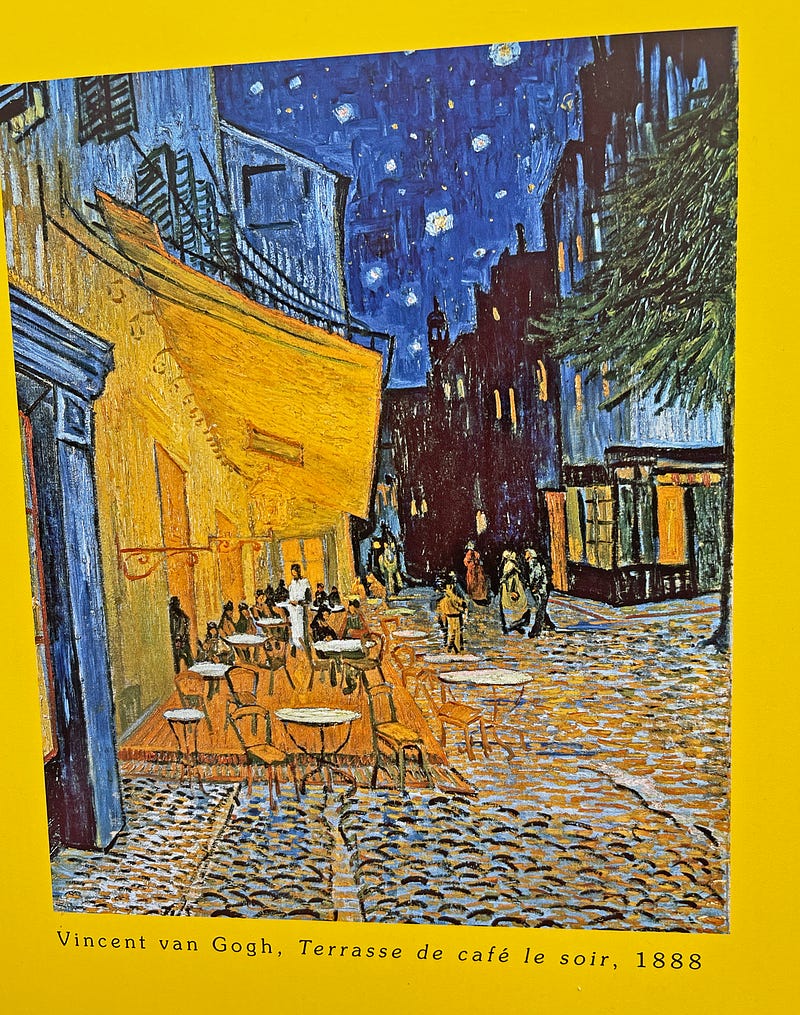
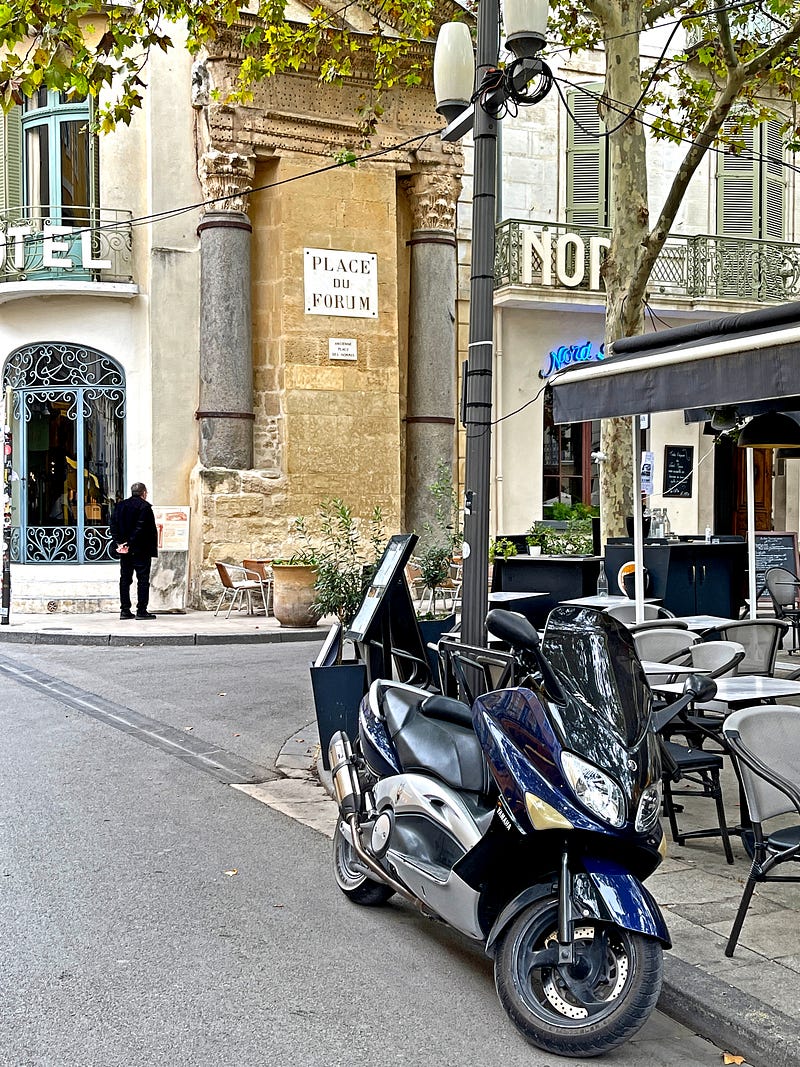
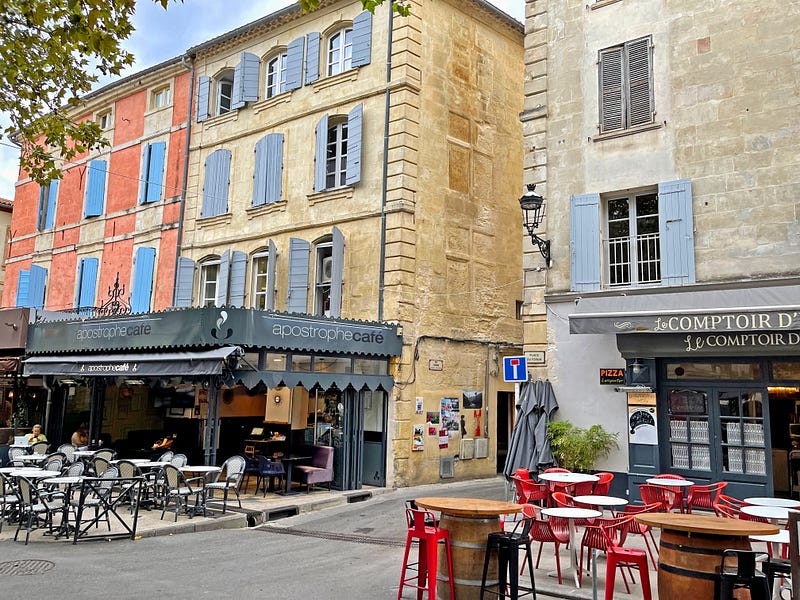
While the cafe was interesting I was just as interested in the other buildings around the Place du Forum, which Van Gogh would have looked at as well, with his critical eye, to maybe include in one of his future artworks.
Just a block or so up the road we came upon a large building with a courtyard entrance that looked intriguing. As I got closer I saw that this was the old Hospital of Arles, the Hôtel-Dieu-Saint-Espirit, where Van Gogh stayed twice following his breakdown. It is now a community center and open to the public.
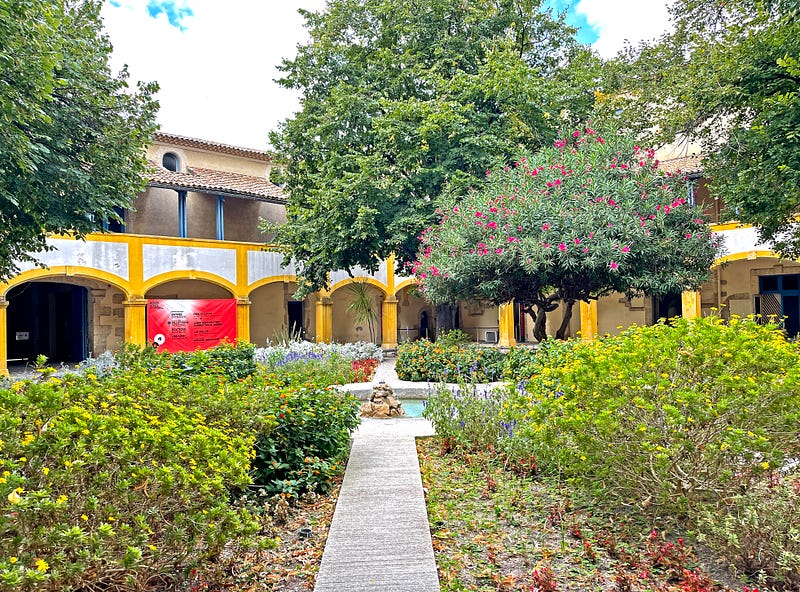
As we entered the courtyard it was immediately recognizable. There was the yellow and white wooden colonnaded breezeway framing the central garden where a simple circular concrete water fountain sat in the center. It was like we had walked into one of his most famous paintings. The courtyard looks virtually the same as it did in the late 19th century, only more overgrown. The courtyard is now referred to as Espace Van Gogh.
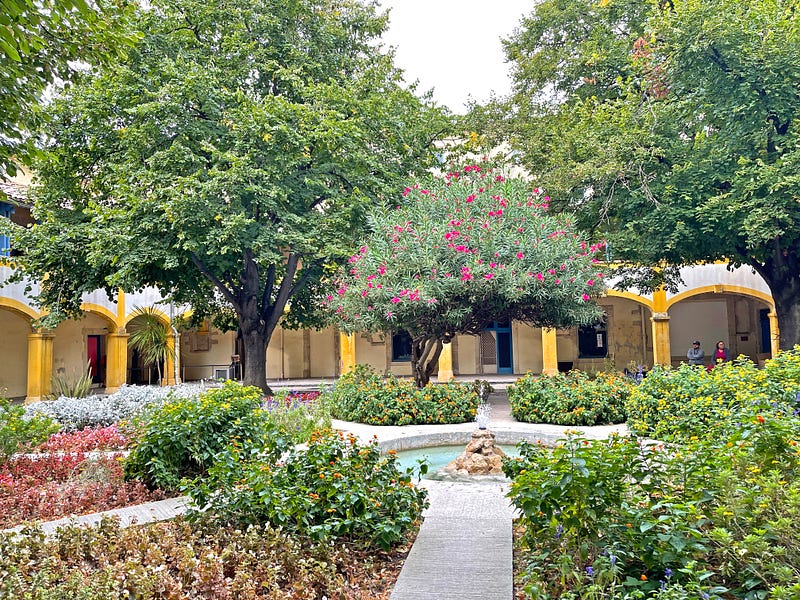
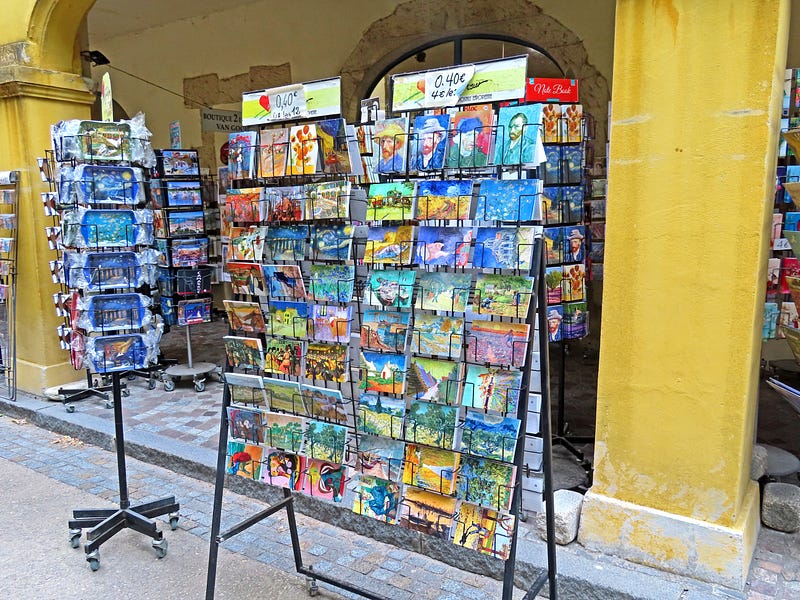
It was fascinating to see how Van Gogh had taken a bit of artistic license with his perspective. I gave up trying to recreate the perfect angle to match the painting, deciding it is impossible since his vantage point was on the second level. I gave up and browsed through the postcards at the souvenir shop instead… not all of them were about Vincent.
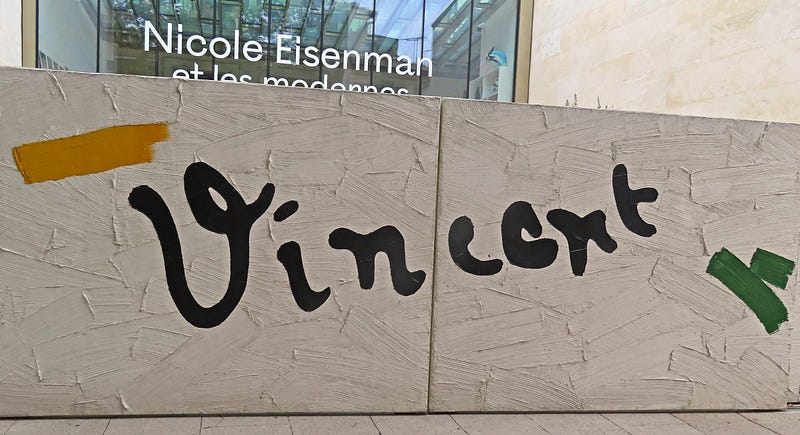
As we wandered through the streets and alleys we found the Fondation Vincent Van Gogh Arles, which doesn’t really feature any of his paintings but celebrates the artwork of others who have been inspired by Vincent.
There is a map available to help anyone interested in doing a self-walking tour of Arles to see some of the locations where Van Gogh lived and painted. I wish I had that to help me get around but old town Arles is relatively small and just by wandering the streets we were able to stumble on some of the highlights and find some of our own inspiring locations.
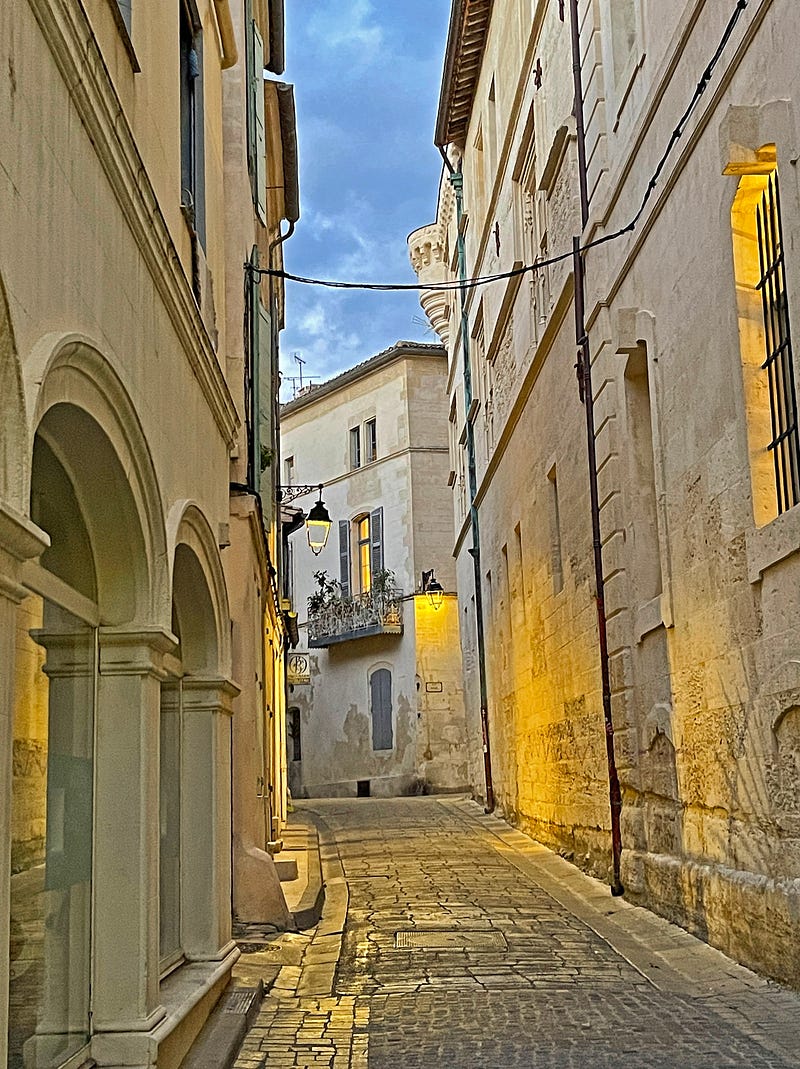
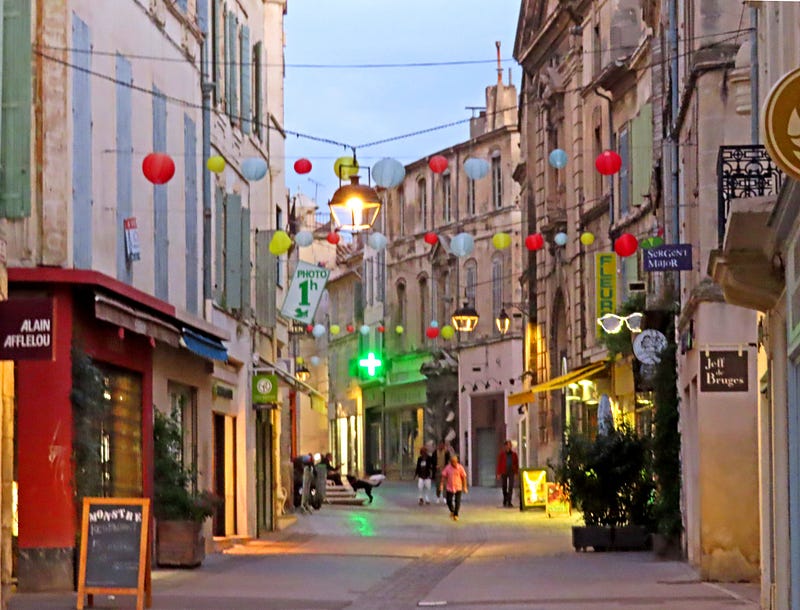
We didn’t have a lot of time in Arles, but because it was now off-season in mid-September, we avoided the big crowds and were able to simply enjoy the city, its art, the architecture, and the Provencal sunshine.
_______________________________________
You could read so much amazing content on Medium and it could be your next step in becoming a writer, for just a few bucks a month. And if you sign up with this link you will also be supporting my writing.


