
Covid-19 Vaccine for Minors: All The Possible Benefits and Risks Explained
Topics discussed include acute Covid-19, long-COVID, MIS-C, anaphylaxis, Shoenfeld’s syndrome, ITP, myocarditis, VITT, societal factors, and X-factor.
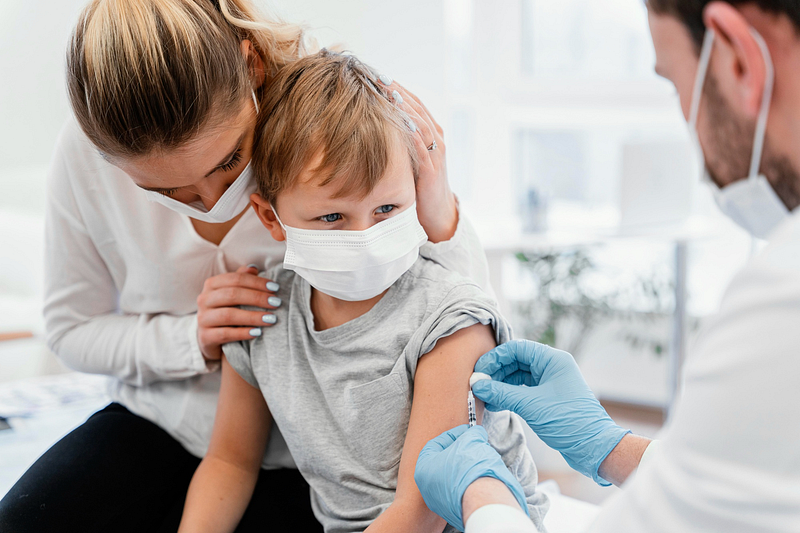
While I won’t hesitate to get the Covid-19 vaccine when my turn comes, my parent is anxious about it (even though I’m already 21). Other parents probably feel the same way. After all, we can’t help but wonder if it’s really necessary to inject a bioactive substance into our body — much more into our child’s body — when there might be no need for it. But others may feel relieved, knowing that their child can return to some level of normalcy after getting vaccinated.
In May 2021, the U.S. Food and Drug Administration (FDA) has issued an emergency use authorization (EUA) for the Pfizer-BioNTech mRNA vaccine in adolescents aged 12–15. It has a 100% efficacy rate based on a randomized clinical trial (RCT) of 2,260 adolescents, where 18 cases of Covid-19 occurred in the placebo and zero in the vaccine group. In another RCT involving the Moderna mRNA vaccine in 12–18-year-olds, a 100% efficacy at preventing Covid-19 has also been noted. Moderna will request for EUA in June 2021. Pfizer also plans to seek EUA for children aged 2–11 years soon.
It may not be long before other vaccines are authorized for children. Other countries may also follow suit soon. So, it’s about time to address— at least with the most correct answer possible — if it’s worth vaccinating children and adolescents (referred to minors hereafter) who are not at high risk for serious Covid-19.
Vaccination Benefits
1. Protection against acute Covid-19
Although most minors are not at high risk, they are not 100% risk-free from the dangers of acute Covid-19—i.e., death, hospitalization, and admission to the intensive care unit (ICU). While the latter two do not mark the end of the world, they are not pleasant experiences either. No matter the disease, being seriously sick is awful and dangerous.
According to the latest dataset (30 May 2021) from the Centers for Disease Control and Prevention (CDC), 2.74 million cases of Covid-19 (10% of total cases) have occurred in 5–17-year-olds, of which 293 have died (0.1% of total deaths), in the U.S. This equates to a case fatality rate of 0.01%.
A study published in April 2021 analyzed data from 869 medical facilities that capture about 20% of total hospitalizations in the U.S. The study found 20,714 cases of Covid-19 in minors, of which 11.7% were hospitalized, 3.6% were admitted to the ICU, and 0.8% were put on invasive mechanical ventilation. Information about death was not mentioned, so presumably, nobody died. In this study, risk factors for severe Covid-19 include one or more pre-existing medical conditions, male sex, and younger age group.
Although the Pfizer vaccine is 100% effective in 12–15-year-olds, a little deviation might occur in the real world. Assuming a deviation of <5%, the Pfizer vaccine would reduce the chance of a minor dying from Covid-19 by about 95–100%; that is, from 0.01% to <0.0005%. For hospitalization, this number would be from 11.7% to <0.6%; for ICU admission, 3.6% to <0.18%; for invasive mechanical ventilation, 0.8% to <0.04%.
But these numbers are most likely underestimated, which is a good thing. A vaccine can prevent the disease from worsening even when the vaccinated person gets the disease. For instance, the Pfizer vaccine is 87–89.5% and 72–75% effective at preventing infection by the B.1.1.7 (U.K.) and B.1.351 (South Africa) variants of SARS-CoV-2, respectively; but 97% effective at preventing severe or fatal Covid-19 from any of the variants.
Therefore, at least with the Pfizer vaccine, getting vaccinated keeps a minor safe from getting Covid-19 and from progressing to more severe Covid-19.
2. Protection against long-COVID syndrome
Diagnostic tests may say that the virus is gone, but it’s only gone in the sampled area, such as nasal or throat swabs. We still don’t know what the virus may be doing elsewhere in the body. We also don’t know what long-lasting impacts the virus might have left on a minor’s organ systems.
Hence, viruses — SARS-CoV-2 included — are acknowledged as a common cause or initiator of several clinical syndromes, such as chronic fatigue syndrome, postural orthostatic tachycardia syndrome, multisystem inflammatory syndrome (more on this later), and long-COVID. (A syndrome is a collection of symptoms of unclear causes, which is different from a disease with a defined set of symptoms and a cause.)
Long-COVID is characterized by multi-organ symptoms that last for months after Covid-19 is over. Some have already suffered long-COVID for more than a year. Its most common symptoms are fatigue, shortness of breath, and cognitive issues; other symptoms include muscle and joint pain, heart palpitations, insomnia, cough, and headache.
One peculiar aspect about long-COVID is that it can happen to anyone who got Covid-19, including mild Covid-19. Even for asymptomatic cases, long-COVID can still happen, although this is rare.
For the prevalence of long-COVID that lasts for at least three months, the U.K. Office for National Statistics (ONS) has provided an update based on data collected up to March 2021. Per the ONS, even 2–11 years children and 12–16 years adolescents who got Covid-19 can develop long-COVID at the rate of 7.4% and 8.2%, respectively.
However, a published study from Italy found that 53% of 129 minors (mean age of 11 years) diagnosed with Covid-19 developed long-COVID five months later. Only 5% of the minors were hospitalized, and 2% admitted to the ICU, and the rest had asymptomatic-to-mild Covid-19. Moreover, a preprint study from Russia reported that 24% of 518 children (median age of 10 years) still exhibited persistent symptoms of long-COVID at 8-month follow-up after hospital discharge. Thus, the prevalence of long-COVID in minors can vary based on the cohort studied —i.e., hospitalization status, country of residence, and follow-up time.
More importantly, these data and studies tell us that minors are not spared from long-COVID. Although not confirmed explicitly, getting vaccinated against Covid-19 will most likely protect against long-COVID. After all, it’s not long-COVID anymore when there’s no COVID to start with.
3. Protection against multisystem inflammatory syndrome in children (MIS-C)
This syndrome is even more mysterious than long-COVID but, thankfully, much rarer. The prevalence of multisystem inflammatory syndrome in children (MIS-C) is hard to pinpoint due to its rarity, but it’s estimated to be at <1% of children with confirmed SARS-CoV-2 infection.
MIS-C happens when multiple organs— such as the heart, lungs, kidneys, brain, skin, eyes, and gastrointestinal tract— get inflamed at once, resulting in symptoms of fever, breathing difficulty, abdominal pain, diarrhea, vomiting, rash, bloodshot eyes, and chest pain. And MIS-C usually happens within a few weeks of getting an asymptomatic or mild Covid-19.
A 2020 case series study in the U.S. found that 70% of 186 children (median age of 8 years) with MIS-C — from 56 hospitals across 26 states — had Covid-19 about 25 days ago. In this study, 62% of the cases were males, 73% were previously healthy, 88% were hospitalized, 80% were admitted to the ICU, 20% were put on mechanical ventilation, and 2% died. These data figures are similar in other case series reports of 159, 95, and 58 cases of MIS-C in France, New York, and the U.K., respectively.
Children with MIS-C are treated with immunomodulators, most commonly intravenous immunoglobulins and glucocorticoids. After all, “MIS-C is thought to be an abnormal immune response to the novel coronavirus that often occurs after the acute infection has passed,” Bo Stapler, MD, internal medicine and pediatric physician, wrote for The Elemental. (Acute means short-term, whereas chronic means long-term.)
Unlike long-COVID, victims of MIS-C often suffer severely but not always chronically. In a 6-month follow-up study of 46 children (median age of 10) who had MIS-C in London, the only medical problems that remained were elevated inflammatory biomarkers in 2% of children, heart abnormalities (tested via ultrasound) in 4%, gastrointestinal symptoms in 16%, mild neurological symptoms in 39%, and muscular fatigue in 45%. While it’s worrying that nearly half of these children had something like long-COVID that needs monitoring to prevent overexertion, 98% of them managed to return to full-time education by the 6th month.
As with long-COVID, the Covid-19 vaccines will most likely prevent MIS-C too. In fact, the vaccines should be even more important in this regard as vaccines are generally more effective at preventing severe disease than infection (as discussed in point 1). And, unlike long-COVID, MIS-C is a severe disease that often requires hospitalization or ICU admission.
4. Societal benefits
Getting vaccinated has social privileges, such as choosing not to wear a mask outdoors, gathering indoors without a mask with vaccinated people, traveling with fewer restrictions, and attending schools. These privileges also lessen the psychological toll of isolation that has affected the mental health of many, especially minors who need to nurture their social-emotional skills as one of their developmental milestones.
Vaccines also benefit the broader community by halting the spread of Covid-19. “It’s a big, altruistic ask for below-12s to be vaccinated in large numbers,” Andrew Noymer, Ph.D., an associate professor of public health, said. “The overwhelming majority of cases are not going to be sick. It’s not for their benefit; it’s to prevent them from spreading it to others.”
It’s still early to conclude if vaccinating minors deter Covid-19 spread. But, at least for the pneumococcal bacterial disease, widespread vaccination in children in 2000 has led to a massive drop in infection rates in the unvaccinated, older populations in the following years. As Ryan P. Gilley, Ph.D., a respiratory infectious disease scientist, put it, “Giving Children the Pneumococcal Conjugate Vaccine Saves Grandparents Lives.” In this way, every vaccinated person contributes to the population’s herd immunity.
Besides, vaccines limit the number of available hosts that the virus — or any pathogens — can exploit for survival and evolution. During the Covid-19 pandemic, multiple problematic variants with improved infectiousness and immune evasion abilities have emerged — such as the B.1.1.7 variant in the U.K. (Alpha) and B.1.351 in South Africa (Beta) — where mass vaccination had not yet begun. Pathogens need time to evolve, but vaccines will rob that time away by preventing infection in the first place.
“The new variants are actually spreading down into younger generations,” noted Peter Openshaw, MD, Ph.D., lung immunology and infection specialist. “In other words, the virus is changing its behavior as it evolves, and you could argue that as children are becoming much more important in driving transmission, there are reasons for widening vaccination and including children.”
5. X-factor
No scientists would say that we know everything there’s to know about Covid-19 (the disease) or SARS-CoV-2 (the virus); so, there may be some other unknown health risks that the vaccine can help prevent.
SARS-CoV-2 has a unique protein insertion — called the furin cleavage site — in its spike protein that’s not found in its close coronavirus relatives. This insertion allows SARS-CoV-2 to infect cells very efficiently, making the virus highly infectious. This also means that SARS-CoV-2 might interact with our cells in ways we don't comprehend (yet).
For instance, evidence exists that SARS-CoV-2 can integrate itself into the human genome in cell culture experiments, which may or may not translate to animals or humans. There are also published reports of SARS-CoV-2 inducing persistent brainstem dysfunction and epigenetic reprogramming in multiple organs, of which their long-term significance in human health remains unclear. Covid-19 can also increase the risk of future diseases — such as diabetes, heart attack, and respiratory diseases — in older adults, which have not yet been examined for in minors.
Vaccination Risks
1. Possible anaphylaxis
The CDC has a “Who Should NOT Get Vaccinated” section to caution against possible anaphylaxis — a severe allergic reaction — from the mRNA vaccine. Specifically, if an allergy to polyethylene glycol — or any other vaccine ingredients — is present, the mRNA vaccine should be avoided. The same applies to other Covid-19 vaccines. The Johnson & Johnson vaccine, for example, should be avoided if the person is allergic to polysorbate.
Of the 1.9 million doses of Pfizer vaccine given to adults in the U.S., 21 cases of anaphylaxis occurred, equating to a rate of 11 cases per million doses. More recent data, however, put that rate at 4.7 cases per million and 2.5 cases per million with the Pfizer and Moderna vaccines, respectively, in adults. Although such rates are higher than the usual rate of 1.3 cases per million doses of regular (non-Covid) vaccines, no one has died from anaphylaxis during this pandemic. Anaphylaxis is treatable with prompt epinephrine administration available on standby.
The rate of post-mRNA vaccine anaphylaxis rates has not been determined in minors but is likely to be lower since possibly allergic persons are now advised to avoid vaccination. However, about 20% of post-mRNA vaccine anaphylaxis cases in adults had no known history of allergies or anaphylaxis. So, we shouldn't dismiss the risk of anaphylaxis in the general population, including minors.
2. Possible Shoenfeld’s syndrome
“Reports on autoimmune reactions after vaccination would constitute probably less than 0.01% of all vaccinations performed worldwide, although this rate may be biased by under-reporting,” Yehuda Shoenfeld, MD, a world-leading professor in autoimmune research, and co-workers wrote. Such post-vaccine autoimmunity is also called ASIA (autoimmune or inflammatory syndrome induced by adjuvants) or Shoenfeld’s syndrome.
Shoenfeld’s syndrome can include both symptoms (chronic fatigue, muscle weakness, sleep problems, cognitive impairments, fever, and dry mouth that are often mild and self-manageable) and diseases (arthritis, lupus, type I diabetes, thrombocytopenia, vasculitis, dermatomyositis, Guillain-Barré syndrome, and demyelinating disorders).
While the true cause is unclear, Shoenfeld’s syndrome is thought to result from stimulating a frail immune system via vaccines or other adjuvants found elsewhere, such as in cosmetics or silicone breast implants. As follows, people with autoimmunity or at risk for autoimmunity — e.g., a family history of autoimmune diseases, smoking habits, and improper hormone regulation — are at risk for Shoenfield’s syndrome.
For mRNA vaccines, autoimmune risks have been raised before. “A possible concern could be that some mRNA-based vaccine platforms induce potent type I interferon responses, which have been associated not only with inflammation but also potentially with autoimmunity,” Drew Weissman, MD, Ph.D., professor of medicine, and the inventor of mRNA technology, and co-workers stated in a 2018 research review. “Thus, identification of individuals at an increased risk of autoimmune reactions before mRNA vaccination may allow reasonable precautions to be taken.”
Sarfaraz Hasni, MD, director of the Lupus Clinical Research Program at the National Institutes of Health in Bethesda, noted that lupus, for example, is an autoimmune disease driven by overactive interferons. So, the mRNA vaccine that can stimulate interferons could, in theory, cause a flare in lupus patients, but no studies have confirmed this theory yet, Dr. Hasni said.
However, people with autoimmunity are also at increased risk of infections, including Covid-19. So, authorities like the European League Against Rheumatism (EULAR) and CDC advise that people with autoimmunity get vaccinated. “However, they should be aware that no data are currently available on the safety of COVID-19 vaccines for people with autoimmune conditions,” the CDC added. After all, persons with autoimmune diseases were excluded from the Pfizer and Moderna vaccine clinical trials.
So, adults or minors with autoimmune conditions should seek professional medical advice about vaccination. In general, experts have cautioned that: (i) live vaccines should be avoided and (ii) the vaccine should be given only when the autoimmune condition is stable or when the person is not on any autoimmune drugs that are immunosuppressive.
3. Possible immune thrombocytopenia (ITP)
A case series published in February 2021 described 20 cases of immune thrombocytopenia (ITP) that occurred among the 20 million people who got the Pfizer or Moderna mRNA vaccines in the U.S. — giving a rate of one ITP case per million vaccinated persons. And these ITP cases occurred within two weeks of vaccination. Many were hospitalized from these ITP incidents, of which only one has died.
In April 2021, the American Society of Hematology has estimated that post-Covid vaccine ITP— from Pfizer, Moderna, AstraZeneca/Oxford, or Johnson & Johnson — occurs at the rate of one in 100,000-1,000,000 adults. Although it’s in adults, post-vaccine ITP has happened in minors before, such as with the influenza and measles/mumps/rubella vaccine.
ITP usually happens after an infection, where the immune system started destroying the platelets — a blood component that clots blood — resulting in platelet deficiency that leads to bruising and bleeding. ITP is indeed a type of autoimmune disorder and fits into the description of Shoenfeld’s syndrome. So, it might be wise to be cautious of early signs of ITP for 1–2 weeks after vaccination, notably superficial bleeding in the skin (usually on the lower legs) that looks like small reddish-purple spots.
4. Possible mild myocarditis
In adolescents and young adults, there have been reports of mild myocarditis — inflamed heart muscles — occurring about four days after the Pfizer or Moderna mRNA vaccine shot in the U.S. The European Medicine Agency has also reported myocarditis in one in 175,000 Pfizer doses.
In Israel, one in 50,000 persons who completed the Pfizer vaccine dosing regimen developed myocarditis, of which 90% occurred in young men aged 16–24, a rate that’s 5–25-times higher than expected from the unvaccinated young men population. Many experts agree that there’s a causal link, possibly because that young people mount a stronger immune reaction to the mRNA vaccine that might have left an unfavorable effect on the heart.
This “is very suggestive of a causal nature,” said Dror Mevorach, Ph.D., professor and head of internal medicine. “I am convinced there is a relationship.” But Douglas Diekema, MD, pediatrician and bioethicist, cautioned that “it requires validation in other populations by other investigators before we can be certain the link exists.”
Thankfully, post-mRNA vaccine myocarditis is usually mild and easily treatable with anti-inflammatory drugs. Although two myocarditis deaths happened in Israel, it’s unclear if those deaths were due to the vaccine; one death could have been a case of multisystem inflammatory syndrome (MIS), and the other is unverified. Thus, the medical community is now alert of any symptoms of chest pain after vaccination.
5. Societal issues
The World Health Organization (WHO) has advised wealthy countries to donate the vaccines they will use for minors to lower-income countries that don’t have enough vaccines for their at-risk populations, such as healthcare workers and older people.
So, vaccinating low-risk groups like minors has an indirect risk — that someone out there in the world needs it more desperately. Some experts have said that it’s morally wrong to prioritize vaccinating minors. But nothing much can be done about this problem at the individual level since it ultimately comes down to governmental or political decisions.
By authorizing vaccines in minors, schools are pressured to remain close until enough students get vaccinated. “I think that any articles that say that you have to vaccinate young children to get to the end of our pandemic are, yes, going to keep schools closed,” Monica Gandhi, MD, professor of medicine, said. And keeping schools shut have their cons, such as hampering educational and social-emotional learning.
6. X-factor
As with Covid-19, it’s unwise to claim that we already know everything about vaccine safety. But, at this point, we can be assured that the Covid-19 vaccine is safe for the overwhelming majority, except for those with important contraindications such as vaccine allergy or unstable autoimmune condition. Now, are there other contraindications or risk factors that we have not yet identify?
One of the Covid-19 vaccine types — the adenovirus-vector DNA vaccine from AstraZeneca/Oxford and Johnson & Johnson —can cause vaccine-induced thrombotic thrombocytopenia (VITT) at the rate of 1 case per 100,000 to 500,000 doses with a fatality rate of about 30–50%. Although younger females were affected more often, the precise risk factors for VITT are unknown. This means that we don’t know how to prevent VITT, except for cautious monitoring for early signs of VITT after vaccination.
Because of its irregularity, the clinical trials missed VITT, and we only discovered VITT during mass vaccination by the millions. A similar situation has happened with the post-mRNA vaccine myocarditis that the clinical trials did not detect. So, there might be other rare side effects or adverse events of the mRNA vaccine that were overlooked in the clinical trials that involve only a few thousand of minors.
What can we conclude?
Compared to adults, the decision to vaccinate minors at low risk for severe Covid-19 is harder to call. But overall, for the reasons discussed above, minors getting vaccinated still provides more benefits than not getting vaccinated. This is unless certain contraindications exist, such as vaccine allergies and unstable autoimmune conditions.
To be extra safe, parents can monitor their child’s health for some time after vaccination. Anaphylaxis usually happens within 15–30 minutes of vaccination, ITP and myocarditis within two weeks, and VITT within three weeks. All these vaccine-related medical problems are treatable and preventable if acted upon early. On the other hand, while acute Covid-19 and MIS-C are treatable, long-COVID is not. There are no accepted forms of treatment yet for long-COVID, be it in minors or adults.
Some may be keen to adopt the wait-and-see approach. But even if other vaccine risks are discovered in minors in the future as large-scale vaccination is going on, the numerous benefits of vaccines will most likely still outweigh their minor risks. Although it’s possible that some Covid-19 vaccines may turn out to have a better benefit-risk profile than others, the risks of not getting vaccinated while waiting should also be considered. And this most likely depends on whether Covid-19 is actively spreading in your region, and whether vaccines will still be enough in the future.
All in all, this article hopes to provide an objective look into the risk-benefit analyses of vaccinating minors for Covid-19 and to help parents and minors make better and safer decisions.
If you have made it this far, I appreciate it. Subscribe to my Medium email list here. If you want to become a member to get unlimited access to Medium, you can use my referral link and I will receive a small commission.


