
Life Lessons | Inspiration | Self Awareness
Could We Be Better By Empowerment and Praise?
Are We Ingrained To Believe That Only Loopholes Could Move Us Forward?
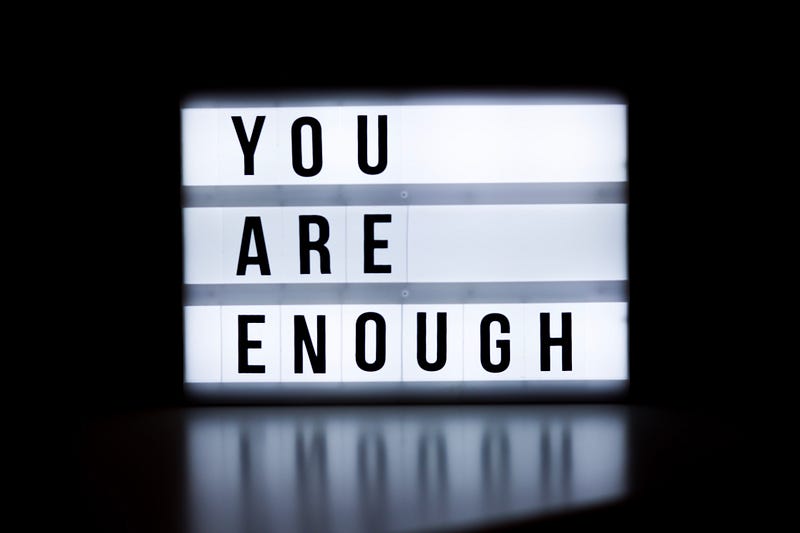
Can we not be better when others tell us that we are enough? Can we not do better when others tell us that we do well already?
Or, based on our previous experiences, do we believe that to improve means we ‘have’ to identify our lacks or look for what’s not there yet?
Hmm…!! As much as we give the message there is always room to make mistakes, we could indirectly relay a message that ‘ we are never enough’ and that message itself is not only false, but it can also deliver a wrong self-image.
Could we be better by empowerment and praise? Or the only way to be better is by finding loopholes within ourselves?
My mother didn’t believe so much in praises. She thought her children’s heads would get big and stop learning. She didn’t want us to believe that “We are all that,” hence finding loopholes and pointing those out was her task with the hope that we learn from them. A wonderful intent! Could be debilitating and unfair.
When I was teaching in schools, most teachers contacted parents for their immediate attention only when not-so-good things happened. When a student did well, it was another story. The praise could wait until the parent-teacher conference or whenever the teacher had a chance to meet the parents. I found it peculiar as I asked myself, “What message do we give to students?”.
“We need to talk” is a phrase we use when things go wrong; it is a way to point out loopholes to the other person. Rarely do we use the term to communicate joy and gratitude towards the other person. As if, when things are right, it should’ve been, so why talk about it? But, when things go wrong, hey! We need to make sure the other person knows about it.
“No pain, no gain” or “learn from mistakes” is commonly used. It makes us feel good. I question, “ Can we not be better by identifying what we have done right and maintaining those?” How about telling ourselves, “You’ve done well!” Can we not be better by saying that to ourselves? Telling ourselves that we are enough?
We are humans and designed to make mistakes. Understood! We believe that we can learn from our mistakes and be better people because of them. Got it! However, that is not the only way we can be better. We are humans with a capacity for thinking and feeling; we need to embrace both and use them to be better people.
What gets in the way? Our fear of uncertainties, the unknown. Thinking helps us reach for what’s certain; feelings, on the other hand, present uncertainty. How our parents or previous generations taught us, especially when it has worked for us, became habits; habits lead to certainty. Most self-help books aim to find loopholes and change what hasn’t been working. And seemingly, to change what has not been working offers more assurance. And, what promises certainty makes us feel good.
I am not saying that changing what has not been working is not an excellent way to improve. Yet, doing so may overlook what has been good and working for us. It is also a mindset that might not work well when we relate with others. When we overlook what’s good in us, it is hard for us to notice them from others. It is like seeing a glass half empty.
And at the end, we contradict ourselves; we start with a well-intent of empowering ourselves and others to be better, but we might end up not fully accomplishing it because we focus only on changing what hasn’t been working.
Human beings need to be recognized, acknowledged, cared for, and loved. I will tell you, with no hesitation, “Please tell me what I can do better, and I will think and work on them when it is within my control.” Notice the word ‘think’ and not ‘feel.’ I won’t tell you that I feel good hearing it or while engaging in the process because I’ll be lying. I will feel uncertain, somewhat disappointed, misunderstood, possibly rejected, hesitant, and yes, I might indulge myself with a bit of self-pity and self-blame. However, it doesn’t mean I don’t appreciate the suggestions or criticism and work on them.
Reflecting and understanding what we think and feel and admitting that thinking and feeling won’t be aligned sometimes make me more mindful when I listen, write, read, communicate, teach, coach, and even self-talk.
As much as there are many facets I need to improve, I have to recognize my strengths. Understanding my strengths helps me to empower myself and see myself as enough. When I feel ‘enough,’ I feel good about myself — a higher probability of aligning my thoughts and emotions. Then, I can see more clearly why I need to improve and how I will improve.
Most of us won’t function when we don’t feel good about ourselves. We tend to look for changes erratically than systematically when we feel and think we aren’t enough. “Why can’t I do this?”, “Am I stupid?” “ I can never accomplish my mission,” and all those negative lines are in the forefront of our minds. We focus on errors, the sense of urgency to fix those errors, and the hope that we will be better because of it.
When our hope doesn’t pan out, we might be in a worse place than when we started.
So, maybe, start by systematically understanding ourselves. Being realistic means that we are humans and must function with thinking and feeling. No way around it!
Then, being honest by knowing that feeling could make us feel unreliable, imbalanced, uncertain, random, and personal. Know that those are okay.
Thinking could help us with directions, hence less randomness and working towards more certainty. Know those take time. We need time to think of the best directions.
Don’t neglect the feeling; teach the mind to be more patient with the feeling. Ask the feeling, “What do you need?” Most times, what the feeling needs is not much; it is a simple acknowledgment. Just say, “Yes, I feel shitty!” or, “Yes, I feel less when I heard that!” We are no more or less by admitting our feelings, even the negative ones.
When the mind accepts, the feeling will be calmer.
When we are calm, we can say, “Look, I know that I need to do this and that better. The good thing is I realized what I need to be better at. That’s a good start.” Simple praise to ourselves, saying we can recognize what we need to improve, will make us feel good and empower us to see how we can improve.
We can call it self-compassion; we can call it being fair to ourselves. I call it being human.
We can extend the approach to how we relate with others through parenting, teaching, building friendships, coaching, etc.
Imagine the difference we can make when we say to a child, “ Great! So you can do this and this. Now, how could this and this help you to do that. Can you think of a way?” in comparison with “You can’t do this if you don’t learn that.” Doesn’t the latter sound like an ultimatum? Doesn’t that impact a child emotionally and mentally?
Or, when we tell our friends, “ I understand you feel that you need to be better at this, and it is difficult. Now, I see you as a person who is skillful, thorough, and eager to learn. I don’t doubt you can be better at this if you see what I see in you.” Isn’t it more helpful when you can offer your friends or spouse their positive sides in times that they probably couldn’t see themselves?
Our intent is well. Our follow-up is well thought of. Not to use feeling good about ourselves as an excuse, but use them as a motivator. Builds self-confidence. Without being arrogant or boastful. Without being pessimistic and hopeless.
We are human with feelings and thoughts. We could be better through many ways, such as empowerment, praise, and constructive criticism. The balance of those will lead us to be enough.
As much as we don’t want to believe it, we are ‘always’ enough!
My company for this article is, “ Want to learn a new skill? Take a hint from a baby,” by Jann Christoph von der Pütten.
Favorite line, “ Self-doubt is inherent to all human beings. It only varies in intensity. Well, in my case, it took years.” I am with the author. It took me years to understand that learning from my mistakes doesn’t mean overlooking my strengths.
Related article: