Could the Slowing Down of the Human Species Indicate a Psychological Evolution?
What it was like living through the Pandemic Era that began in 2020

“Do you have your leotard ready for after school? Is your lunch packed? Where’s your homework? Has anyone seen my keys? I’m running late. Love you! Bye…I’m back! Forgot my water. See you later! I might be late for pickup. It’s busy at work right now, but I’ll be there by 3:15.”
We are a typical middle-class family of four in the middle of America — mom, Dad, son, daughter, and two dogs. Before March 2020, the dialogue above was a familiar morning refrain in my home, said hurriedly by me around 6am.
Is 2020 a wakeup call for humans to focus on the survival of our species?
2020 has been a pivotal year for the human species. Yuval Noah Harari argues in his book Sapiens: A Brief History of Humankind (2016) that the agricultural revolution and the technological revolutions have held similar significance in changing the evolution of the human species.
With agriculture, homo sapiens, the current modern species of the genus homos, lost their nomadic cultures.
With technology, some argue humans are being cultivated by technological interests, as posited in the documentary The Social Dilemma.
Having so recently been one of the underdogs of the savannah, we are full of fears and anxieties over our position, which makes us doubly cruel and dangerous. Many historical calamities, from deadly wars to ecological catastrophes, have resulted from this over-hasty jump. — Yuval Noah Harari
Is Covid-19 Nature’s calculated way of slowing down the recklessness of our species? We have overpopulated the planet. We create unsustainable living conditions for future generations. Humans can rationalize, think, and process, but are we really smarter than Nature, herself?
I don’t think so.
In 2018, Harari wrote an article for The Atlantic titles “Why Tyranny Favors Technology” in which he explains how technology could domesticate modern humans as humans have domesticated animals.
We are now creating tame humans who produce enormous amounts of data and function as efficient chips in a huge data-processing mechanism, but they hardly maximize their human potential. If we are not careful, we will end up with downgraded humans misusing upgraded computers to wreak havoc on themselves and on the world. — Yuval Noah Harari
Life before Covid
In late December of 2019 and early January of 2020 I had a bona fide mental health breakdown. Suicidal ideation. Nachos in bed. Endless days and nights of weeping. Lost ability to communicate or take care of my basic needs or my children. I was a shell of my former self. The whole shebang.
I can talk lightly about it now that it’s in the rear view mirror, but it was not a light time. And, it was before Covid-19 arrived on the scene.
I worked as a part-time gardener at our local botanic garden — this job was mainly outside for about 25–29 hours per week with potential fulltime hours during the holiday season when we installed and ran a beautiful lights display.

Work started at 6:30 or 7 depending on the time of year. It gets hot in Oklahoma, so earlier hours in summer are gravy.
David took the kids to school and I drove to my job in just northwest of downtown Tulsa. It was about a 25 minute commute. I’d listen to music or books. Depending on the time of year, the drive included glorious sunrises while I’d watch as the city turned into hilly countryside with llamas, cows, horses, stray dogs, turkey buzzards, turtles, tarantulas, and red-tailed hawks.
I would move my car so as not to run over any turtles or tarantulas.
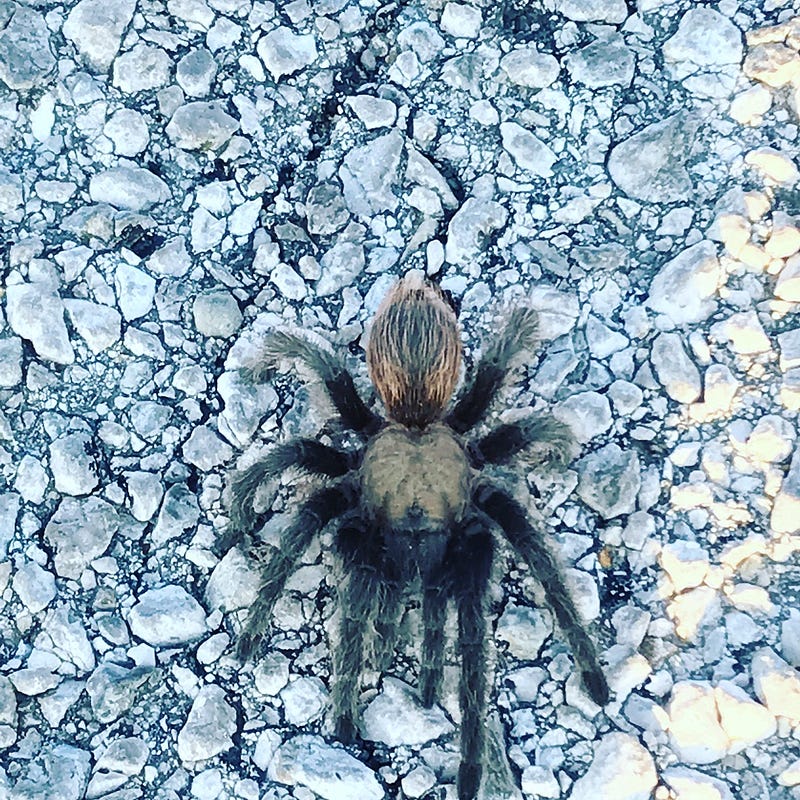
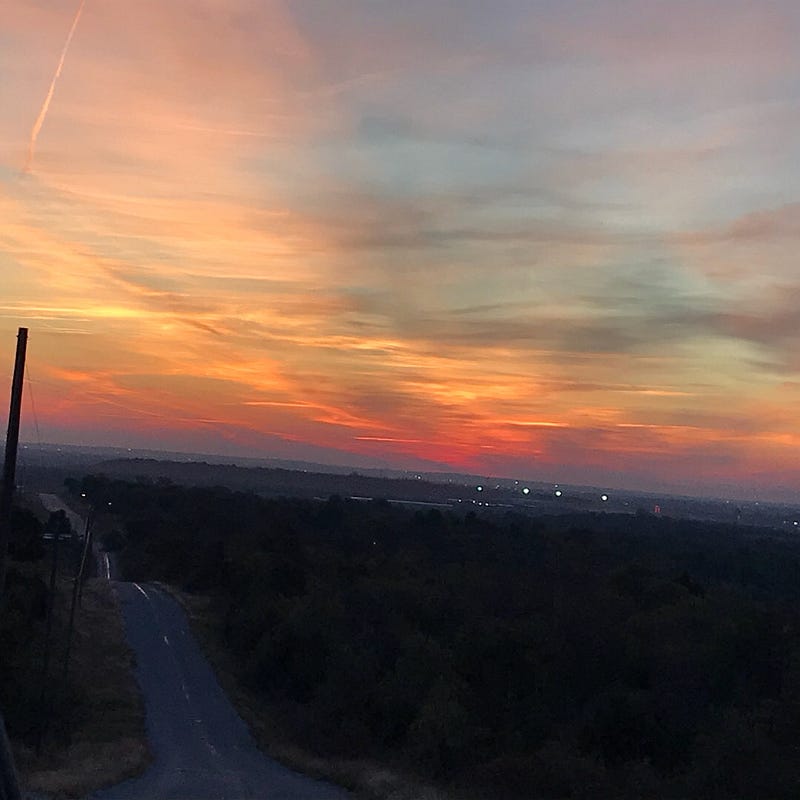
Why was I pausing for tarantulas, turtles, and other wildlife and go-go-going-gone for practically everything else in my life? Up until December 2019 or so these nature connections were keeping my inevitable breakdown at bay.
A typical day looked like this:
- 5:00 am-wake up
- 5:00–5:30am-drink coffee, surf the internet
- 5:30–6:00am-work commute
- 6:30am-clock in to work
- 6:30am-10am-work outside — leaf blowing, planting, weeding, mulching, whatever was needed that day
- 10:00–10:15am Burrito Break with the most amazing coworkers
- 10:15am-12:30pm-back out to the garden-could be supervising, installing holiday lights in trees, planting, mowing, pond work, tree removal, whatever was needed
- 12:30–1pm-lunch with the most amazing coworkers
- 1–2:30pm-slower tasks — gardeners tend to bust our butts in the morning and try to pace ourselves a bit better when the weather is less agreeable
- 2:30pm-clock out, sit down in my car, pop two ibuprofen and drive the 20 minutes to pick up my daughter at her elementary school
- 3:05–1st school pick up. Walk in the building to sign her out for the day.
- 3:15-drive to pick up my son from middle school where they got out at 3:35. It was across town and we’d be lucky to get there by 3:35
- 3:35-go home. Home by 3:45–4:00 depending on traffic and how long it took my son to come out of school
- 4:00-lay down to rest for a few minutes while my daughter got ready for gymnastics two-three days of the five days a week.
- 4:45–5:00-leave for gymnastics which was 30 minutes away from home.
- 5:30–8:30-gymnastics
- 8:30-David or I picked up our daughter from gymnastics
- 9:00-eat dinner if it hadn’t already been done and crash into bed by 10pm
- Wash, rinse, repeat, in one variation or another 5 days per week — try to figure out where to fit in meals on gymnastics days.
Living the dream
It felt like we were living the American dream, sort of. David worked at his 9–5 in a respected advertising agency. I worked at our respected botanic garden and was working my way up the ranks at my own pace. Our son was adjusting to his first year of middle school and our daughter was enjoying her first year of competitive gymnastics after several years of rec gymnastics and one year of competitive gymnastics.
Did I mention I was exhausted?
Yeah. I was exhausted.
Were you exhausted, too?
The American dream began unraveling
In early March, I was sitting with my mom for my first appointment with a new psychiatrist. My awesome DO (Doctor of Osteopathy) recommended him, but he worked at a teaching/learning facility, which meant he wouldn’t be around for more than a year or two. I didn’t know this at the time.
The receptionist asked me a bunch of questions, “Do you have a temperature? Are you achy? Have you traveled out of the country?” It was the usual question — ”Have you traveled outside the country?” to which my standard reply, when in a good mood, would be a cordial, “I wish…” — times ten. I was confused.
“Mom, umm…Did you hear all those questions?”
“Yes, dear. It’s because of a virus going around in China.”
I shrugged it off. China was far away from Oklahoma. I didn’t understand the fuss — or have the brain space for it.
When the collective consciousness got a time-out
By Mid-March my new medication was helping a lot and the kids had spring break. I’d resigned from my job in early January. Even though I hadn’t brought in the majority of our income, quitting my job meant we took a financial hit. Family helped us some financially (thank you, family).
David picked up more freelance design work.
In March 2020, Coronavirus became part of the national dialogue in the United States.
Spring Break was the last time the kids went to 3rd and 6th grades in a school building. We became uncomfortable sending our daughter to gymnastics. School went virtual for the remainder of the year.
Our busy life slowed down. It was a slow evolution. A revolution.
The Slow Food Movement people have been on to something for a long time.
The Slow People Movement is here.
We are exhausted.
We are slowing down.
We like our slower lifestyles.
I want to make it clear. I recognize my privilege in living this slow life during Covid-times. And, I know it may not be my family’s ongoing privilege depending on how the cards fall.
People have died and lost their livelihoods. And, during Winter 2020–2021, this is predicted to continue.
Life is sometimes absurdly based on luck and who you know. In my opinion, those bootstrap people had a helping hand when they got back up. You don’t get up all on your own. I repeat — you don’t get up all on your own.
Humans are a social species. We need each other, for goodness’ sake.
Discovering ambition I never knew I had
I worked on my resume. I was supposed to start looking for a part-time job and have it by the end of March. I was terrified of going to work with people again. So, yeah. My OCD was definitely still there. My OCD presents as mainly rumination and contamination fears. It was hard to get past the contamination fear part of working with people before Covid. And, now there was Covid.
I switched gears and realized I’d need to earn income from home. And, hell, that’s something I’d wanted to do for years.
In March, I found Medium. By May, I was all in trying to earn a fulltime income on the platform. A funny thing happened. I didn’t earn much money, but I made connections. And, I started writing like I crazy. I sat my derriere in a chair in front of the computer to write, promote, and learn for hours a day. No problem. I got excited about my writing work. I made a new goal list.
New Goal List
- Finish writing memoir
- Publish memoir
- Go on book tours
- Teach writing in a non-traditional way with nature incorporated
- Make part-time to full-time income through writing
- Secure off-platform freelance writing jobs
- Guest on a podcast (want to get practice for when I’m a famous author)
Was I being delusional? Maybe. But, all arrows pointed to emphatic Yeses. I finished writing my memoir. I guested on a podcast. I secured off-platform freelance jobs. I agreed to interviews about writing.
What does all this have to do with slowing down?
My Covid + Mental Breakdown silver lining has a lot to do with slowing down. Slowing down allowed me to be still, to stop thinking two, three, four steps ahead. I had the opportunity to process, think, and discuss the years of my life leading up to my 40s. Kapow.
I was talking with my family more than ever before. Friends, writing peers, and my family read through the first and second drafts of my memoir. Deep healing began happening.
Hurry up and slow down
I’m no psychologist or historian, but it seems to me the collective slowing down of our species is indicative of evolutionary advancement.
I think the collective consciousness has been craving this stillness for a while. Yeah. We still have our technology to distract us. I’m certainly not immune. I’m earning my dollars through platforms and public writing.
But, there’s something that 2020 has solidified in the collective about the wondrousness of noticing the leaves changing color outside of our windows, puppies growing by the week, our children’s handwriting improving day-by-day, or our neighbors smiling faces from across the way.
Was the human species created to function like fast and efficient machines? No. Not by any means.
Joyful epiphany
This is the year I had an epiphany regarding myself and joy. I think part of my life’s purpose is simply experiencing joy — and, perhaps teaching other humans how to feel joy as well. I found my portal to joy in Nature. Gary Buckley notes that while machines may eventually contribute more “value” to society, they are incapable of feeling joy.
Humans excel at the simple. Computers can process millions of finance numbers faster than humans, but humans can fold laundry better. Humans can write more colorfully. Being good at being simple might seem a meager consolation prize. But the simple is what makes life worth living. Feeling the sunshine on your face, snapping your fingers, breathing fresh air — all trivial occurrences. Yet perhaps the most faithfully joyful ones. Humans can enjoy the relational aspect of chatting with an old friend or getting lost in the world of a novel. — Gary Buckley
Since we jumped to the top of the food chain without the natural checks in balances that had been in place before, as noted in Harari’s earlier quote, we have the disadvantage of being a species evolving too fast for our own good. In essence, collectively, we’re acting too big for our britches — and Mother Nature is pushing back.
The fact is that a jumbo brain is a jumbo drain on the body. It’s not easy to carry around, especially when encased inside a massive skull. It’s even harder to fuel. It accounts for about 2–3 per cent of total body weight, but it consumes 25 per cent of the body’s energy when the body is at rest. Yuval Noah Harari
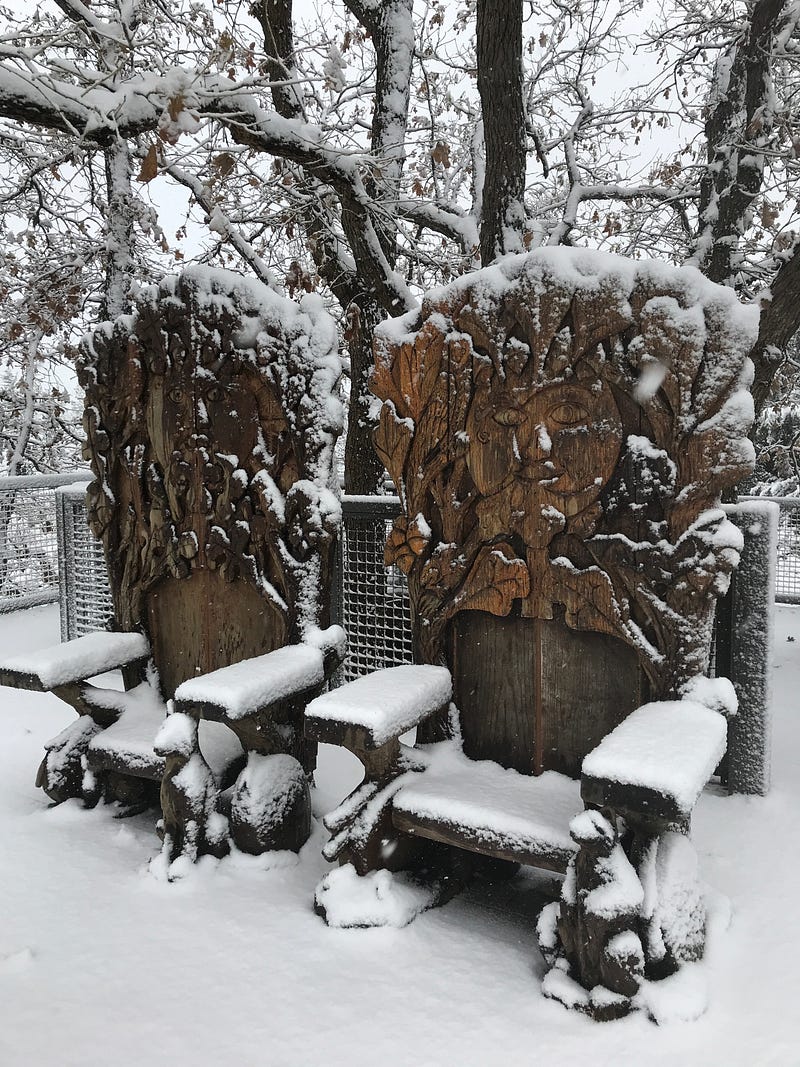
If we have the privilege to slow down, let’s set the example. Let’s recognize our privilege and prioritize the slowing down of our lives. Let’s walk through winter wonderland in awe at glittering snow. Let’s gaze skyward at the birds that look like seagulls but aren’t and puzzle out what they may be. Let’s make a phone call. Let’s connect with one another and talk about why we are here together as humans. Let’s continue the human’s search for meaning. Let’s get back to slowing down enough to rediscover our discernment for what in life is important and what is not.
Let’s create a world in which this slow living is not a privilege. Let’s create a world in which slow living, supporting each other, and searching for meaning are our species’ norms.