
Coronavirus Through the Lens of ‘America’s First Battles: 1776–1965’
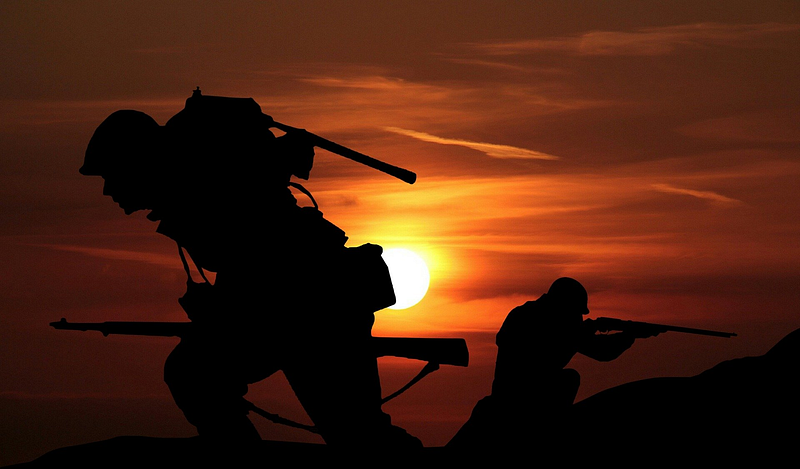
What the American way of war has to teach us
In the summer of 1939, America’s military was understaffed, under-trained, and didn’t understand the new realities of the mechanized battlefield.
Serious thinkers knew war was coming. Ferdinand Foch, Supreme Allied Commander in World War I, predicted it in 1919. Winston Churchill advocated for rearmament throughout the 1930s. The Germans used the troop caps established by the Treaty of Versailles to the fullest, building a cadre that could be rapidly expanded. Hitler began openly rearming in 1935, reoccupied the Rhineland in 1936, annexed Austria through the the Anschluss in the spring of 1939, and took the Sudetenland later that year.
The United States, on the other hand, sported a withered military with old equipment, few aircraft, and aging obsolete ships. There was no appetite for war, and no appetite to even prepare for war. The Neutrality Acts of the mid-1930s aimed to keep America out of any coming conflict.
America finally started to prepare after Germany invaded Poland on September 1st, 1939, when Britain and France declared war in Poland’s defense. It was too little, too late.
American conflict, then and now
The lead up to the Coronavirus pandemic reminds one of America’s First Battles: 1776–1965 by Charles E. Heller and William A. Stofft. From the Battle of Long Island in 1776 to the Ia Drang valley in 1965, the authors detail preparation and results of the beginning of each major conflict through a large swath of American history.
The country repeatedly made the same mistakes. Over and over, it almost willfully refused to man and equip a military until forced by crisis, even when war obviously loomed. Doctrine stagnated; America prepared to fight the last war using outdated tactics, techniques, and procedures. After a few failures, the country usually overwhelmed the enemy by pouring buckets of resources on the problem.
Wars and pandemics are foreseeable
In the history laid out by Heller & Stofft, the United States routinely disregarded the obvious inevitability of war. This routinely led to lack of modern equipment at the outbreak of hostilities and inadequate training training on the new equipment when it did arrive.
Sometimes a long period of instability presaged a conflict, like with the American Civil War. In World War I, World War II and Vietnam, the nation joined wars already in progress. Korea and perhaps the Spanish American erupted more suddenly.
In any case, while we don’t know exactly where or when the next war will start, one can predict that there will be a war. Twenty-two years separated World Wars I and II; there were five years between World War II and Korea. The conclusion that war will continue regularly into the future requires no genius.
Pandemics are much the same. No one could have predicted that COVID-19 would erupt from Wuhan in December 2019. One could predict, however, that a pandemic would erupt sometime. The United States even fought skirmishes against H1N1 and Ebola.
In 2015 the state of New York determined that there might be a shortfall of 15,000 ventilators after modeling an influenza outbreak. New York City, in fact, auctioned off ventilators acquired in 2006 after a flu outbreak in Asia rather than pay to maintain them, much like demobilizing after a conflict. The fact that New York did not run out of ventilators does not mean that they are not needed for the future, only that this particular pandemic was not as bad as the Spanish Flu underlying the model.
New York City and State likely put more thought into the issue than most regions. The pattern of unpreparedness in ventilators, masks, and gowns repeated across the country at city, state, and federal levels.
Failure to prepare is a product of willful ignorance in the same way that the country failed to prepare for wars during most of its history.
We get ready to fight the last war
Upon the United States’ entry into the First World War, doctrine cited infantry formations and the rifleman as the primary means of delivering firepower. Starting in the American Civil War and continuing through the Russo-Japanese War and the start of World War I, rates of fire increased. This increased the importance of breastworks and trenches, but American tactics didn’t evolve.
The American Expeditionary Force in France initially clung to its doctrine of open warfare, against the advice of seasoned French advisors. Not until the battle of Belleau Wood, where the US Marines experienced thousands of excess casualties, did the American forces truly understand the new reality of artillery and the machine gun.
American pandemic response followed a similar pattern. For example, our doctrine of centralized testing simply did not work when faced with exploding requirements. Doctors first confirmed community spread in Washington by breaking the rules. Then the CDC ordered them to stop testing. This was in the United States, not China. The Centers for Disease Control (CDC) clung to its position and set back private testing even as it continued to fail.
Eventually public outcry forced executive action to break the gridlock. But what if we had allowed and encouraged private labs and universities to expand testing early on?
Refusal to recognize the reality on the ground cost extra lives as surely as ordering brave Marines to charge into machine gun fire in 1918.
Our industrial capacity bails us out
During the run-up to World War II, the United States determined the need to increased shipping capacity. A couple hundred ships were ordered. 244 days after its keel was laid the first Liberty Ship, the SS. Patrick Henry, launched on the 27th of September 1941. By the end of the war, eighteen American shipyards delivered a total of over 2700 ships, with an average build time of 42 days.
Automotive factories were converted to building tanks and airplanes. The entire machinery of American industry was turned to the war effort. The United States built over 100K tanks, nearly 300K aircraft, and over 1200 large combatant vessels. The U.S. Army expanded from 174K in the summer of 1939 to 1.4 million by the start of the war, and topped out at over 11 million personnel.
In 2020, at the first of March, the CDC performed handfuls of tests. With American industry unleashed, the nation performed over 100K tests per day at the end of the month. By the middle of April the number rose to over 150K per day. Further large expansion may take more time as industry addresses production bottlenecks for swabs and reagents, but expansion will happen.
In March and early April of 2020, the need for ventilators appeared dire. With the feel of a desperate holding action, perhaps like dispatching the forlorn Task Force Smith to slow down a vastly superior approaching army in Korea, ventilators were frantically inventoried, rationed, and delivered. No crush came, and no American went without a ventilator, but in the mean time American industry was once again turned loose. A few thousand ventilators from new production began delivery in April, and tens of thousands will be on hand by the end of summer.
Imagine if the United States had started modest preparation for war in 1937, and truly mobilized so that the entire 20 million person armed forces that would eventually be built was available on December 7th, 1941. Would there even have been a war? Why didn’t we mobilize? For the same reason we did not ramp up American industry to fight Coronavirus in January 2020.
Mobilization is our ace in the hole, but it doesn’t help until we believe.
Hope for the future?
Is it possible to maintain a high state of readiness? Yes. After hollowing out its military in the 1980’s, the United States reinvested and recapitalized its military. Desert Storm showcased a prepared, ready military deployed in adequate numbers to overwhelm the enemy.
Major unit actions during the early phase of the 2003 invasion of Iraq were likewise successful, despite the smaller military after the drawdown of the 1990s. With the exception of damage done to readiness from the Budget Control Act of 2011, which seems to be on the mend, the country has avoided letting its military deteriorate. Though small by historical standards, it is effective and lethal.
Perhaps the country can do the same for pandemic readiness? The United States must establish planned capacity for worst case scenarios and fund the necessary investments to enable rapid expansion.
Pharmaceuticals and PPE stockpiles must be expanded. The United States maintains the Strategic Petroleum Reserve, which until recently was needed to buy time for domestic production to expand in a crisis. Medical capacity is now a strategic enabler.
Similar to military procurement, portions of the medical supply chain must be repatriated from foreign powers. The raw materials and finished goods manufacturers must have plans in place to rapidly expand before the stockpile is consumed.
The only question is whether this pandemic will be enough to learn our lessons, or whether we need mor failures as with our first 200 years of military experiences.
If you liked this story, you might also like:
Brian E. Wish works as a quality engineer in the aerospace industry. He has spent 29 years active and reserve in the US Air Force, where he holds the rank of Colonel. He has a bachelor’s from the US Air Force Academy, a master’s from Bowie State, and a Ph.D. in Public and Urban Administration from UT Arlington. The opinions expressed here are his own.


