
Vaccines Now, Safety Later: The Utilitarian Ethics of Rushing
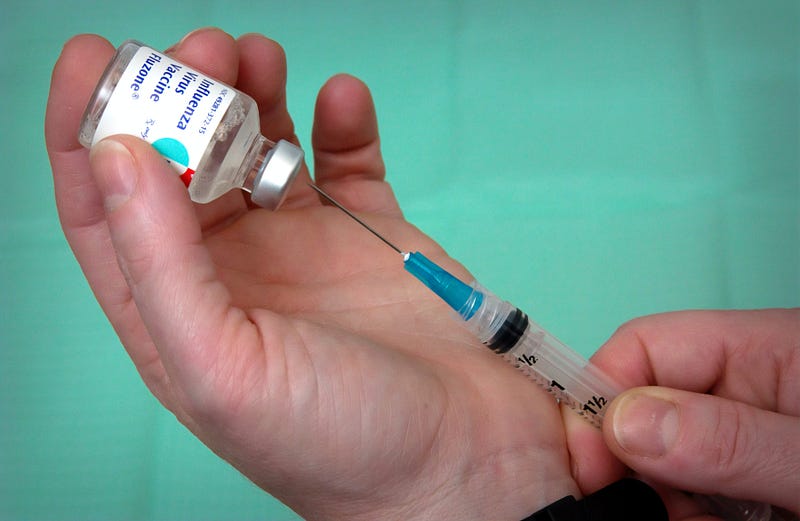
What would John Stuart Mill say?
My brother and I spent hours on the phone. Should we take mom out of her senior living facility? She’s in good health, she has no underlying conditions, and only uses a walker because we make her. But she is 93 years old, and if Covid-19 gets into her building, it would be a death sentence.
Finally, we decide that she will go home with my brother. He’s got a big house with a downstairs bedroom. More important, he lives alone and has gone to 100% telecommuting for his job.
We have a temporary solution for our one seasoned family member, but what about the rest of the country? What strategy does the greatest good, using less-proven vaccines, or waiting until completion of thorough Phase 3 trials?
When we relax our lock-downs across the country, it won’t be enough
Coronavirus is already sneaking into our elder care facilities. It started with Life Care Center in Kirkland, Washington, with 120 infections and at least 37 deaths.
That was just the start. Some estimate over 2,400 separate nursing homes have Covid-19 infections. Of the roughly 22K deaths in the United States back on April 12th, at least 3,600 were tied to nursing homes. These numbers probably underestimate the carnage.
It can take days or weeks for deaths outside of hospitals to be recorded, and without testing they may not be included. The Wall Street Journal reports that thousands of nursing home deaths in Britain, France, and Spain are not included in the official death tolls. The paper reports, for example, that out of 4,260 nursing home deaths in Madrid alone, only 781 were tested and confirmed.
If thousands of elderly are dying in elder care facilities when most of the country is under shelter-in-place orders, it is delusional to believe that we can safely segregate the vulnerable population. When happens when the kids of the staff go back to school?
Coronavirus could run like wildfire through an elementary school and be completely unnoticed. Younger children are the least vulnerable and most likely to be asymptomatic. The children will most certainly infect their parents, who can then expose residents before they become symptomatic.
The Utilitarian Perspective
Jeremy Bentham, John Stewart Mill, and other Utilitarian theorists argue that we should maximize happiness. Happiness, though, can be a slippery concept.
Are ten people living an extra year the same value as one person living ten years? Does it change the equation if the person living ten years is a political prisoner destined to be tortured and thus not really happy? Or perhaps the prisoner’s suffering will bring about positive social revolution, maximizing happiness for everyone else?
One gets bogged down in the specific flavors of hedonism, but for our purposes we can consider the typical reduction of “the greatest good for the greatest number.” Good is simply not dying.

This idea of greatest good rests behind the push to open the country. Any loosening of restrictions increases the number of deaths. At some point, the economic ruin visited on society by isolation will become more onerous that than a few more deaths. In fact, as the New York Post argues, the economic devastation will cause deaths of its own and generational tragedies.
Dan Patrick, the Lieutenant Governor of Texas who just turned 70, created a firestorm for speaking honestly:
“My messages is that let’s get back to work, let’s get back to living. Let’s be smart about it and those of us who are 70+, we’ll take care of ourselves. But don’t sacrifice the country.”
The argument becomes about when to relax restrictions, and where the appropriate tipping point is. Questions to the President about how many lives he’s willing to sacrifice to open the economy are partisan posturing; both sides know that any loosening will increase coronavirus mortality but reduce other suffering, including increased mortality from economic factors.
The discussion about opening up for business is a Utilitarian balancing act.
The vaccine option
This brings us to the discussion on vaccines. Dr. Anthony Fauci, arguably the United States’ most trusted expert, says that it will take at least 12–18 months until a vaccine is available.
Time reports that according to the World Health Organization (WHO), the vaccine pipeline contains at least 70 candidates. While difficult, developing a new vaccine takes the least amount of time in the approval process. Moderna has already begun human trials, and, Inovio, Novavax, Pfizer/BioNTech, and Arcturus plan to start shortly.
The Phase 1, 2, and 3 trials consume the majority of the time needed. In the first phase a limited number of healthy volunteers, typically up to 100, test whether the vaccine works, what the best dosage might be, and whether there are serious side effects.
Phase 2 expands on this with hundreds people in human trials, looking for side effects and how well the immune systems respond. Phase 3 includes thousands or tens of thousands of people, running a double-blind test to see how those who get the vaccine fare against those who do not, as well as continuing to monitor for side effects.
Keeping the most people alive
The United States should seriously consider skipping Phase 3 trials, and possibly Phase 2 trials as well. Perhaps Phase 1 and Phase 2 can be combined as with one study in the UK. Why? Because deploying vaccines early saves the greatest number of lives.
What about safety? If there is no evidence of widespread side-effects in Phase 1 or Phase 1 & 2, then why wait? What will the increased risk of death be? As of this writing, there are about 615K Covid-19 cases in the United States, out of a population of 330 million, leading to 26K deaths. It sounds like a lot, and it is, but only .2% of the country has been infected. (Likely there are just as many or more aysmtomatic, but it doesn’t really matter for this analysis.)
Flexing restrictions on business tighter or looser as infection clusters present themselves prevents another mass outbreak like New York. Hospitals still function as patients arrive at a steady state and no one runs out of ventilators. But people will still die. Lots of them.
Perhaps over the next year the national infection rate climbs to 1%. That means 100K new deaths. The vast majority of them will be elderly or living with other fairly common health conditions like asthma, diabetes, or immune diseases like HIV.
Is there a scenario where a vaccine that passes a Phase 1 or Phase 1/2 trial kills 100K people? Likely not. If presented with a vaccine that had a 1/10,000 chance of a side effect and 1/100,000 chance of a serious side effect, I would sign up my 93 year-old mother in a heartbeat. I bet Dan Patrick would take it too. What she faces now is at least a 1/100 chance of contracting COVID-19, and near-certain mortality, dying alone in hospital if it happens.
What about effectiveness? In addition to safety, later stage trials seek to confirm that vaccines are effective. Do they prevent the disease that they are trying to prevent?
For the current crisis, facing tens of thousands of deaths, it doesn’t really matter how effective a vaccine is. The immune response from the vaccine may or may not be sufficient to protect everyone.
However, even if the antibodies produced by the immune response don’t prevent illness, they may at least reduce the severity of those infected. Perhaps it will only prevent 25% of the deaths? Is it worth the risk to save 25K lives?
What about high risk workers? Some initial plans call for vaccinating high-risk workers like doctors, nurses, and other hospital personnel in the fall. This is not enough. Those workers are at imminent risk due to constant exposure and high infections doses, so it makes sense for them to assume a small additional vaccination risk.
But the elderly and vulnerable populations also face impending danger. They can’t be sheltered even now. Will thousands of vaccinated healthcare workers have to watch tens of thousands of seniors, asthmatics, and diabetics die? Does that make sense?
Whether a vaccine is 10% effective or 99% effective, it will surely save more lives than will be lost through side effects.
How to rush
Several things things must happen to promote the greatest good. First, the FDA must continually evaluate vaccine development and issue an Emergency Use Authorization (EUA) as soon as each vaccine appears reasonably safe. It has already done so for numerous tests, PPE, ventilators, Chloroquine phosphate and hydroxychloroquine sulfate.
Next, Congress should revisit and affirm release from liability for providers and manufacturers. Under the Public Readiness and Emergency Preparedness (PREP) Act, they should already enjoy protections, but this should be widely understood and confirmed.
Our vulnerable population, the elderly and those with underlying conditions, should be actively informed of the risks and benefits of their options to take or not take quasi-experimental vaccines.
Finally, HHS can monitor results in real-time through the Vaccine Adverse Event Reporting System (VAERS) as it would with any new vaccine, and issue alerts or take other actions should there be an unacceptable level of side effects.
To save the most people, to do the greatest good, we don’t need a safe, fully tested vaccine in twelve to eighteen months. We need a vaccine that is probably safe and probably effective now. Otherwise, tens of thousands of additional elderly and vulnerable will die.
If you liked this article, you might also like this one about COVID-19, the CARES Act, and the economy, recently featured on RealClearMarkets.com:
Brian E. Wish works as a quality engineer in the aerospace industry. He has spent 29 years active and reserve in the US Air Force, where he holds the rank of Colonel. He has a bachelor’s from the US Air Force Academy, a master’s from Bowie State, and a Ph.D. in Public and Urban Administration from UT Arlington.


