
Copyright — You Don’t Own Your AI-Generated Art: everything you need to know
The realm of AI and copyrighting is uncharted territory.
The very essence of copyrighting is to protect the intellectual property of a creation that stems from human creativity. But as AI begins to create content that rivals or even surpasses human creativity in various forms, from artwork to music, the lines are blurring.
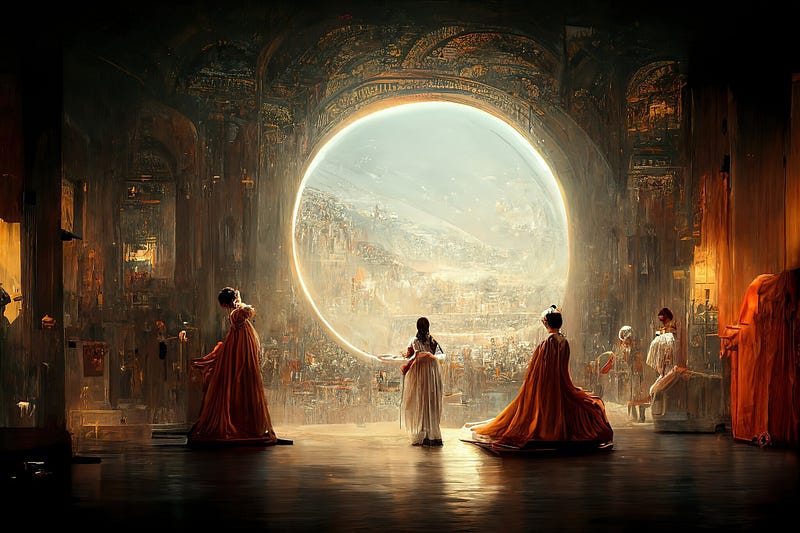
You might recognize this painting, where Artist Jason Allen used Midjourney to generate this art piece called “Théâtre D’opéra Spatial”! It ended up winning the first place for digital art in the Colorado State Fair’s fine arts competition in August 2022!
Obviously the jury wasn’t aware that the painting is AI generated!
What doesn’t mean? Can we consider AI as creative? Who owns the copyright?
1. Human Authorship as a Foundation of Copyright
The United States District Court Judge Beryl A. Howell has ruled that AI-generated artwork cannot be copyrighted!
This decision came after Stephen Thaler attempted to copyright an image produced by his AI algorithm, the Creativity Machine. Despite Thaler’s efforts to classify the image as a “work-for-hire” with the AI as the creator and himself as the owner, his applications were consistently denied by the US Copyright Office.
Judge Howell emphasized that copyright has historically required human authorship, noting that art produced without a “guiding human hand” doesn’t qualify.
Why is it important?
- This ruling is significant as it underscores the essential role of human involvement in copyrighted works, especially as AI continues to play a larger role in various creative endeavors.
- As a consequence, any art form created by AI that is created without a “guiding human hand”, can be used or modified by anyone!
2. This isn’t the first ruling — The Midjourney Case: An Example of the Blurred Lines
Ok, you can’t protect images generated by AI ; but can you protect your work though?
Another notable case was the refusal of the US Copyright Office to protect images generated for an AI comic book.
In this case, images were generated via Midjourney, as a consequence, US Copyright Office refused to protect it!
Why is it important? the document announces two decisions:
- Images generated by AI, and not significantly altered by the author (via Photoshop for instance) are not protected by copyright in the US.
- Comic book’s text and image arrangement are protected by US copyright since they involved a human effort.
“We conclude that […] the images in the Work that were generated by the Midjourney technology are not the product of human authorship.” -United States Copyright Office (Source)
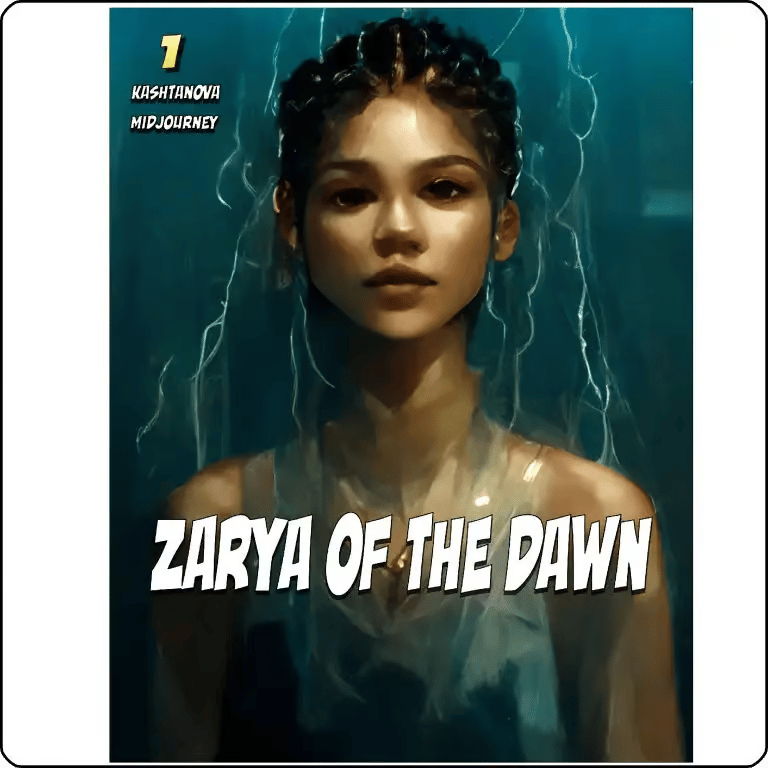
This makes one thing clear — the role of AI in the creation process needs to be clearly defined. Is AI just a tool like a paintbrush or a guitar, or can it be an author in its own right?
3. The Grammys and AI-Generated Songs
Even the world of music isn’t immune to this debate.
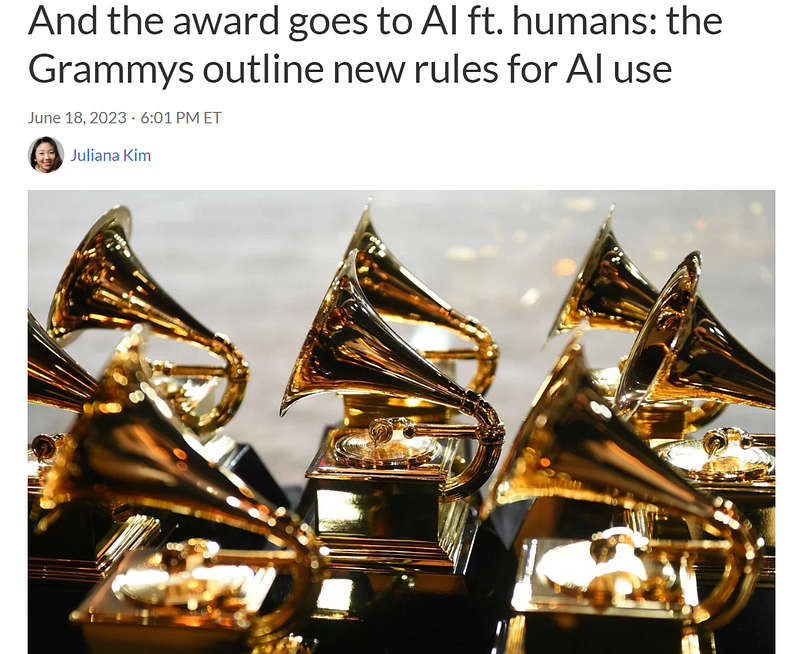
The Grammys, a coveted recognition platform for musical artistry, has made its stance clear — AI-generated songs would only be considered for nomination if they exhibit a significant human contribution. This serves as a testament to the larger cultural perspective of the role of AI in creative processes.
4. Define Human Involvement in AI generated Content
The ruling by Judge Beryl A. Howell has sparked discussions and debates around the definition and boundaries of “human involvement” in AI-generated content. Given that AI tools are designed to enhance, complement, or even autonomously execute human ideas, distinguishing between AI’s raw output and its collaboration with human creators can be challenging.
Here are some of the speculative questions and implications this ruling might trigger:
- Degree of Modification: How much modification does a human need to make to an AI-generated piece for it to be considered “original”? Is there a quantifiable threshold, or is it based on subjective interpretations?
- Intention vs. Execution: If a human provides an initial idea or direction, but the AI executes it, does the intention alone qualify as enough human involvement?
- AI as a Tool vs. AI as a Creator: Traditional tools like cameras or musical instruments are extensions of human creativity. If AI is treated similarly, then any output could be seen as a result of human intention. However, if AI is seen as a collaborator or even an independent creator, the line becomes blurrier.
- Training Data and AI Models: Since AI models are often trained on existing human-created data, can the output truly be separated from human creativity?
- Future Legal Frameworks: This ruling might encourage the creation of new legal frameworks or guidelines specifying the degree of human intervention required for copyright protection.
- Economic and Commercial Implications: If AI-generated content can’t be copyrighted without significant human alteration, this might impact businesses or artists who heavily rely on AI for content creation. They might need to ensure clear human intervention steps in their creation process.
- Evolution of AI Tools: In response to such rulings, AI tool developers might focus on creating systems that require more explicit human direction, thereby ensuring that the output has clear human involvement.
Global Impact! As AI continues to become a pivotal part of our everyday lives and enters more creative fields, countries around the world will grapple with similar challenges.
Read More: can we consider AI as creative? some technical insights.
Conclusion
The intersection of AI and copyright raises intriguing questions about the nature of creativity, authorship, and ownership.
As AI continues to evolve, the definitions of creativity and human agency will invariably undergo transformations.
For now, it’s evident that the presence of a significant human touch remains paramount in the eyes of the law when it comes to copyrighting creations.
However, as with all things AI, the future remains unpredictable, and only time will tell how these definitions and boundaries evolve.