
BIOLOGY, ENERGY, AND EVOLUTION
CCBE — Part 4: Mitochondria, evolution, and energy
How the evolution of mitochondria, the ‘energy factories’ of our cells, drove the evolution of complex life
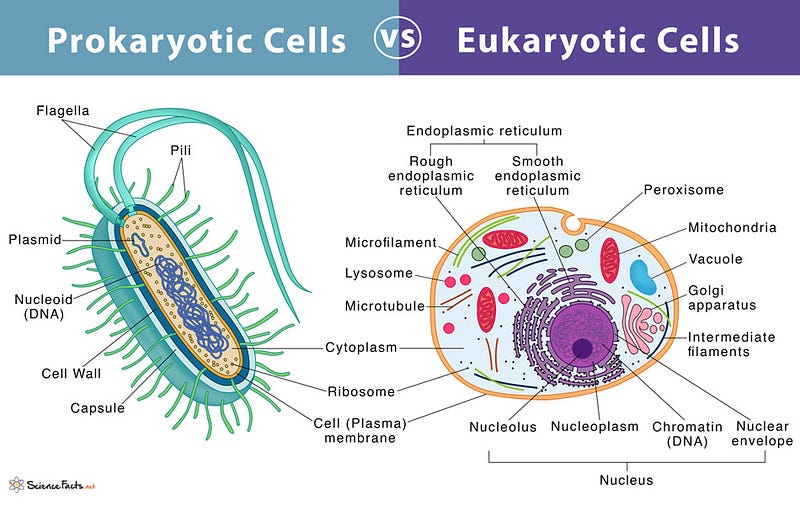
On our planet today, eukaryotes are everywhere, from plants and algae to mushrooms and animals, the branch of the family tree that produced us around 200,000–300,000 years ago. But this wasn’t always the case. In fact, bacteria and archaea emerged before the eukaryotes.
So where did the eukaryotes come from? The answer surprised many researchers when it was discovered, and (bet you can guess where this is going) has important implications for cooperation and competition in biology and evolution.
The shocking truth behind the evolution of eukaryotes
In a shock twist up there with the Red Wedding in Game of Thrones, researchers looking into the origins of eukaryotes found that their history begins with the energy factories of our cells: mitochondria. The mitochondria in all of our body’s cells produce the ATP that we need in order to function.
What’s more, according to Nick Lane, professor of evolutionary biochemistry and author of the book Power, Sex and Suicide: Mitochondria and the Meaning of Life, every member of the eukaryote family either has, or previously had and then lost, mitochondria. In contrast, prokaryotes like bacteria and archaea don’t have mitochondria and never did, instead relying on their own methods of generating ATP.
This suggests that possessing mitochondria is a key requirement for entry into the eukaryote family. So why are mitochondria only found in eukaryotes? The answer involves a form of cooperation that gave birth to the eukaryotes as the third domain of life.
One of the important clues to this puzzle came from the discovery that mitochondria have their own DNA. When researchers took a closer look at mitochondria and their DNA, they noticed some unexpected features.
For one, the DNA was strikingly similar to bacterial DNA, and when researchers looked at how the mitochondria produce ATP, it also looked strangely similar to how bacteria produce ATP. After several decades of study, researchers eventually agreed on an answer to the mystery: mitochondria are the descendants of an ancestral bacterium that invaded an archaeon, forming a partnership (or endosymbiosis for the jargon fans) that gave rise to the eukaryote family.
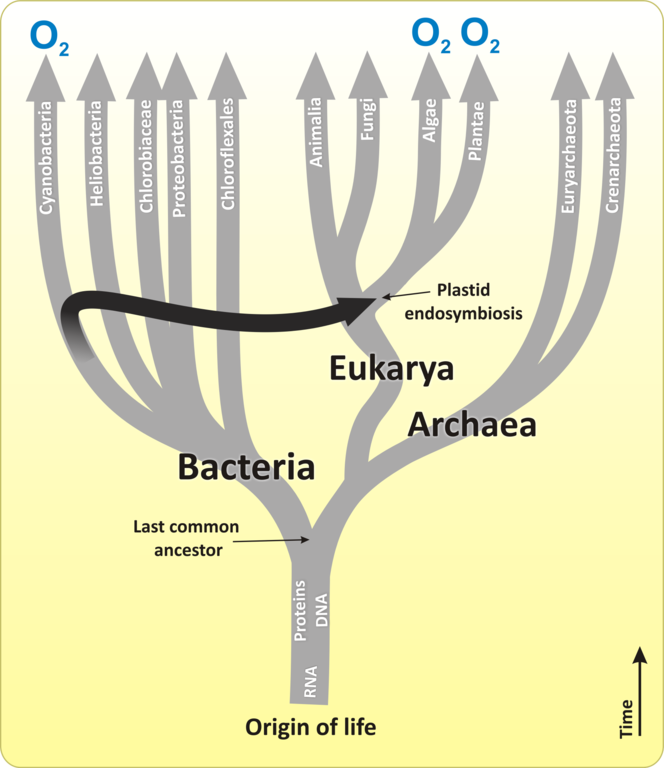

The crux of this team effort is that the archaeon provided a safe and resource-rich environment for the bacterium, which in return provided a healthy supply of ATP to its host. As a result of this partnership, which Nick Lane calls “the eukaryotic merger”, this last universal common ancestor of the eukaryotes was suddenly in a very different ‘bioenergetic’ position compared to bacteria and archaea.
Prokaryotes rely on methods of generating ATP that place constraints on how big they can grow. That’s why we (thankfully) don’t need to worry about elephant-sized bacteria, as the prokaryotes remain tiny single-celled organisms after billions of years of evolution (see the very end for an interesting recent exception to this rule and some implications for biology).
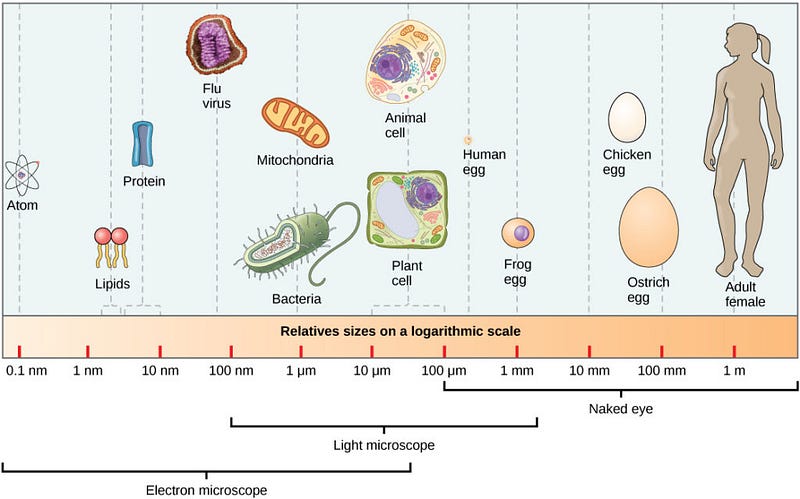
But for the eukaryotes, being able to rely on a strong internal supply of ATP from their mitochondria changed the rules of the game. Various single-celled eukaryotes remain with us today, and although there are examples of relatively small single-celled eukaryotes and relatively large bacteria and archaea, the average single-celled eukaryote is many times larger than the average single-celled prokaryote (take a look at the slightly confusing figure below for an estimate of the difference in size).
But beyond single-celled organisms, mitochondria also enabled the invention multicellularity for the first time. Over the course of roughly 2 or so billion years of eukaryotic evolution, the multicellular eukaryotes became super enormous. Notable mentions include whales, woolly mammoths, giant trees and the class of dinosaurs known as the Titanosaurs, but even smaller organisms like bees and ants are gigantic compared to prokaryotes.
Next time
Next time, we’ll talk about how the birth of the eukaryotes exemplifies a type of cooperation known as a major evolutionary transition, and how the invention of different sexes is a win for cooperation. However, you can bet I’m going to try and convince you that competition is also lurking around the corner.
Bonus: Are we living machines?
But before you go, one final thing about the constraints that keep prokaryotes unicellular, and some of the implications for biology as a science.
You’ve probably heard of scientific laws and may imagine the universe working something like a machine — at least, that’s what I imagined. We’re not going to tackle that beast in full right now, but a key point about biology is that it isn’t simply about living machines following universal rules.
There are many reasons why we and machines aren’t the same. Major ones include that we’re evolved, context dependent and highly variable, while machines are designed, context independent and mostly invariant.
A company making machines with as much variability as we see between people would quickly go out of business, and no machine is capable of the kind of independent behaviour you see in even simple organisms. As we’ll cover in an upcoming article, we’re also a metabolic phenomenon, whereas machines have no metabolism.
Still, the temptation to think in terms of biological machines is often too great to resist – although an exception is usually carved out for the mind, ‘the ghost in the machine’. Time and again, biologists’ most common observations are misinterpreted as universal rules in a world of clockwork biology, only for us to later find out that there are many ways to skin the biological cat.
Biology is the science of exceptions to the rule, and a recent study found an exception to the rule that all prokaryotes are unicellular: a cave-dwelling bacterium with some multicellularity. Check out an article about it here to learn more.
In line with what we’ve just covered about the importance of context dependencies in biology (i.e., the role of the environment), the article says, “Regardless, the researchers all agree that HS-3’s discovery provides strong evidence for the role of the environment — in this case, flooding — in encouraging the evolution of complex organisms.”
If you find this interesting, stay tuned, we’ll cover more philosophy of science/biology in the future. Thanks for reading!