
Contagious
what if “Hope” were as contagious as a cold?
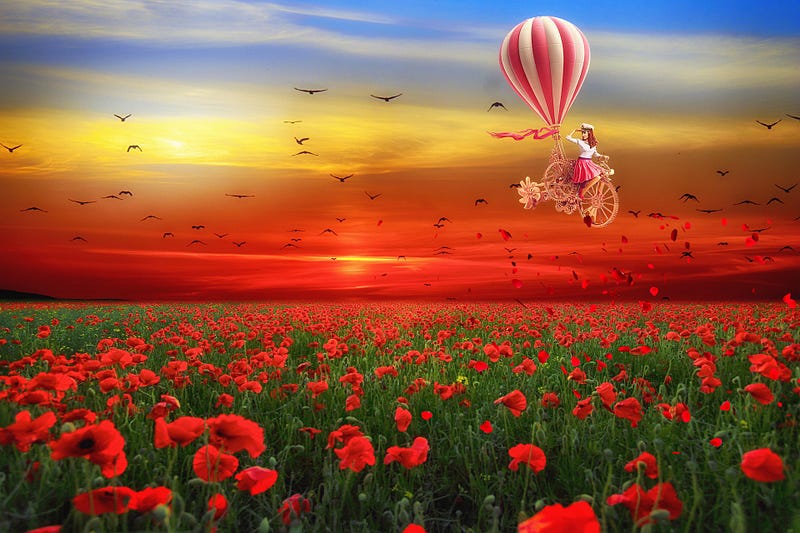
“Hope” is the thing with feathers — That perches in the soul Emily Dickinson
Emily called it the thing with feathers. I call it a virus,
one of the good ones, like bacteriophages perched in our gut. “Hope” — an infinitesimal and infinite Glinda wielding infinite and monumental magic against infinitesimal, infinitely ghastly green Wicked Witches. Bitches soaring into flight on bloodstreams.
“Hope” is not happily ever after any more than one cold inoculates against all others. But, within forests of despair blighted with lions, tigers, and bears oh, no,
dripping with mistletoe and flop sweat
we can use mind, heart, and courage to summon a ruby-red sequined flutter of faith that — “Hope” willing — infects others, stopping up their soul with trust enough in heel-tapping’s wizardry to see
a way clear
on hot air balloons with all our wings for ropes.
©Jenine Bsharah Baines 2021
I know. Emily Dickinson, viruses and bacteria, and the Wizard of Oz in one poem?
The Oz part is entirely the Muse’s fault; she seems stuck on Oz lately. And how could I argue? I’ve read more than one article on the archetypical nature of the series.
The virus/bacterial part is the “science” half of my response to Science and Soul’s prompt:
I have come to see “Hope” as a good bacteria, a bacteriophage that must infect our inner Hero’s soul if our journeys are to be successful. Not successful as in happy happy happy ever after but as in growth-inducing.
We grow wings. We soar. Until we’re forced to land, this time on a higher plane, and we repeat the whole process all over again.
A word about mistletoe. We kiss beneath it at Christmas but it’s a parasite! Its genus name, Phoradendron, means “thief of the tree.”
More science, R. Rangan PhD!
Thank you, team at Science and Soul, for the home for this poetic quilt for “Hope.” Thank you, dearest readers. You instill “Hope” in my heart.


