avatarAswath

Free AI web copilot to create summaries, insights and extended knowledge, download it at here

3144

Abstract

aking the hard route.</p><p id="7182">Which brings us to cases where you only know the total quantity, no breakdowns. Here, you need to take a long, hard look at your life choices. What are your appliances? Think in terms of a few categories, like lighting, cooking, laundry, gardening appliances, etc. Try to answer the following questions as accurately as you can <i>(And no, this is not a personality test)</i>:</p><ul><li><b>What is the capacity of the appliance?</b> (This is the ‘watts’ or ‘kilowatts’)</li><li><b>What is the time of the day you use it?</b> — This is especially important. You need to know what is your use when the sun is not out there.</li><li><b>How often do you use it?</b></li></ul><p id="0875">Calculating the demand from there is fairly simple. Just</p><p id="c399" type="7">Demand of one item (in kilowatt-hour or Units) =</p><p id="8330" type="7">Number * Capacity (kilowatt) * Time of use (hours)</p><p id="0c85">Do this for a <b>typical day at different times of the year</b>. <b>This is again important</b>, because the way we use our electricity is not the same throughout the year. And add a weightage to each day, like how many summer days, how many winter days. The overall sum for 365 days should be somewhere near your electricity bill. Of course, you also need to know the day-night breakup.</p><p id="7236">Example: You use 10 lights that are 10W each. That is 100W in total. Your use is something like this:</p><ul><li>In summer (~3 months), late spring (~2 months), early fall (~2 months) you use it for like 6 hours of the day. That’s almost 210 days.</li><li>In the rest of the year (~5 months) you use it 8 hours a day. Let’s say that is 155 days.</li><li>The total use is (1002106)+(1001558), which is around 250000 Watt-hours per year, or 250 kilo-watt hours/units.</li></ul><p id="1e28"><i>Pro-tip: If you have the tools and patience, do try to calculate for as many days as you can. The finer your data is, the more accurate you can design your system. You can simply develop a basic tool using Microsoft Excel. I will not recommend using readymade “calculators”, unless they are relevant to your geography.</i></p><p id="005a">You can extend this calculation to any future devices you may want to use. I recommend to think of at least 5-year term, but if that is not a possibility, you can scale up your PV system <b>to some extent</b> — Although that is a very specialized topic in and of itself.</p><h1 id="6ba3">Good to know</h1><p id="7654">There is an upcoming trend called “<a href="https://www.iea.org/energy-system/energy-efficiency-and-demand/demand-response">Demand Response</a>” where consumers are encouraged to consume more electricity when production is higher. In case of solar, it implies that highest consumption should be at midday, and if you have any serious repair or beautification, try to do them in summer. This behavior can be very helpful in optimizing your consumption, and keeping the grid relatively healthy.</p><p id="8f74">Of course, there are now emerging technologies, like smart reminders, sensor-based planners, and in future, I visualize a house where

Options

your production and consumption are both optimized by AI <i>(Happens to be a pet project of mine, except I am horrible at coding. Collabs, anyone?)</i></p><h1 id="e3b0">What is the type of system you want?</h1><figure id="73e1"><img src="https://cdn-images-1.readmedium.com/v2/resize:fit:800/0*waPHg-zfAtGCNafp"><figcaption>Photo by <a href="https://unsplash.com/@zendure?utm_source=medium&amp;utm_medium=referral">Zendure Power Station</a> on <a href="https://unsplash.com?utm_source=medium&amp;utm_medium=referral">Unsplash</a></figcaption></figure><p id="df6e">This is again a matter of preference — There are two broad types:</p><ul><li>On-grid, or grid-connected PV system.</li><li>Off-grid, or disconnected PV system.</li></ul><p id="4dc4">The difference, as you already see, is how you interact with the grid. Let’s look at the two very quickly.</p><ul><li>On-grid systems have the benefit of using the grid when the PV fails, or in nights when we need more power. Supply is more resilient in case the PV fails, or the conditions to get solar power are affected. Off-grid, on the other hand, is completely dictated by weather and climate.</li><li>On-grid systems may also have the option of sharing excess power to the grid, which is called “feeding in”. Houses can get paid depending on how much power they feed into the grid.<i> (Quick disclaimer: Many countries are now moving towards highly regulating the feed-in power with tariffs and taxes. Belgium is my familiar example. Feel free reach out and learn why!)</i>. Off-grid systems don’t have such options.</li><li>Consumer behavior can be a bit more relaxed when you have a grid-connected system. Worst case scenario, you take power from the grid. The off-grid systems require more awareness about how much electricity you use.</li></ul><p id="8770">This distinction is very important, as it determines the type of components you use, and sometimes also affects the performance of the system.</p><p id="47b8">To summarize, building a PV system is just like any other engineering system — Start with your needs and desired outcome. This initial section covered how to determine the size of your system, which is an electrical consumption. We also looked at how to qualitatively approach this number. In the next part, we will bring together the roof and the demand, and apply it to a PV system.</p><p id="02a4">P.S, a bit of self-publicity: I’d love for you to also check out my other posts, <b><i>(mostly)</i></b> non-technical articles as well, here:</p><div id="c4c9" class="link-block"> <a href="https://aswaths.space"> <div> <div> <h2>Aswath Subramanian — Medium</h2> <div><h3>Read writing from Aswath Subramanian on Medium. I ask questions and do solar panel stuff. Every day, Aswath Subramanian…</h3></div> <div><p>aswaths.space</p></div> </div> <div> <div style="background-image: url(https://miro.readmedium.com/v2/resize:fit:320/0*-t2qDPu8KRKmFOQ1)"></div> </div> </div> </a> </div></article></body>

Consumer’s guide to making a solar panel system.

Part 2: What is your electricity demand, and what is your goal?
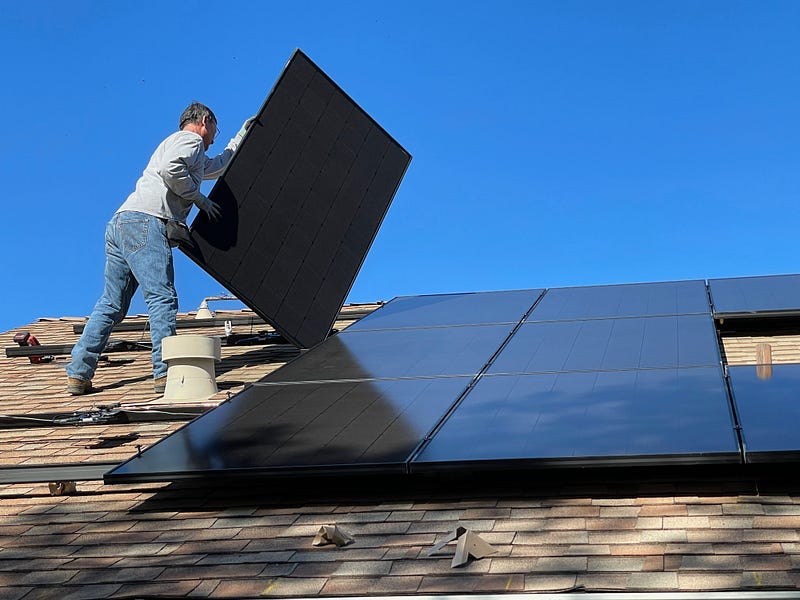
Photo by Bill Mead on Unsplash

The previous part elaborated on the scope and choices of the roof(s) of the house where the panels can be placed. In this article, we will proceed with the assumption that you have a viable roof. Again, I encourage you to get professional assistance, or structural data of your house, to be able to make an informed choice. A quick summary — You need a strong roof, preferably with minimal shading obstacles both on the roof and around it. Also, it has to be accessible.

That being said, we can move ahead with the next step — Finding out how much of power you need from solar power. As you already know, solar panels generate electrical power as output, so the consumption will be the key factor in deciding how big of a system you need (This is, of course, subjected to the various criteria touched upon in the first part).

Before proceeding further, I highly recommend reading the first part and then continuing further down.

Knowing your needs is half the game. The other half, a̶s̶k̶i̶n̶g̶ ̶A̶s̶w̶a̶t̶h̶ setting it up.

Calculating your electricity need.
Photo by Diz Play on Unsplash

Here, by “needs”, I mean a twofold decision — Both in terms of electricity, and your aim for going solar.

Knowing how much electricity you would need can be easy, or hard. You can start with your electricity bill. Depending on your country and/or service provider, the bill can be extremely detailed, or just a lump sum of total electricity used. Some companies go further and give you the ability to monitor your consumption on daily, or even hourly basis. The more data you get, the easier it is to calculate your electricity needs without taking the hard route.

Which brings us to cases where you only know the total quantity, no breakdowns. Here, you need to take a long, hard look at your life choices. What are your appliances? Think in terms of a few categories, like lighting, cooking, laundry, gardening appliances, etc. Try to answer the following questions as accurately as you can (And no, this is not a personality test):

  • What is the capacity of the appliance? (This is the ‘watts’ or ‘kilowatts’)
  • What is the time of the day you use it? — This is especially important. You need to know what is your use when the sun is not out there.
  • How often do you use it?

Calculating the demand from there is fairly simple. Just

Demand of one item (in kilowatt-hour or Units) =

Number * Capacity (kilowatt) * Time of use (hours)

Do this for a typical day at different times of the year. This is again important, because the way we use our electricity is not the same throughout the year. And add a weightage to each day, like how many summer days, how many winter days. The overall sum for 365 days should be somewhere near your electricity bill. Of course, you also need to know the day-night breakup.

Example: You use 10 lights that are 10W each. That is 100W in total. Your use is something like this:

  • In summer (~3 months), late spring (~2 months), early fall (~2 months) you use it for like 6 hours of the day. That’s almost 210 days.
  • In the rest of the year (~5 months) you use it 8 hours a day. Let’s say that is 155 days.
  • The total use is (100*210*6)+(100*155*8), which is around 250000 Watt-hours per year, or 250 kilo-watt hours/units.

Pro-tip: If you have the tools and patience, do try to calculate for as many days as you can. The finer your data is, the more accurate you can design your system. You can simply develop a basic tool using Microsoft Excel. I will not recommend using readymade “calculators”, unless they are relevant to your geography.

You can extend this calculation to any future devices you may want to use. I recommend to think of at least 5-year term, but if that is not a possibility, you can scale up your PV system to some extent — Although that is a very specialized topic in and of itself.

Good to know

There is an upcoming trend called “Demand Response” where consumers are encouraged to consume more electricity when production is higher. In case of solar, it implies that highest consumption should be at midday, and if you have any serious repair or beautification, try to do them in summer. This behavior can be very helpful in optimizing your consumption, and keeping the grid relatively healthy.

Of course, there are now emerging technologies, like smart reminders, sensor-based planners, and in future, I visualize a house where your production and consumption are both optimized by AI (Happens to be a pet project of mine, except I am horrible at coding. Collabs, anyone?)

What is the type of system you want?
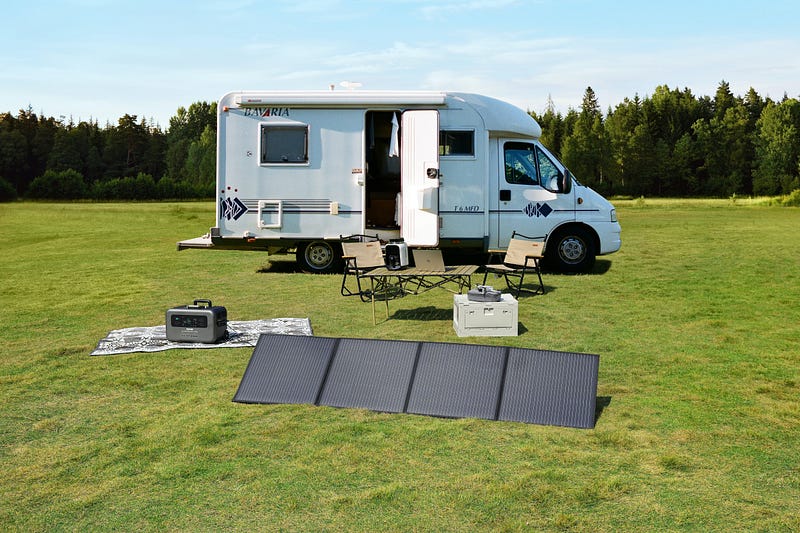
Photo by Zendure Power Station on Unsplash

This is again a matter of preference — There are two broad types:

  • On-grid, or grid-connected PV system.
  • Off-grid, or disconnected PV system.

The difference, as you already see, is how you interact with the grid. Let’s look at the two very quickly.

  • On-grid systems have the benefit of using the grid when the PV fails, or in nights when we need more power. Supply is more resilient in case the PV fails, or the conditions to get solar power are affected. Off-grid, on the other hand, is completely dictated by weather and climate.
  • On-grid systems may also have the option of sharing excess power to the grid, which is called “feeding in”. Houses can get paid depending on how much power they feed into the grid. (Quick disclaimer: Many countries are now moving towards highly regulating the feed-in power with tariffs and taxes. Belgium is my familiar example. Feel free reach out and learn why!). Off-grid systems don’t have such options.
  • Consumer behavior can be a bit more relaxed when you have a grid-connected system. Worst case scenario, you take power from the grid. The off-grid systems require more awareness about how much electricity you use.

This distinction is very important, as it determines the type of components you use, and sometimes also affects the performance of the system.

To summarize, building a PV system is just like any other engineering system — Start with your needs and desired outcome. This initial section covered how to determine the size of your system, which is an electrical consumption. We also looked at how to qualitatively approach this number. In the next part, we will bring together the roof and the demand, and apply it to a PV system.

P.S, a bit of self-publicity: I’d love for you to also check out my other posts, (mostly) non-technical articles as well, here:

Solar Energy
Offgrid Solar
On Grid Solar
Subject Matter Experts
Finding The Joule
Recommended from ReadMedium