
Consumer’s guide to making a solar panel system.
Part 1: Is your roof ready for this?
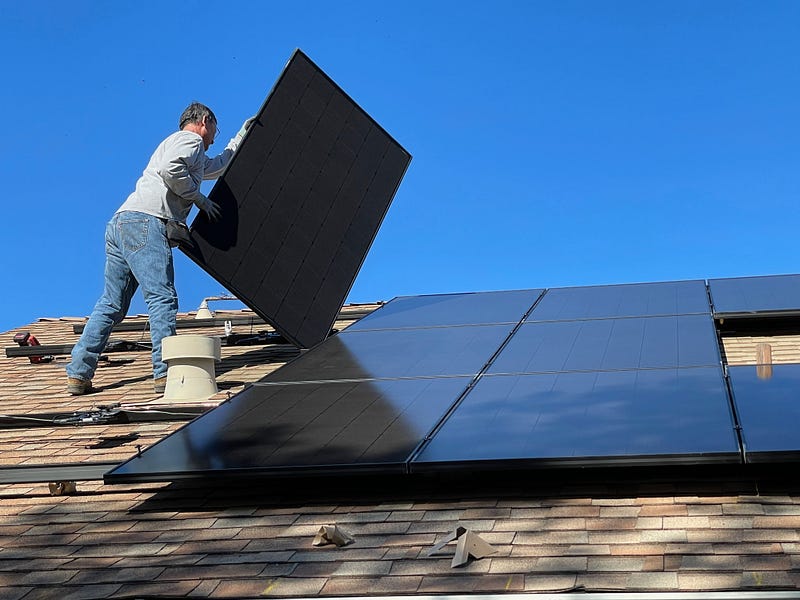
So, you are concerned about what is the nature of your household’s electricity sources. Or you want to shift some of your consumption to renewable energy. Or just jump off-grid, survivor style. Or, you heard of the sustainability fad and have FOMO. Whatever it may be, you decide that you want to make a solar panel system (I’ll also call it a PV system, for Photovoltaics). But you don’t know what to do, or how to go ahead by yourself.
At this point, I am tempted to recommend my professional assistance (seeing as a I am a PV System engineer at a company of rooftop solar), but I will refrain from that for being true to the title of “making” your system.
In this part , we will understand what is a “great” roof, what is the next best option, and most importantly, what is not a good roof. This analysis can be extended for detached areas like garden sheds or garages, as well.
Above our heads.
Types of roofs
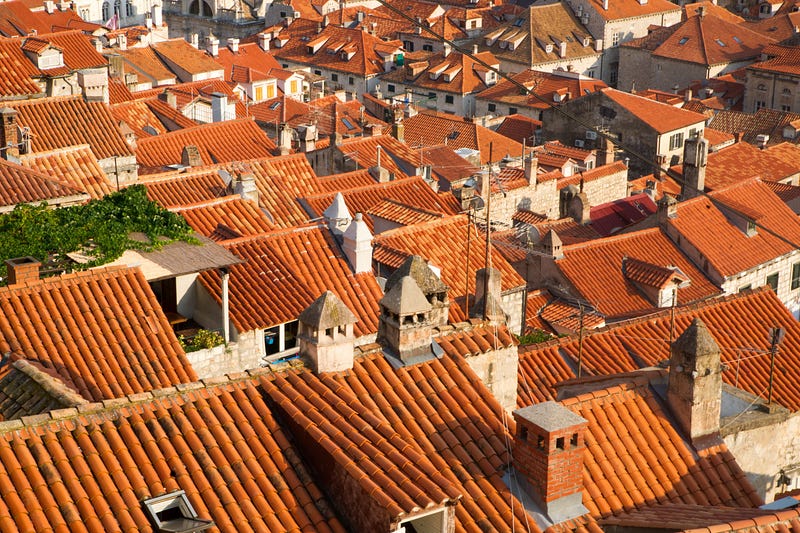
In a residential setting, the best place to install solar panels is definitely the highest point — The roof. The roof has the most open space, and is free from all of the things that can block the sunlight from reaching panels. Now you may not be interested in modifying your roof, so I am just assuming it is going to stay the way it is. There are many “types” of roofs, based on their construction material and other factors, but in PV systems, two are relevant:
- Flat roof.
- Tilted/Inclined/Pitched roof.
This determines how the panels will be placed. In turn, it also influences the production. Both are just as good, and there is no specific advantage of one over the other in terms of production. A few points to consider, though.
- The flat roof has a higher chance of waterlogging under the panels, but in the tilted roof gravity is on your side. This means a bit more thought has to be spent on the natural slope of your flat roof.
- The flat roof allows better accessibility to panels, in case you have to clean them, or a technician has to work on them. The tilted roof may need supporting lifts, or at least a ladder, depending on the height from ground.
- Depending on the location, the flat roof may be off-limits for regular use (Commonly in Netherlands or Belgium) or part of human use (What I call the ‘motta maadi syndrome’ in India, especially south). If the roof is not to be used, it may not have high parapets, and have more space. The ones in use, however, come with tall parapets AND limit the area of use for panels. The pitched roof does not have such an issue and is not used as regularly. Unless you are bitten by a radioactive spider.
Now that we know the types of roof, let’s take this one step further into the impact of the materials used.
Influence of construction material.
What do I mean by construction material? Tiles, slates, sheet metal, flat metal, cement, bitumen, wood. The way the roof is made has quite an impact on the system. A regular solar panel can weigh upwards of 21 kilos (higher capacity panels go to 35 kilos even), so if you have a 10-panel system, that is an extra 210 kilos on your roof. At minimum. So, immediately, your roof has to be strong enough.
Enter “load bearing capacity”.
This is quite an extensive topic and will require an article of it’s own. For now, let’s just understand it as the ability of the roof to handle weight. This data can be gleaned from the structural documentation of your house. If not, you can also do a back-on-envelope calculation, but I will highly recommend getting an engineer to work this one for you. The first principle is determining the bending moment of your roof.
Okay, I will just write about it in a different article.
For general purposes, if your roof is sturdy enough, with good structural underroof and minimal structures (like chimneys) on the roof, you’re good to go. Cement and steel roofs are good. Highly risky are the sheet metal roofs. If five adults can stand on that roof without collapsing it, chances are, 10–15 solar panels will do just fine. Again a disclaimer — This is an anecdote. Please consider getting an engineer here.
Other structures on the roof.
The roof can also house other structures, like chimneys, skylights, AC units, exhaust vents. They are a load, but they also occupy space on the roof. They also are potential shading threats — They can block the sunlight and cast a shade on your panels. If your roof has a lot of these additions, you may not be able to use solar panels effectively.
What remains after, is useful space.
After the space has been allocated for all above-mentioned uses, what remains is the so-called useful space. This space is where the panels will be installed, and can determine the layout and number of panels you can ultimately have on the roof.
Around your house.
Having a good roof is just part of the solution. The surroundings can also determine the feasibility of the system. This includes a few main concerns:
- The presence of very tall buildings or trees in immediate vicinity of the house can block the sun for many hours of a day. This defeats the purpose of having a solar panel.
- The accessibility of the house — Is it reachable from the roads? Is there enough space to, for example, place a lift to move people to the roof? Are there any threats in the way, like overhead cables?
- If your system is placed on a detached roof, it is recommended to be connected to the main house electrically. If not, it may involve a few extra steps.
- What is the weather in your area? Generally, solar panels can generate power even when it’s not full sunshine, but if you live in a rain-prone area or somewhere you may not get a lot of sun for a large fraction of a year (a hill station, mountainside, places very north or south of Equator)
To put it in a nutshell, having a viable roof is the most fundamental need for having a PV system. It is not the only condition, as it also involves a few other qualifying criteria in terms of electrical connections (more on that in part 3)
P.S, a bit of self-publicity: I’d love for you to also check out my other posts, (mostly) non-technical articles as well, here:


