avatarSjoerd Nijland

Free AI web copilot to create summaries, insights and extended knowledge, download it at here

2036

Abstract

     <iframe class="" src="https://cdn.embedly.com/widgets/media.html?src=https%3A%2F%2Fgiphy.com%2Fembed%2FMeOyHuh9QcPh6Keb3r%2Ftwitter%2Fiframe&amp;url=https%3A%2F%2Fgiphy.com%2Fgifs%2Ffootball-soccer-blindfold-MeOyHuh9QcPh6Keb3r&amp;image=https%3A%2F%2Fmedia.giphy.com%2Fmedia%2FMeOyHuh9QcPh6Keb3r%2Fgiphy-downsized-large.gif&amp;key=a19fcc184b9711e1b4764040d3dc5c07&amp;type=text%2Fhtml&amp;schema=giphy" allowfullscreen="" frameborder="0" height="244" width="435">
          </div>
        </div>
    </figure></iframe></div></div></figure><p id="5803">I’m not saying Developers need to interact with customers and stakeholders <i>all the time</i>. UX designers are great at facilitating and processing customer interviews<b> </b>en-person.<b> </b>They can collect footage and data that show customers are interacting with the product, or even (paper) prototypes of that which the is considering to be developed into the product. They can organise Service Safari’s for the team. Service Safari’s are experiential field trips for teams so they can experience the customer’s journey from the customer’s perspective in a safe setting. In Scrum these are <a href="https://readmedium.com/empiricism-inspection-part-one-cc4cd8bf98a8"><i>inspections</i></a>.</p><p id="41e7" type="7">Inspect &amp; Adapt</p><p id="61f2">So LEAN UX adds value to Scrum as it makes teams less blind to what the customers and users are actually experiencing. UX Designers can help Scrum Teams <a href="https://readmedium.com/a-daily-scrum-in-the-cave-78d8d7ac6f72">get out of their cave</a>.</p>
    <figure id="6e51">
        <div>
          <div>
            <img class="ratio" src="http://placehold.it/16x9">
            <iframe class="" src="https://cdn.embedly.com/widgets/media.html?src=https%3A%2F%2Fgiphy.com%2Fembed%2Fl2SqhmmWcv9pibmy4%2Ftwitter%2Fiframe&amp;url=https%3A%2F%2Fgiphy.com%2Fgifs%2Fsouthparkgifs-l2SqhmmWcv9pibmy4&amp;image=https%3A%2F%2Fmedia.giphy.com%2Fmedia%2Fl2SqhmmWcv9pibmy4%2Fgiphy.gif&amp;k

Options

ey=a19fcc184b9711e1b4764040d3dc5c07&type=text%2Fhtml&schema=giphy" allowfullscreen="" frameborder="0" height="244" width="435"> </div> </div> </figure></iframe></div></div></figure><p id="cc9d">When there is more <a href="https://readmedium.com/empiricism-transparency-33adad8fbba2"><i>transparency</i></a> over what the customers and users are experiencing, it will enable the team to <b>work together as a team</b> and <b>focus</b> on building that which will benefit that experience most.</p><p id="4901"><b>Next episode:</b></p><div id="5c17" class="link-block"> <a href="https://readmedium.com/working-as-a-cross-functional-team-cf58c3f6fdc6"> <div> <div> <h2>Working as a cross-functional team</h2> <div><h3>SCRUM & LEAN UX | Episode 4</h3></div> <div><p>medium.com</p></div> </div> <div> <div style="background-image: url(https://miro.readmedium.com/v2/resize:fit:320/0*YxqCP4YpShkJNHH0.jpg)"></div> </div> </div> </a> </div><p id="cd32">Thank you <a href="undefined">Paddy Corry</a> and <a href="undefined">Willem-Jan Ageling</a> for reviewing this series.</p><figure id="b8be"><img src="https://cdn-images-1.readmedium.com/v2/resize:fit:800/1*Gm9Ct7FbH5z5u5wRoGZOSg.png"><figcaption></figcaption></figure><p id="cd6b"><i>Do you want to share an article in <a href="https://www.seriousscrum.com">Serious Scrum</a>? Connect with us and make it happen!</i></p><figure id="40f1"><img src="https://cdn-images-1.readmedium.com/v2/resize:fit:800/1*93vbp_QkPcOB3Eu59FLg7Q.png"><figcaption></figcaption></figure><p id="9d19"><i>Also, <a href="https://join.slack.com/t/serious-scrum/shared_invite/enQtNjQ5MDY0NTg5OTg0LWExYmZkZjZhOTQ4ZGNkMTU2OTgxODY3ZjZjZDA5OTI2NDY4N2ZiYTUxOTMxM2RlNDRlMTJkYTUwMDMwZjgzNTg">you’re all invited</a> to the Serious Scrum Slack workspace. Come join the conversation!</i></p></article></body>

Connecting more closely with end users and customers

SCRUM & LEAN UX | Episode 3

One of the pitfalls in Scrum is that a Development Team could focus perhaps a bit too much on the development of the product increment during a Sprint, doing with what little feedback they get from a Sprint Review.

Sadly, but often so, end-users are not included in Sprint Reviews. They might be represented by internal stakeholders, who might only present real-user metrics and establish assumptions from those. That isn’t what we are aiming for with LEAN UX.
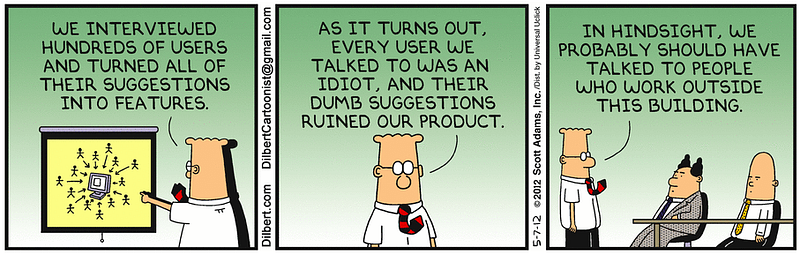
UX designers can recruit users (and other stakeholders) to participate in design activities during the Sprint. Some Scrum Professionals might find this unnerving. And I admit, so did I. After all, wouldn’t that be distracting the Development Team? Yet… imagine frequent release of increments to a user base, which are all entirely build on unvalidated assumptions, made by indirect representatives during a brief get-together?! Now that is unnerving.

Continuous alignment through continuous involvement.

Some shiver at the thought of developers interacting with customers or end-users. Imagine though what it does to motivation when developers (being the value creators) don’t get to see the value being delivered. Not getting feedback is like playing a sportgame blindfolded, failing to see where the ball is and where it really needs to go. Players don’t get to experience what it is like scoring. They only hear about it indirectly.

I’m not saying Developers need to interact with customers and stakeholders all the time. UX designers are great at facilitating and processing customer interviews en-person. They can collect footage and data that show customers are interacting with the product, or even (paper) prototypes of that which the is considering to be developed into the product. They can organise Service Safari’s for the team. Service Safari’s are experiential field trips for teams so they can experience the customer’s journey from the customer’s perspective in a safe setting. In Scrum these are inspections.

Inspect & Adapt

So LEAN UX adds value to Scrum as it makes teams less blind to what the customers and users are actually experiencing. UX Designers can help Scrum Teams get out of their cave.

When there is more transparency over what the customers and users are experiencing, it will enable the team to work together as a team and focus on building that which will benefit that experience most.

Next episode:

Thank you Paddy Corry and Willem-Jan Ageling for reviewing this series.

Do you want to share an article in Serious Scrum? Connect with us and make it happen!

Also, you’re all invited to the Serious Scrum Slack workspace. Come join the conversation!

UX
Scrum
Lean UX
Serious Scrum
Agile
Recommended from ReadMedium