avatarSjoerd Nijland

Summary

The website content discusses the enhancement of cross-functional team collaboration through the integration of LEAN UX principles with Scrum methodologies.

Abstract

The article delves into the synergy between LEAN UX and Scrum, emphasizing how LEAN UX techniques can significantly improve collaboration within cross-functional teams. It highlights the inclusive nature of design in this framework, where all team members, regardless of their specialization, contribute to the design process. The article underscores the role of UX Designers as facilitators in this collaborative environment, leading activities such as Design Studio sessions and utilizing tools like the LEAN UX Canvas to transform business problems into actionable Sprint Goals and hypotheses. The text also points out the benefits of including Marketeers and UX Designers in Development Teams to enhance the definition of "done" by incorporating real user input and insights within short Sprint cycles. The Scrum Guide's emphasis on skilled inspections is referenced to support the idea that these professionals are valuable additions to cross-functional teams for their ability to inspect and adapt based on user feedback and collaboration effectiveness.

Opinions

  • LEAN UX is praised for extending the concept of cross-functionalism, allowing the entire team to engage in discovery and go beyond mere delivery.
  • The article suggests that in Scrum with LEAN UX, design becomes a collective effort, with activities guided by experienced Product Design professionals.
  • UX Designers are seen as key collaborators who can facilitate exchanges between specialists and lead Collaborative Design sessions, such as Design Studio.
  • Co-located teams are advocated for, as they focus collectively on solving business problems.
  • The LEAN UX Canvas is presented as a tool that aids Scrum Teams in creating meaningful Sprint Goals and hypotheses that can be translated into Product Backlog items.
  • The inclusion of Marketeers and UX Designers in Development Teams is viewed positively, as it allows for the collection of real user metrics and insights within the Sprint duration.
  • The Scrum Guide's recommendation for skilled inspections at the point of work is cited to reinforce the value of having diverse expertise within the Development Team.
  • The article concludes with a nod to the continuous learning and adaptation process that occurs within these cross-functional teams, with the aim of delivering value within even very short Sprint cycles.

Working as a cross-functional team

SCRUM & LEAN UX | Episode 4

Continuing the 10 ways LEAN UX boosts value in Scrum, I’ll zoom in on how LEAN UX promotes better collaboration within a cross-functional team.

LEAN UX provides us with great techniques on how cross-functionalism can be extended to enable the whole team to get involved in discovery and to enable them to go beyond delivery.

In Scrum with LEAN UX, everyone gets to design. When teams consist of specialists with ranging disciplines working together in a collaborative space, each problem is approached from many different perspectives. Don’t worry though, these activities are led by someone experienced in Product Design.

UX Designers can promote collaboration by facilitating the exchanges between specialists.

They do this by facilitating Collaborative Design, for example by running a Design Studio.

LEAN UX promotes co-located teams, focusing together on a common business problem.

UX Designers find ways to share work and insights across the Development Team. They can help teams collaborate by facilitating collaborative sessions, for example by swarming together on a LEAN UX Canvas.
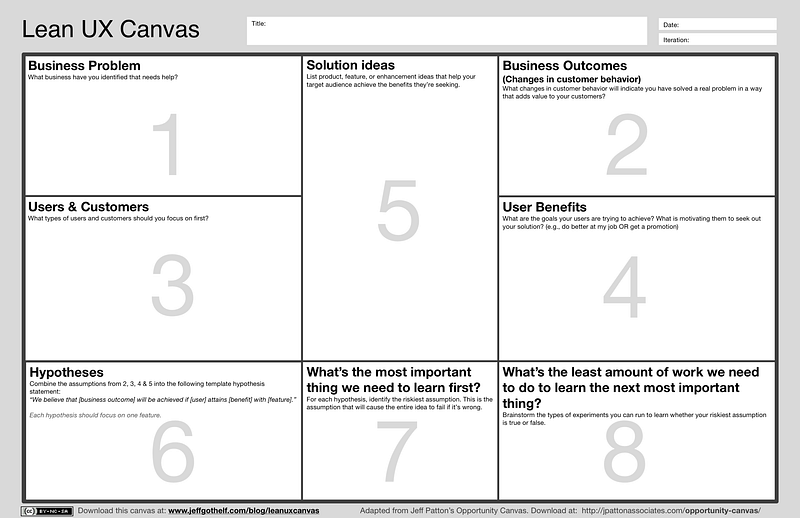
This canvas can help Scrum Teams translate business problems into Sprint Goals and relevant hypotheses to Product Backlog items.

The teams I currently work with recently included Marketeers and UX Designers into the Development Teams. Together, they’ll learn how to help design great Sprint Goals, gather Real User Metrics, perform A/B tests, perform interviews, create recordings, etc. This enables them to extend the definitions of “done” to not just delivery, but to collecting insights from how it is both received and experienced within a Sprint, even Sprints as short as one week. That means the teams move from concept to validation to delivery to inspection and adaptation with real user input within a single week. Rinse, Repeat.
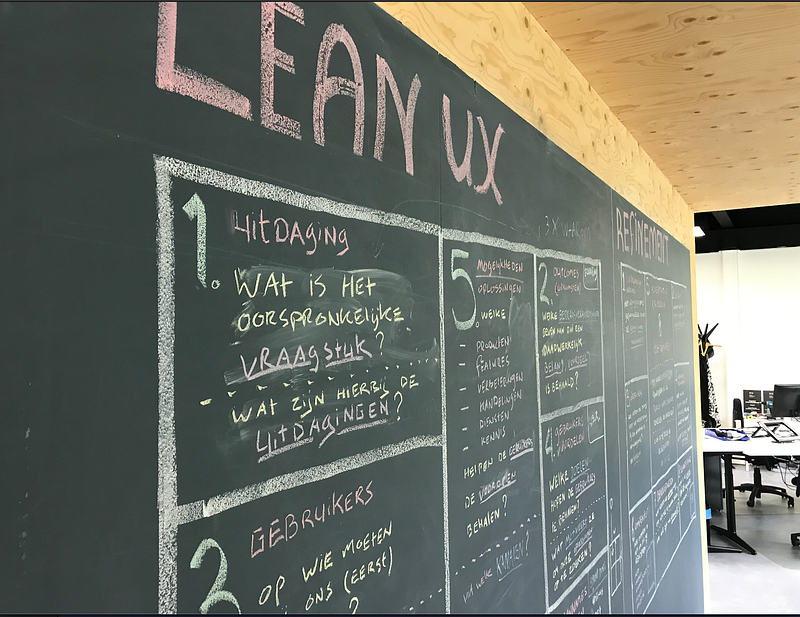
LEAN UX CANVAS

The Scrum Guide tells us

“Inspections are most beneficial when diligently performed by skilled inspectors at the point of work.” — The Scrum Guide

(Data) Marketeers and UX Designers would be great additions to any cross-functional Development Team as they can help perform these inspections. They can inspect hypotheses, customer satisfaction, feature usage, how a team collaborates and if the team is focussing on building the right thing.

Next episode:

Thank you Paddy Corry and Willem-Jan Ageling for reviewing this series.

Do you want to write for Serious Scrum or seriously discuss Scrum?
UX
Lean UX
Serious Scrum
Scrum
Teamwork
Recommended from ReadMedium