
Connect With Your Readers By Being Honest About Your Struggles
You don’t have to be a great writer. You just have to be real.
I don’t consider myself a great writer. If I’m honest, I barely consider myself a good one. Yet, I’m somehow at a point where I’m about to reach 3,000 followers. I’m sure many of you can relate when I ask why? Why do people read my work? How have I gotten here?
While there might be various reasons why people my work — every reader is different, after all — one look at my comments made me realize one important reason that shouldn’t be overlooked. Here are a few of those comments:
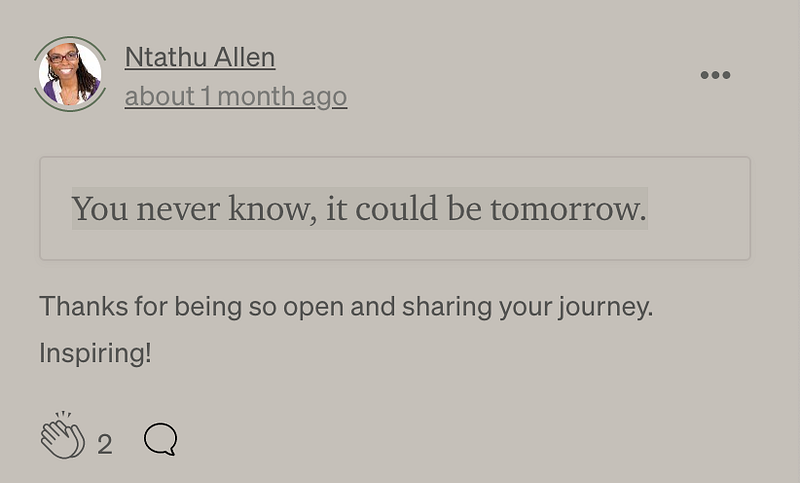
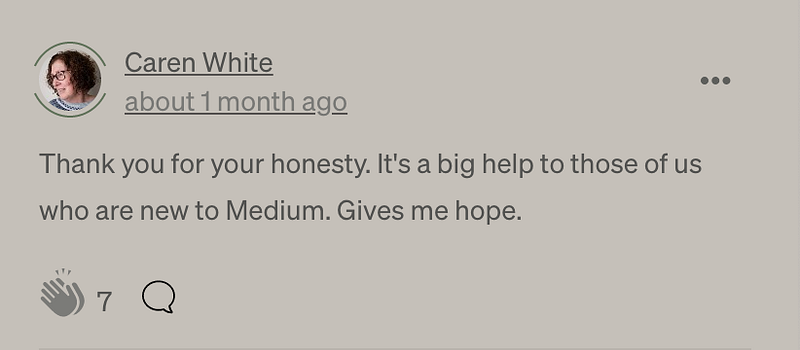
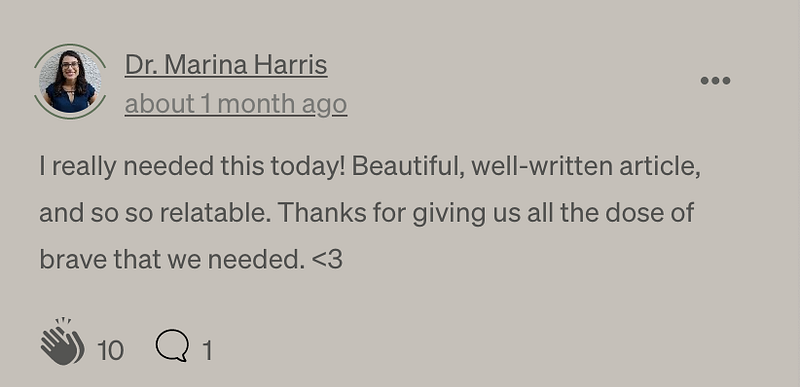
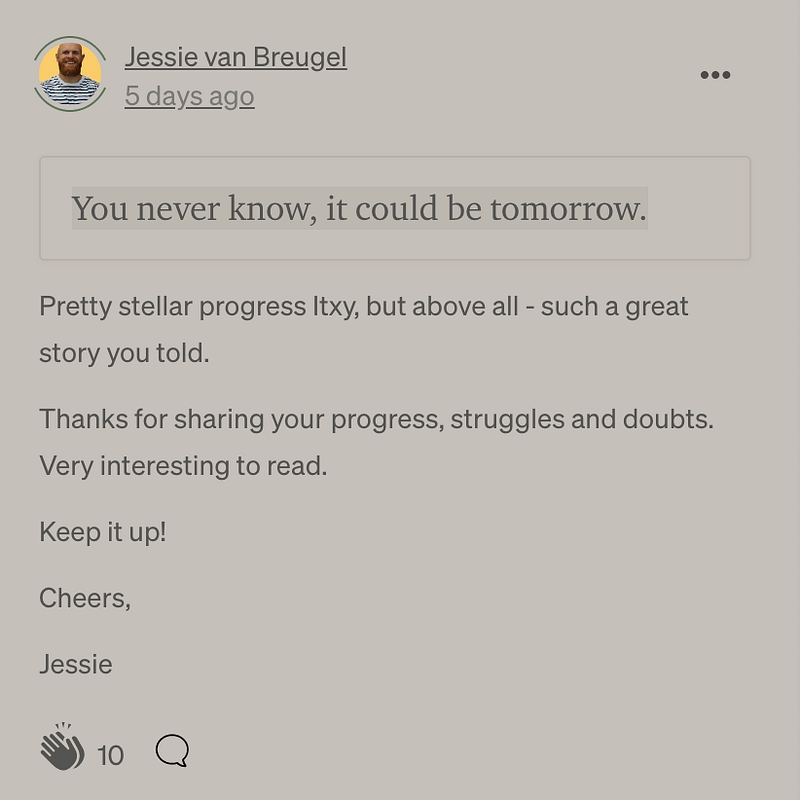
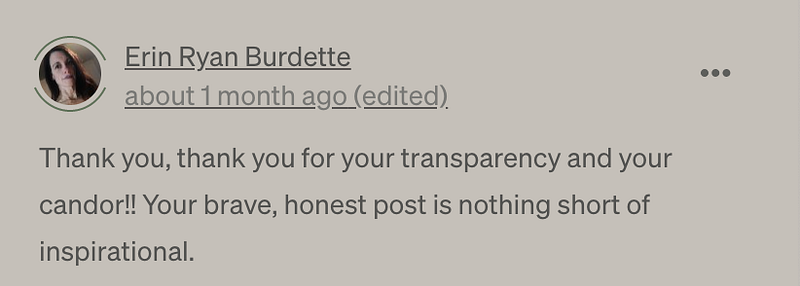
Readers like transparency, authenticity, and vulnerability. I may not believe I’m a great writer, but I pride myself on my ability to be open about my doubts, struggles, and insecurities.
I’ve gotten real about how difficult the writing process is. I’ve admitted that sometimes I doubt my love for writing. I’ve shared my earnings from my entire Medium journey — which is nowhere what we’re used to reading about in these types of pieces. I’ve talked about my demons, how badly I’ve wanted to give up, and how hard it is sometimes to keep persisting.
And readers love that. It’s why they stick around and say they can relate. I don’t pretend that this journey is easy. We may not be journalists, but it’s a writer’s job to expose the truth anyway — your truth, universal truths, human truths.
Being honest isn’t easy. Sometimes it’s embarrassing. Sometimes you’ll feel like you’re begging for attention or making a fool of yourself. But I’ve never received a comment saying I was too honest.
I’m not saying that every article you write has to get personal. Sometimes I write about books I like or ways to be more productive. Because another truth is that sometimes I don’t like feeling vulnerable. I don’t want to expose myself — I just want to make some money.
When you do want to be more open, here’s how you can do so.
3 Questions to Ask Yourself When You Want to Be More Honest
Here a few questions I ask myself when I realize I want to get deeper than the surface. You can ponder them before or during you write because they’ll open up a floodgate of memories and thoughts you have on the subject.
- What is the truth?
- How can you tell it? (Which story can you share?)
- How did you feel/do you feel right now?
Let’s use one of my articles as an example: How to Calm Down and Stop Your Mind from Spiraling. When I was writing this article, I started by asking what the truth was. In this case, it would’ve been easy to establish myself as an optimist who rarely experiences negative thinking. But that would’ve been a lie. The truth was that, at the time, I was having trouble being positive, but I’d found techniques that stopped me from spiraling.
Moving on to question two, I thought how can I share that truth? Which personal moment can I share? I’d thought back to the week before when I was freaking out about some financial struggles my family was going through. It’d been difficult to calm down, but I managed to pull through. It was the perfect personal and honest story for that topic.
If you’re wondering if your anecdote will be relatable, it normally is. Even if the experience itself is different, emotions are universal. For example, if I talk about financial struggles, someone who’s never gone through a similar situation can still think about a moment in their life that they also felt helpless. They can relate because of the feeling.
As you reflect on the memory — or your current feelings — inflict all of those emotions into the piece you’re writing. There’s no trick to this. It’ll just happen as you write. Here’s the important part: when you start editing, resist the urge to change what you wrote. A part of you will feel embarrassed but don’t be.
Ask yourself these questions, and think for a while about which personal moments you may be willing to share. Write what’s on your mind exactly, and don’t filter yourself. If you’re sharing something embarrassing, it’ll probably have a bigger impact than you think.
Final Words
While readers can relate to more than dark moments filled with doubt, more writers talk about the good than they do the bad. Don’t be afraid to be one of the few who’s completely honest about their journey. Your readers will feel less alone and comforted by the fact that if you — someone they admire — can get through it, then they can too. It’s a beautiful message to be able to share as a writer.
Be honest and brave. As Brené Brown said, “Staying vulnerable is a risk we have to take if we want to experience connection.”


