
Did the Catholics canonize a gay man?
The debate over John Henry Newman’s sexuality goes on
On October 13, 2019, Pope Francis declared the English cleric John Henry Newman was a ‘saint’, Newman having evidently performed the required two posthumous healings.
And an old debate was raised once again about the teacher who is respected across all Christianity for his humane, ecumenical teachings. Was John Henry Newman ‘gay’?
To many Catholics, the idea could only be horror at anyone making such a vile suggestion about so favored a divine servant.
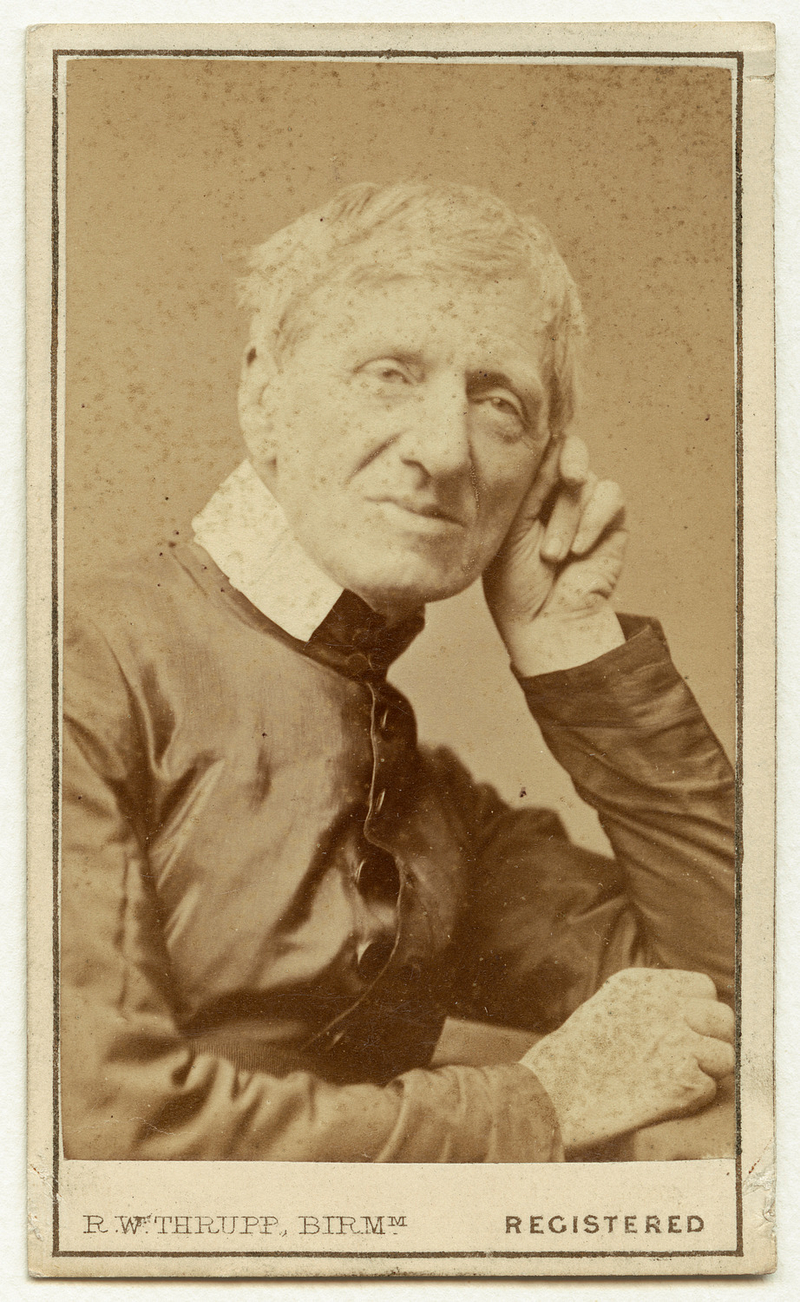
Priests have often been thought sexually different.
That seems so evident it seems difficult to deny. “Don’t you know,” went the celebrated remark, “there are three sexes — men, women, and clergymen?”
But in his time, John Henry Newman was perceived as effeminate even for priests. He was often called “maidenly,” etc.
His life can seem to reflect intense homoerotic feelings. He seems to have developed very strong feelings for men since he was young, and in an infamous scene in 1864, was attacked for “perversion” by the Anglican cleric Charles Kingsley.
As the historian Oliver S. Buckton notes, ‘perversion’ in this context means “his Catholicism, his celibacy, his gender transgression, or ‘effeminacy’, and relatedly, his homosexuality.”
Newman was likely celibate.
But that he harbored any sexual feeling for women remains in doubt after, for example, reading his letters. He writes one describing his “profound inability to understand love between a man and a woman.”
Then there was his evident life partner in Ambrose St. John, a fellow priest fourteen years younger. Newman called him “my earthly light.” They seem to have met in 1841 and lived together for 32 years, until St. John’s death of a stroke in 1875. The two men had studied in Rome together and were ordained together. Newman recalls their relationship in a letter
“From the first he loved me with an intensity of love, which was unaccountable. At Rome 28 years ago he was always so working for and relieving me of all trouble, that being young and Saxon-looking, the Romans called him my Angel Guardian. As far as this world was concerned I was his first and last. He was not intermitted this love for an hour up to his last breath.”
They were buried together — in the same grave.
Years later, the church dug up Newman and put him in his own grave.
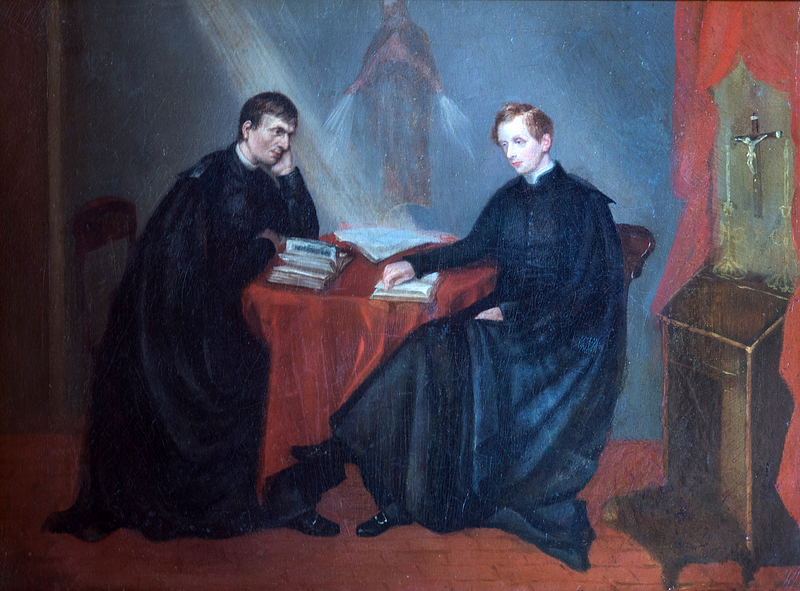
Many others read Newman as the 19th century version of ‘gay’.
The historian David Hilliard notes the prevailing accuasation that Newman had a “characteristically feminine” mind and lack of “virility.
To the pro-queer Lytton Strachey, in Eminent Victorians (1918), Newman was a tragic figure for not exploring his sexuality: “In other times…under other skies, his days would have been more fortunate.”
Strachey was very versed in ‘queer’ styles of that day and he seemed not to think it much in doubt that Newman was ‘that way’.
Newman’s sexuality was broached in print in 1933.
In a well-known crtique, Geoffrey Faber reads him as ‘effeminate’ and a ‘pervert’ in his history book, Oxford Apostles:
“Newman’s natural masculinity, if he had it, was quickly cauterized. As he might never be an ordinary boy, so he was never to be a whole man, and as a leader he was to prove a broken reed.”
In this overview, Newman lacked a drive of masculinity and “instinct.”
“Years of intense hard work and bodily mortification had killed what he would have called his baser instincts; or, if they were not completely dead, they were now so mutilated and enfeebled that they were completely subservient.”
But Newman’s critics deny it.
A priest could not be gay, by definition, for many traditional Catholics, as this would situate a holy person as unholy.
Newman was asexual, perhaps. In a round-up of the evidence, Joseph Azize, in “Newman and Sexuality,” makes a vigorous argument for Newman having been asexual.
Any homosexuality is completely dismissed in the notable Catholic biography of Newman by Ian Ker. Even being buried in the same grave as his lifelong companion wasn’t too suspicious, Ker finds:
“Newman would scarcely have left such an instruction had he ever dreamed that it could ever be interpreted as having any significance beyond the significance which he attached to it — nor would the Oratory or the Church authorities ever have permitted such a joint burial if they had had the slightest suspicion about what must have seemed to them a totally innocent, not to say praiseworthy gesture.”
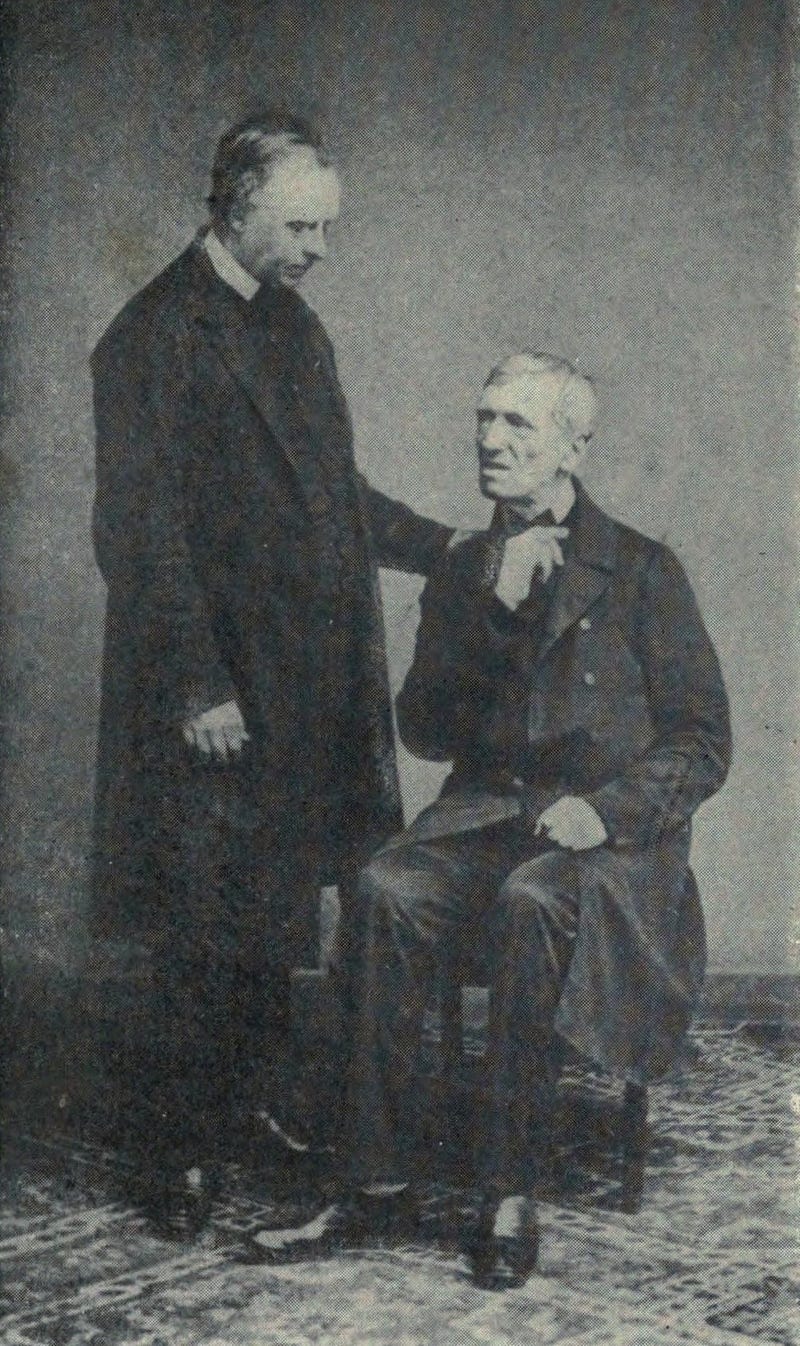
But the matter keeps coming up.
In 1979, the periodical Gay Literature ran a treatment of the issue. Martin Smith’s “A Saintly Gay or A Gay Saint?” worked to update Newman for the era of gay liberation.
And queer-friendly scholars often read Newman as ‘queer’. As Dominic Janes writes in Visions of Queer Martyrdom, the nonsexual coupling of Newmanand St. John “provided both a model and a substitute for same-sex relationships.”
Diarmaid MacCulloch, a gay academic, writes in Silence: A Christian History:
“After a survey of Newman’s emotional life — his passionate friendship with other single men (of whom his companion in the grave Ambrose St John was just the most longlasting), his tortured opinions about his own sinfulness, his obvious revelling in the homosocial world of early Victorian Oxford, it is difficult to avoid applying to him that useful variant of Ockham’s Razor: ‘Looks like a duck, waddles like a duck, quacks like a duck — can it be a duck?’”
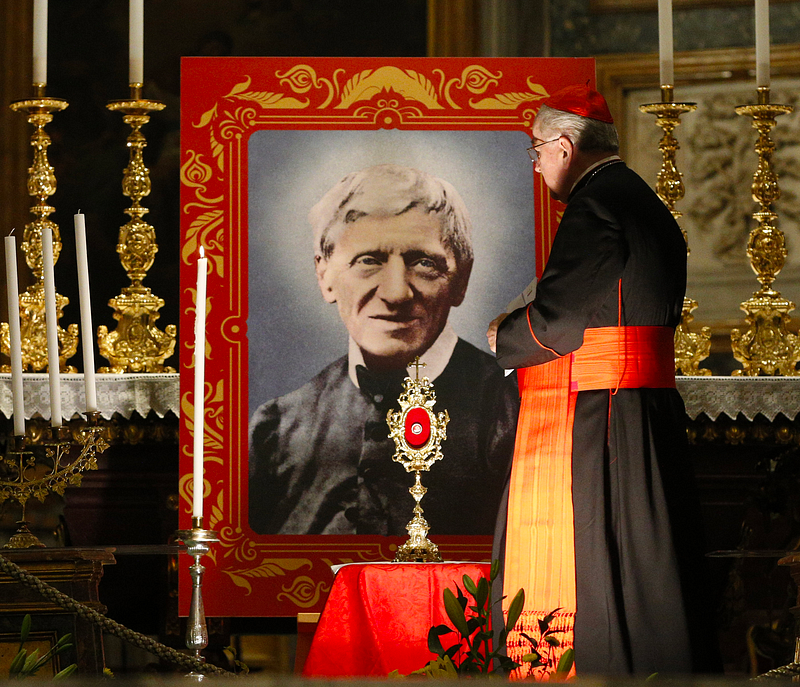
Even a Catholic priest could speak out.
“It’s not unreasonable to think he might have been homosexual,” says James Martin, a Jesuit priest, upon Newman’s canonization. “His letters and his comments on the death of one of his close friends are quite provocative.”
But the faithful will dismiss that—along with James Martin.
Newman’s sexuality, one would have to say, can seem more a theological evaluation than a biographical one. To queer-friendly people, he was.
Otherwise, he very clearly was not. 🔶


