
THOUGHTS
Confessions of a Gen Y Kid: Pop Culture
Busywork, surreal play, and casual hedonism throughout the 1980s and 1990s foreshadowed much of our world’s present-day consternation
Millennials grew up with very specific cultural markers that have shaped our worldviews. It was reflected in the abuse we endured. It became exemplified by the toys and leisure activities that occupied our free time. Its metaphorical flavor could be found in the snacks upon which we feasted.
In Part 1 of my series “Confessions of a Gen Y Kid,” I highlighted what K-12 schooling was like for myself and so many of my generational peers. Today, I’ll explore the unwritten codes and novelty items that shaped our identities. Whether we employed them at school or for leisure play at home, there were certain hallmarks of the 1980s that extended into the 90s…until more updated technology made them obsolete.
Discipline
First, I’ll fully admit I was abnormal as a kid. In all of my years growing up, I was never once grounded by my parents — nor did I ever receive detention from any teachers. Part of this was due to my sheltered lack of social life, which can be largely attributed to my place on the autism spectrum. In addition, my reputation as a “good kid” kept me out of trouble.
Of course, part of the reason I stayed so well-behaved so often was because I was SCARED SHITLESS of getting in trouble, in the first place. Please refer to my op-ed piece entitled “Stop Telling Me What a ‘Nice Guy’ I Am.”
None of this was due to my parents somehow being hippies (oh, if only!) with free-range parenting techniques. On the contrary, their parenting styles were the epitome of social conservatism — filled with heteronormativity, fearmongering, guilt-tripping, and gaslighting.
My dad had been conditioned by his own father to use violence as part of discipline. He didn’t just spank me and my sister…he would hit us with a wooden spoon. Or, he’d take off his belt and whip us with it. Or, smack me across the face with his bare hand.
I remember when I had reached middle school, and he STILL tried to spank me as a punishment. One time, he ended up having to chase me all over the house; and, even then, I wouldn’t let him put his hands on me, because it got to the point where I internally screamed inside of my head, “I’m too old for this!”
My dad would also berate me for my political beliefs. We had a three-day-long power struggle (which I eventually won) where he tried to coerce me into continuing with Sunday School when I didn’t want to. While my mom never exhibited these draconian tendencies, she silently went along with it. I can’t count the number of times when she would threaten my sister and I (usually while we were fighting) with variations of “Wait until your dad gets home…”
Not all Millennial kids necessarily had parents as individually scattershot as mine. But, from talking with my peers, it’s clear to me that such traits were present across our households in a widespread manner. Were my parents typical of parents from the Traditionalist and Boomer generations? Well, their exact personalities may not have necessarily reflected those of “all” or “most” Boomers and Traditionalists. But they symbolized a lot of them.
The writers of That 70s Show didn’t just pull the Red Forman character out of thin air.
At school, humiliation was also the name of the game. In fact, in some ways, this was worse: unlike parents and guardians, the plethora of passive-aggressive teachers, administrators, and aides on school grounds didn’t have to be accountable to students by virtue of living at home with them. Thus, they could get away with a lot more…until some independent-minded parents might actually dare to show up at their neighborhood school and make noise to the administration.
Every teacher or faculty member was different, of course. Some would openly rag on us with degrading language. Phy Ed teachers were notorious for shaming those of us students who weren’t as athletically-gifted as our classmates. Other faculty members would try to make us feel guilty for not engaging in the same pastimes or daily activities as our more popular peers. My Second Grade teacher, Mrs. Brandt, made gum-chewers stick their gum wads on their noses (I never chewed gum, so this was never anything I had to worry about).
Much of this would have been somewhat understandable if our teachers could have at least been consistent with their discipline. But, in my experience, when we would report bullies to the playground aides, the standard retort would be:
“Oh, just ignore them.”
And, of course, even if you tried to ignore the bullies, they’d just persist. Then, when us “good kids” got in trouble for standing up for ourselves or defending our bodies on the playground, we would be set up by bullies to look like the antagonists. Punishments and lectures assigned to us would be disproportionately harsher than they were for the “lowlifes.” Apparently, teachers felt they needed to overcompensate with disciplining us “good kids” because there was still hope for us — unlike the “lost causes” who were usually our aggressors and assailants.
Gadgets and Rituals
I think one of the reasons why food and leisure projects were marketed to us Millennials, in the way they were, was because our “elders” (Boomers, Traditionalists, and GI-Gens) were dismayed by the rise of Generation X. So many of them viewed Xers as rebellious, bubblegum-snapping juvenile delinquents. And, for that reason, they didn’t want to see the youngest generation back then (Generation Y) follow the lead of our big brothers and big sisters.
At the time, I didn’t realize it…but the commodities we consumed also had underlying messages and suggestions. Bright colors, saltiness, sugary flavor, and happy themes were all utilized to make us believe that the life journeys ahead of us would be optimistic and idyllic.
Heh.
Trapper Keepers were a trendy carrier for storing and compartmentalizing all of our class notes and folders. Your lunch box and its matching thermos came in a variety of stylish motifs. Ditto for our cardboard pencil boxes. Excellent grades on assignments were sometimes rewarded with puffy or scratch-and-sniff stickers. A common parental incentive for good behavior was getting to bring home VHS rentals from the video store. I still remember the magic of seeing Gene Wilder’s Willy Wonka and the Chocolate Factory come to life on my basement TV (even though it had been released a full eighteen years earlier), after Mrs. Brandt had read us the entire book during class time.
When not at school or doing homework, cassette tapes for playing music were the norm — until the rise of the “boom box” and music CDs for listening to our favorite vocalists. There were no USBs, so any computer files we created had to be saved on floppy discs. Since a majority of families didn’t have a personal computer in their households, using an electric typewriter was considered upscale or “luxurious.”
No Internet. No DVRs or streaming TV/movies. No SmartPhones or iPhones. No music downloads. Very few laptop computers.
I don’t know if current Alphas (“Coronials”) or younger Zoomers (from Generation Z) recently participated in school candy sales, pre-COVID. But we always sold candy door-to-door as part of schoolwide competitions; the more we sold, the wider variety of catalogue-style prizes we could receive. One year, we sold “Stickees” — these kitschy decorative adherents that you could easily peel on and off of your window for seasonable display. During the Third through Eighth Grades, I was also into amateur photography…using my crappy little 110 camera (a 35-millimeter camera was considered swanky). Of course, we had to wait several weeks for our photos to be developed for us, once our roll of film ran out — no instant digital processing of photos. No ability to simply text or email your picture out to friends or loved ones within seconds of capturing the image.
Everyone hated our monthly “fluoride rinses” — the K-5 system’s attempt, apparently, at promoting good dental hygiene. We had to swig these small plastic cups of this horrid fluoride cocktail — which, for some reason, we all thought tasted utterly REPULSIVE even though it really had no taste to it. Swish it around in our mouths for the longest sixty seconds of our lives…and then spit it back out into our emptied cups. You could only opt out of it with written permission from your parents.
Come to think of it…maybe it was moreso the whole process of sipping, swishing, and spitting the fluoride that made it feel so gross, to us? Not its actual taste (or lack thereof).
Snack Time
What was the perfect way for 80s and 90s parents to shut up their kids? Feed us an array of unhealthy snacks to which we became addicted!
Everyone recalls classic snack foods emblematic of their childhood era. The choices were fairly abundant, for us Millennials and Xers. But among my favorites:
Clearly Canadian Sparkling Water: it disappeared from American supermarket shelves by the late-90s. But thanks to Kickstarter, this fizzy and subtly-flavored seltzer-like beverage made a comeback in American stores around 2015. An imported spritzer from Canada, it had far more flavors available back in the 90s: I loved Western Loganberry, Coastal Cranberry, Summer Strawberry, Mountain Blackberry, and Country Raspberry — with only the latter two being available when it was re-released during the 2010s.
Pizzarias: these tangy snack chips were made with real pizza dough — unlike most varieties of chips, then and now, which usually feature corn products as their main ingredient. Keebler had three delectable pizza flavors: Pepperoni, Supreme, and Cheese. They were discontinued in the late-90s after Keebler failed to remain competitive in chip sales and was bought out by Kellogg’s. Apparently, TGI Friday’s makes a “pizza chip” that many have claimed is very similar to how Pizzarias used to taste.
Chachos: also from Keebler, these crunchy Mexican-style chips were baked from flour tortillas. Their three signature flavors were Cheesy Quesadilla, Cinnamon Crispana, and Restaurant-Style Original. They were more crisp than crunchy; today, they’d probably be targets for claims of cultural appropriation.
O’Boisies: the third member of the Keebler chip family’s trinity, O’Boisies were a zesty potato chip with air pockets to give them extra crunch. Known for their ultra-salty flavoring, O’Boisies boasted their own trio of available flavors: Original, BBQ, and Sour Cream & Onion.
Pepperidge Farm Goldfish Crackers: although they’re still extremely popular today, these bite-size crackers first arrived at our town’s stores when I was in the Sixth Grade. They had fewer flavors, back then. My favorites were (traditional) Cheddar and (traditional) Pizza. The “flavor-blasted” varieties didn’t emerge until I reached high school.
Giggles Cookies: Nabisco manufactured these cookies up through the early-90s. It’s one of my most nostalgic early memories of my Grandma Eichberger, seeing how she loved buying these for me and my sister. Although Giggles were a “sandwich cookie” in the style of Oreos, they were made from shortbread and contained a half-vanilla and half-chocolate fudge filling. Silly and goofy smiley-faces were carved into the cookie’s crust.
Magic Middles: Keebler had its own shortbread-based cookie, soft and Newton-like with fillings of either chocolate fudge or peanut butter. Magic Middles were also a casualty of Keebler’s decade-long revamping, although I found a homemade recipe for them by Gerry Burn at AllRecipes.com
Other salty snacks I craved included Planter’s Cheez Balls (to which I eventually developed an aversion, in college) and Old Dutch Nacho Cheese Dip (still a favorite of mine). Back when I actually ate ice cream, I liked Flintstone’s Push-Up Pops…which is what I ate the first time I ever stayed home by myself (while entertained by 1960s Batman on TV), while my mom ran an errand to the local convenience store.
I no longer eat ice cream; but, back when I did, I liked Dairy Queen’s Blizzards and the soft-serve “Cool Twist Cones” from Hardee’s (aka Carl’s Jr.). I never got to try the Good Humor bars in the supermarket’s frozen desserts section — their four flavors were Chocolate Éclair, Strawberry Shortcake, Toasted Almond, and Chocolate Candy Crunch. My favorite soda pop varieties were Shasta (especially strawberry), Crush (orange and grape), and classic Sunkist. On a family vacation to Central Minnesota, one of my mom’s friends introduced us to Crystal Light — which my mom herself refused to buy for us, because she claimed it caused cancer. And I thought orange Tang was an elegant treat — not realizing it was what astronauts drank because they weren’t able to consume solid foods in outer space.
I didn’t eat all of these things frequently…my enjoyment of them was spaced out, across many months, because my family couldn’t afford the same amounts of groceries as households that were median middle-class, upper-middle-class, or wealthier.
Fast food had a special place in the hearts of Gen Y kids. My parents took my sister and I to “Showbiz Pizza” before it officially became “Chuck E. Cheese,” back in the late-80s. We always loved McDonald’s Happy Meals, largely because of the free toy (plus the jovial commercials). I loved Hardee’s Chicken Stix (one of my traditions was having them for lunch while rewatching a Sister Act rental, every year on the Friday after Thanksgiving), and the thin fries that Kentucky Fried Chicken (KFC) used to make before they switched entirely over to their yucky thick wedge fries. There was also the short-lived Bigfoot Pizza at Pizza Hut, which was a popular choice when catering birthday parties or family reunions.
Toying Around
Board games were a staple for kids. My favorites were Trivial Pursuit, Scrabble, Monopoly, and Scattergories. But outside of my ownership and habits, other children loved Connect Four, Pictionary, Mousetrap, Operation, Guess Who?, and Hungry Hungry Hippos.
Among the variety of freestanding toys that kids begged for, I was partial to the “Food Fighters” — military-style action figures in the anthropomorphic form of personified menu items. Or who could forget the “Pillow People”? — I had both Squeaky Door and Window Rattler (the latter of whom D.J. Tanner famously kept by her bedside, on Full House). And the Cherry Merry Muffin dolls, which were a more sophisticated answer to Strawberry Shortcake and her friends.
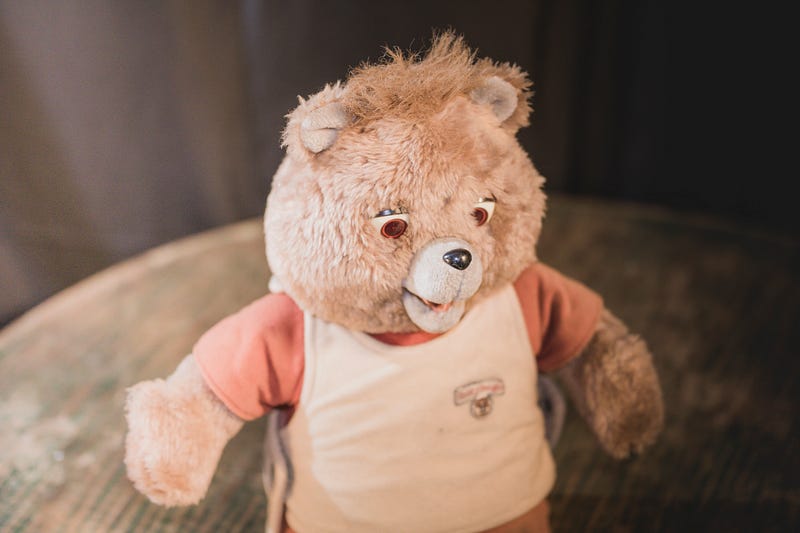
Some were extremely mainstream, like Teddy Ruxpin, Barbie dolls, My Little Pony, Chia Pets, Skip-It, Water Pets, Polly Pocket, and Puppy Surprise. As the 90s began, shortly following the tutelage of the Barney & Friends craze, Teletubbies and Furbies dazzled our nation.
My sister and I played with Barbies, and we also had Quints…miniature thumb/metacarpal-sized plastic quintuplet babies with many different accessories. Another offbeat treasure of mine were plush stuffed characters from the Mr. Men & Little Miss book series — tiny children’s books authored by British illustrator Roger Hargreaves, depicting bubbly and colorful creatures with distinct personality traits. We had Mr. Tickle and Little Miss Sunshine.
My Imagination
In hindsight, many of my unconventional interests seemed to build upon each other, over the years. Whereas most kids were occupied with skateboarding, video games, listening to music, and swimming — I had no interest in socializing outside of school.
Very early on, multiple teachers recognized my creativity and predicted I’d end up being a writer. Initially, I’d wanted to be a sitcom actor. Then, by the Third Grade, I’d shifted to hoping I could be an elementary school teacher (largely because I wanted to rectify all of the mistakes I saw my own teachers and aides repeatedly making).
But by the Seventh and Eighth Grades, I was permanently fixated on the career aspiration of becoming a TV writer. Throughout my preteen years up through mid-adolescence, I spent afternoons immersed in the creation of my own “sitcom plots,” using cartoon figurines from my collection. I’d assign them character roles and develop plotlines for episodes, stealing (ahem, “borrowing”) from syndicated comedies such as Mama’s Family, The Facts of Life, Growing Pains, Who’s The Boss?, and The Hogan Family (also from the original Roseanne, which was in its prime with first-run episodes during the early-90s).
By the time I’d reached high school, we had Internet in our high school computer labs. I taught myself some rudimentary coding skills, using a GeoCities website as my template. This is where I began dipping my toe into the practice of reviewing TV shows (as I often found myself disagreeing sharply with TV Guide’s commentary), which would thereby set the stage for my college angst and post-collegiate struggles.
And, while these struggles may have been individualized to my aptitude, they paralleled what other Millennials endured as we fought to try to make our lives mean something.
Next time: in Part 3 of my “Confessions of a Gen Y Kid” series, I will talk more extensively about how TV had a great impact on my life in these formative years. To contextualize it, I’ll discuss which shows and movies were hot during those days…and which of them would or wouldn’t hold my own interest.
If you are keen to write with us on RESONATES, read the submission guidelines here.


