
THOUGHTS
Confessions of a Gen Y Kid: Electronic Media
Moving screen images and bouncy audio carried us all the way through our youth…and straight into pariah status!
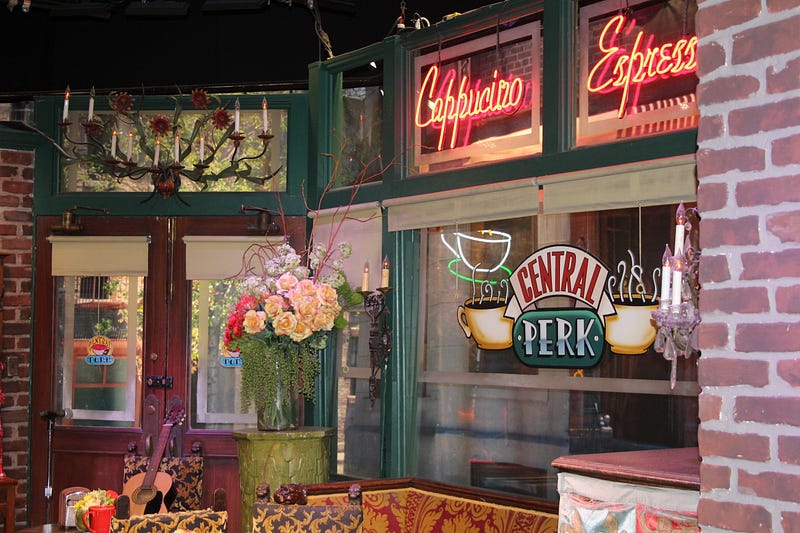
Just like Generation X before us, and Generation Z after us, members of Generation Y have been influenced by moving-picture media — for better or for worse. Some claim it’s been “for the worse”…and, in many scenarios, I can understand their frustration. On the other hand, I can’t ignore the positive impact that this imagery has had on all of us younger generations.
In Parts 1 and 2 of my “Confessions of a Gen Y Kid” series, I’ve documented how education and pop culture, respectively, have shaped Millennial minds. So I’m going to build on these emphases to demonstrate how much more deeply our sources of entertainment have molded us. What we used to consume influenced what we currently consume…and that will continue to influence which audio-visual emblems we cling to, decades from now.
The Early Days of Millennial Culture
As someone who was born toward the front of the Gen Y assembly line, chronologically speaking — I had pretty good awareness of what my generation was into, leisure-wise. Even the stuff that I didn’t care for, myself.
I didn’t really “get into” music until I reached my double-digits in age. And, even then, my music consumption was fleeting, compared to so many of my peers. But I observed what others liked!
Tiffany Darwish’s 1987 cover of “I Think We’re Alone Now” was one of my earliest musical memories. In day care (where they shoved all us kids who were First-Graders or older into the same classroom), the older girls were obsessed with that one. And I became semi-obsessed with it, too. I also remember one of our day care’s teachers, Rhonda, lighting up with excitement when us older kids were watching the movie Labyrinth (which had been released commercially, a couple of years earlier) on VHS and she recognized David Bowie in the lead role (Rhonda was a mid-GenXer).
As I moved through elementary school, the vocalists who were popular within my predominantly-White, rural neck-of-the-woods: New Kids on the Block, The Jets, Michael Jackson, New Edition, Kriss Kross, Menudo, Debbie Gibson, Whitney Houston, Milli Vanilli, Genesis, Billy Ray Cyrus, Kenny Rogers, and Garth Brooks.
Like most audio-visual influences of this time period, these tunes and motions were driven by younger Xers. As the 1980s turned into the 1990s, older (and, eventually, mid-to-younger) Millennials would gradually join in the transformation of youth culture.
Turn-of-the-Decade: 90s Edition
Commercialization only became more dominant as the 1980s closed out and the 1990s began. Paula Abdul, Roxette, Bryan Adams, Janet Jackson, Bobby Brown, Madonna, Gloria Estefan, Prince, Vanessa Williams, TLC, House of Pain, Nirvana, Mariah Carey, Boyz II Men, Spin Doctors, Amy Grant, Snap!, The Proclaimers, Vanilla Ice, Dr. Dre, Wilson Phillips, and Celine Dion began to more audibly penetrate the music scene.
Home Alone (I & II), Jurassic Park, Ghost, Free Willy, The Addams Family, Who Framed Roger Rabbit?, The Land Before Time, All Dogs Go To Heaven, The Little Mermaid, Beauty and the Beast, Aladdin, Big, Prancer, Beetlejuice, Boyz n the Hood, 3 Men and a Baby, Ghostbusters (I & II), Back to the Future (I, II, & II), Teenage Mutant Ninja Turtles (I, II, & III), Beethoven, Mrs. Doubtfire, The Bodyguard, Sister Act, Wayne’s World, My Girl, Cool Runnings, Problem Child, Uncle Buck, Kindergarten Cop, Rookie of the Year, and DuckTales the Movie: Treasure of the Lost Lamp — these were the blockbuster hits that us kids watched…whether we were “supposed to” be watching them, or not.
Of those, only Home Alone, Ghost, Sister Act, Prancer, and Mrs. Doubtfire resonated with me. A majority of the biggest hits on that list, in fact, I haven’t ever watched, to this day! And I’m still bitter that I never got to see the big screen DuckTales movie on its premiere weekend…largely because the movie theater in my small town didn’t get new releases until three or four weeks after the rest of America had already watched them.
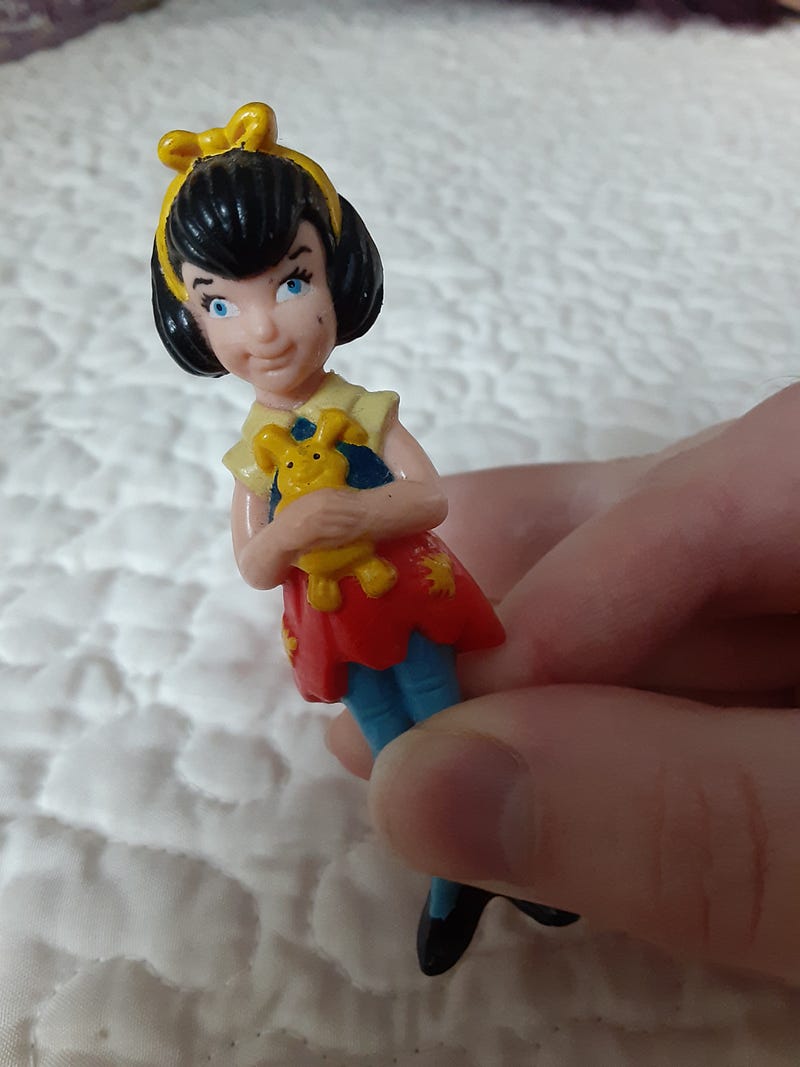
I do remember crying at the end of All Dogs Go to Heaven, as a Second-Grader. To this day, I can’t eat waffles…because I associate them with the sad memory of Charlie leaving behind Anne-Marie as he floated away into the afterlife. I also never received the miniature Anne-Marie figurine that I’d wanted for Christmas, as part of the Wendy’s promotional kids’ meals from 1989 — and that was only because we didn’t have a Wendy’s in our town, at that point in time. “Santa” left me a note, that December, saying something along the lines of:
“I’m sorry that I couldn’t find your Anne-Marie toy. They were very popular, this year.”
More than twenty years later, for Christmas 2011, I bought myself my long-awaited Anne-Marie figurine from an independent seller on eBay. I still have it sitting on my desk.
I also bitterly recall when, upon making a road trip dinnertime stop at the Pizza Hut in Marshfield (before a Pizza Hut would finally arrive in our actual hometown, a couple of years later), the restaurant’s manager — a wishy-washy Rick Moranis-lookalike — emerged from his office to break the news to me and my sister that they didn’t have any Land Before Time finger-puppets left in their inventory.
TV was divided into three basic categories for kids: Saturday (and sometimes Sunday) morning cartoons, afternoon/weekend television, and prime-time (up until bedtime) television.
I watched Saturday morning cartoons up until the Fifth Grade. Muppet Babies, Garfield & Friends, The Flinstone Kids, Mighty Mouse, Hello Kitty’s Furry Tale Theater, The California Raisin Show, Dennis the Menace, Popeye & Son, Teen Wolf (yes, they had a cartoon version of it), Alvin & the Chipmunks, Where’s Waldo?, Mother Goose and Grimm, Pee-Wee’s Playhouse, Wish Kid, A Pup Named Scooby-Doo, and Looney Tunes were all a part of my personal lineup during various broadcast seasons. And there was this very strange Japanese anime version of The Swiss Family Robinson that aired Sunday mornings (along with The Get-Along Gang, based on the popular children’s book series) on CBN right before it became The Family Channel (later, Fox Family; then later, ABC Family; and finally, at present, Freeform).
Some cartoons aired on weekday afternoons. There were, of course, the “classics” like Scooby-Doo, The Flinstones, and Smurfs. Disney spawned Tail Spin and Chip n’ Dale’s Rescue Rangers. I would also tune into Jem & The Holograms, Tiny Toon Adventures, and C.O.P.S.
As I gradually grew out of cartoons, I developed an addiction to game shows. Press Your Luck (now in syndicated returns, after having been canceled by CBS in 1986) and Supermarket Sweep (the David Ruprecht-hosted version) were two of my faves.
Fun House was a Lorimar/WB-produced addictive afterschool kid/teen game show in the mold of Nickelodeon’s Double Dare. In fact, Nickelodeon was the “go-to” spot for preteen and early-teen programming: I watched You Can’t Do That on Television, Out of Control, David the Gnome, Maya the Bee, Eureka’s Castle, and Hey Dude. But there were even bigger hits I didn’t regularly watch, that other kids were regularly tuning into: Clarissa Explains It All, Salute Your Shorts, Welcome Freshman, Mister Wizard’s World, and The Adventures of Pete & Pete. These — along with NBC’s Saturday morning sensation Saved by the Bell (which I also didn’t watch) — ended up being hallmarks of Millennial childhood viewing experiences.
As for prime-time television: I had very early blurry memories of watching The Facts of Life, Diff’rent Strokes, Webster, Gimme a Break!, Punky Brewster, Silver Spoons, Who’s the Boss?, Growing Pains, Just the Ten of Us, The Hogan Family, Mama’s Family, The Golden Girls, Designing Women, and The Cosby Show — but I’d later catch up on these in syndication as I got closer to middle school age. I was mainly into sitcoms, as a kid. The only one-hour dramas I checked out were Beauty and the Beast (the Linda Hamilton / Ron Perlman version), Twin Peaks, and this short-lived charmer called The Wizard about a diminutive toymaker.
Oh, and The Disney Channel was a premium pay-cable network (rather than being part of your standard basic cable package), back then.
Puberty For Some, Juniority For Others
I entered middle school in 1993. Around that time, the final few years’ worth of the absolute youngest Millennials were just being born. The mid-Millennials were entering preschool, Kindergarten, or still working their way through elementary school.
The music scene became more elevated than ever. Ace of Base, Toni Braxton, Haddaway, Queen Latifah, Coolio, The Cranberries, Green Day, Immature, The Spice Girls, Hanson, Snoop Doggy Dogg, Annie Lennox, LL Cool J, Metallica, Real McCoy, Brandy, Crystal Waters, Seal, Better Than Ezra, Sophie Hawkins, Blues Traveler, Pearl Jam, The Moffats, Montell Jordan, Tim McGraw, Des’ree, Melissa Etheridge, Shaggy, Goo Goo Dolls, La Bouche, Collective Soul, Hootie & the Blowfish, Alanis Morissette, Sheryl Crow, and All-4-One (one member of whom I’d actually become casual friends with, a decade or so later) all made bigger splashes onto MTV and the radio.
The Lion King, Forrest Gump, Titanic, Speed, Jerry Maguire, Toy Story, Dumb and Dumber, Men in Black, The Fifth Element, Space Jam, Independence Day, The Rock, Jumanji, Pocahontas, My Best Friend’s Wedding, Ransom, The Mask, Apollo 13, Waterworld, Twister, As Good As It Gets, Clueless, The Nutty Professor, and Interview with a Vampire were trademark movies from the middle of this decade. To this day, I haven’t seen any of them (other than Ransom).
For me, TV was where it was at. I was obsessed with sitcoms. This love of mine started early in elementary school and accelerated once I reached the Fourth and Fifth Grades, working its way up through the first half of my high school career. It’s why I soon decided I wanted to be a sitcom writer.
ABC’s “TGIF” lineup was at its peak from 1993 through 1998: Family Matters, Boy Meets World, Step by Step, Hangin’ with Mr. Cooper, Sister Sister, and Sabrina the Teenaged Witch all thrived on Friday nights. Prior to that, Full House, Perfect Strangers, and Mr. Belvedere had set the stage as precursors to making Fridays into “Appointment TV” for kids and families.
I was into the major sitcom hits of the time: Home Improvement, Friends, Roseanne, The Nanny, Seinfeld, The Fresh Prince of Bel-Air, Frasier, Blossom, Mad About You, Ellen, Wings, and Murphy Brown. Then there were the modest (or short-term) semi-hit sitcoms I enjoyed from this era: Empty Nest, Cybill, Nurses, Love & War, Hearts Afire, Grace Under Fire, Coach, Living Single, and The John Larroquette Show.
Most kids seemed to love America’s Funniest Home Videos and America’s Funniest People. Saturday afternoon syndication on the Lifetime cable network made me addicted to Unsolved Mysteries and Anything But Love. Weekday cable syndication exposed me to classics such as Three’s Company, One Day at a Time (the Bonnie Franklin version, not the Rita Moreno-led remake), Welcome Back Kotter, and (the original) Charlie’s Angels.
Around this time, I began dipping my toe into consumption of scripted dramas — which I would eventually come to love and value even more than sitcoms. My So-Called Life, Picket Fences, Northern Exposure, Savannah, New York Undercover, Melrose Place, Buffy the Vampire Slayer, Touched By An Angel, Central Park West, Pacific Palisades, and Nowhere Man were some of my earliest dramatic staples.
Popular preteen/teen-viewed shows that I *didn’t* watch during my elementary school years: In Living Color, Married…with Children, The Wonder Years, and Doogie Howser MD; and, as I got to middle school: Lois & Clark, seaQuest, Beverly Hills 90210, The X-Files, ER, NYPD Blue, Party of Five, Dr. Quinn Medicine Woman, Walker Texas Ranger, and The Simpsons (nope, not a fan — I grew out of that one very quickly, after Season 3 or 4).
A watershed pop culture moment hit us in September 1995, when CBS moved Angela Lansbury’s Murder She Wrote from its longtime Sunday night perch over to Thursday evenings, where it went up against NBC’s newly-minted megahit Friends. This ratings showdown (which Friends very quickly won) symbolized mounting generational tensions that pitted Gen X and younger Boomers against GI-Gens, Traditionalists, and older Boomers. Decades later, this paradigm would shift, once again — with Gen Y and Gen Z being forced into the newest scapegoat position, where Gen X used to be.
Setting The 21st Century Stage…
What did these tunes and images have in common? They relied very heavily on fantasy, hedonism, and social status. From cartoons to music videos to blockbuster plotlines to episodic tropes — they taught us (Gen X and Gen Y), as America’s youth, that our dreams and visions were attainable if we strived to improve ourselves and our mindsets.
In other words: they sold us a crock of shit.
But, looking back, us Gen Y kids can learn from this deceptive oasis of our childhoods. We must reflect on our aspirations for the future…and then demand such action to benefit present-day society. And this isn’t for Millennials alone to accomplish. Gen Y should join with Gen Z, Gen AA, and even the youngest members of Gen X to take back our collective destiny in the face of today’s elitism and bureaucratic indifference.
In my fourth and final planned installment of “Confessions of a Gen Y Kid,” I’ll explore how the turn-of-the-century would inevitably snap Millennials out of our parentally-induced coma of naivete and rosiness. How entertainment and politics merged to fuel strife that would eventually become the whiplash of the late-2010s and present-day 2020s.
If you are keen to write with us on RESONATES, read the submission guidelines here.


