
Comminution
We’re smashing this word to pieces

Today’s New York Times Spelling Bee letters:
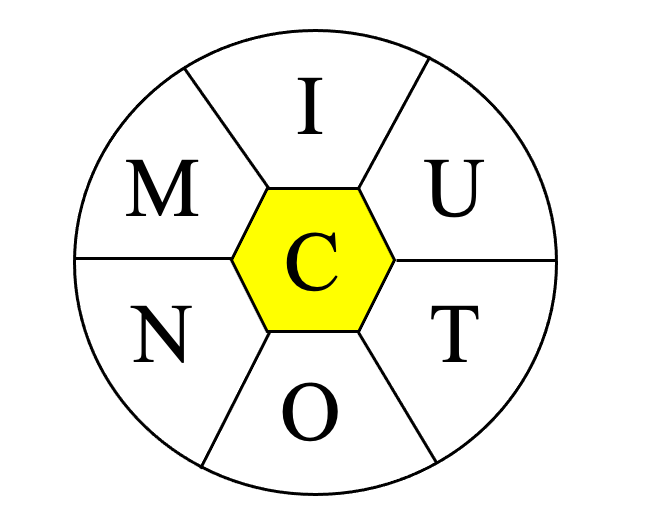
I, M, N, O, T, U, and center C (all words must include C)
Merriam-Webster says…
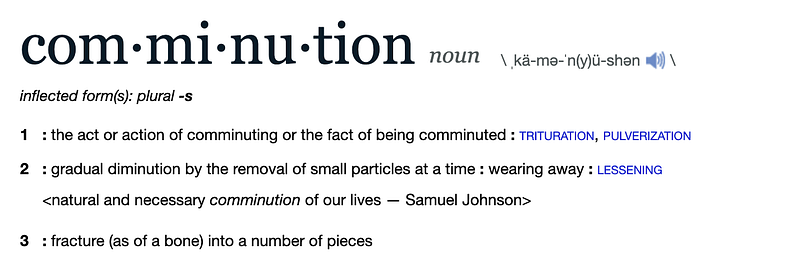
Silly little dictionary! Don’t you know that comminution can’t possibly be a word if The New York Times says it ain’t?
For a complete list of rejected words, check out the Spelling Bee Master.
What’s your favorite dord* from today’s puzzle?
My Two Cents
People who play the Spelling Bee and my regular readers —all five of them — are likely familiar with the game’s primordial concept of pangram. The pangram is the word that can be made using all seven letters in the puzzle at least once. (You’re allowed to use letters as many times as you’d like.) And every puzzle has at least one pangram, although sometimes more can be formed.
I’m not telling you what today’s pangram is, but yesterday’s game had the following seven letters: E, H, N, P, T, Y, and center O (all words must include O)…
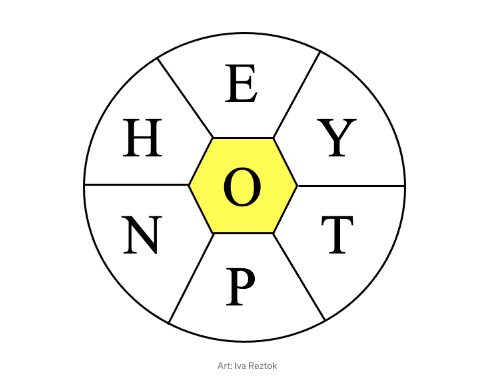
…and three pangrams! Can you figure them out? I’m going to reveal the answers, so if you want to try this on your own first, stop scrolling down.
Stop.
The three pangrams are:
- Honeypot
- Neophyte
- Phenotype
Now, because you can rotate the center letter, each pangram yields seven different games. But the pangram or pangrams stay the same, as they contain all seven letters.
What’s special about pangrams? Well, in the scoring system the Spelling Bee uses, words that are four letters long are worth one point. And every word five letters or longer is worth the number of letters in points. So, a pangram is worth at least seven points. (The ones mentioned above are worth 8, 8, and 9 points, respectively.) But you also get 7 bonus points for them. Which means each pangram is worth at least 14 points.
And why am I spending my not-so-valuable time and wasting your valuable time explaining all this? Well, because today’s rejected word, comminution, is a pangram. Rejected pangrams are frustrating for Spelling Bee players, as finding those magic words is a big part of what the game is all about.
I selected comminution to write about only because it’s a pangram, and I wanted to vent. After all, who wants to spend a Friday evening writing (or reading) about geology and bone fractures?
Sticks and stones
Comminution, which is a method of reducing a solid material into much smaller solid materials, can occur naturally or be a man-made process. The mechanics involved include grinding, crushing, cutting, and even vibrating.
In geology, comminution is one of the collateral results of faults occurring in the Earth’s crust. In industry, it’s a key element in mineral processing, ceramics, and electronics, and is usually achieved through different types of crushers and mills.
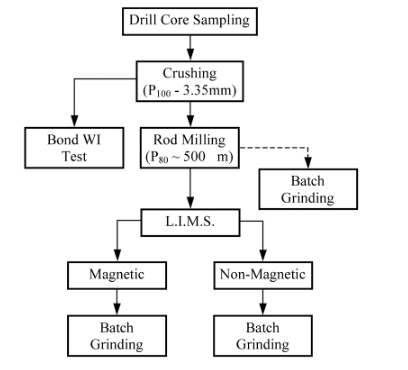
Industrial comminution is a complex things that involves equations such as this one…
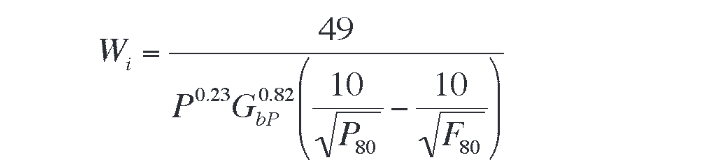
…and flowcharts like this one…
…and graphs like these:
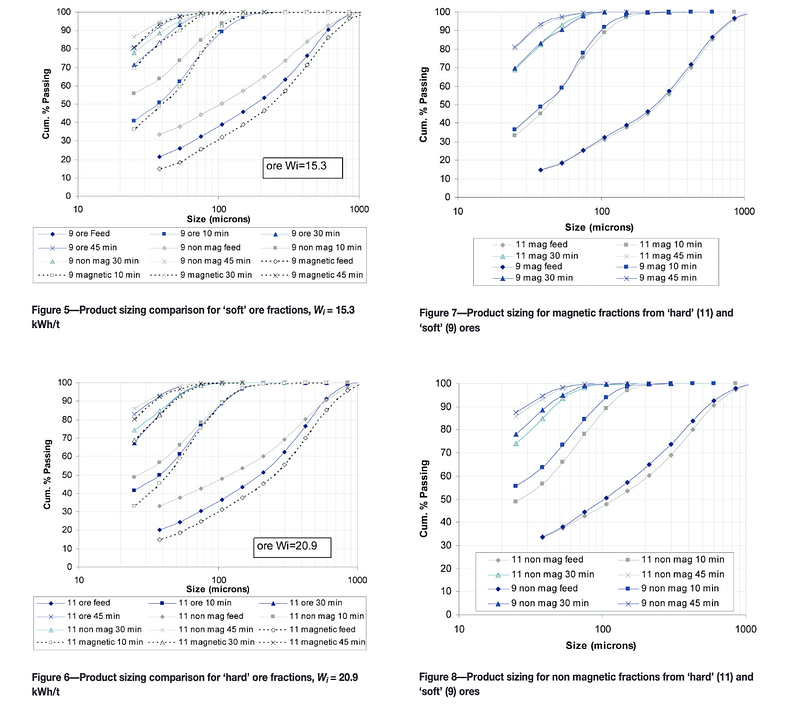
Is this really how you want to spend your Friday night? Trying to figure out complicated data about an industrial process you hadn’t even heard about until a few minutes ago?
I don’t either. Plus, I already made my point about the Spelling Bee rejecting comminution, a pangram worth 18 points.
Bones
In the human body, comminution is bad news. Like, really, really bad news. And that’s because it’s a type of bone fracture. One of the really, really bad ones.
Bone fractures can be classified according to several categories. For example, one category is cause: traumatic (due to a fall, a fight, or a car accident), pathological (due to bone weakness, as in osteoporosis), or periprosthetic (due to a mechanical problem with an implant, for example).
One of the other fracture categories is fragmentation, which includes the following types:
- Incomplete: the bone fragments are still joined, at least partially; these are often seen as cracks in the X-ray..
- Complete: bone fragments separate completely along the fracture line.
- Comminuted: the bone has broken into several pieces. The more pieces involved, and the smaller they are, the more complicated and longer it will take the bone to heal.
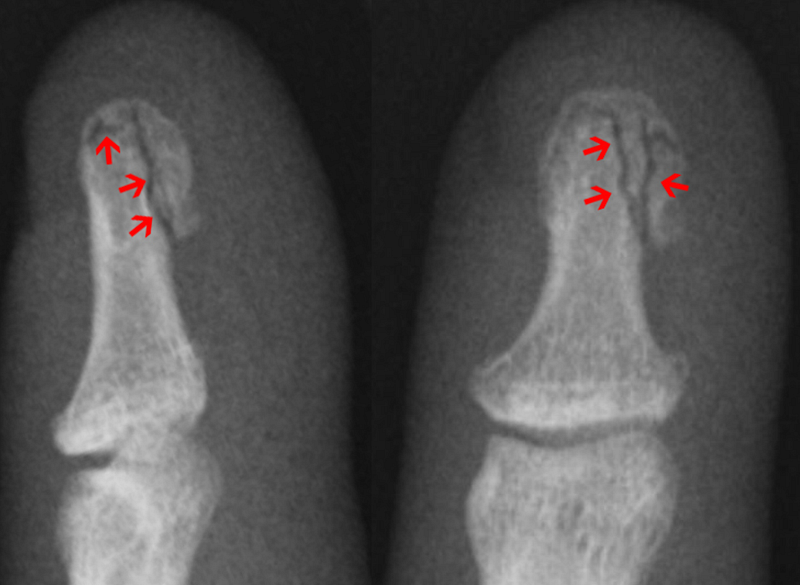
Above are comminuted fractures of two digits. I’m not sure if they are fingers or toes. Taking into account that these type of bone destruction happens due to massive crushing, I’d place my bet on toes.
Remember all those Saturday morning cartoons, with pianos often falling on people’s heads?
Unfortunately humans are not toon characters, so we can’t bounce back like we’re made out of rubber. Well, okay, except for hockey players. They are freaks of nature.
Anyway, if you ever did survive a piano falling on top of you, or if the piano fell only on a part of your body, the bones in that part of your body would likely end up with a severe comminution.
So please be watchful of falling musical instruments next time you’re happily strolling down a sidewalk, minding your own business.
That’s about it for today. Thank you for scrolling all the way down. As a reward, here is the video of a song called “Comminution”, featuring cars, guns, and a very odd relationship. But seemingly… no actual comminution.
Now you know. Next time you think you’ve broken a bone and go to the hospital for an X-ray, ask the attending doctor if you have a comminuted fracture. Don’t be surprised if they act dismissive. Not because what you have is just a harmless sprain… but because the editors of the Spelling Bee decided that comminution is a dord*.
You can check out my previous entry on another dord* here:
*What the heck is a dord, you ask? Here’s the answer: