
Commenting on the more Colorful Comments on Medium Posts
Wha?! Huh?!?
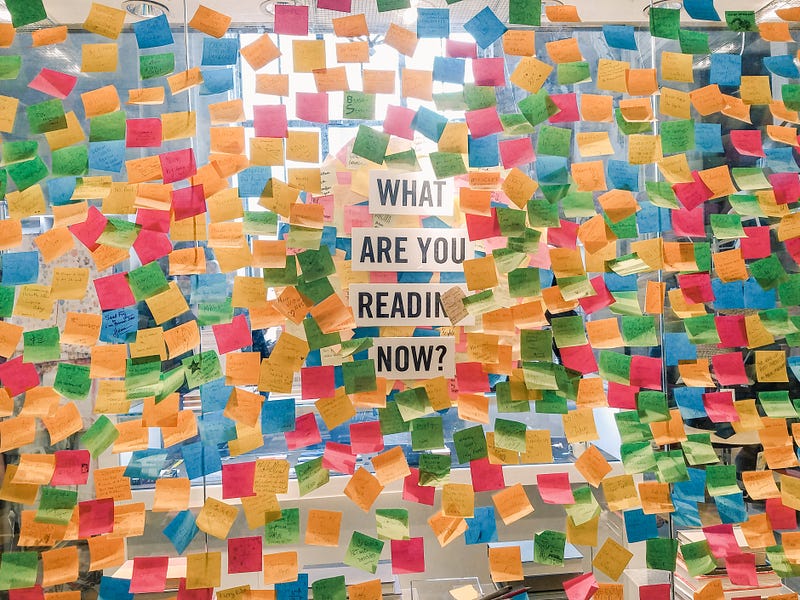
It’s a topic I approach with a great deal of trepidation because as a general rule of thumb, I greatly appreciate comments.
I look forward to them as I would Christmas presents. So, I don’t want to poo-poo on anyone and make them hesitant to leave a comment on any of my posts.
With that being said, I have noticed that, on occasion, people will leave a comment on someone’s post that sums up their thoughts on a combination of articles that they are thinking about. I don’t mind it so much. It just makes it hard to follow their argument, or if it’s on my post, it makes it hard to tell if they are arguing with me at all.
There’s an article from Bill Myers that states “50% of comments left were logical responses to something in that post.”
In the past, I would by default get defensive if someone was trying to break down my argument. It’s difficult to get defensive if someone is attacking an argument from someone else that I never made on a separate topic.
Are there any other Medium writers that have this issue? Well, I know there are. For the most part, I see that like me, you don’t respond. I think that’s probably the prudent thing to do.
I got a 173 on my LSAT (Law School Admissions Test). I know a rational argument when I see one.
When I look at some responses to some articles here on Medium, it’s like I’m watching a split-screen TV or I walked into the wrong theater at a multiplex movie cinema.
“George, I love you, won’t you take me to Paris?”
“Brazil started to develop into a world-class powerhouse in soccer in the 1940s.”
Oops, wrong theater. See? There’s just no connection.
I see some people post a synthesis of their thoughts on several topics on one poor writers’ article on occasion. The following is my exaggerated parody of what these comments look like:
Dear Writer, I disagree with your opinion on penguin suffrage in South America, and furthermore, I am reminded of this autumns fashion trend towards Orange being considered the new black which I also find totally outrageous. Orange will never be the new black.
Penguins are black. South America is cold at the tip near Antarctica. Snow, as I’m sure you are well aware, is also cold. I’m surprised you did not bring this up in your article since you claim to know so much about penguin suffrage in South America and penguins live in the snow. I guess this shows you don’t know as much as you claim you do.
These are the type of comments I leave alone. I wouldn’t know where to start. My silence is my argument against them.
Situations like these have been on the increase as far back as I can remember. It makes me wonder: Are people becoming increasingly distracted? Are they too rushed that they don’t notice what they are doing or is it that they don’t care?
As a part-time writer, I occasionally will write from a point of view that I don’t wholeheartedly endorse.
I will write as a character or as an aspect of my personality. When I do this, I will often be dogmatic, passionately endorsing positions that I don’t really feel that strongly about.
I’ve read comments on these arguments I’ve made and don’t really feel much of anything as I read the stabbing attacks. I don’t feel like I’m being attacked so much since it’s not me under attack, although the commenter has no way of knowing that.
I get a chuckle out of it. I don’t respond to these comments either as that would make me look wishy-washy. Best to look as if I hold onto strongly, but less well-thought-out opinions than to look weak, right? At least, that’s what US politicians do.
Then there are the righteous ones.
These are the strong comments of holier-than-thou righteous condemnation that come from those whose job it is to let us know just what God thinks of heathen scientists and comedians. I wrote an article once about the sections of the brain that got a long nasty response condemning me to hell for all eternity. That was unexpected.
Religious humor from a Buddhist perspective is also a taboo topic, apparently. I was previously unaware of that. That also earned me a ticket straight to hell from someone who somehow stumbled across one of my posts.
Then there was this time when I thought I hit the Medium Big Leagues.
Like umair haque, an article I published had an in-tandem attack from several critics at the same time, each calling me an idiot in their own unique way. I could tell that none of them had actually read what I had written all the way through, or that they hadn’t checked my sources, which I had conveniently provided links to before they hit the comment button. That article was perhaps the article I researched the most before publishing on Medium, so naturally, it attracted the most haters.
It was a synthesis of the research regarding ancient human settlements in the Americas. I pointed out how I cannot see how to transition from the mainstream (but well debunked) Bering land bridge theory to the now well-documented (but controversial) findings of Polynesia settling earlier in the western part of the Americas.
It doesn’t look like a definite cut-off with one being definite science while the other one is fringe lunatic pseudo-science.
It doesn’t seem like that huge of a leap of time, logic, or imagination to make to me, but apparently it's unimaginable sacrilegious heresy to others. The Bering land bridge theory is in every published textbook sold to elementary schools in the United States and it’s going to remain the official version of the truth for the foreseeable future, actual truth be damned until it’s time for the school districts to renegotiate their contracts with the book publishers.
Go ahead, call me cynical. Or paranoid. But who else besides representatives of the publishing companies of educational books for our schools would amass a series of attacks on an article about this topic from a barely followed writer on Medium unless that were the case?
I barely get any comments on my Medium articles. That isn’t new. It’s always been that way from day one.
I think it’s probably the style of my writing and the approach I take to a topic that makes people hesitant to comment. That and the obscurity of my chosen genres with a tinge of potential insanity that makes some refrain from commenting.
But, please, don’t let that hold you back. It’s not likely that I will hunt down you and your family because of a comment you made on one of my medium posts. My list of enemies is already far too long to add you to the list of those I hold a grudge against. So, go ahead, feel free to add your 2-cents.
Note: Some people just don’t seem to understand my sarcasm. They say you should write for your audience, but I prefer to write for myself. I already have a job. I don’t need the extra 63 cents per month income that Medium provides me, so I see no need to kiss the ass of my readers. Sorry readers, but this is my playhouse and cheap therapy session. You are just a spectator, a witness to my psychotic breakdown and/or recovery depending on the time of day.
All that being said about the comments here on Medium, I have to say that the worst comments I’ve ever received were about a lesson I gave once in a classroom in Seoul, Korea.
The lesson asked the students to form their own country/society. My class had a mix of Buddhists and Christian students.
Naturally, the Buddhists formed their own group, and the Christians theirs. When they gave their presentations, I played devil's advocate. At the end of the lesson, both groups stormed off to complain to the Director about the lesson. (A lesson which was in the textbook, not created by me.)
One group complained that I was too Buddhist, that I needed to be more open-minded towards the Christians. The other group complained that I was too Christian and needed to be more open-minded towards the Buddhists.
I told the Director that the lesson, which was in the first printing of chapter 4 in upper-intermediate English, needed to be removed from the book. At the very least, the question, “would your country/society have a state religion?” needed to be taken out.
Perhaps there is a larger lesson in there for the students that could have been learned, but the lesson that day fell on the teacher, administration, and the publisher of the textbook.


