
Color Theory
Color Theory: There is more than one set of universal Primary Colors — debunking the myths.
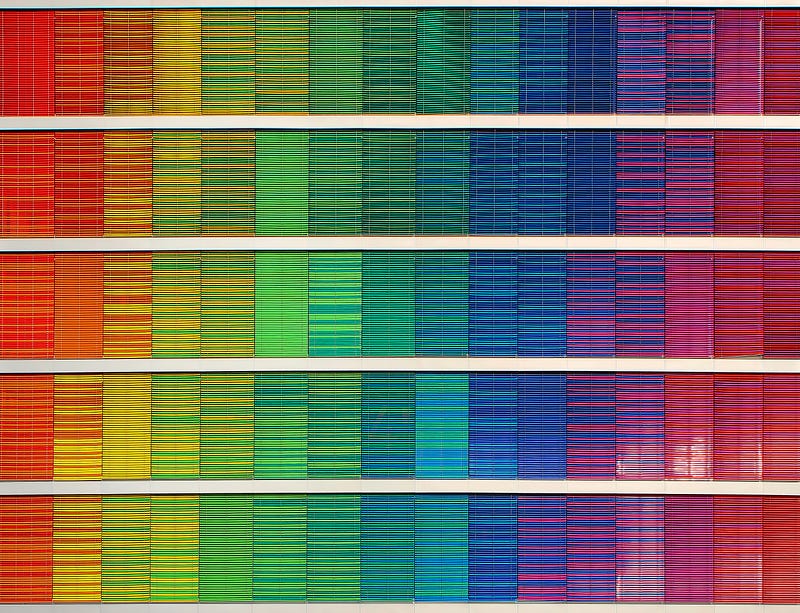
You might have been taught that there is only one set of primary colors, red, yellow, and blue, but primary colors differ by color systems. What is true is that primary colors can simulate ‘most’ colors. I’ll explain.
Imagine a set of paints, and each paint has a color. Some colors cannot be made by mixing other colors together. These colors that cannot be created by mixing other colors together, are called primary colors. All other colors are made by mixing these primaries together in different ways.
For example, true violet cannot be made by mixing any other colors together. It is a primary color. But lavender, which is similar to violet, can be made by mixing red and blue together.
There are various color models that use different primary colors. The most common three are the RYB (Red Yellow Blue), the CMY (Cyan Magenta Yellow), and the RGB (Red Green Blue) model.
The RYB model is the traditional model that most of us learn in school. It is used in art. The primaries in this model are red, yellow, and blue. All other colors are made by mixing these primaries together.
The CMY model is used in printing. The primaries in this model are cyan, magenta, and yellow. All other colors are made by mixing these primaries together.
The RGB model is used in electronic displays such as TVs and computer monitors. The primaries in this model are red, green, and blue. All other colors are made by mixing these primaries together.
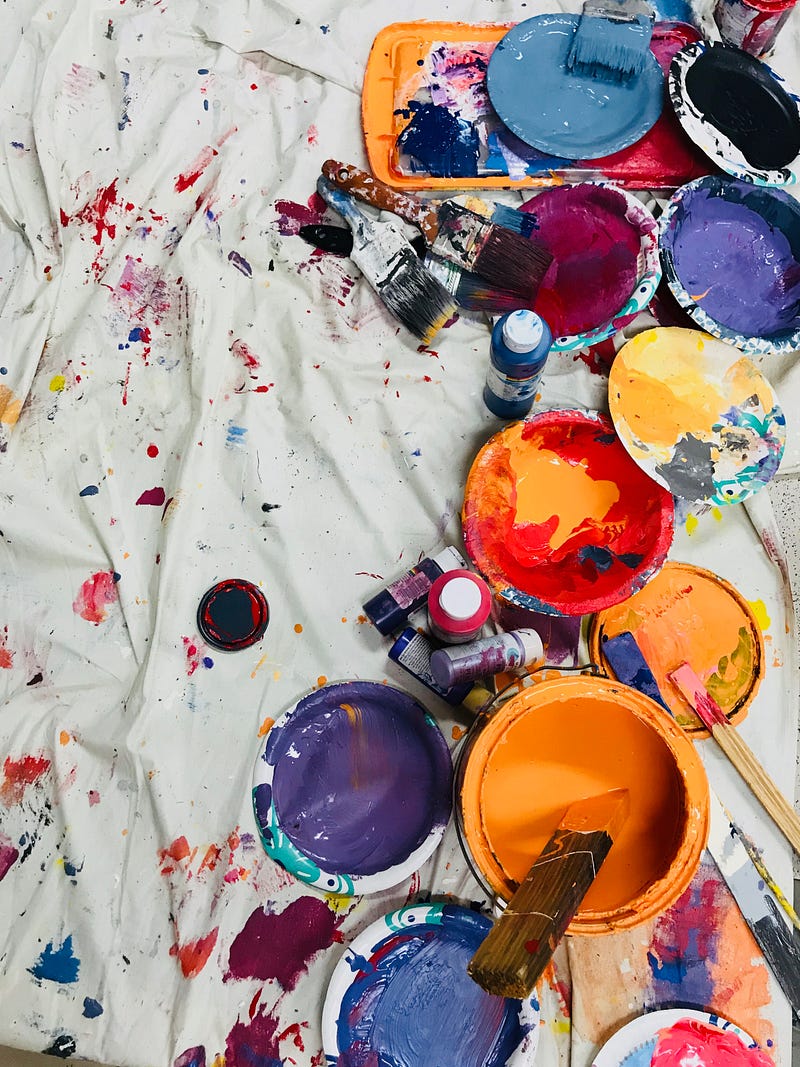
There are three main types of color models:
1) Additive
2) Subtractive
3) Complementary
The RYB and RGB color models are additive. This means that when you mix the primary colors together, you get lighter colors.
The CMY color model is subtractive. This means that when you mix the primary colors together, you get darker colors.
The complementary color model is a mix of the two. It uses the subtractive primaries (cyan, magenta, yellow) and the additive secondaries (red, green, blue).
So, there is no one set of universal primary colors. It all depends on the color system that you are using.
Nature
Another myth is that all nature contains all primary colors. This is not true.
All colors in nature are made by a combination of the three primary colors: red, yellow, and blue. However, not all colors are present in every natural scene.
For example, a green meadow will contain more yellow and blue than red. A pink sunset will contain more red than yellow and blue.

There are also colors that are not made by the three primary colors. These colors are called secondary colors. Secondary colors are made by mixing two primary colors together. For example, green is made by mixing blue and yellow together.
What’s important to remember is that primary colors are a type of colorimetry, defined as a set of colors that can make most/many other colors. And each color system has its own set of primary colors.
One way to learn more about primary colors is to experiment with them yourself. You can do this by mixing paints, using color filters, or even just playing with light. Try different combinations and see what colors you can make.
Remember, there is no one correct answer.
Color Theory: Spectral color corresponds to wavelengths of visible light — the root of all color.
Color Theory is a complex study related to the properties of light and human perception.
If you’ve enjoyed my writing, please consider supporting me by becoming a Medium Member, accessing unlimited Medium articles. Follow the link to subscribe for $5 a month or $50 per year. Thank you!


