
Color Theory
Color Theory: Spectral color corresponds to wavelengths of visible light — the root of all color.
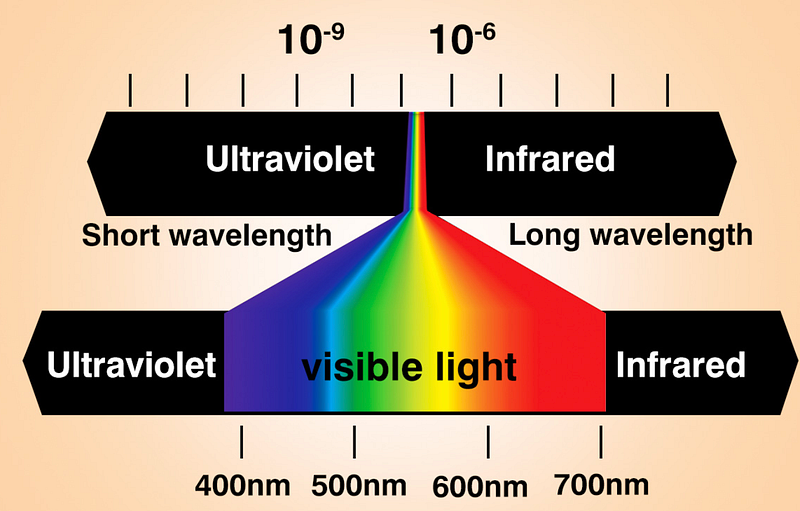
The root of all color comes from light. Sunlight, artificial light — all visible light is made up of different wavelengths. And each wavelength corresponds to a different color. This is the spectral color.
The colors of the rainbow — red, orange, yellow, green, blue, indigo and violet — are the spectral colors. They’re the colors that we see when a prism or a raindrop breaks up white light. All other colors are made by mixing spectral colors together.
Theoretically, colors corresponding to wavelengths are infinite, but our human eyes can only see a limited number of colors. The number of spectral colors that we can see depends on the sensitivity of our eyes.
We separate colors by wavelengths (nm). Violet is the color at the shortest wavelength, at around 380 nm. Red is the color at the longest wavelength, at around 700 nm. In between are all the other colors of the rainbow.
When all these colors are combined, we see white light. That’s because white light contains all the colors of the visible spectrum. Black, on the other hand, is the absence of color, and what that means is that black doesn’t contain any of the colors of the visible spectrum.
Spectral color is based on science, representing the physics of light that can be perceived with the eyes.

It’s important to have a basic understanding of spectral color if you want to go into any kind of color work, whether it’s graphic design, web design, or careers in science and technology.
- Scientist use spectral color to measure the properties of light and to study the stars.
- Color therapists use spectral colors to heal the body.
- Artists use spectral colors to create beautiful works of art.
- Fashion designers use spectral colors to create the latest trends.
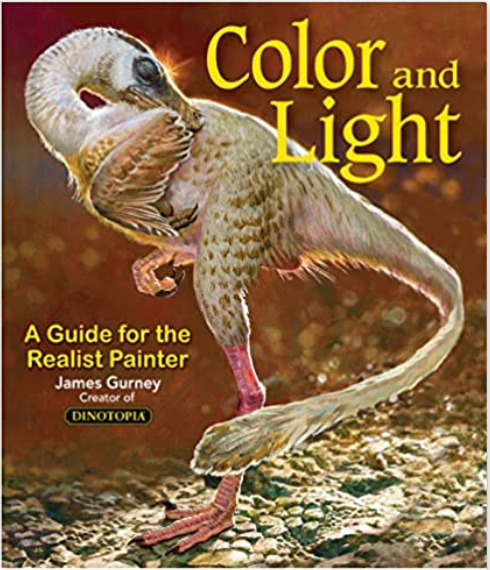
In the book “Color and Light” by James Gurney, he talks about how the Impressionists used spectral colors to capture the light in their paintings.
“They didn’t just use white light,” he says. “They used all the colors of the rainbow.”
Gurney goes on to say that understanding spectral color can help us understand the science of light and how we see color.
“It’s the key to understanding why the sky is blue, why sunsets are red, and why some flowers are blue and others are yellow.”
“It’s the key to understanding why some colors are difficult to mix, and why some colors can never be made from other colors.”
“It’s the foundation of all color theory.”
So, as you can see , spectral color is the root of all color. It’s the foundation of all color theory, and it’s the key to understanding how we see color.
Also, read
Color Theory: Color perception spans light, vision, psychology, and hues.
Color Theory is a complex study related to the properties of light and human perception.
If you’ve enjoyed my writing, please consider supporting me by becoming a Medium Member, accessing unlimited Medium articles. Follow the link to subscribe for $5 a month or $50 per year. Thank you!


