
Cold Weather Running Tips From a Canadian
Don’t let a little frost hold you back
About 10 minutes into my run, I was starting to warm up fast. It was 12 degrees below freezing, with fresh snow on the ground. I was feeling pretty good. The country road was empty and white in front of me.
As I jogged past the end of the trees on my left side, a biting breeze blew right on me. My face got real cold real fast. My nose went numb and my fingertips were stinging. But I was prepared.
I pulled my neck warmer up and flipped my hood over my head, pulling it around to block the wind. Then I reached in my pocket and put my gloves on. Crisis averted.
It’s not cool to freeze to death out running
I intend to run outside most of the winter. I want to come into spring in better shape than I usually do, after making excuses and skipping runs. I’ll be able to meet my personal fitness goals without spending all of those hours on The Dreadmill.
The cold can be dangerous, so it pays to be prepared. Here are the steps I will be taking to ensure that I’m safe. I want to be as comfortable as possible, too. There’s no point in extra suffering!
The old layer trick
This isn’t new advice but is it ever important. As soon as I start building some heat and sweating, I need to be able to vent that heat. I don’t want to get cold and clammy. My upper outer layer needs to be easily removable and light enough that I can tie it around my waist on the go.
Start with a base layer that will get moisture away from your body, while keeping the heat in. In Canada, these are typically called Long Johns. I put my running pants right on top of these for my bottom half.
Up top, I wear a long-sleeved workout shirt. Over that, I put on a light zippered sweater which can be unzipped when I get too warm. My North face outer shell is the final piece for my upper body.
Head, hands, feet
Layers are the answer to these areas too. For my head, I wear a neck warmer that can be pulled up to double as a face and nose cover. I wear a beanie or toque on top, which I can quickly pull off and stuff in my pocket if my head gets too warm. I always wear a shell with a hood for my outer top layer. The hood can be pulled over to add extra cover when needed, but usually just covers the back of my neck in the off position.
Thin glove liners are usually enough for me, but I have a pair of thicker gloves to pull over top as needed. It depends on the day. I make my glove decision based on the weather.
I wear a liner sock, which is just my summer running sock. I put a thicker, longer sock on top of that. This all fits in my trail runners pretty well. I don’t worry about waterproof footwear, but If I were in a slightly warmer climate I would. There’s not much liquid water on the ground here!
It’s important to have options. That’s why zippered sweaters and multiple removable layers are best.
Avoid running headlong into the wind — if you can
You can’t always avoid running into the wind. Sometimes you can pick a running route that avoids open stretches or long straight wind tunnels. On blustery days, try to take it into consideration.
It seems like I can never avoid it. All I have near my house are long, straight roads running North to South or East to West. So when it’s windy I have to make sure I only run North to South, or I’m going to be in the wind the whole way because our wind is generally out of the west from the Rocky Mountains.
Think about your route and the available options and try them out. That’s really the only way to see how the wind will affect your run at those locations.
Other running route considerations for winter
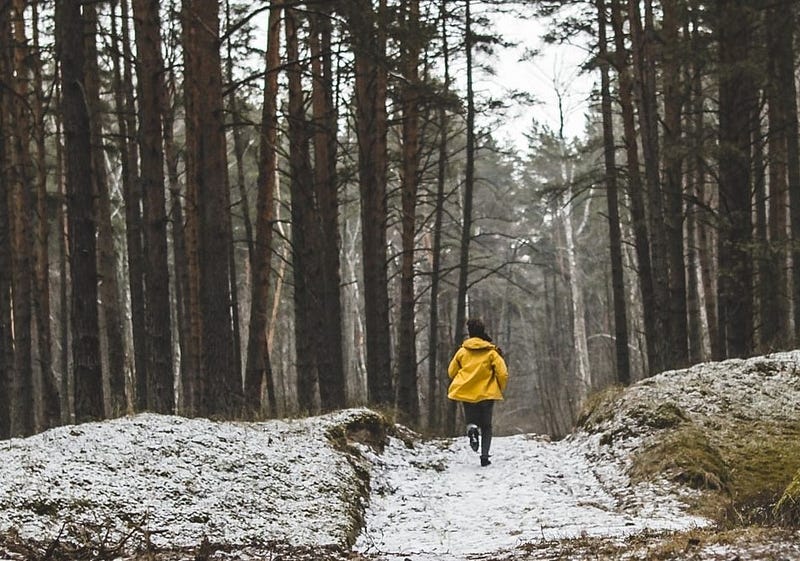
Does your intended route get plowed if it snows? It means the difference between smashing through snowdrifts and trudging instead of running or having a clean and crisp path. Waiting for the snowplow before beginning could be helpful.
Is there emergency help if necessary on the route? Jogging 5 miles away from all assistance could be the last move you make in sub-zero temperatures if anything tragic goes wrong.
I haven’t tried this but read about it. Running a loop where you place your vehicle or have a warmup location, so you can take a break and grab or drop off gear. I intend to give it a try when it gets really cold out, but I have some reservations about giving myself an out.
If I’m by myself and I have access to a vehicle halfway, I really increase the odds of me calling it quits by a factor of about 1000%, because I’m weak that way. I don’t really want the option of bailing on myself. I want to keep from giving an easy out option for when the going gets cold.
This could really be run length dependent. I won’t be going much more than 1.5 hours tops in the cold. Longer circuits might require it.
Electronics don’t like cold
Earbuds with cords are the worst. The wires get stiff and rub on your hood, making extra noise. Sometimes they get so brittle that they snap instead of bending.
Anything with a battery can go dead if it gets too chilled. If you bring your cell phone, it needs to be fully charged and kept in an inside pocket if possible.
When out by yourself in below zero temperatures, you should make sure you have that phone. Imagine slipping and hurting yourself on a curb and needing a ride. Or what if you misjudge the temperature and your capabilities and get in way over your head? Rescue is just a 911 call away.
So, charge your phone and keep it warm. It really could make the difference between life or popsicle.
Comments, fellow runners? I love hearing your thoughts!
I’m going to make the most of winter and stay active no matter what. For that I’m using all the Canadian cold weather tricks I know:
Running in the cold is all about mental state and motivation. In some ways, the clothing and the environment are secondary. Here are my thoughts on ways to keep my spirits up so I won’t give up and just stay inside:


