
Cleopatra’s death. Did the ruler of Egypt actually die from a cobra bite?
The manner of Cleopatra’s death still remains a mystery. It is not known whether she killed herself or was assassinated, and if so, whether it happened on Octavian’s orders. However, the latest research shows that it is unlikely that she died from a snakebite.
.jpg)
After losing the Battle of Accium in 31 BC. Cleopatra knew that the end of her reign had come. The ruler of Egypt tried to beg for mercy. And even seduced the victorious Octavian (later emperor), but he resisted her charms.
How did Cleopatra’s death occur?
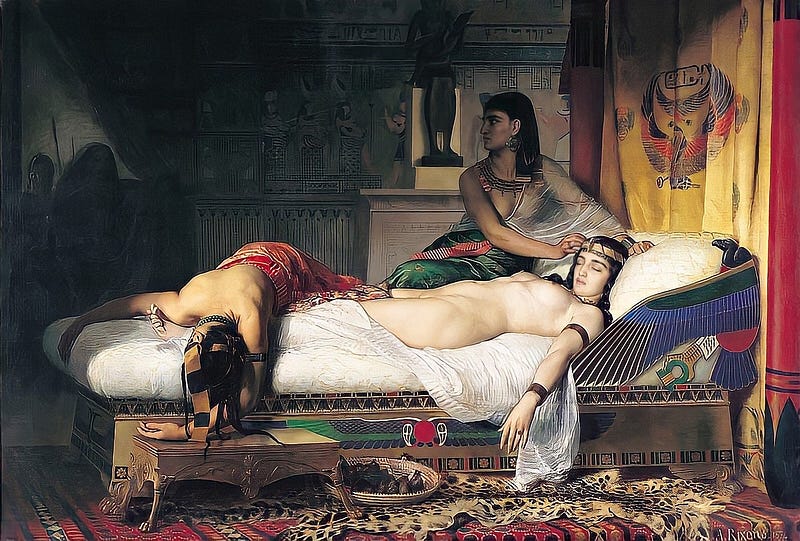
On August 1, 30 BC, the army of Cleopatra’s husband Mark Antony was once again defeated by Octavian. Then the Egyptian ruler barricaded herself in her mausoleum along with her private treasury and two servants Iris and Charmion. After a few days, she sent a farewell letter to Octavian. When the guards broke down the door at his command, they found the dead queen lying on a golden bed, adorned with the most beautiful jewels and with the attributes of power in her hands. Along with Cleopatra, her servants had died.
How the queen and her courtesans died remains a mystery. Most ancient historians consider their deaths to be suicides. Plutarch of Cheronea wrote (almost a century later) that there were two small wounds on Cleopatra’s arm, perhaps the ruler stabbed herself with a poisoned comb. Cassius Dion a century after Plutarch suggested that the wounds could have come from a poisoned hairpin or from the bite of a cobra hidden in a basket of flowers or figs, possibly in a jug of water. However, no snake was found in the chamber.
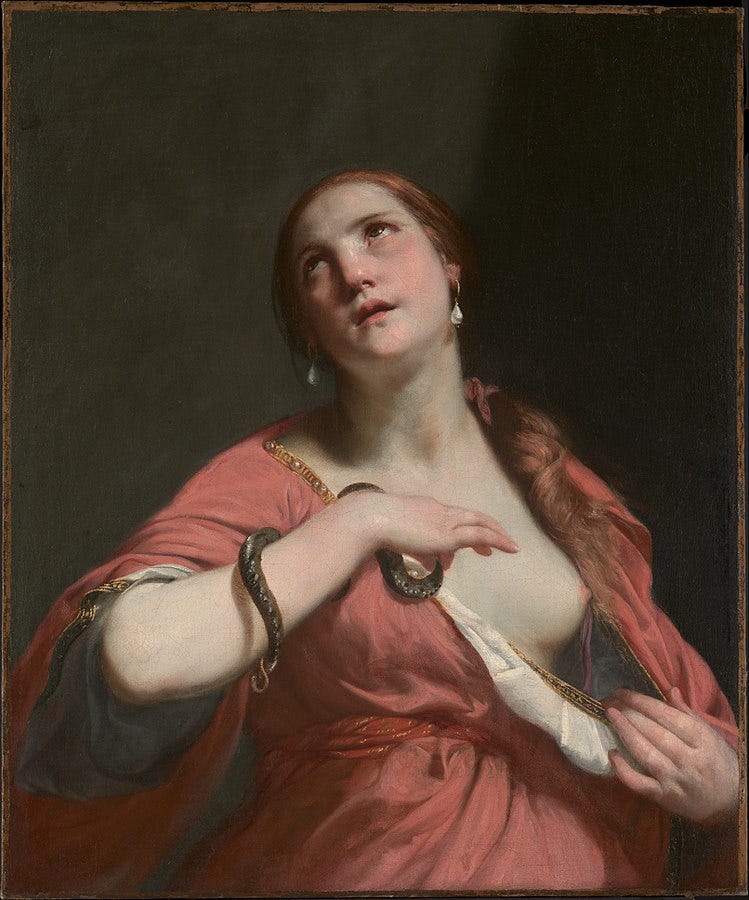

Did Cleopatra really die from a cobra bite?
The version about the bite spread shortly after Cleopatra’s death. It was supported by Octavian, who carried a wax statue of the queen with a cobra in it in his triumphal procession upon his return from Egypt. Cleopatra’s death was also described in this way by the poets of the period, Virgil, Horace and Martialis, and many centuries later even by Shakespeare in his play “Antony and Cleopatra.”
However, this most popular version of Cleopatra’s death is unlikely. Herpetologist Andrew Gray of the Manchester Museum said that a cobra whose venom would have been able to kill three women would have had to be huge — it wouldn’t have fit in a basket of flowers or between fruits. In general, it is unlikely that a single snake would bite as many as three people with fatal results. As Gray points out, snakes “save” venom for the hunt and 90% of bites do not contain it.
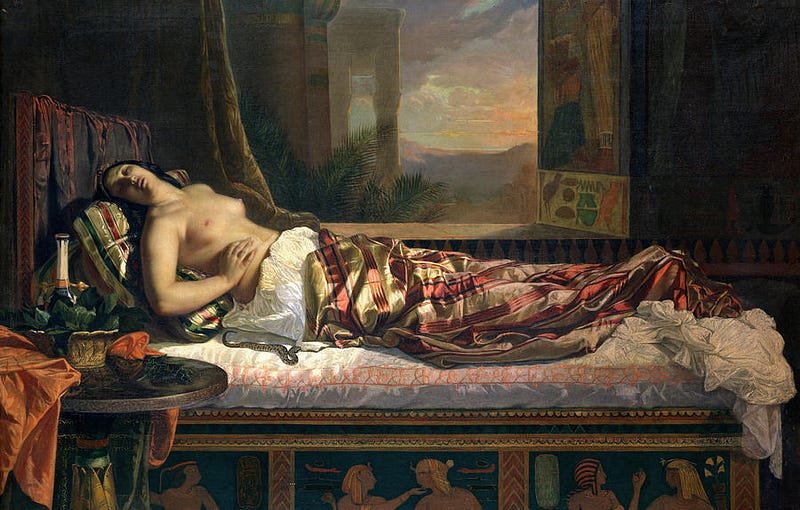
What’s more, cobra venom doesn’t kill instantly. The queen would suffer from excruciating pain, convulsions, vomiting and diarrhea for hours or even days. As a native Egyptian, she certainly saw the effects of a cobra bite more than once. If she wanted to die with dignity, she was unlikely to risk prolonged agony in her own vomit and excrement.
_-_German_Von_Bohm.jpg)
If Cleopatra did not die from a cobra bite, how did she die?
Strabon (a contemporary of the queen) and Galen (2nd century AD) suggested that she died by rubbing a poisonous substance into a wound on her skin. Christoph Schäfer, a historian at the University of Trier, is leaning toward this version. The researcher claims that Cleopatra was interested in poisons and even conducted experiments, observing the death of slaves. The queen may have ordered a mixture of opium, toad and venomous shawl to be prepared for her, which would have brought a painless and quick death.
But did Cleopatra actually commit suicide, or did someone “help” her do it? In her earlier years, the queen competed for power with her siblings, but by 31 BC Cleopatra’s brothers and sisters were already dead, mostly put to death on her orders. Her younger brother and husband (intermarriage between siblings was common in Egyptian royal families) Ptolemy XIII drowned in the Nile in 47 BC while attempting to escape after losing a battle with the Romans. Another brother — Ptolemy XIV — was poisoned by her when Cleopatra wanted to pave the way to the throne for the son she had with Julius Caesar — Caesarion. And the ruler’s half-sister Arsinoe was captured by Caesar and later murdered on the steps to the temple of Artemis on the queen’s orders.
Cleopatra, therefore, could not be killed by her sibling. Nor could her lover and husband, the Roman leader Mark Antony. Cleopatra, having barricaded herself in the mausoleum, sent him false news of her death. Upon this news, Antony pierced himself with a sword. However, the wound did not cause immediate death. When the leader learned that Cleopatra was alive after all, he had himself carried to the walls of the mausoleum, and the queen and her servants dragged him up on ropes. Mark Antony only gave up the ghost in the arms of his beloved. Under such circumstances, he was unlikely to assassinate Cleopatra or have her killed.

Who remains the prime suspect?
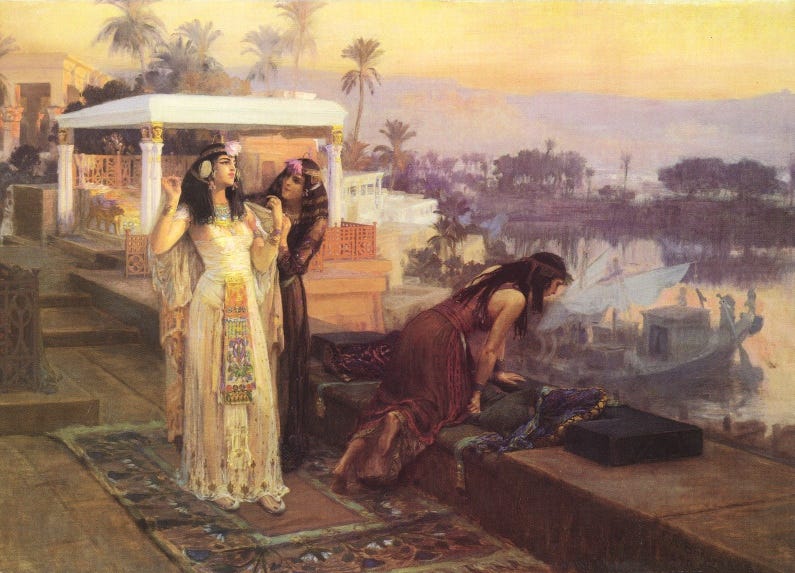
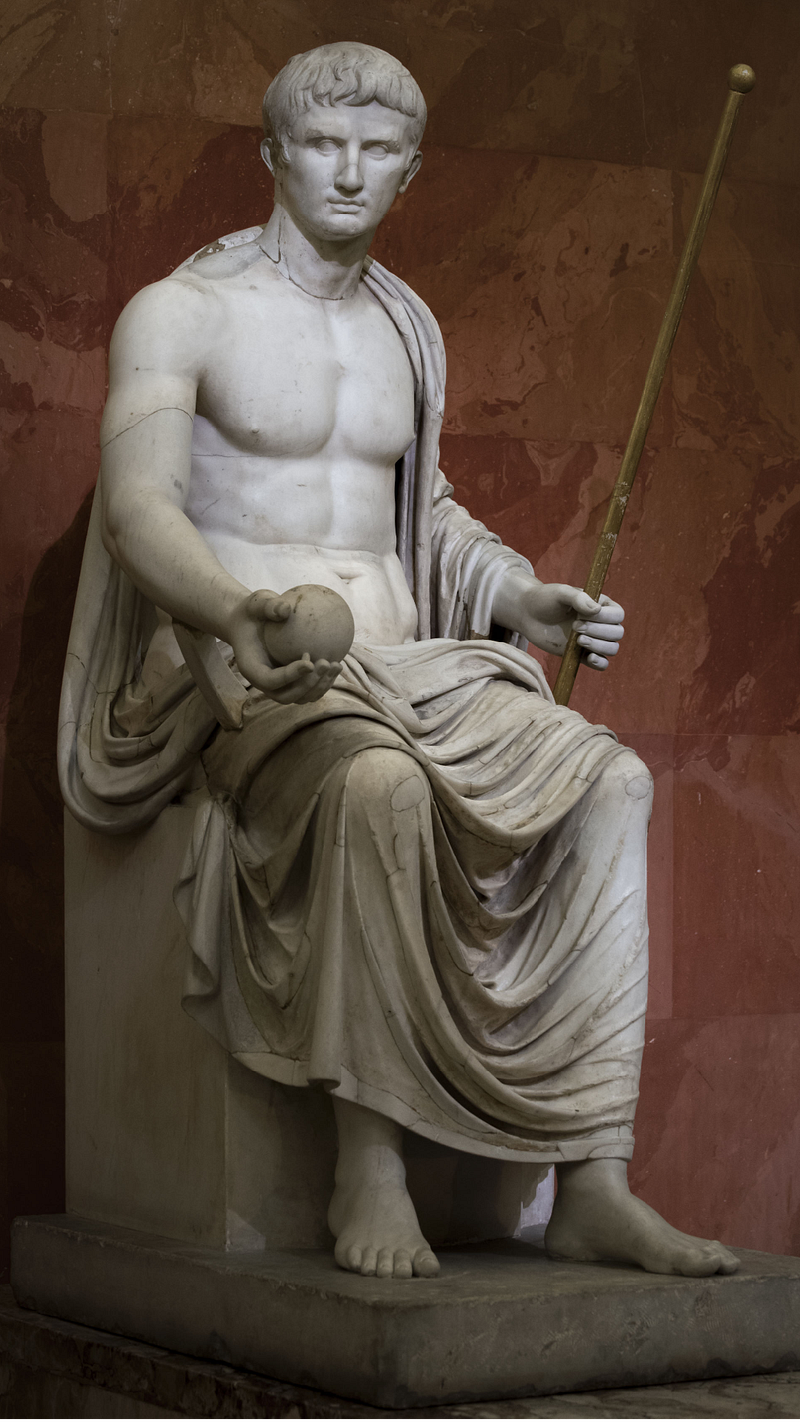
However, it cannot be ruled out that the murder of the queen may have been organized by Antony’s henchmen. In revenge for driving the leader to suicide. The main suspect remains Octavian. The living Cleopatra was a constant threat to his power, as she could drag other Roman chieftains to her side (as she had done twice before: with Caesar and with Mark Antony). Officially, however, Octavian had to keep his hands clean. And while he wanted to take Cleopatra to Rome in a triumphal procession — thus confirming his rule over Egypt — he nevertheless remembered that many years earlier Arsinoe, led in chains by Caesar, had aroused pity and anger at the victor. It was more convenient for Octavian, instead of a living queen, to present a statue of her during the procession.
.png)
It should be remembered, however, that no ancient historian accused Octavian of either direct murder or conspiracy against Cleopatra’s life. Svetonius, a historian of the late first and early second centuries, even wrote that after the queen’s body was found, the leader summoned a snake charmer to suck the poison from the wound and try to bring the ruler back to life.
Cool that you made it to the end of this article. I will be very pleased if you appreciate the effort of creating it and leave some claps here, or maybe even start following me. It would be nice if you also left a tip! Thank you!