
Civilization VI Adopts Nintendo’s Money Making Strategy
How the ‘New Frontier Pass’ exploits dedicated players for money
Since 1991, Sid Meier’s Civilisation games have been the go-to purchase for Mums everywhere that hope in vain to dissuade their kids from developing an interest in violent video games. The ultimate combination of ‘learn while you play,’ the Civilisation series teaches us politics and diplomacy, all while you race to crush either your friends or AI opponents in one of 6 distinct victory scenarios.
Civilisation is a turn-based strategy game, the goal of which is to run a real-life civilisation from the stone age until the current day. You play as a real-life leader from world history, and govern your nation through historical events and technological progress.
You develop new ways of thinking, found religions, engage in war, and develop partnerships. The newest version, Civilisation 6, has been the ultimate development for the series; a development made even better by its two expansions that were added to the Nintendo Switch in November of last year.
Since the release of the new expansions, players have had access to many more cultures, including indigenous cultures such as Maori and Cree.
Players are also able to vote in the newly created World Congress that takes place regularly throughout the game.
Through constant development, the game has naturally become the number one choice for those of us that took part in either debate or Model UN club back in high school.
The mix of exciting soundtrack, high stakes, and intense attention to detail have the nerd inside all of us jumping for joy.
But what is the cost of being a high functioning nerd? What always happens to those of us that obsess over the things most people only have a passing interest in?
I’ll tell you what happens; we get squeezed for cash.
Squeezing Nerds
When I think of companies squeezing money out of nerds, the first place my mind goes to is Geek Chic.
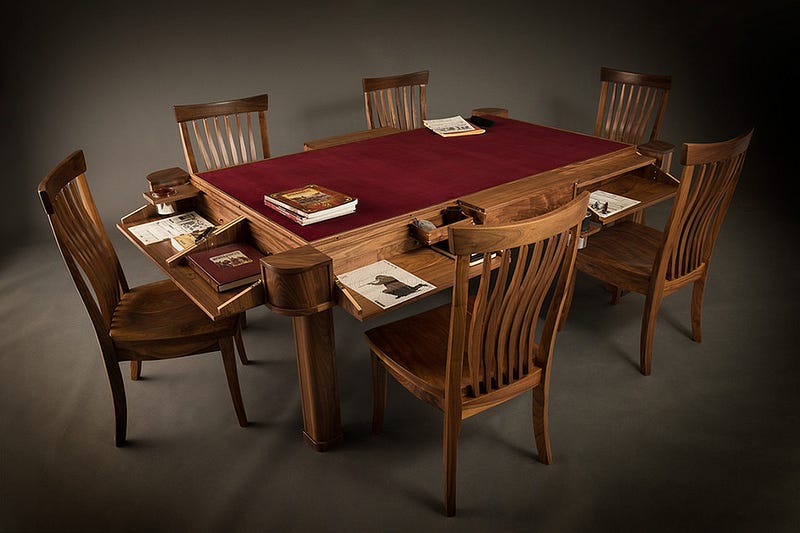
Geek Chic was a boutique furniture design company that hand-made specialty tables for hobbyists.
Those of us that play role-playing games such as Dungeons and Dragons could buy a table that could be used as a dinner table one minute, then unfold into a dragon-filled world the next.
The tables weren’t cheap, but Geek Chic knew they could charge us whatever they wanted because our passions are our lives.
Once we’d bought a table, we were then inclined to follow it up with chairs, goblets, and whatever else the company could think of.
Geek Chic folded as most companies do, after years of mismanagement. But Sid Meyer and Civilisation have similar plans that will bleed us of cash in ways Geek Chic could only dream of.
Civilisation 6 has already had two expansions, as many successful games do. But their new plans reflect an updated way of monetizing games that Nintendo, in particular, is a big fan of.
Last month, Civilisation 6 rolled out their ‘New Frontier Pass’ on all consoles and PC, immediately ringing the alarm bells in my mind.
As you may or may not know, when writing about Nintendo’s new business practices, I coined the ‘Unfold System’ term when describing the new lower-risk way that Nintendo does business.
Nintendo’s new plan is to make show-stopping games that define the current-gen platform, then follow these games up with expansions as opposed to making new titles in each series.
Each game they release only contains a portion of the planned content, then over time, they unfold the game revealing new characters and new worlds each time.
How this differs from traditional expansions is that the consumer commits to several expansions all at once, each with planned release dates and very minor details released in advanced.
Releasing an entirely new game in a franchise is extremely risky, with fans not necessarily willing to pay more money to jump from one title to the next.
This risk is elevated further when the followup title is released on the same engine as the previous entry. This is because many customers don’t see the investment as necessary when graphics have little chance of having been improved.
So instead of releasing new games, Nintendo has adopted a version of the system EA has been using for years.
EA releases isolated expansions for their games, each of them being far lower cost to produce than a full game, so, therefore, cheaper for the consumer and lower risk for everyone.
Instead of regular expansions, Nintendo has been releasing passes, which are year-long commitments to the unfolding of games released at various intervals.
Smash Bros Ultimate is a great example. This game had a pass that ran out early this year, so they released a second pass that gamers could buy with the promise of lots more content to be released over the following year.
If gamers bought both passes, they were (knowingly or unknowingly) paying more for the expansions than they had originally paid for the full game at launch.
For the developers, the pass is a lot less work than a full game. Each entry in the Smash Bros pass only comes with a new fighter and a new stage that matches the fighter.
Pokemon also received this treatment, and both Animal Crossing: New Hoizons and The Legend of Zelda: Breath of the Wild 2 are rumoured to be getting unfold passes in the future.
This business model works because fans of these franchises are committed to the games. The model is extremely low risk because developers aren’t enticing players to leave the game they’ve become committed to.
Instead, they’re unfolding the experience and offering even more of what the player loves. They’re also not taking the risk of committing millions of dollars and countless years to develop a sequel that after one bad review, the fanbase may never buy.
A sequel has the risk of being worse than the original, but a pass is a guaranteed upgrade. Civilisation takes this line of thought and elevates it to the next level by banking on the nerdiness of its player base.

Patterns of Nerdy Thought
We were those kids that volunteered to stay back three hours after school and run Model UN. Sid Meyer and the Civilisation development team know that we’re completely committed to the simulation.
Because of this, Civilisation has no intention on releasing an entirely new game anytime soon. Instead, they’re going to bill us for the next 10 months of play, knowing we’ll cough up the money.
The New Frontier Pass gives players bimonthly updates to the game (every two months, not every half month) over ten months for the mere price of $39.99. (The cost is higher outside the US).
Players get a new world leader or two as part of each update, in addition to quirky new things such as updated personalities for existing leaders.
Teddy Roosevelt, for example, will receive a new look and attitude in July that reflect his change in priorities during the later years of his presidency.
Are these updates worth the money? Certainly not for the average consumer; but the average consumer is not who Sid Meyer is targeting.
Civilisation 6 has been selling at a reduced price over the past month, even free on the Epic Games Store in a bid to increase their player count before the Frontier Pass rolled out.
Money earned from the Frontier Pass will fund the development studio while they work on other games, and occasionally develop the updates they’ve promised to roll out every two months for this game.
The risk for the studio is extremely small because they haven’t even committed to exactly what will be unveiled each two months. They’ve only teased us with mystery leaders and unnamed surprises.
Even when rolling out the second Smash Bros pass, Nintendo offered no details before charging us money for it. The only detail they offered is that one of the heroes we’ll receive will be from the three-year-old (and largely forgotten) game ‘Arms.’
Can you imagine charging people $40+ for gaming content you don’t tell them about or even when they’ll receive it? It’s a bold move.
We enjoyed the first pass, so Nintendo is confident that we’ll have faith in them to deliver for the second one. Nintendo knows they carried us through the pandemic, and they’re happy to cash in on all that goodwill.
So who knows what’s next for Civilisation.
We know that a seventh game will probably not be announced until they can develop it for a next-gen engine. So instead we’ll be billed $40+ (depending on where you live) for the New Frontier Pass until inevitably the second Frontier Pass is announced a year later.
Will we be nerdy enough to reward them for their strategy? Will we pay the equivalent price of a brand new game so that we can see Teddy Roosevelt sport a brighter coloured vest and sterner demeanour?
Unfortunately, I can guarantee we will. Us nerds are just wired that way, and Sid Meyer will retire early because of it.


