
Choco
Related to chocolate, yes, but maybe not the way you think
Today’s New York Times Spelling Bee letters:
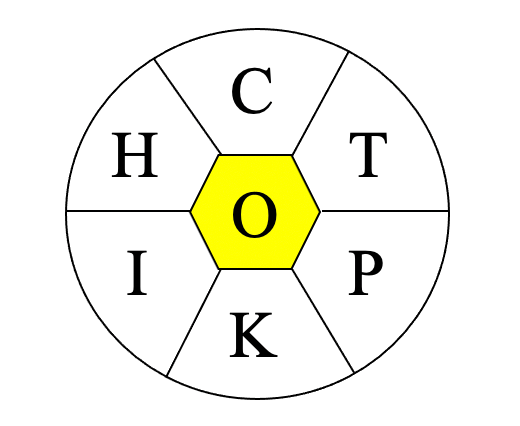
C, H, I, K, P, T, and center O (all words must include O)
Merriam-Webster says…
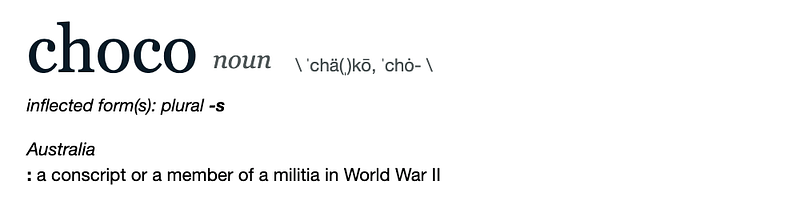
Silly little dictionary! Don’t you know choco can’t possibly be a word if the New York Times says it ain’t?
For further fascinating facts, check out the Spelling Bee Master.
What’s your favorite dord* from today’s puzzle?
My Two Cents
For those of you who may not be that familiar with the Spelling Bee game, every combination of seven letters that makes up a puzzle actually provides for seven different games. That’s because one of the key elements is the center letter (the one in yellow in the diagram above) that must be included in every word of four or more letters.
Today’s puzzle is a good example, having already appeared in May 30, 2019 (with center letter C), October 23, 2020 (with center letter H), and March 6, 2021 (with center letter I). That last time was almost exactly a year ago, and I was already writing this column then. I checked back and discovered the word I chose for that article was piki.
Today I picked choco, which lets me save interesting words like koto and ptotic for future editions when the center letter is K or P or T.
And yes, I know there is a Chocó with a capital C and an accent on the second “o”…
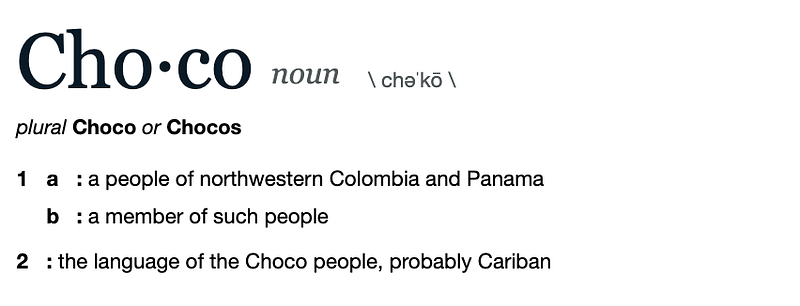
…but that’s not what I will be discussing today.
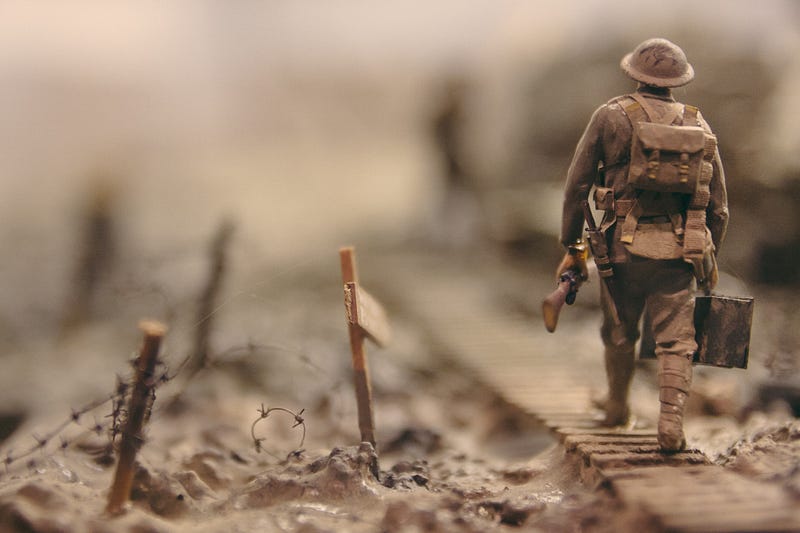
Chocolate-cream soldier
George Bernard Shaw was born in Ireland in 1856 and died almost a hundred years later, in 1950. So he lived through a lot of crap: the U.S. Civil War, which he probably paid little attention to, as Ireland wasn’t in any way involved; the first World War, the Spanish flu, World War II, and the beginning of the Cold War. Here he is in 1879, smiling joyfully in the way people did back then. Mind you, this was before most of the crap hit the fan in the 20th century.
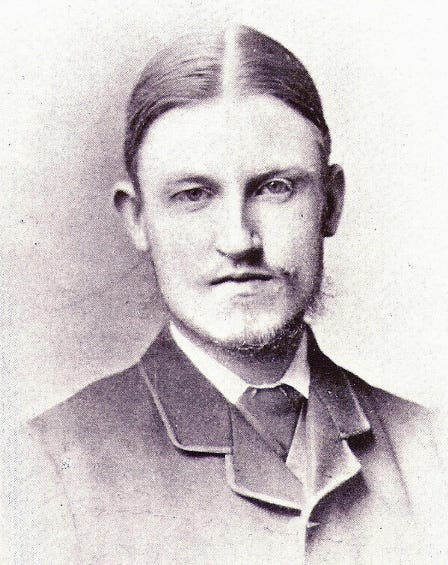
Of course, Bernard Shaw was also a famous playwright, critic, and a political activist, and polemicist… meaning he loved to argue with everyone just for the heck of it.
Today Shaw is perhaps best-known by most people as the author of the play Pygmalion, from which the My Fair Lady musical and film were versioned. His first great success in the theater, however, was the 1894 play Arms and the Man. So great was this success that legend has it George was called onto stage after the final curtain to enthusiastic applause. But not everyone had loved the play; one audience member booed. Shaw being the witty and sarcastic guy he was, simply told the man: “My dear fellow, I quite agree with you, but what are we two against so many?”
The play itself deals with the hypocrisy of human nature and attempts to showcase the futility of war. And again, this was written before the two great wars that killed millions and millions of people in the next century.
Arms and the Man popularized the phrase “chocolate soldier” as a derisive term applied to a handsome but useless soldier. The events of the play occur during the 1885 Serbo-Bulgarian War. The heroine, Raina Petkoff, is engaged to a soldier named Sergius Saranoff, but falls in love with Captain Bluntschli, a Swiss mercenary. During a conversation Bluntschli tells Raina that he uses his ammunition pouches to carry chocolates instead of cartridges.
Later on, Raina leaves a photograph of herself in the pocket of Bluntschli’s coat, inscribed “To my chocolate-cream soldier”.
The most famous adaptation of Shaw’s play came in 1908 as the operetta The Chocolate Soldier, by Rudolf Bernauer and Leopold Jacobson with music composed by Oscar Straus. Shaw hated this version but regretted not accepting payment for it when it became a huge international hit. This influenced Bernard Shaw’s reluctance to letting Pygmalion be adapted into a musical. It still became the award-winning My Fair Lady, but that was in 1956, once old George had died.
Art imitating life
Australia’s Defence Act of 1903 stated that the country’s part-time militia and the full-time Permanent Military Force could not serve outside Australia’s borders or territories unless they volunteered to do so. Therefore, when World War II broke out, the Second Australian Imperial Force (AIF) was created. (The first one had fought in World War I) This Second AIF fought against Nazi Germany and Italy at the outset of war.
Now, because the Australian Militia remained in the country as per that Defense Act that I mentioned before, they were looked down upon by those soldiers who were serving overseas and risking their lives fighting the Axis powers. The nickname “chocolate soldier”, or choco, started being used as an insult for those who had stayed home.
In this case, the use of choco referred to the belief that the militiamen would melt like chocolate in the heat of the battle. Another insult given to them was “koalas”, as these animals were protected under law at the time: it was illegal for them to be shot or exported… just like the Australian militiamen.
However, when Japan entered the war the conflict came to Australian territories in 1942, when the Japanese army landed in New Guinea (then under control of the Aussies). Suddenly Militia soldiers, the ones derided as chocos, found themselves on the front lines. These Militia units were called upon to fight stubbornly on the Kokoda Track to delay the Japanese advance while reinforcements to arrive.
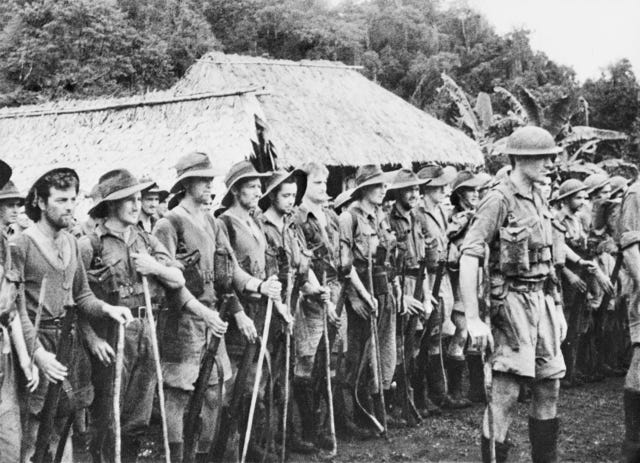
After this and other brave actions by these soldiers, the name-calling stopped. Reinforcements arrived and by January of 1943 the last of the Japanese forces had been defeated.
But don’t worry, no actual koalas were sent to fight in the war.
Now you know. If you’re ever in a bar in Australia and find yourself wanting to get beaten up by a soldier, just call them a choco. Oh, wait, you may not be able to… because the editors of the Spelling Bee decided that choco is a dord*.
You can check out my previous entry on another dord* here:
What the heck is a dord, you ask? Here’s the answer: