avatarDark Energy Articles

Free AI web copilot to create summaries, insights and extended knowledge, download it at here

2574

Abstract

3Dhttps%253A%252F%252Fabs.twimg.com%252Ferrors%252Flogo46x38.png%26key%3Da19fcc184b9711e1b4764040d3dc5c07" allowfullscreen="" frameborder="0" height="281" width="500"> </div> </div> </figure></iframe></div></div></figure><h1 id="1f0d">A milestone in Earth exploration</h1><p id="1e60">Chinese media — such as the Xinhua agency — have christened the planned borehole <i>“a milestone in the exploration of the Earth’s interior.” </i>It is supposed to be the scientists’ response to Chinese President Xi Jinping’s call. In 2021, he identified the Earth’s interior as one of the four most important areas for exploration by Chinese researchers.</p><p id="9544">However, the goal of the venture is not only scientific. Among those behind it are the largest state-owned oil company, China National Petroleum Corporation, and Sinopec, a powerful producer of oil and petroleum products.</p><p id="333d">In turn, the Kashgar Basin — largely occupied by the Taklamakan desert — is the region where China’s largest and deepest oil fields are located. One of them is the Sinubei oil field, operated by Sinopec. According to New Scientist, there are already 49 wells deeper than 8 km there.</p><p id="d8d5">So it’s very likely that behind the Chinese’ ambitious plan is a desire to find new fossil fuel resources, perhaps located at great depths.</p><blockquote id="b817"><p>“This looks more like an industrial drilling project than a scientific one,” notes Edward Sobel of Potsdam University, quoted by New Scientist. — “Research wells are usually drilled to encounter neither oil nor gas”, he adds.</p></blockquote> <figure id="873d"> <div> <div> <img class="ratio" src="http://placehold.it/16x9"> <iframe class="" src="https://cdn.embedly.com/widgets/media.html?type=text%2Fhtml&amp;key=a19fcc184b9711e1b4764040d3dc5c07&amp;schema=twitter&amp;url=https%3A//twitter.com/Asia_Financial/status/1664301416632942596%3Fs%3D20&amp;image=https%3A//i.embed.ly/1/image%3Furl%3Dhttps%253A%252F%252Fabs.twimg.com%252Ferrors%252Flogo46x38.png%26key%3Da19fcc184b9711e1b4764040d3dc5c07" allowfullscreen="" frameborder="0" height="281" width="500"> </div> </div> </figure></iframe></div></div></figure><h1 id="4967">Record deep hole in the Earth</h1><p id="e88c">The largest hole in the Earth that has been dug so far is <b>1,262 meters</b>. This is the so-called <b>SG-3 hole</b>, which the Russians drilled on the Kolsk Peninsula back in the 20th century. Work on i

Options

t began in the 1970s and lasted more than twenty years.</p><figure id="00fb"><img src="https://cdn-images-1.readmedium.com/v2/resize:fit:800/1*gr5od6hKyh1-zxg8QOXJ8A.jpeg"><figcaption>SG-3 Direct view of hole. Currently welded shut. — [Photo: Rakot13, <a href="https://creativecommons.org/licenses/by-sa/3.0">CC BY-SA 3.0</a>, via <a href="https://commons.wikimedia.org/wiki/File:%D0%A1%D0%B0%D0%BC%D0%B0_%D1%81%D0%BA%D0%B2%D0%B0%D0%B6%D0%B8%D0%BD%D0%B0(%D0%B7%D0%B0%D0%B2%D0%B0%D1%80%D0%B5%D0%BD%D0%B0),_%D0%B0%D0%B2%D0%B3%D1%83%D1%81%D1%82_2012.JPG">Wikimedia Commons</a>]</figcaption></figure><p id="fed6">Work on SG-3 showed how difficult it is to drill multi-kilometer holes in the Earth. The Russians’ plan was to drill 15 km into the Earth. This, however, proved impossible. First, it turned out that with depth the temperature rose much faster than expected. Second, the drill had to be replaced every few dozen hours of operation. Third, when it was removed, the hole would plug up again.</p><p id="b156">China’s drilling of more than 11 kilometers is thus a very demanding undertaking. And especially if it is to be completed in less than a year and a half.</p><div id="3bfb" class="link-block"> <a href="https://readmedium.com/milky-ways-dark-secrets-black-hole-unleashes-intriguing-fibers-into-the-cosmos-c76576cd30f7"> <div> <div> <h2>Milky Way’s Dark Secrets: Black Hole Unleashes Intriguing Fibers into the Cosmos</h2> <div><h3>At the very center of our Galaxy, scientists have found something entirely new. These are hundreds of string-like…</h3></div> <div><p>medium.com</p></div> </div> <div> <div style="background-image: url(https://miro.readmedium.com/v2/resize:fit:320/1*fbpWkfV81I2JFMAZ0Ggh5g.gif)"></div> </div> </div> </a> </div><p id="ddf3"><b>Cool that you made it to the end of this article. I will be very pleased if you appreciate the effort of creating it and leave some claps here, or maybe even start following me. It would be nice if you also left a tip! Thank you!</b></p><figure id="e494"><img src="https://cdn-images-1.readmedium.com/v2/resize:fit:800/1*QCQqlZr6doDP-cszzpaSpw.png"><figcaption><a href="https://www.buymeacoffee.com/oconnel">https://www.buymeacoffee.com/oconnel</a></figcaption></figure><figure id="92a2"><img src="https://cdn-images-1.readmedium.com/v2/resize:fit:800/1*fxkd_sjXknSGRO4TY0S9Mg.png"><figcaption></figcaption></figure></article></body>

Chinese Scientists Aim for an 11-Kilometer Deep Drill into Earth’s Depths!

It’s expected to be China’s largest borehole and one of the largest in the world. The Chinese are starting to drill a hole in the Taklamakan desert in the Kashgar Basin. They want to break through the earth’s crust in record time.
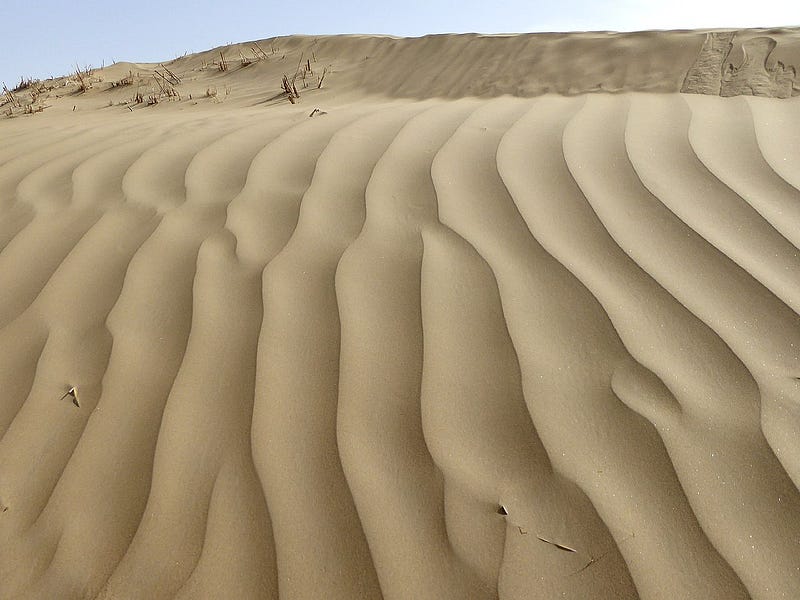
Taklamakan desert — [Hiroki Ogawa, CC BY 3.0, via Wikimedia Commons]

A week ago — May 30 — the digging of one of the largest holes ever drilled in the Earth began. The well is being constructed in northwest China’s Xinjiang autonomous region. Its planned depth is 11 kilometers and 100 meters.

If it is indeed possible to go that deep, the Chinese hope to reach layers of rocks from the Cretaceous period. That is, which are about 145 million years old. The project is expected to be completed in a record 457 days.

Deep drilling in the desert

How difficult will the project be? Sun Jinsheng, a scientist at the Chinese Academy of Engineering, compared it to driving a truck over two thin steel cables. The equipment used in the work weighs 2,000 tons. It will have to withstand temperatures as high as 200 degrees Celsius and atmospheric pressure 1,300 times that of the Earth’s surface.

An additional difficulty is the site of the work. The well will be constructed in the Taklamakam desert, one of the largest sandy deserts on Earth. It is the driest and hottest desert in China. In winter, it can be minus 20 degrees C and snow can fall there. In summer, temperatures reach 40 degrees C.

Why did the Chinese decide to dig there?

A milestone in Earth exploration

Chinese media — such as the Xinhua agency — have christened the planned borehole “a milestone in the exploration of the Earth’s interior.” It is supposed to be the scientists’ response to Chinese President Xi Jinping’s call. In 2021, he identified the Earth’s interior as one of the four most important areas for exploration by Chinese researchers.

However, the goal of the venture is not only scientific. Among those behind it are the largest state-owned oil company, China National Petroleum Corporation, and Sinopec, a powerful producer of oil and petroleum products.

In turn, the Kashgar Basin — largely occupied by the Taklamakan desert — is the region where China’s largest and deepest oil fields are located. One of them is the Sinubei oil field, operated by Sinopec. According to New Scientist, there are already 49 wells deeper than 8 km there.

So it’s very likely that behind the Chinese’ ambitious plan is a desire to find new fossil fuel resources, perhaps located at great depths.

“This looks more like an industrial drilling project than a scientific one,” notes Edward Sobel of Potsdam University, quoted by New Scientist. — “Research wells are usually drilled to encounter neither oil nor gas”, he adds.

Record deep hole in the Earth

The largest hole in the Earth that has been dug so far is 1,262 meters. This is the so-called SG-3 hole, which the Russians drilled on the Kolsk Peninsula back in the 20th century. Work on it began in the 1970s and lasted more than twenty years.
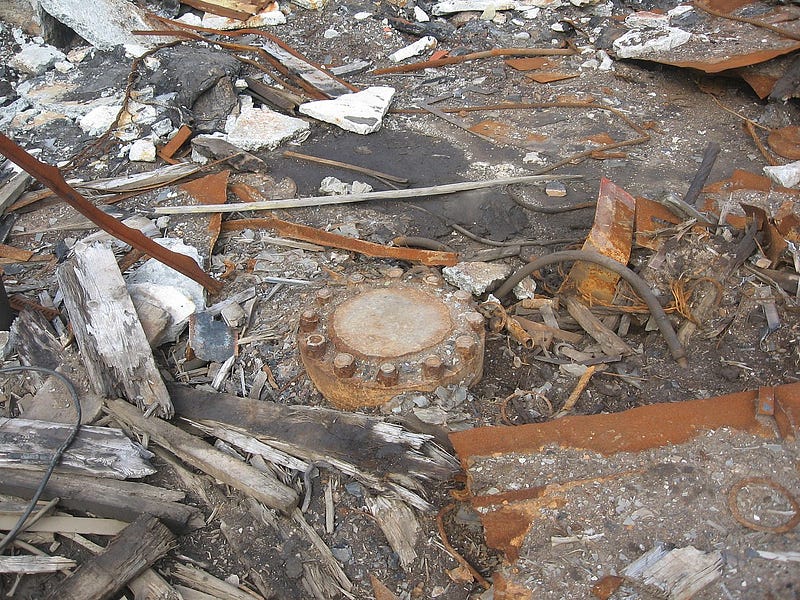
SG-3 Direct view of hole. Currently welded shut. — [Photo: Rakot13, CC BY-SA 3.0, via Wikimedia Commons]

Work on SG-3 showed how difficult it is to drill multi-kilometer holes in the Earth. The Russians’ plan was to drill 15 km into the Earth. This, however, proved impossible. First, it turned out that with depth the temperature rose much faster than expected. Second, the drill had to be replaced every few dozen hours of operation. Third, when it was removed, the hole would plug up again.

China’s drilling of more than 11 kilometers is thus a very demanding undertaking. And especially if it is to be completed in less than a year and a half.

Cool that you made it to the end of this article. I will be very pleased if you appreciate the effort of creating it and leave some claps here, or maybe even start following me. It would be nice if you also left a tip! Thank you!


https://www.buymeacoffee.com/oconnel
China
Technology
Science
Life Lessons
Earth
Recommended from ReadMedium