China’s Record Moon Mission
Examining China’s Chang’e 5 moon mission can steer China’s lunar exploration goals
This month is the first anniversary of China’s special lunar mission. It was a historic moon mission for many reasons. Let us examine more about this moon mission and the future of China’s lunar exploration plans.
On the 1st December 2020, China’s Chang’e 5 lunar exploration satellite landed successfully on the moon. This has made China, the only country to perform a soft landing on the moon after the USA and the USSR. It also raised China’s flag on the lunar surface.
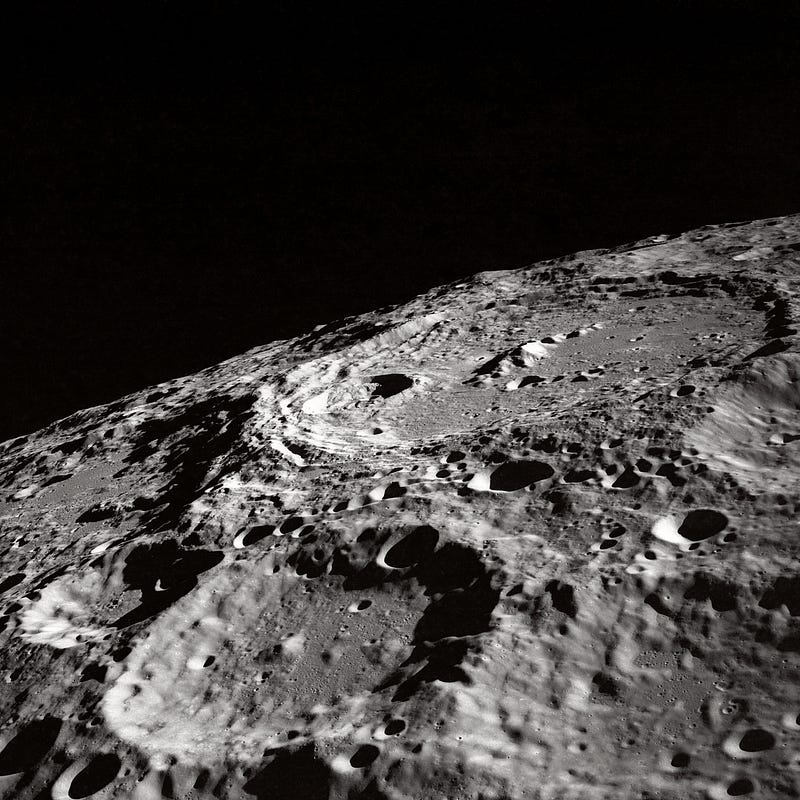
Unlike the other ordinary Moon Missions, the main feature here is to bring samples back to the Earth for research. It will be for the first time China is trying for the same after 1976 when the USSR’s Luna Mission had succeeded in the same. On 16th October 2020, the orbiter reached back to earth with samples collected from the lunar surface. The orbiter fell into the Arabian Sea.
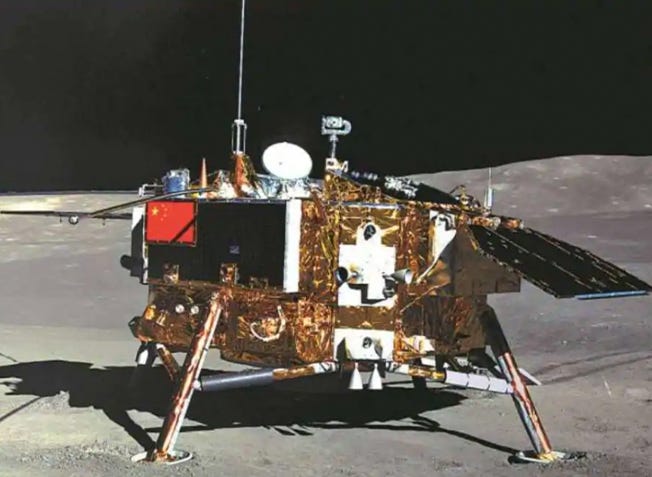
After the failure of both Israel and India on making a soft landing on the far side of the moon, China had succeeded in 2019, when Chang’e 4 has landed on the far side of the moon. This time, the aim of Chang’e 5 was to bring soil samples up to 2 kg onto an ascent vehicle. The ascent vehicle was fired along with the orbiter and has reached back to Earth in Inner Mongolia, which is a Northern Chinese Autonomous Province. China also plans Chang’e 6 which will also help in collecting Lunar Soil samples and returning them to Earth.
Ever since the end of the Cold war and the beginning of the twenty-first century, China has made tremendous progress in Lunar Exploration and research. In two decades, it has already sent five satellites and is planning for three more in the next decade. This will include more equipment and instruments possibly for the establishment of a base on the moon.
Explaining China’s Lunar Exploration Mission
China’s entire project is spread out in four phases. Each phase comprises two satellites. Phase 1 and 2 were already over till 2018. The current Chang’e 5 and the next Chang’e 6 form the part of phase 3. Phase 4 is solely aimed at building a lunar site on the south pole of the moon. By the 2030s, we can expect crewed missions sent by China.
The Chinese Moon orbiting program was put to start in January 2004 and was later renamed into Chinese Lunar Exploration Program.
Change’1, China’s first lunar orbiter satellite reached the moon’s orbit in November 2007, since then China only tasted success. On June 23rd 2020, China successfully commissioned its own Navigation System Beidou rivalling GPS.
Components and Modules
There is a lander that has the ability to separate out of an orbiter and later land on the surface. A lander does have an ascender attached to it, which helps it to ascend safely on the surface. Lander also has space for storing the collected samples and later taking them back to the orbiter.
Although it transfers samples back to the orbiter, it doesn’t go back to earth, instead, it fell back to the moon’s surface in order to prevent itself from being space debris. Then we have a returner, which returns back to the earth. The overall mass of the Chang’ e 5 project is estimated to be 8,200 kg.
Payload
Chang’e 5 has included four payload components. These are- a landing camera, panoramic camera, mineralogical spectrometer, and regolith penetrating radar. Sample collection is done in two ways. One is drilling and the other is scooping. This sample can be brought back to earth and used for research.
Recent updates
The Rover Yutu-2 which was part of the Chang’e 4 project has been actively roaming around on the moon and sending information back to earth. Today, we can also witness the rover spotting a mysterious cube on the moon’s surface. More details are awaited.
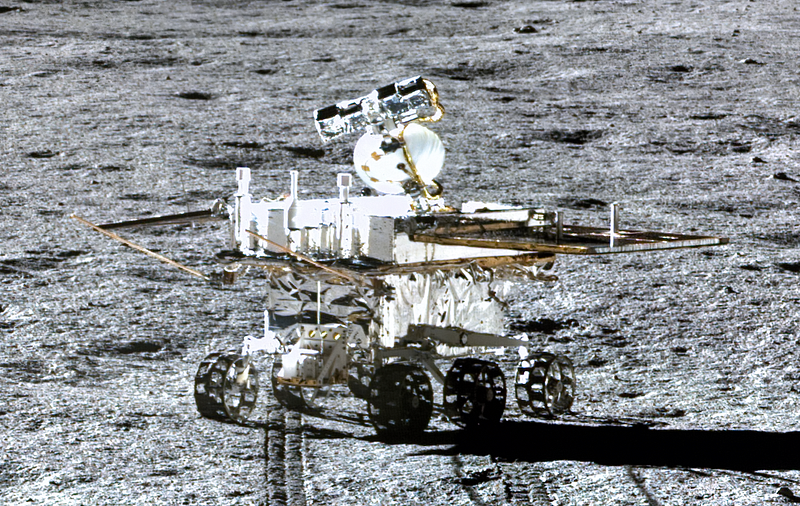
Till now, the same rover has detected rocks and has travelled close to 900 m. It has been the longest working rover on the moon completing more than 1000 days. The two solar-powered spacecraft sleep during the two-week-long lunar nights
International Collaborations
Science is the world’s most globalised entity. It is natural for countries to collaborate and coordinate in space missions. European Space Agency (ESA) had provided the tracking facility to the mission from French Guinea. Even Beijing received the status of the mission from ESA only. During the landing session, the INTA facility in Spain was used.
Controversies
When one side claims success, the other side claims propaganda. China has been using its successes for chest-thumping in front of the international community. NASA like any other govt. agency prevents any collaboration with China or Chinese citizens. Instead with was ESA who was active with the help.
China has been an active member of the UN Peaceful Use of Outer Space (UN COPUS) and signed all space-related treaties except for the 1979 Moon treaty.
On the other hand, the US is preparing for space troops and also NATO has proclaimed that Space can be the next battlefield between the superpowers. China, Russia, US and India have already tested their anti-satellite weapons which have the capabilities to shoot down satellites.
Significance of the project
For China, this is an important breakthrough as well as an achievement that only a handful of countries has been able to achieve. For the world, we can see the samples returned from the moon being used for research and it will help us learn a lot about the moon and solar system.
Coming to geopolitics and especially the geopolitics of science and technology we can see China trying to match up to the scientific achievements of the United States. Today, the situation is more geopolitical with China and the US trying to compete with others in space.
Future of Lunar Missions
India’s Chandrayaan Mission and Israel’s Beresheet are the two competing Space Programme’s as far as China is concerned. NASA is also a close rival, but it has shifted its focus on Mars now. Unlike others, NASA has multiple restrictions on working closely with CNSA with growing geopolitical tensions between both nations.
Future of Space Explorations
China post lunar mission might focus more on other planetary missions, namely Mars which is also what NASA is focusing on. Alongside this, China is also planning crewed missions to the moon. Mars will be the next spot for the rivalry between the US and Russia.
Hopefully, all countries will work together as Space is not owned by anyone and humanity as a whole is yet to explore it fully.
Note: The article was published elsewhere by the author. Now added on medium with permission and appropriate edits.
Also Read
I have started a Telegram Channel which will contain the record of all my articles. Follow my personal blog for behind-the-scenes and informative content. Do join my medium mailing list. If you enjoy my content and find it informative, do support me at Buy Me a Coffee.


