Guide for a Successful B. Tech. Project
How you engineering students can build an excellent final year project that aligns with their subject. Specialised for KTU CS students but inclusive to all branches.
Project is one of the most important subjects for the engineering curriculum irrespective of the branch for so many reasons. Project is a sum of whatever you have learnt in the past four years, and it should be reflective of the subjects and principles of engineering you have been working.
It is an unwritten rule that the project should be related to your branch or another branch or a different subject. Projects also give you work experience, a trailer like image of what you can expect when working in a company.
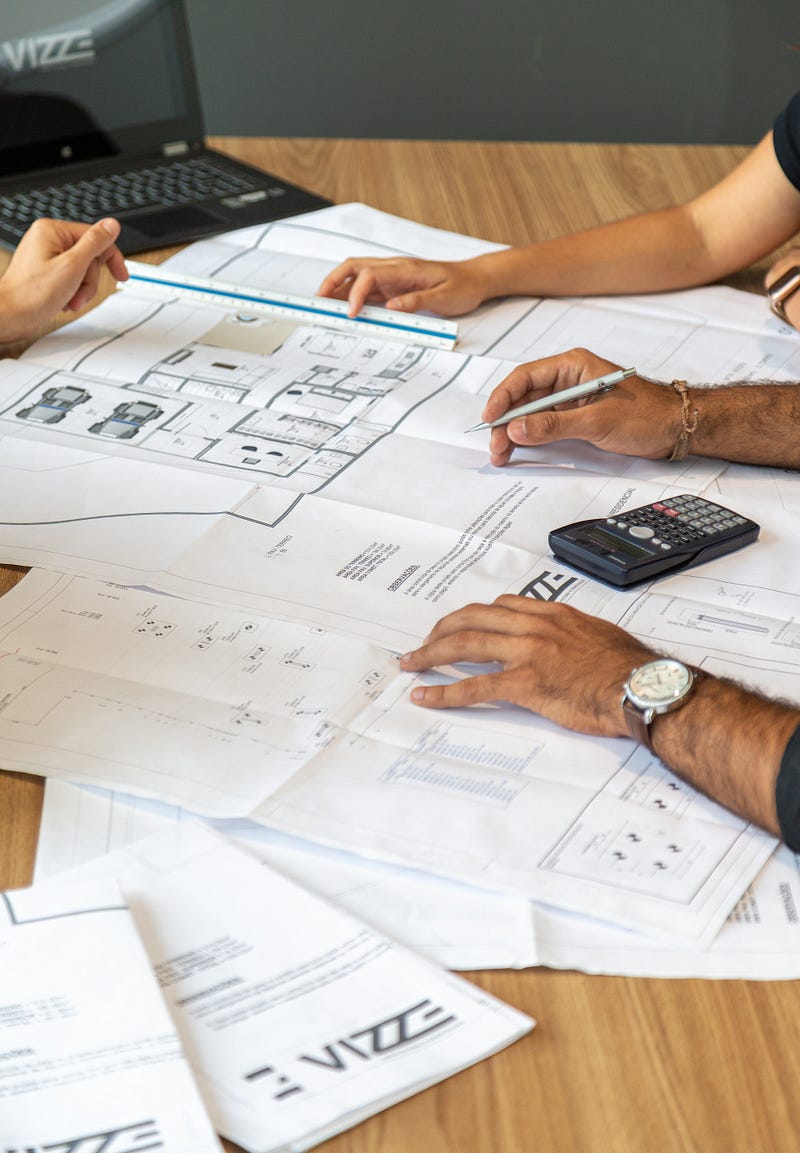
You must be very well aware of the Design Project, which is generally done in semester 5 or 6. Computer Science students would also have a subject in S 6, called Software Engineering and Project Management. Also, if you're interested, you would have experience with a lot of mini-projects.
There are multiple steps involved in each stage of the project. Usually, people or students think that the project is entirely about Execution. At the same time, they typically miss the fact that many things are equally important, like documentation, presentation etc. This is similar to your lab exams. It's not just about the experiment's output but also the aim, principle, theory, formulation, record, viva etc. Observation and output is only a part of it.
I have kept my promise that I will be doing a blog solely on B. Tech Project
The entire project is spread out throughout the year and before you enter the fourth year, have this in your mind. The Engineering Project includes three broad stages:
- Project Preliminary
- Project Execution
- Project Evaluation
Project Preliminary
Project preliminary generally happens in the Seventh semester or S7, while Execution and evaluation happen in S8. In the last blog, we had already discussed that you wouldn't be having any practical work or lab in the final semester; instead, you will have the project.
Project preliminary stands for all stages that happen before the execution and carries a lot of weightage. It is also a scoring area if you are very well versed with the subject matter. Also, this gives us a clear direction and planning of how the project is expected to move. Following are the various stages that come under the same.
Group formation
This is the most crucial part of the project preliminary. It would be best if you teamed up with people who will be there throughout working with you on a similar objective. Typically this is a period where people get confused maximum as well as face a lot of contention. Obviously, you may not be part of the best team or even be the one with the best talent.

Ideally, given the team strength, it should be three to four members. The criteria of formation might be all your choice. It can be that everyone will equally divide all the work or divide the number of tasks. One person can do a presentation; one person can code; one person can handle documentation; one can do design etc. Each group will be assigned a mentor who will be a faculty to ensure that your group receives maximum help and guidance.
In rare cases, we can also see lone wolves or a pair involved in the project, but there you must remember, you should be able to take up the entire burden by yourselves. You must be good at and must be ready to do everything. Ideally, the team must be able to coordinate and work along very well by staying committed.
Topic Selection
This is very important, just like I mentioned before. Once you have started with the same, you won't be able to roll back. So proper selection is critical. Topics must somewhere be reflective of the subject you are majoring and also that you all must work upon for a year. It can be an idea, a subject area on which you will focus, or even a problem statement.
What are the good topics? Generally, colleges do offer issues or suggestions. Usually, the institution seeks relevant projects, traditionally taken from approved journals, namely IEEE papers, which most engineering colleges subscribe. The college asked me to choose any topic that adheres to documents of the past two to three years.
The best topics are those aimed at solving an existing problem or helping society which is the ultimate goal of an engineer, solving any social issue or even fixing any holes in the subject or research. Depending on your branch, you can select topics accordingly.
There will be some element of coding involved for any circuit branch (Electrical, Electronics and Computer Science). For core circuits branches, having a hardware element is very much essential. For mechanical or civil, having a proper mechanical device or proper subject idea in Execution is required.
Some popularly chosen CS-based topics include-
- Machine Learning
- Digital Image Processing
- Network and Web Security
- Building a web and mobile application for something
- Data Science and Analytics
- Database Based application
- Networking based
- Natural Language Processing
Project proposal
After you have completed topic selection, usually you are required to elaborate on your project. You can elaborate on your abstract too. The proposal should include the aim of your project, what problem you tend to solve, or what exactly you are trying to achieve. It will also include what all your project will contain and the basic requirements. The language used should be simple, crisp and direct.
Abstract submission
You will have to take the abstract of the paper you select and build a proper short abstract for your project. Keep the abstract in brief. The abstract is merely the summary of your project.
Abstract presentation
Now, you will have to present the abstract which you have submitted in the form of an interactive presentation. You may also expect some questions. Ensure that you answer the question, why should you spend close to a year on this particular project.
Literature Survey Report
Literature Survey is not have anything to do with any literature or language but refers to the Literature of Research papers in the field. You are expected to dig out close to ten essays concerning the tools you will be using in your project. You will have to refer to reputed journals, papers, etc., in finding your articles. The survey must be a critical examination of the documents and see what you need.
Google Scholar, IEEE Xplore, JStor, Taylor and Francis are some reputed sources for searching appropriate literature. You will have to make a structured report of the same using a particular structure.
Literature Survey Presentation
Now, you will merely have to present this in front of your project in charge faculty. The presentation should be interactive, must include something that your project will be based on. This is done to ensure that your project is in the right direction and that your idea is relevant today.
Software Requirments Specification (SRS)
This is a crucial step coming inside Software Engineering, whenever you are developing proper software. All the requirements for the project's technical side are understood and documented. Various components of the same are Functionalities, Non-functionalities, Performance requirements of the system, Design constraints, Hardware and Software requirements, External interfaces etc.
SRS is documented using IEEE standard for the same; you can check about it in detail later. A person with sound technical and knowledge of English will be able to do it well.
Software Development Specification (SDS)
This is more technical but a required step before you start your project execution. Before you start coding, it is essential to remember that you need to understand what are you going to code clearly. SDS is that guide for programmers.
The main contents of SDS include the architecture of the system you are designing. Divide your project into smaller modules and make a design. Then comes the plan and diagrams. This explains the various aspects of your project in diagrammatic or graphical format.
Main diagrams include Data Flow Diagrams for the flow of your program data, Use-case diagrams to identify your users and their functions, Class diagrams for your database design, Activity Diagrams to showcase various functionalities and activities in your project, Component diagrams if you are using embedded or hardware components, and finally State diagram, to showcase the multiple states of the system. There are outstanding UML diagram makers online, which will make your job very easy.
Last but not least, SDS will have the list and explanations of various algorithms you will be using in the project. Mere English based illustration will do.
Note:- SRS and SDS is only applicable for CS or IT-based branches.
Project Execution
You are done with all your preliminary work for the project. Now it is time for you to think about how you will convert an idea on paper to reality. There might be requirements of funding, resources, hardware components, learning a new programming language, simulators, etc. Along with that, you must be ready with work division and setting up deadlines.
Gantt Chart and Schedule
This is a pictorial explanation of how long your project will proceed and what task will be allocated how much time. The Gantt chart makes it easy for everyone to keep track of your project progress and priorities. The schedule refers to the deadlines you maintain for the project's execution and completion, including work division and time you will be taking.

Project funding
This is optional, but if your project is a scalable one and has a lot of humanitarian or commercial potential, you must afford the project. You will require monetary support. You can apply the same to different associations, technical societies, NGOs, etc.
Suppose it is a simple one that doesn't need much investment, then there is no need to look for funding. Although if you are project is exemplary, you can get financing, even after it is evaluated. Good projects can, of course, be applied for patents and published in journals too.
Coding
Often you will require to learn and program in a language that you don't know. You will have to learn it or try to use the internet in referring the same. There is also no harm in taking any help from anyone as well.

For each task, usually, use a different language. For web development, for database, backend, frontend, embedded systems, data analytics, system programming, networking, etc. All use other languages. Everyone can't know everything. So you will have to make adjustments, proper divisions and also teamwork changes.
Building
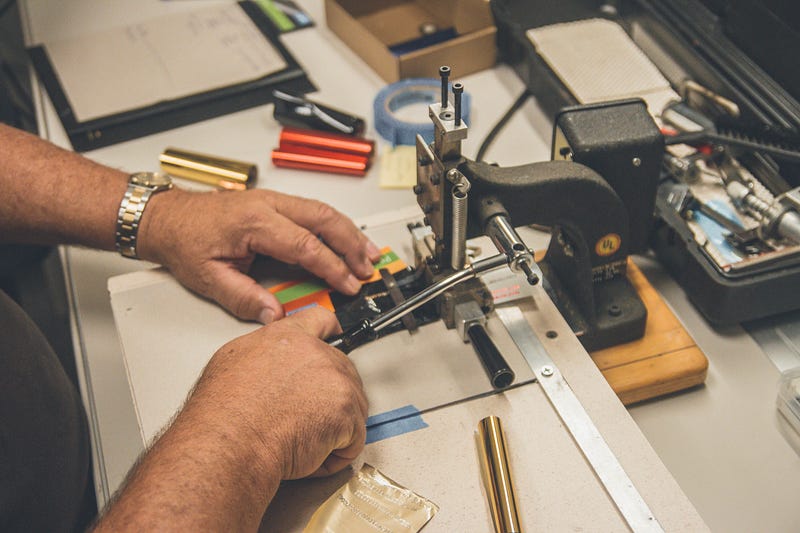
This is mainly for mechanical or hardware projects where you must assemble components and make them work. If you are trying to make it at home, make sure that it is divided into smaller parts which are mobile, carried and assembled again at the campus. If you are working on the campus, ensure that your project is safe and maintained without any issue. If your machine requires electricity, ensure that it follows all the safety measures and has constant supply during evaluation. Have backup electrical and electronics components just in case some of them get faulty or damaged.
Testing
Whatever you built or the code you have created must work without any problem. There are two types of testing, ie. Module testing and Integration testing. Module testing divides the big machine into parts or modules and tests them, same with the code. Integration testing will test all modules together to check if all of them work together and produce the desired output.
Ideally, keep one or two weeks solely for testing so that you will get enough time to correct them or make appropriate changes.
Report Writing
It is essential to have it wherever you go. Whether it may be your job, projects, freelancing, higher studies, documentation is necessary. Along with building your project, it is mandatory to note down the step by step happenings as reports and submit them. There are two types of reports- Weekly and Consolidated.

Weekly Reports comprises activities that happen over a week. So each report will include what you have completed previous, your plan for this week and what you have completed at present. One page is enough for the same.
A consolidated report can be a report having details of multiple weeks or even based on module wise. The information should be specific and must include all the essential information.
Code in GitHub
Github is an open-source platform to track projects and changes made to the same. It is an easy way to share code and large projects remotely. So whenever you have finished coding, you must add and update the code on Github. You can then share the links with your evaluators or friends to either collaborate or for getting marks. On Github, you call also contribute a lot of open-source projects.
Output/Observation
The aim of your project is obviously to obtain some output. Even while you are testing, you need to make sure that you are getting the desired result. Always remember that you must have sample output ready.
If it is output for a program, then you must have screenshots and values ready. If you are experimenting then have the backup observation recorded early itself. If you are doing a demo, then have a video clip ready.
Even though getting output is essential, it is necessary to have obtained it by the proper procedure itself. Give equal importance to the code and how it works. Expect and anticipate some roadblocks early in itself. Always be ready to explain the output on the day of evaluation.
Evaluation
You have your project ready, but you must be able to make the maximum out of it and get marked for your merit. Here will discuss various evaluation methodologies and also how to deal with this. Scoring very well in this section will indeed help to push your CGPA.

Intermediate Evaluation
You don't need to have only one single final evaluation. You may have a lot of intermediate assessments, usually for project proposals, Literature surveys, SRS-SDS, 25%, 50%, 75% and final. The evaluators can also ask you questions, presentations, reports, explanations, etc.
Full presentation and Demo
If you're doing a remote presentation or a demo, then it is essential that you have a proper Powerpoint Presentation ready with all the sides starting from abstract, aim, output, code, modules, components, etc. In addition to that, you will be asked to demonstrate your product if it is a website, phone application or a working program. If it is an operational handheld model, then proper camera angle that covers the entire demo.
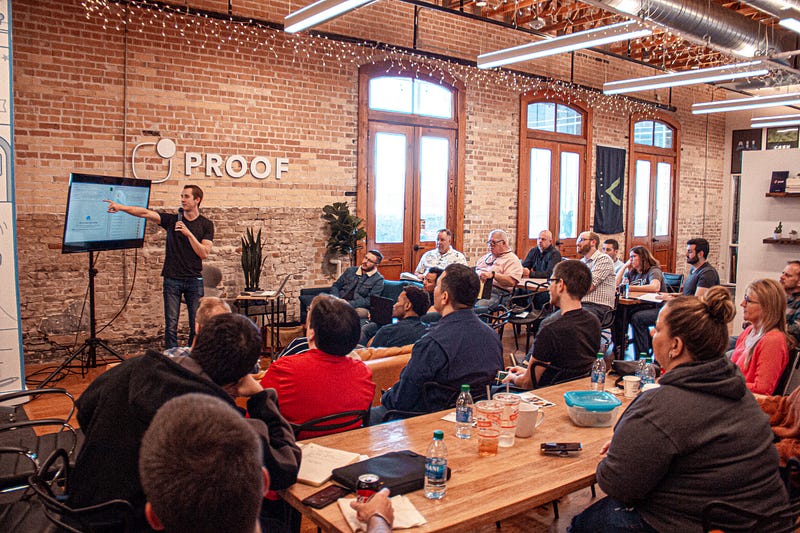
If you are doing an onsite demonstration, usually of a machine, make sure that the model is comfortably placed with all the inputs, namely electricity, water, ventilation, cooling etc. If it is a circuit-based model, ensure constant power supply, good internet connection, backup cables, components, batteries etc. If you are using laptops, provide a backup internet connection, fully working programs, and a backup power supply.
Project report
After the presentation and your project are evaluated, you will be asked to submit the consolidated report summarising the entire year. The same will be in a fixed format and template, which the university might already provide you. Make sure that the structure is followed and that there are no errors in the report, Be alert to proofread and cross-check before submission.
Viva Voice
The evaluation may not be just one side, but an interactive Q&A or even a viva style where the evaluator can ask you about the project, any specific module, the doubts in the code or even explain the part in detail. It is always good to keep yourselves prepared for any questions. Don't leave any section.
Some Tips and Things to remember in your mind
- Try to ensure that you follow the deadlines.
- Don't make your project either too simple or over complicated.
- If you feel that your project isn't that enough, try adding more modules or features. E.g., if you have a website, plan of having apps on Android and IOS as well.
- Your project topic should not have deviated, neither should it be different from your technical subjects.
- Always ensure that whatever you do and the product you make should be adhering to Engineering principles, especially if it is software, then it must be following all the software engineering concepts.
- The project should be easily understood and followed by the commoner too.
- On the day of evaluation, be on time, have a backup for everything, including printouts.
- The details and reports should be presentable.
- Everyone is expected to know each other's contributions and all the details of the entire project.
- Help each other, help your teammates, divide and collaborate.
- You will have a lot of distractions- studies, placements, seminars, higher studies etc. Never let this spoil your project prospectus.
- If you are using simulators or emulators, please be familiar with them and ensure it works well. If you are doing some embedded project, you will also have to make small changes to the firmware, so be careful there.
- Always keep your project guides and mentors in the loop.
- For reports, you will be using LaTeX which is generally used by the scientific and engineering community. Have a practice of it before you start the final work.
Once you have complimented your project successfully, it's celebration time. It's a year-long hard work and the intelligence of your past four years. Have a groupfie, meetup, hangout or something. Just that don't forget to submit your pending works. Don't damage your project or delete files, at least for a year.
I hope I have tried to stay objective and covered whatever is needed. I hope this will be useful for you and your peers. If you have any issues or doubts concerning this subject, please reach out to me in comments or social media. All the best with your project. I hope you will find your project period exciting.
I have also made subject wise for all KTU CS semesters and a guide for placements, so please check them out and stay updated. S8 will be uploaded soon.
I have started a Telegram Channel which will contain the record of all my articles. Follow my personal blog for behind-the-scenes and informative content. Join medium paid membership by clicking here. Do join my medium mailing list.
Join Medium through my referral link, which will give you access to tons of articles.


