China’s Cultural Revolution and Its Modern-Day Parallels
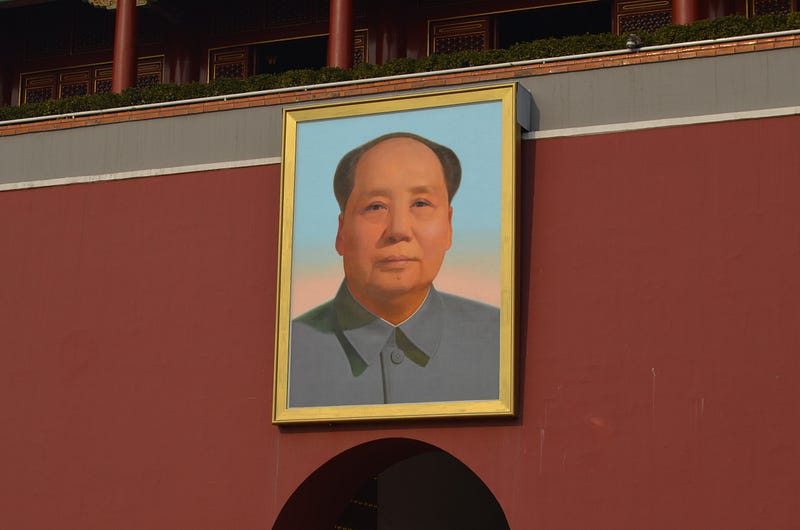
There are parallels that can be drawn between what is happening in China today and the Cultural Revolution, which was a period of political and social upheaval in China from 1966 to 1976.
During the Cultural Revolution, Mao Zedong, the founder of the People’s Republic of China, sought to purge what he saw as bourgeois and capitalist elements from Chinese society and promote a more pure and revolutionary ideology.
This led to a wave of violence, political repression, and social chaos, as millions of people were persecuted and even killed for their perceived ideological impurities.
Today, under the leadership of Xi Jinping, China has embarked on a new campaign to strengthen the role of the Communist Party and promote a more ideologically pure vision of Chinese society.
This has involved cracking down on dissent, promoting Communist Party loyalty, and increasing state control over various aspects of society, including the media, education, and the internet.
While the scale and intensity of the current campaign is not on the same level as the Cultural Revolution, there are some notable similarities in terms of the emphasis on ideological purity, the use of propaganda, and the promotion of Party loyalty.
Some observers have also noted a resurgence of Maoist ideology in China, particularly among younger generations who were not alive during the Cultural Revolution.
The Use of Propaganda
During the Cultural Revolution, Mao Zedong and his supporters harnessed the power of propaganda to promote their vision of a pure, revolutionary society.
Propaganda played a critical role in shaping public opinion, controlling the narrative, and ensuring loyalty to the Communist Party.
Posters, pamphlets, and public performances were common forms of propaganda during the Cultural Revolution. The ubiquitous Little Red Book, a compilation of Mao’s quotes, was distributed widely and used as an ideological guide.
Art and literature were also employed to convey political messages, with revolutionary themes dominating the cultural landscape.
Fast forward to today, the Chinese government continues to use propaganda to promote the Communist Party’s vision of a strong and stable China.
While the methods and tools have evolved, the underlying goal of shaping public perception and reinforcing loyalty to the Party remains the same.
Modern propaganda relies heavily on state-controlled media and education. News outlets, television programs, and social media platforms are often used to disseminate the government’s narrative, both domestically and internationally.
Stories are carefully curated to highlight the Party’s achievements, bolstering its legitimacy in the eyes of the public.
In the realm of education, textbooks and curricula are designed to instil a sense of national pride and loyalty to the Communist Party.
Lessons on history and politics emphasise the Party’s role in leading China towards prosperity, while downplaying or omitting events that could cast the government in a negative light.
The use of propaganda in both the Cultural Revolution and present-day China demonstrates the enduring power of information and narrative control in shaping public opinion.
The Role of Personality Cults
During the Cultural Revolution, Mao Zedong and his supporters promoted a cult of personality around Mao himself, emphasising his role as the leader of the Communist Party and the Chinese people.
This involved the widespread use of Mao’s image and slogans, as well as the glorification of his revolutionary achievements and ideals.
Similarly, today, the Chinese government has been promoting a cult of personality around President Xi Jinping, emphasising his role as the leader of the Communist Party and the Chinese people.
This has involved the widespread use of Xi’s image and slogans, as well as the glorification of his achievements and ideals.
As well as this, the government has been promoting the idea of “Xi Jinping Thought,” which, much as in Mao’s time, emphasises the importance of loyalty to the Communist Party and its leaders, as well as the rejection of Western-style democracy and human rights.
The Suppression of Dissent
During the Cultural Revolution, the suppression of dissent was brutal and widespread. Millions of people were persecuted, and many lost their lives due to their perceived ideological impurities.
Intellectuals, artists, and anyone suspected of harbouring counter-revolutionary thoughts were publicly humiliated, imprisoned, or even executed.
This extreme campaign to quell opposition aimed to consolidate Mao Zedong’s power and enforce ideological conformity.
Today, while the scale and intensity of political repression in China are not on the same level as during the Cultural Revolution, concerns about the suppression of dissent persist.
The Chinese government has been criticised for its stringent measures against activists, journalists, and other critics who voice opposition or raise questions about the government’s actions and policies.
The modern-day suppression of dissent often takes the form of online censorship, surveillance, and the intimidation of individuals or groups expressing critical opinions.
The Great Firewall of China and the country’s extensive internet monitoring apparatus enable the government to control the flow of information and silence voices of dissent on digital platforms.
In addition to online censorship, the Chinese government has been known to detain and imprison activists, human rights lawyers, and journalists who challenge the status quo.
High-profile cases, such as those of Nobel Peace Prize laureate Liu Xiaobo and Uighur academic Ilham Tohti, highlight the risks faced by those who dare to speak out against the government.
The suppression of dissent also extends to ethnic and religious minorities, as evidenced by the treatment of Uighur Muslims in Xinjiang and the ongoing crackdown on Tibetan culture and religion.
These measures exemplify the government’s determination to maintain social stability and control at the expense of individual freedoms and human rights.
The role of youth
During the Cultural Revolution, young people played a crucial role in driving the revolutionary movement forward. Mao Zedong famously called on the youth to “bombard the headquarters” and root out “counterrevolutionary” elements.
This rallying cry resulted in the formation of the Red Guards, groups of zealous young supporters of Mao’s ideology, who were instrumental in carrying out the goals of the Cultural Revolution.
These groups targeted intellectuals, religious figures, and perceived enemies of the Communist Party, often with devastating consequences.
In modern-day China, the Communist Party continues to recognise the importance of engaging with younger generations, albeit in a different context.
The Party has been actively working to promote loyalty among today’s youth, seeking to instil a sense of national pride and a commitment to the Party’s vision for China’s future.
The Communist Youth League (CYL), an organisation directly affiliated with the Party, plays a vital role in fostering Party ideology and propaganda among the youth.
The CYL organises a wide range of activities and programs, such as summer camps, volunteer opportunities, and educational initiatives, aimed at shaping the political and social values of young Chinese citizens.
These activities not only reinforce the Party’s narrative but also encourage active participation in the nation’s development.
Social media platforms and online forums have also become important tools for engaging the younger generation.
The Chinese government utilises these digital spaces to promote patriotic content and counteract any narratives that could challenge the Party’s legitimacy.
In this way, the internet serves as both a platform for disseminating the Party’s message and a tool for monitoring and controlling dissenting opinions.
Mass Mobilisation & Grassroots Campaigns
Another parallel that can be drawn is the use of mass mobilisation and grassroots campaigns to promote political objectives.
During the Cultural Revolution, Mao Zedong mobilised millions of young people to participate in campaigns to root out “counterrevolutionary” elements and promote revolutionary ideology.
These campaigns often took the form of mass meetings, rallies, and demonstrations, and were characterised by a high degree of political mobilisation and grassroots participation.
Similarly, today, the Chinese government has been using mass mobilisation and grassroots campaigns to promote its political objectives, particularly in the areas of environmental protection, poverty reduction, and economic development.
For example, the government has launched high-profile campaigns to reduce air pollution, build new infrastructure, and promote sustainable development.
However, there are some important differences between the current situation and the Cultural Revolution. For one, the current campaigns are focused more on achieving practical goals and addressing social and environmental challenges, rather than promoting revolutionary ideology.
Additionally, the current campaigns are more targeted and limited in scope, and are generally conducted within the framework of the existing political system.
Emphasis on Loyalty to the Communist Party
During the Cultural Revolution, Mao Zedong sought to purify Chinese society of what he saw as bourgeois and counter-revolutionary elements, and replace them with a new revolutionary culture based on loyalty to the Communist Party.
This involved a highly politicised and ideological approach to all aspects of society, including education, the arts, and social relationships.
Similarly, today, the Chinese government under President Xi Jinping has been emphasising the importance of loyalty to the Communist Party as the central organising principle of Chinese society.
This has involved a renewed emphasis on Marxist-Leninist ideology, as well as efforts to promote a more traditional and conservative Chinese culture based on Confucian values.
Related to this, the government has been cracking down on dissent and promoting ideological purity, particularly among young people.
This includes efforts to control education, media, and the internet, and to promote a more positive image of the Party and its leaders.
However, there are some important differences between the current situation and the Cultural Revolution. For one, the current campaign is more targeted and limited in scope, and is being conducted within the framework of the existing political system.
Additionally, the emphasis on loyalty to the Party is being driven in part by concerns about social and economic stability, as well as the potential threat to the Party’s power from growing social and economic inequality.
Role of the State In Shaping The Lives of Chinese Citizens
During the Cultural Revolution, the state sought to transform Chinese society by promoting a new revolutionary culture based on the values of the Communist Party.
This involved a highly politicised approach to education, the arts, and social relationships, with the state seeking to mould the beliefs and values of its citizens to conform to the Party’s ideology.
Similarly, today, the Chinese government under President Xi Jinping has been seeking to shape the personal values and beliefs of its citizens in order to promote loyalty to the Party and its leaders.
This has involved a renewed emphasis on traditional Chinese values, as well as efforts to control education, media, and the internet, in order to promote a positive image of the Party and its leaders.
In addition, the state has been using technology and social media to monitor and control the behavior of its citizens, particularly in terms of their political opinions and social relationships.
This has raised concerns among human rights activists and other observers about the potential for widespread repression and surveillance in China.
“Struggle Sessions” to root out supposed enemies of the state
During the Cultural Revolution, Mao Zedong’s supporters conducted “struggle sessions” where people were publicly humiliated, physically beaten, and forced to confess to supposed crimes against the state.
The goal of these sessions was to purge society of “counter-revolutionary” elements and promote revolutionary ideology.
Similarly, today, there have been reports of Chinese authorities conducting “struggle sessions” against dissidents, human rights activists, and other perceived enemies of the state.
These sessions can take various forms, including public confessions, televised trials, and forced statements of loyalty to the Communist Party.
Additionally, there are reports of Chinese authorities using technology and surveillance to monitor and control the behavior of their citizens, particularly in terms of their political opinions and social relationships.
Again, this has raised concerns among human rights activists and other observers about the potential for widespread repression and surveillance in China.
Emphasis on Revolutionary Heroism & Sacrifice
During the Cultural Revolution, Mao Zedong and his supporters encouraged young people to become “red guards” and engage in revolutionary activities to promote the Communist Party’s vision of a pure and revolutionary society.
This involved a highly politicised and idealistic approach to social and cultural life, with the emphasis on personal sacrifice and loyalty to the Party.
Similarly, today, the Chinese government has been emphasising the importance of revolutionary heroism and sacrifice in promoting loyalty to the Communist Party and its leaders.
This has involved a renewed emphasis on traditional Chinese values, as well as efforts to control education, media, and the internet, in order to promote a positive image of the Party and its leaders.
The government has also been promoting the idea of the “Chinese dream,” which emphasises the importance of individual sacrifice and hard work in achieving national greatness and prosperity.
Control & Manipulation of History
During the Cultural Revolution, Mao Zedong and his supporters sought to redefine Chinese history by promoting a new revolutionary narrative that emphasised the importance of the Communist Party and its leaders.
This involved the destruction of traditional cultural and historical artefacts, and the rewriting of history to conform to the Party’s ideology.
Similarly, today, the Chinese government under President Xi Jinping has been seeking to control and manipulate history in order to promote loyalty to the Communist Party and its leaders.
This has involved a renewed emphasis on traditional Chinese values, as well as efforts to control education, media, and the internet, in order to promote a positive image of the Party and its leaders.
In addition, the government has been promoting the idea of “patriotic education,” which emphasises the importance of loyalty to the Party and the state, and the rejection of Western-style democracy and human rights.
Use of Propaganda & Ideological Indoctrination
Mao Zedong and his supporters used propaganda and ideological indoctrination to shape public opinion in support of the Communist Party and its leaders.
This involved the control of education, media, and the arts, and the promotion of revolutionary slogans and symbols.
Similarly, today, the Chinese government under President Xi Jinping has been using propaganda and ideological indoctrination to shape public opinion in support of the Communist Party and its leaders.
This has involved the control of education, media, and the internet, as well as the promotion of positive images of the Party and its leaders.
The government has also been promoting the idea of the “China model,” which emphasises the superiority of the Chinese political system over Western-style democracy and human rights.
This has been used to justify the government’s policies on issues such as economic development, poverty reduction, and environmental protection.
Use of State Violence & Repression to Maintain Social Control
During the Cultural Revolution, Mao Zedong and his supporters used violence and repression to maintain control over Chinese society.
This involved the mobilisation of paramilitary forces and the creation of “revolutionary committees” to root out supposed enemies of the state, as well as the imprisonment, torture, and execution of millions of people.
Similarly, today, the Chinese government under President Xi Jinping has been using violence and repression to maintain social control.
This has involved the use of paramilitary forces and police to quash dissent, as well as the imprisonment and torture of human rights activists, dissidents, and other perceived enemies of the state.
Additionally, the government has been using technology and social media to monitor and control the behavior of its citizens, particularly in terms of their political opinions and social relationships.
Differences Today
Although there are many similarities with the past (as noted above), the current situation in China is shaped by its unique historical and political context, and cannot simply be reduced to a repetition of past events.
There have been positive developments and changes taking place in China, such as the country’s rapid economic growth, and technological innovation.
During the Cultural Revolution, China was an isolated and largely agrarian society, with limited ties to the global economy and limited social mobility.
The Chinese government today has, by contrast, been more effective in promoting economic growth and improving living standards for many of its citizens, which has helped to maintain social stability and prevent the kind of widespread social unrest that characterised the Cultural Revolution.
Today, China is a major economic and political power, with a growing middle class, increased social mobility, and close ties to the global economy.
This has led to a more complex set of social and economic factors that are driving the current political and social changes in China.
The Chinese government has also been actively working to address some of these challenges by promoting economic growth and development, improving social welfare programs, and expanding access to education and healthcare.
(However, as noted, these efforts have also been accompanied by greater state control over various aspects of society, including the media, education, and the internet).
The global community has also become more interconnected and interdependent in recent years, which has created a greater degree of interdependence between China and other countries.
This has helped to constrain China’s behavior in some areas, as it is mindful of the potential consequences of actions that could lead to conflict or destabilisation.
However, the rise of China as a major power has also led to new competition and tensions between China and other countries, particularly the United States, which has raised concerns about the potential for conflict and instability.
China has also been increasingly forming alliances and partnerships with other authoritarian regimes, such as Russia, North Korea, and Iran, as a way to counterbalance the influence of Western democracies.
This has raised concerns among some observers about the potential for the emergence of a new authoritarian bloc that could challenge the norms and values of the international system.
Linking Past & Future
It’s fascinating to see the parallels between China’s Cultural Revolution and modern-day events.
While we must be cautious not to oversimplify or draw exact comparisons, understanding these connections can provide valuable insights into contemporary sociopolitical dynamics.
As history often repeats itself in different forms, it’s useful to keep our eyes open and learn from the past, so as to better navigate our ever-evolving world!
Interested in showing support for this writer? Consider becoming a Medium member. By signing up with my referral link, I’ll earn a modest commission at no additional expense for you! You’ll also enjoy unrestricted access to a wide range of stories on Medium.