
Rise of the New Authoritarian Bloc: Unraveling the Future Impact on Global Politics
What is likely to happen if there is the emergence of a new authoritarian bloc that could challenge the norms and values of the international system?
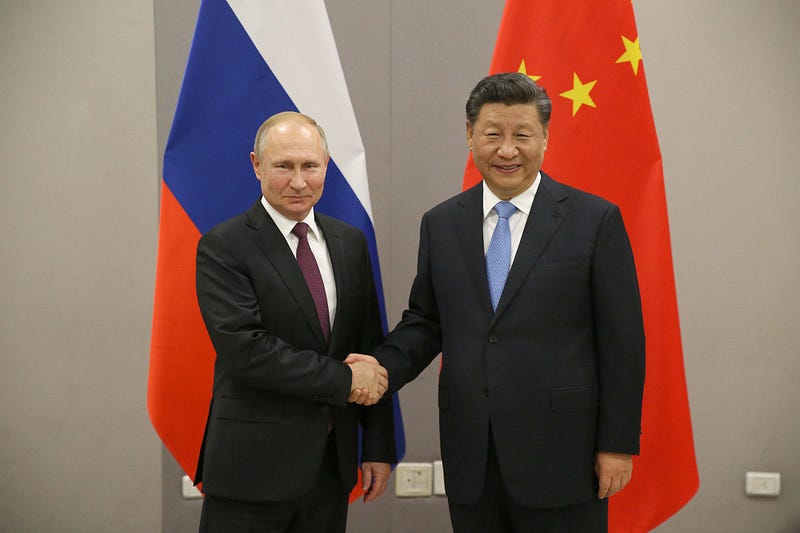
In an era of shifting global power dynamics, the emergence of a new authoritarian bloc has significant implications for international relations.
Recent collaboration between Russia’s Vladimir Putin and China’s Xi Jinping, has raised the potential for such a bloc to reshape political and economic landscapes worldwide.
As these two leaders join forces, the rest of the world must grapple with the consequences of their combined influence.
I’m interested in understanding the impacts of the emergence of a new authoritarian bloc in terms of the challenges it would pose to the norms and values of the international system, and in turn, the significant implications for global politics and security.
Such a bloc could seek to undermine the liberal international order that has been in place since the end of World War II, and could lead to increased geopolitical competition and tensions.
Some possible scenarios of what this might look like include:
- Increased competition and conflict: The emergence of a new authoritarian bloc could lead to increased competition and conflict in various regions of the world, as different countries and blocs seek to expand their influence and assert their interests. This could lead to increased military spending, arms races, and proxy wars, and could increase the risk of direct military conflict between major powers.
- Polarisation and fragmentation: The emergence of a new authoritarian bloc could lead to increased polarisation and fragmentation within the international system, as countries and regions align themselves with different power blocs and seek to advance their interests. This could lead to a breakdown in cooperation and coordination on key global issues such as climate change, human rights, and trade, and could lead to the erosion of the multilateral institutions that have underpinned the international system since World War II.
- A return to great power politics: The emergence of a new authoritarian bloc could lead to a return to a system of great power politics, in which major powers compete for influence and resources through a combination of military, economic, and diplomatic means. This could lead to a new Cold War-style system of alliances and rivalries, and could fundamentally reshape the international system and the way that countries interact with one another.
- Economic impacts: A new authoritarian bloc could seek to undermine the existing economic order, and could lead to increased protectionism and trade barriers. This could have significant impacts on the global economy, and could lead to a period of increased economic volatility and uncertainty.
- Human rights and democracy: A new authoritarian bloc could pose a significant threat to human rights and democracy around the world, and could lead to increased repression and censorship. This could have a chilling effect on political dissent and civil society, and could lead to a decline in the global spread of democratic values and institutions.
- Technology and innovation: A new authoritarian bloc could seek to dominate emerging technologies and innovation, and could seek to use these technologies to assert their interests and values. This could have significant implications for the development and deployment of emerging technologies, and could lead to increased polarisation and fragmentation in the global tech industry.
- Environmental impacts: A new authoritarian bloc could have significant impacts on the environment, and could lead to increased pollution, deforestation, and other forms of environmental degradation. This could exacerbate the global climate crisis, and could have significant impacts on the health and well-being of people around the world.
Increased Competition & Instability In The Global Energy Market
Related to the above, is the potential for increased competition and instability in the global energy market.
The countries in such a bloc could seek to control energy resources and transit routes in order to further their strategic interests and limit the influence of other countries.
This could lead to increased competition and tension in the global energy market, and could lead to a new era of energy insecurity and volatility.
We have already seen this to some extent, with Russia’s control over gas pipelines to Europe and the inevitable disorder that resulted there. There is potentially worse to come though.
Impacts on Global Order Of Norms & Values
The emergence of a new authoritarian bloc would also likely have a significant impact on the global order of norms and values.
Such a bloc would seek to promote alternative values and ideologies, and could seek to undermine the existing liberal international order.
This could lead to a further erosion of the values and institutions that have underpinned global stability and prosperity, and could lead to a new era of polarisation and fragmentation in the international system.
Strategic Competition in Space
Another potential impact is the potential for increased strategic competition in outer space.
Countries in such a bloc could seek to develop and deploy advanced space technologies for military and strategic purposes, leading to a new era of space militarisation and competition.
This could have significant implications for the global balance of power, as well as for the development and deployment of new space technologies.
Impacts on Global Health & Public Health Policy
Countries in such a bloc could also seek to control the production and distribution of vaccines and other critical health resources, and could use these resources as a tool of political influence and coercion.
This could have significant implications for global health and well-being, as well as for the ability of governments and other actors to respond to emerging public health threats.
Impacts on Global Responses to Transnational Challenges
In addition, the emergence of such a bloc could have a significant impact on the global response to emerging transnational challenges, such as climate change, terrorism, and cyber threats.
Such countries could seek to undermine existing mechanisms and institutions for addressing these challenges, and could use these challenges as a tool of political influence and coercion.
This in turn, could lead to a further erosion of the global order of norms and values, and could lead to increased instability and uncertainty in the international system.
Impacts on Trade & Commerce
There would of course also be significant impacts on the global system of trade and commerce.
Countries in such a bloc could seek to promote their own economic models and approaches, and could use their economic power as a tool of political influence and coercion.
This in turn, could again lead to increased competition and fragmentation in the global economy, and could have significant implications for the ability of countries to achieve sustainable and inclusive economic growth.
What’s To Be Done?
Ultimately, the emergence of a new authoritarian bloc could have significant impacts on a wide range of issues and sectors, and could fundamentally reshape the international system in ways that are difficult to predict.
It is important for countries to remain vigilant and to work together to address the underlying causes of these trends, and to promote cooperation, dialogue, and the rule of law as a means of addressing these challenges.
There would be significant and far-reaching implications for global politics and security if such a bloc were to emerge, and we would likely see a period of increased instability and uncertainty in the international system.
Ultimately, part of this must also be finding ways to address the underlying grievances and challenges that may be driving the emergence of such a bloc in the first place too.
I’m no fan of Xi Jinping or Putin, or appeasement (think pre-WWII actions of the allies that might have prevented war), but the direction of both China and Russia worries me deeply and while preparations may need to be made for the inevitable, there are still options open to us.
Attempting to understand the Russian or Chinese worldview can only be helpful as we seek to avoid what is seemingly becoming the inevitable creation of a new authoritarian bloc, as these two world powers move closer to one another.
Interested in showing support for this writer? Consider becoming a Medium member. By signing up with my referral link, I’ll earn a modest commission at no additional expense for you! You’ll also enjoy unrestricted access to a wide range of stories on Medium.