
Cheeto Jesus is giving Narcissists a Bad Name
Bastardization of Good English Words
Just a few short months ago it was okay to be a narcissist.
Apart from a few articles here and there about relationships gone wrong and “How to Spot a Narcissist” on agony-aunt web sites, we were mainly left in peace. These aunties went a bit far once in a while, calling us psychopaths , but normally we were left alone. We could go about our business wringing compliments out of our fellows like there was no tomorrow, dragging the conversation interminably around to me, me, me and checking our reflections in the eyeballs of strangers.
We basked in the hard-won acknowledgements of our fellow man:
“Nice car, huh?” (I had to keep my mouth shut at work for FIVE years to keep that job and get that nice German car for the sole purpose of grabbing your attention)
“Nice place, huh?” (I had to charm and alternately bully the entire administrative office of the rental company for six solid months to get on the list for this fabulous apartment in the centre of town; just to impress you)
“Nice dress” (There goes last month’s rent, just so you could admire me)
Now we narcissists are having to go underground. I am having to pretend that I love other people. That ain’t easy; it’s really stretching my thespian talents. I am having to feign empathy and act like a living, breathing, caring human being. I hardly dare look in a shop window to check out my reflection anymore for fear of being observed, of being judged and being silently berated.
It’s the silent stuff that’s the worst. It’s the tightening of the lips, the smug stiffening of the cheeks, the barely perceptible hardening of the eyes as they watch my head swivel to turn my eyes to the glass facade.
“She’s like him”, I hear them think.
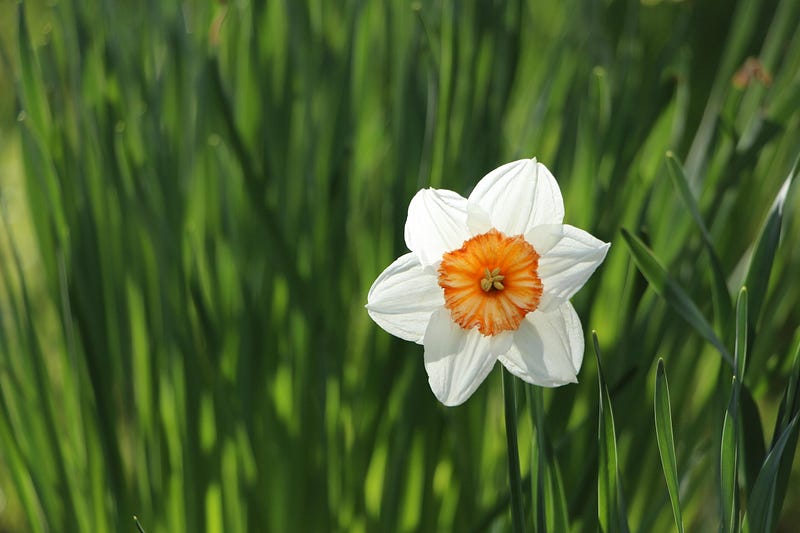
Once narcissus was an innocent yellow daffodil.
(Now they even have a daffodil called Lothario. It’s a “very useful late-flowering daffodil”. That makes plenty of sense.)
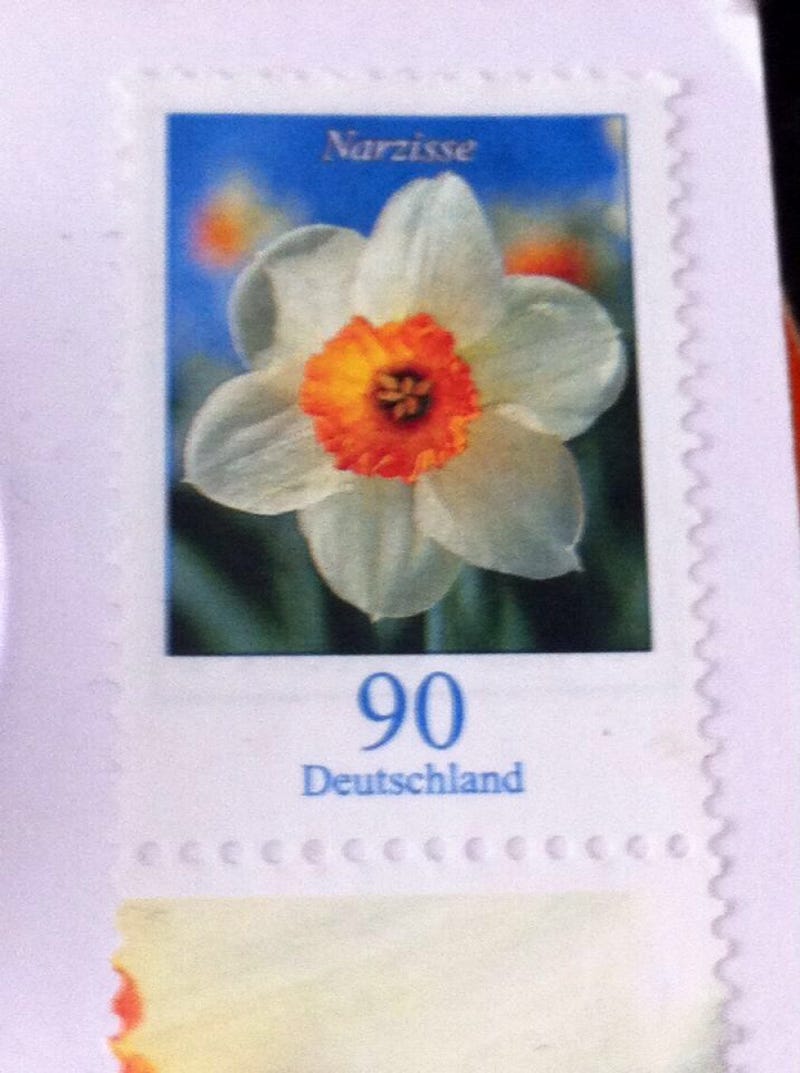
There was even a narcissus on the stamp I bought for a postcard in Berlin. The postcard with an authentic piece of the wall:
But I digress.
The mythological Narcissus was a charming wood nymph loved by many who liked staring at his own reflection.
The baroque painter Caravaggio painted a very famous painting of him; in fact, he deserves his own slide show:
Cheeto Jesus isn’t loved by many. He ain’t charming or handsome. His supporters (shame on you, Clint) are just playing the Ultimatium Game like the Brexiters before them. James Allworth explains it so eloquently:
Give narcissists a fair crack of the whip. Or is that reserved for sado-masochists?
Here’s a brilliant must-read article by Rachel Syme in defence of selfies, that those who would have us cower call narcissism:
It’s an hour long but every word is worthwhile.
Stop calling Cheeto Jesus a narcissist and give us our nice word back.
Dust it off and give it back to us.
NOW!
If you liked this, you might like to check this one out:
Here’s a list of my most recommended stories:
If you liked this story, click the green heart below so others can find it too.
Thanks for reading this far.


#/media/File:Narcissus.poeticus.1658.jpg)
_edited.jpg)