
Chapter 2 — Miracle Of Kingsland Road
Marriage, Naturalisation, and the fight goes on
If you haven’t yet read Chapter 1, then you can read that here
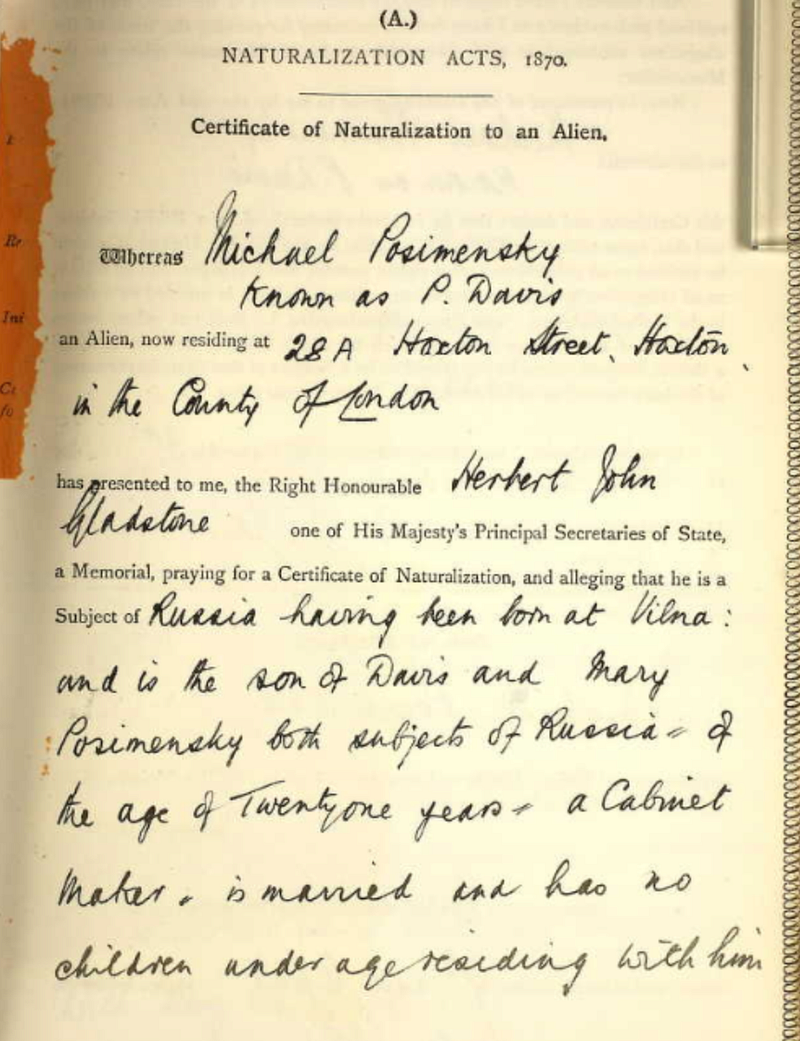
Life continued apace and in 1905, at the age of 20, I married my wife, Rachel, and then in 1906, I became a Naturalised citizen of Great Britain.
The documentation shows that the name Davis was introduced at this time, as a surname. However, I couldn’t find any further documentary evidence of this, as all ongoing electoral registers continue to show Posimensky as the surname, until 1930 when the London City Directory shows Michael Philip Davis. It’s a mystery that continues.
One day, passing through Kingsland Road, we saw that the old Police Station was to be sold or let, so I said “Let us write and ask what rent they want for it”.
The family laughed at me and said that we didn’t have the cash it would cost. But I begged Aleck to write to the Commissioner of Police to ask the rent, and the reply came back that it was open to offer.
So I said: “Let us offer any rent, as we couldn’t afford to make it into a workshop anyway.”
So we sent in the ridiculous offer of £120 a year, and after some months went by and we heard nothing, we forgot it altogether.
In 2020, £120 is equivalent to over £5300.
After a long time, a letter came accepting our offer. We were all stunned with surprise; we couldn’t get involved in such an undertaking.
So we wrote back and said that to break up the cells and convert it to a workshop would cost a lot of money and we couldn’t do it. The Police replied and told us to get an estimate and let them know the cost, and they would pay it.
We moved into our new home around 1910 and here we remained.
And that is the very short story of the Miracle of Kingsland Road that happened to us — and the One Above looked down on us and looked after us; as the old saying goes, we were like unto the young fools who stepped in where angels fear to tread.
The reason I mention Kingsland Road is that I was always sorry that I missed my chance of making an easier living by becoming a Minister. The hard work began when Kingsland Road was settled. But Sundays were my canvassing days for the J.N.F., and I had plenty of rebuffs.
Sadly, my father passed away in January 1914, at the age of 58 and never realised his dream of visiting or living in Palestine.
I became more driven to succeed in my pursuit of the Holy Land.
I went to all the Zionist meetings, and I met the great Jewish leaders of those days.
I was at the historic meeting that was held by Dr Herzl in the Queen’s Hall, at the back of what is now Broadcasting House, and also at the Royal Albert Hall in Kensington.
When Balfour returned from a visit to Palestine I remember hearing him say “We opened the door of Palestine to you, you must work hard to keep it open, and it will not be easy.”
The Balfour Declaration
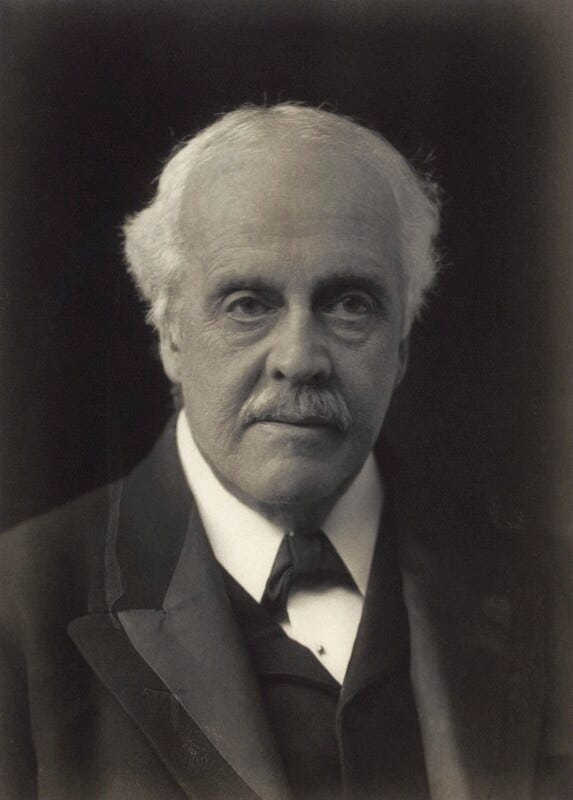
The Balfour Declaration was a public statement issued by the British government in 1917 during the First World War announcing support for the establishment of a “national home for the Jewish people” in Palestine. The declaration was contained in a letter dated 2 November 1917 from the United Kingdom’s Foreign Secretary Arthur Balfour to Lord Rothschild, a leader of the British Jewish community.
There were many of the great men of our race at that meeting, a great crowd and a lot of excitement.
In 1918, I was sent to Manchester as a delegate to the Mizrachi conference, where we had a very good reception on the Sabbath in the Great Synagogue, and on Sunday the conference started in full swing.
Now I have an answer to the “Four Questions” about why I was always a keen Zionist:
- My father worked very hard for Cyprus and gave up a third of his meagre wages in the hope that one day he would be able to enter the Holy Land.
- I had always prayed, morning and evening, for Zion and Jerusalem, and had never done anything to help; that is not praying right. Work and prayer is the right way.
- The prophecies in the Book of Daniel. Two things have already been fulfilled.
- the Balfour Declaration
- the establishment of the State of Israel
I am convinced that the rest will be fulfilled.
4. I can see a great future for the Jewish race in Israel, and I hope my children will have a hand in it.
To be continued
You can listen to episode 2 of the podcast here:
Thank you for reading
👉🏻 Before you go, if you’d like to receive my articles directly into your inbox, then just click here!
👉🏻 Sign up with this link for access to everything on Medium, and you’ll support me directly with a portion of your fee, it won’t cost you a penny more.
👉🏻 If you’d prefer, please buy me a coffee to show your appreciation


