
Chapter 1 — Why I Am A Zionist
A story of a dream, of hope and determination
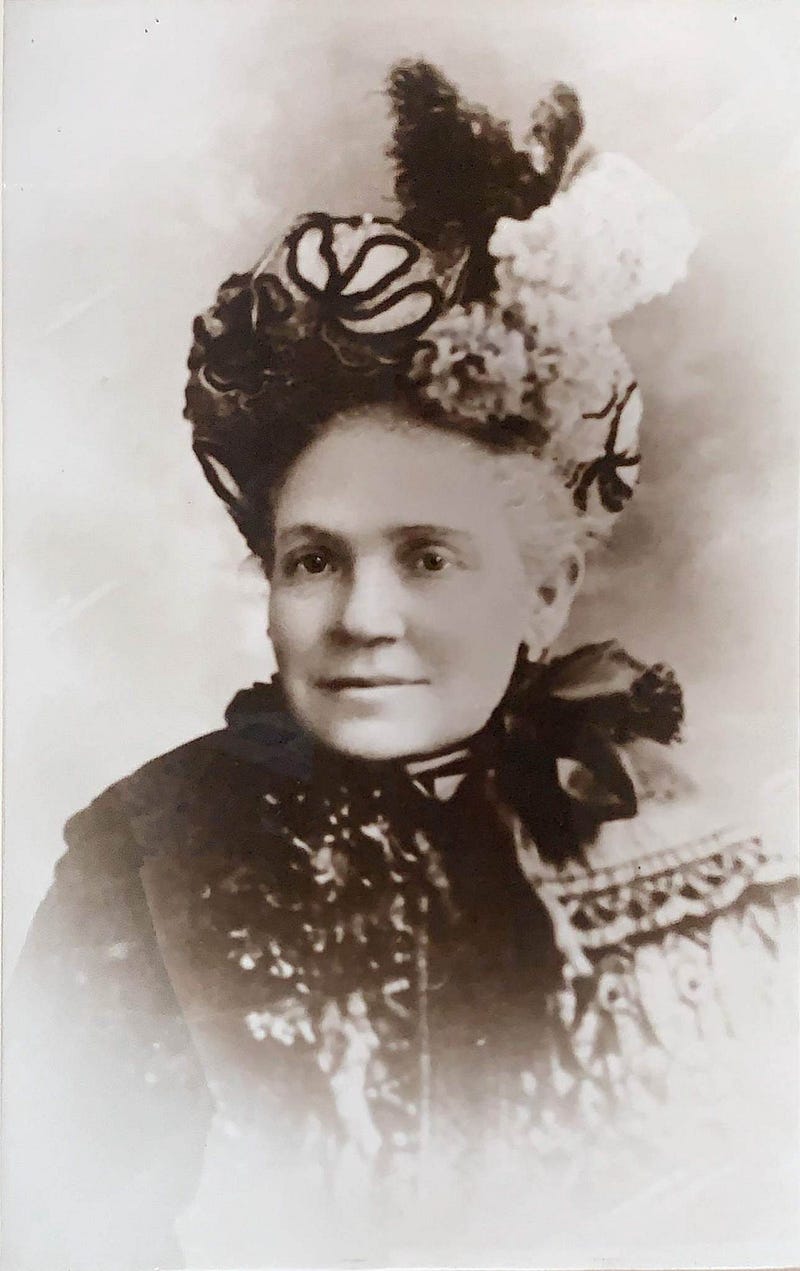
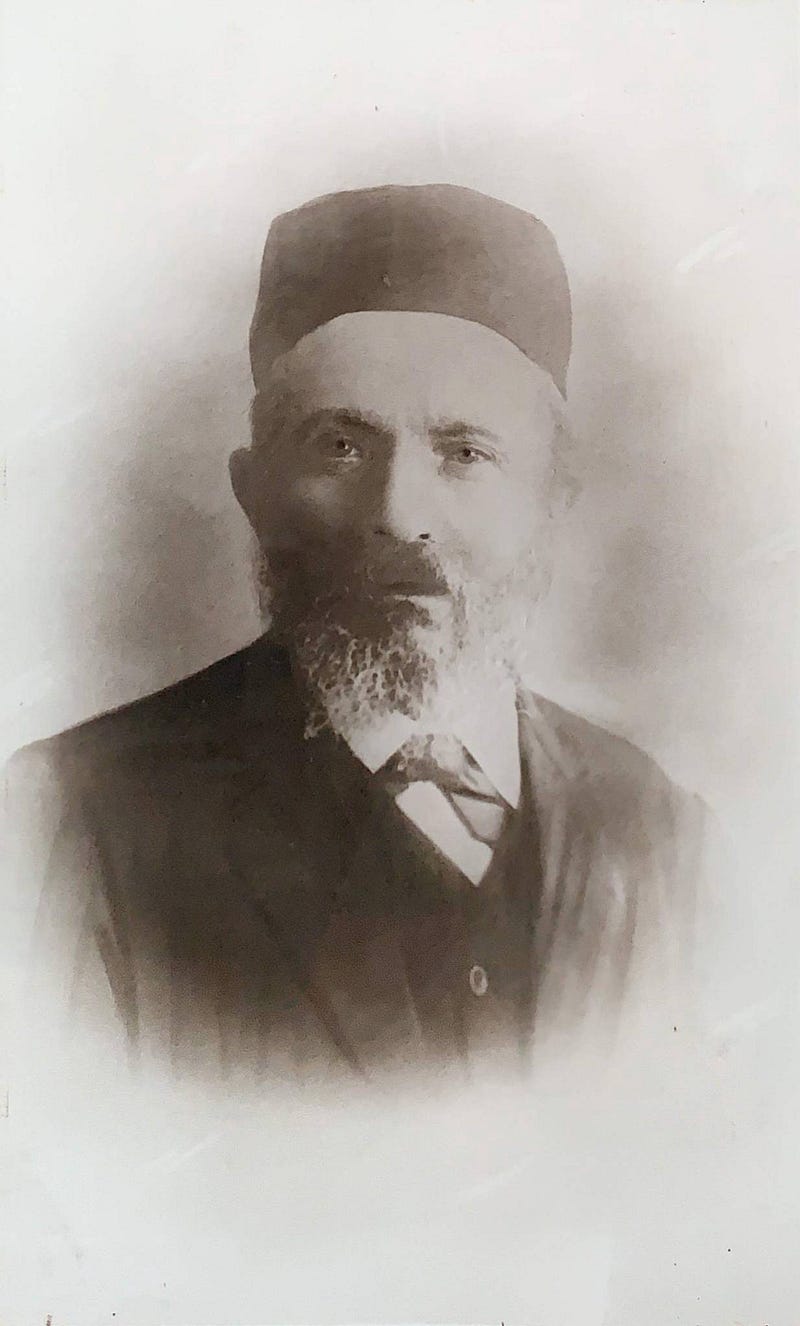
Let me tell you a little bit about myself.
My name is Michael Davis — although that is my anglicised name. My original name is Myer and our original surname was Posimensky.
I was born on the 17th of May 1885, in a place called Swinchan (pronounce: Schvenshoniz), near Vilna; which is now in Lithuania; about 20Km from the border with Belarus.
It was part of the Pale of Settlement, a region of western Imperial Russia where Jews were allowed to permanently remain.
Around 1888 my father, Tuvia, left Swinchan and came to London; and a year or so afterward my mother, Mariasha, followed with the four children; myself, my brother Aleck, and my two sisters, Rebecca and Annie. Annie would only have been about one year old at that time.
There is still, in my mind, the memory of mother having to lift us out of the wagon because the horse couldn’t pull it up the hill; and when we arrived in London I was just over four years old, so there is little I can clearly remember about my home town.
Our first home, in London, was in a garret in Brick Lane.
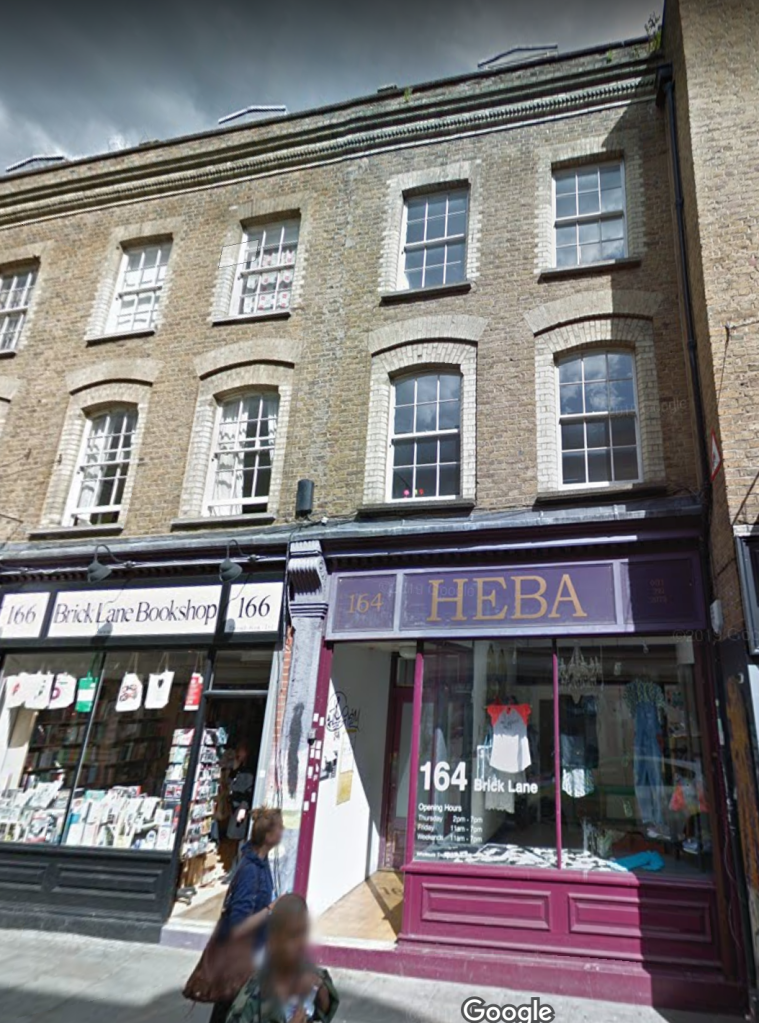
A garret is a habitable attic, a living space at the top of a house, often quite small, dismal, and cramped, with sloping ceilings. But it was home.
According to the 1891 census, our garret was at 164 Brick Lane, near the railway arch.
A little while later we moved to Booth Street, which is now called Princelet Street.
Opposite our house was the old Booth Street Synagogue, and it was there that the Machzike Hadath Congregation came into being.
The Booth Street Synagogue was first established in 1870, in number 19 — a house that was originally built in 1719. It had been used by many different people before my ancestors bought it and created their congregation.
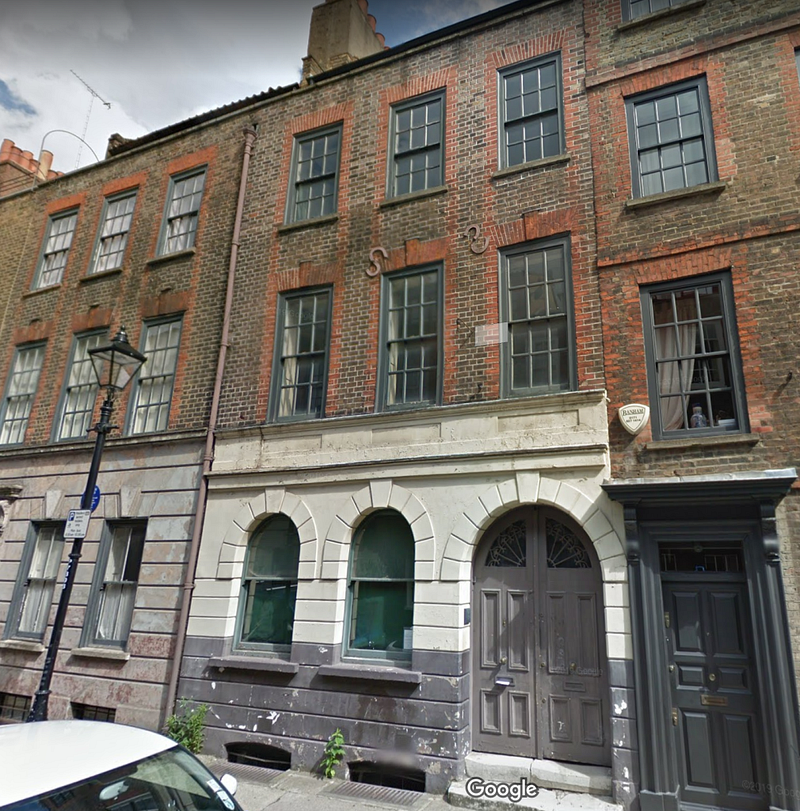
My father was one of the first members and attended all the services as it was the only Orthodox Synagogue at that time.
In 1898 the Machzike Hadath moved to new, larger, premises at the corner of Fournier Street and Brick Lane.
Brick Lane has always been known for the changing demographics, and the building was originally built in 1742 as a Huguenot Chapel and after being used by various groups, it became a synagogue in 1898, which it remained for almost 70 years.
Today, since the Jews have left the East End of London, the grade 2 listed building has become a mosque.
My father worked hard, day and night, as a cabinet maker, and as he didn’t work on the Sabbath he had to come in on the Saturday night, after the termination of the Sabbath, to make up for the lost time.
The workshop roof leaked and the rain came in, and he used to put a sack on his back to cover himself from the rain while he worked.
Throughout eastern Europe in the late 19th century, numerous grassroots groups were promoting the national resettlement of the Jews in their homeland. These groups were known as Zionists.
Now, a society was formed which called itself The Cyprus Society, and the members were all those who wanted to go and settle in Palestine.
At that time it was under Turkish rule, and it was forbidden under heavy penalty to sell land to anyone of the Jewish race; so they decided to settle in Cyprus, which was as near to the Holy Land as they could get.
My father joined this society, and he paid ten shillings a week to it.
To help you understand the value in today’s money, 10 shillings was equivalent to 50p — and 50p in 1920 would be worth about £23 in 2020.
He only earned 30 shillings (£67 today), and mother couldn’t manage on the ten that was left, so she took in lodgers, and cooked meals for them. It was very hard for her, with four children and another on the way.
I remember that each Friday she used to put sand on the floor to make the room look nice for the Sabbath.
Just imagine. Can you picture the scene? The state of our house in those days?
There were no carpets such as we have today or even lino, but what could you expect on father’s earnings of 30/- a week, of which he gave 10/- to the Cyprus Society.
It was decided to send a commission to Cyprus to see the land and the conditions there, and as the members were made up of master tailors, cabinet makers and diamond cutters amongst many others, they went by votes, and the master tailors were selected to go.
This upset my father. He felt that tailors were no use on the land. They needed men who could work on the soil. When they returned they gave a very unfavourable report, and it seemed that all their funds were lost.
Research into the society tells us that there were three attempts to settle in Cyprus. The third attempt, the longest, was between 1898 and 1935 and was sponsored by the Jewish Colonial Association, which settled about 35 families and offered continuing professional assistance. However, ultimate failure was assured, by the proximity of Eretz-Israel, which exerted an irresistible allure on the younger, second, generation.
After some time the Palestine Jewish Colonisation Association (known as PICA), came to their help and paid out very little for it, and the Society disbanded.
Now, every Sabbath I went with my father to the Synagogue for the service, and in the afternoon we went to listen to a sermon by a Rabbi, as this was the only Orthodox Synagogue then.
One Sabbath, the lecturer was Rabbi Gold, of the Mizrachi movement, and when he started his sermon there was a great uproar.
They said, “We do not want to hear anything about Palestine, where they work on Shabbat and eat treifah” (non-Kosher food); for there was a lot of opposition to Zionism from very Orthodox Jews.
“The difference between Palestine and London is that in London there are also religious Jews, and in Palestine, there are also Jews who work on Shabbat and eat treifah and do other things that are forbidden by the Torah.”
What he meant by that was that in Palestine they are mostly religious, and only a few are not, but in London, they are mostly not religious, but a few do keep the religion. So they let him get on with his sermon.
Every day we prayed for Zion and Jerusalem, without lifting a hand, and I felt praying was not enough.
When Dr Herzl came on the scene with his idea for a State for the Jewish people, I felt I had to help.
Theodore Herzl formed the Zionist Organization in 1897 and promoted Jewish immigration in an effort to form a Jewish state. Though he died before its establishment, he is known as the father of the State of Israel.
I went canvassing every Sunday for the Jewish National Fund and sold Shekolim to raise money. Shekolim gave each member the right to vote for delegates of the organisation.
I was very pleased, and so was my father.
But fate ordered otherwise; Dad became very ill, and the family had to be supported, so into the workshop I had to go and do my duty.
Mother looked after us bravely. We moved to Hoxton Street, as there was more room, and it was more central in the cabinet trade.
We used to go around hawking the furniture we made, on a barrow, to show it and try to sell it. There were plenty of disappointments, in many places we were told to “come back tomorrow”.
And so we carried on for a long time until we heard that the London County Council was going to cut a new road through Hoxton Street, and our house would be pulled down.
We went to the agent for the Landlord and begged him to give us a tenancy agreement on the house so that the L.C.C. would have to give us compensation if they demolished it, and he did give us the agreement.
After a few years had gone by, the house was getting dilapidated and a lot of repairs were badly needed, but the agent would do nothing. We wanted to leave but, unfortunately, we were tied down by the agreement.
To be continued…
You can listen to the first episode of the podcast here:
Thank you for reading
👉🏻 Before you go, if you’d like to receive my articles directly into your inbox, then just click here!
👉🏻 Sign up with this link for access to everything on Medium, and you’ll support me directly with a portion of your fee, it won’t cost you a penny more.
👉🏻 If you’d prefer, please buy me a coffee to show your appreciation


