
I LOVE YOU, WE SAID
Chapter 11: Sometimes Never
A serialised novel
At the age of forty-five, when I was thirteen, my father went into fatal cardiac arrest, 2,000 kilometres up-country in a remote northern part of the Republic.
We didn’t attend his funeral and I never visited his grave.
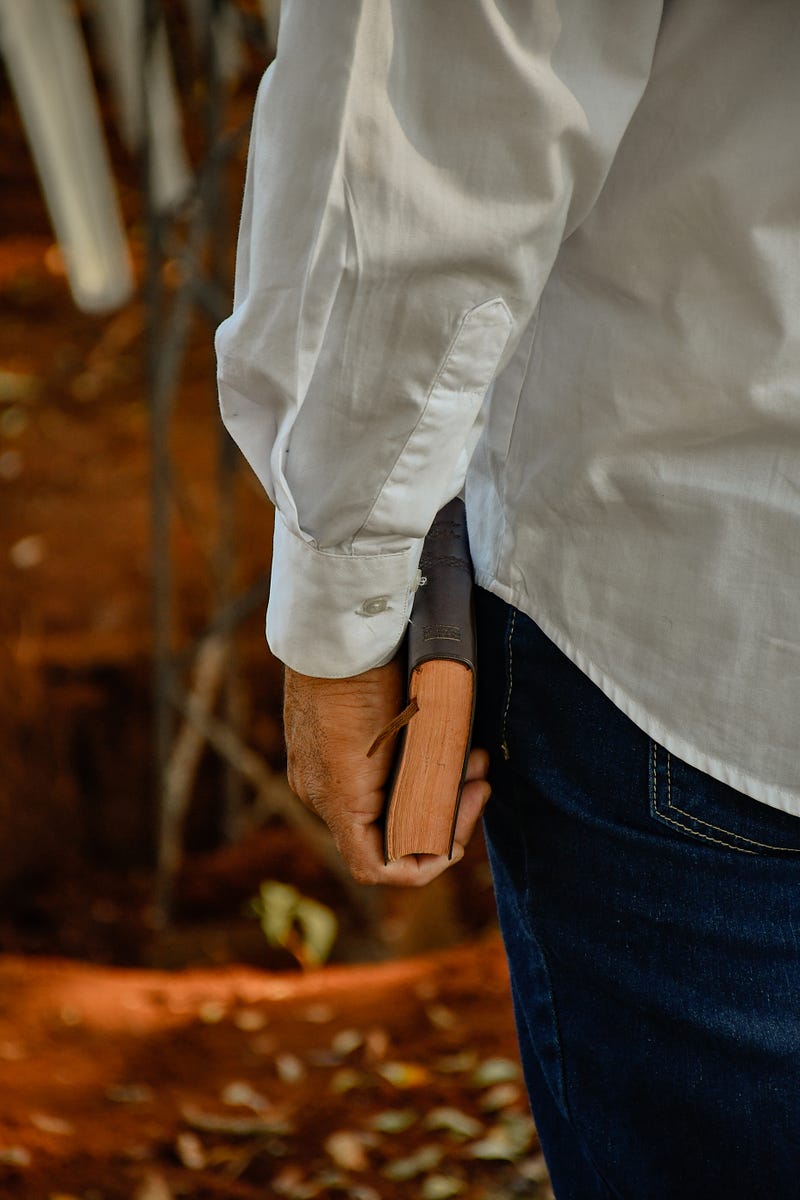
I imagine it was attended by a handful of people who’d known him in the years that we hadn’t heard from him. A few friends, perhaps, turning to each other at the graveside service, making small talk, speaking authentic words of tribute. A woman, in sorrow disavowing the dead, fishing for cigarettes in her bag, her face lined, agitated, composed…
And further back, Johan — my father — and his friends, drinking beer or brandy by lamplight, smoking and arguing. Their conversation worldly, free and self-taught; endlessly enlightened compared to the crazy, stunted mutterings of my Christian upbringing.
I wanted to be wild and free like my father; wildness inflamed my stunted heart. He had tried again, with me. But it hadn’t taken.
Two years before, he’d made his last visit to us and become friends with a man in Coltrane, whose son he decided would be my friend too. They drove us out of town, stopping sufficiently far out once we reached a koppie (hill) and couldn’t see civilisation anymore — but still only a few kilometres away. We were to spend the night out in the open and learn the lessons our fathers had learnt as boys, about the veld and what it meant to be alone, except they called it “being men”.
They put sleeping bags over our heads and drove us out and deposited us in the veld with a few tins of food, driving off again without helping us put up our tent. This, they imagined, was an enormous adventure, and it should have been, but I wasn’t made for it and neither of us had been shown the ropes. The tent stayed in its bag until it was almost too dark, when our fathers returned.
Willing the other boy to shut up, I wanted to feel it, the ancient post-oceanic basin between the two mountain ranges; the strange, earth-hugging plants, impossible to remove from the hard-packed earth; the eroded, fiercely coloured soil; the rock and stone concentrate of the camp and surroundings. Impressed with a sense of loneliness and peace, away from people, I wished him quiet or gone, but didn’t say anything.
Now my father was dead. My mother and I were on our way to church, walking quietly, hurriedly. Then suddenly she fell, stepping awkwardly off a pavement and landing on both knees. Her face was twisted with emotion. I stood by quietly and helplessly; patiently in the way of young boys in the company of stricken women; extending a hand to her and withdrawing it as she brushed it off or ignored me.
She returned home but sent me on to church, reminding me to wipe the sweat off my face before I entered. Feeling displaced, the late summer Karoo sun scorching my neck, I walked on. Rather than suffer the indignity of entering the church late, I stupidly, slavishly waited outside for catechism, in the end enduring the embarrassment of being seen by the churchgoers in my distressed state as they poured out after the service. I looked up as the dominee (Dutch Reformed parson) put a hand on my shoulder.
‘Everything all right, son?’
‘Ja, Dominee.’
‘What worries you?’
‘I’m fine. My head hurts a little.’
‘I will speak to your katkisasie (Sunday school) leader. Go on home.’
‘Ja, Dominee.’
But they heard, and the dominee, fat and uncomfortable, came to our house, fronting a crowd of sweating, squinting people, so embarrassingly alive their meaty odour seemed to mingle with that of the summer lawn. The dominee sat on a lounge chair, hemmed in on both sides by armrests covered in what had once seemed like elegant fabric. My mother looked deferential while the man’s eyes scanned the ceiling in the searching manner of a composer or habitual orator, accessing, as though for the first time, the banal, barren words (“God sees us, God knows”), his droopy eyes probing for wisdom and empathy and the apt phrase, in the end looking down and, unannounced, beginning to pray.
I despised the theatre, the captivity of our church-bound existence and these people who had never known my father and never asked me about him, or anything important about myself. They thought about nothing but what others might think of them, or of petty practicalities or good behaviour. Never books, never a silent moment, never a shadow of thought or baseness crossing their faces. They were dull and vulgar, a bloody smell was coming off their disgusting bodies, as though their insides were exposed, and they lay claim to knowledge I could not fathom, the knowledge of small things, of communion and society, of the secrets in people’s heads. Everyone seemed fragile. Did they not know their own death? Did they not see the meaning of this death; that we had to live? What did they want from us?
Did my mother and sisters want this life, this pretence of piety? Were they not, in some way, like me? Why did they seem so at home in this charade? Could they be happy, forced into strange clothes and obedience to the emotional torpor and fantastic pronouncements and dictates of this existence? I felt an ugly, meaningless sadness, the emotion overpowering me momentarily and making me feel sick. It changed nothing. There was no relief or lesson in it, only death.
But I was wrong. My mother wasn’t feeling or feigning banal deference. Her face had the same taut neutrality that cloaked her sorrow six years before, as we left our Free State home and she looked ahead only and at her mother next to her on the wide Valiant seat, allowing herself to be engaged with everyday exchanges, our life fading behind us. There was heart-breaking acceptance in that face.
I looked away. My mother and these kind, foreign-hearted people, they seemed able to leave things behind, things that disappeared as soon as they turned their backs. But her face on falling to her knees, it was a revelation; she had loved my father still, loved him enough to feel sorrow.
At school my mother had been a rebellious, strong-willed child, my ouma once said. In adult life she acquiesced in what life had given her, intervening only once by taking us away from my father and radically altering our destiny in the process.
My father had been flawed; the course he had us on was one of devastation. It seemed illogical that he should have been the one in charge. My mother ought to have directed proceedings. My teenage mind couldn’t work it out. Why had he not surrendered control? But what should he have done? I loved him and had never wanted to live without him. Should he have locked himself in a room, with his books and canvases and paints and woodwork and steelwork? Passed money under the door, spoken from behind glass, not come out until we had grown up? Would he have been better off making statements under oath, declaring his inability to master his feelings, and accepted, if not life, then less than a life? Was separation by choice not infinitely preferable to enforced separation?
Anything but the devastation of following his fractured nature. It’s what was required by his illness, our fragility, everything in our new situation suggested. Was it right to expect it? Of course not, dictating others’ choices was a savage idea, even in reaction to cruelty. Yet the refusal to speak of him, the short shrift we gave to whatever suffering he had to be going through, loving us and not being near us, was as savage in response as seemed possible.
My father had been out of place: himself cruel and sad, harbouring the immortal longings of men who want great things and know of their possibility within themselves, but lack the strength to attain them.
I hoped to be able to understand; was it a defilement of decency? I didn’t think so. A sick man further driven to distraction by a failure to find an echo in the world will probably hurt someone or himself. Was this unexpected, or his fault? And should such a man be despised, written out of history or reviled? Was there no way he could be loved, no way for him to love his family as others are allowed to?
My father’s death ended a dream of a man waking his child at dawn and taking him to the water’s edge to fish, now driving with his knees only, sharing out grapes between the two of them, one by one, laughing; now looking to his left, momentarily, at the child-being whose wide, ageless eyes will forever drink from his own in filial wonderment. In the dream I had been the child looking at the father. Now, with his death, I saw the child too, who would become the father in turn and would have to find a way of protecting others — from harm that may come to them through his absence or presence.
What can I say? Things happen, things end. Sometimes forgotten, sometimes never.
This novel serialisation is exclusive to The Pro Files on Medium.
To be notified of new chapters, subscribe on my profile page. To read all my stories, join Medium using my referral link. I will get a small commission at no extra cost to you.
Or, if you’d like to own a copy, buy my book here! Thanks for reading.