
Curated in Self | Self Improvement
How Changing Your Mind Is Your Right and the Right Thing To Do
Your psychological health, career, aging process, and almost every aspect of your life can benefit from such a change



I have often faced criticism for changing my mind. I try to avoid stubbornness, and I try not to be rigid in my opinions.
There should be no shame or regret involved in changing your mind. You changed your mind, because you had to and you could. It does not make you undependable. You couldn’t have preplanned everything at the start of your journey.
Everything is going to change. This unchanging rule keeps us fearful about our future — the fear of the unknown — and at the same time, it keeps us eternally hopeful.
A likable change is a happy experience. We want a positive change, something we fancy, and we hope that such a change happens.
If the good times do not last forever, the bad times will end too.
A negative change creates fears in our hearts and minds. We don’t want such a transition to happen.
Most of your life can be described in terms of change. Life changes, as it must, and these changes shape your meanings of life, your emotions, and how you feel about everything and everybody.
Your physical body changes, and you want to do different activities. You were a toddler, and then you changed into an adolescent. You have desires and strong opinions. You want to mature into your vision of an ideal individual.
You have to change if you want to improve. If you want to switch your career, don’t criticize yourself too much for your brand-new passion. It is your right to shift gears; try to plan and enjoy the work that may be coming your way.
We may feel guilt when we change our old habits, attitudes, and life-choices.
Our brains have infinite potential, and they can develop new capabilities. Our minds have the potential to develop new perspectives and unique insights. We have to understand that our knowledge is not outdated, and with every new bit of knowledge, we can change our perception of the world.
Not only that we have a right to change our minds, we must change our minds when we discover a fresh perspective with new knowledge and practical experiences of life.
Giorgio Armani studied medicine at the University of Milan. After serving in a military hospital in 1953, he changed his mind to become a fashion designer. Jeff Bezos changed his mind about his job and launched a new company. He named his new company Cadabra but later changed his mind and called it Amazon. Arnold Schwarzenegger changed his mind twice; he transitioned from bodybuilding to acting and then from acting to politics and became Governor of California. Vera Wang was a figure skater, then the editor of Vogue, and then she changed her mind to be an independent bridal wear designer.


“You absolutely can and should teach your brain to change,” says Dr. Sanam Hafeez, a clinical psychologist & neuropsychologist, noting that keeping the brain agile helps to delay aging. “I’ve done quite a bit of work on the aging process and slowing that down. It starts with changing the aversion to change.”
Neuroscience supports the idea of encountering new challenging changes throughout our lives. The good thing about our brain is that it has a property, called neuroplasticity, which helps us to create new neuronal connections — but it requires commitment, time, and work — it’s ‘experience-dependent’ plasticity. “That’s what the brain does whenever we learn something, or whenever something changes in the environment,” says Sarah-Jayne Blakemore, Professor at the Institute of Cognitive Neuroscience, University College London.
To improve is to change; to be perfect is to change often. ~ Winston Churchill
Conclusion
I would say that changing your mind is not a sin or a crime or a mistake. It does not make you weak, irresponsible, and unpredictable.
Your unique life experiences almost always force you to change your mind, and some of the benefits include:
- Avoiding rigidity in your thoughts.
- Learning new things to make your life more fun.
- Keeping your brain healthy by choosing to think differently.
- Variety is necessary to avoid staleness of ideas and mental paucity.
- Changing your mind allows you to have fresh perspectives and creative insights.
- It may lead you to open the door to new opportunities.
- Some people won’t like the idea that you should change your mind; they may even try to induce guilt in you about your brave new decisions to walk a different path. But to evolve constantly, you have to keep changing your mind.
- Doing challenging new things helps strengthen your confidence to handle any changes that may come your way in the future.
- Making significant changes in life can be daunting, but brave and self-aware people do it all the time.
- It encourages you to live on the edge of moral frontiers and the latest developments in science and philosophy.
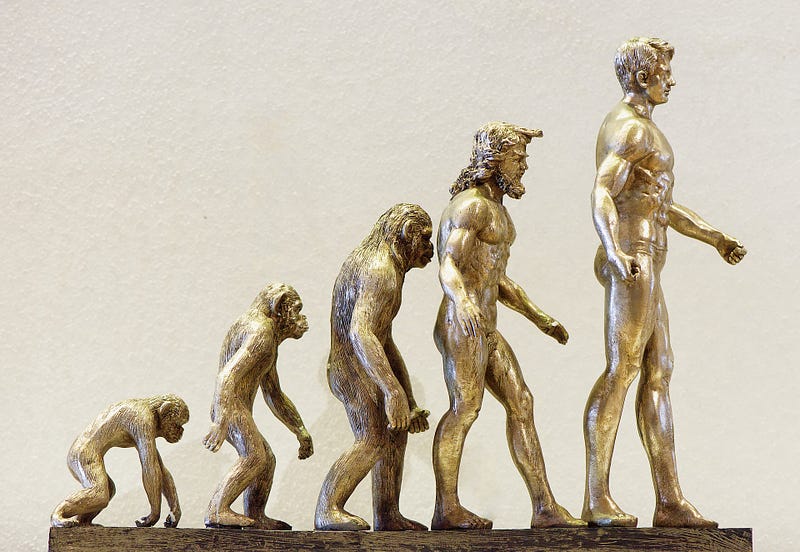
Our ability to change our minds is primarily responsible for directing our entire course of evolution, from chimpanzees to homo sapiens, from primitive desires to lofty ideals, from simple necessities to luxurious accessories.
The most important thing is to accept the idea that changing your mind is okay. Tasting new pleasures of life is not possible if you do not change your preconceived notions of the reality around you.
You don’t buy every book when you go to a book store. You read the book reviews for guidance. The curation is a review of your written piece — by Medium. What Medium wants and what you can do about it — an explanation of the requirements for successful curation.
This post was liked by my publishers and they distributed it into Self and Self Improvement:
This post was liked by my publishers and they distributed it into Self, Psychology, and Language: