
Change Your Perspective On Truth
We need to take a long, hard look at ourselves (and at others)
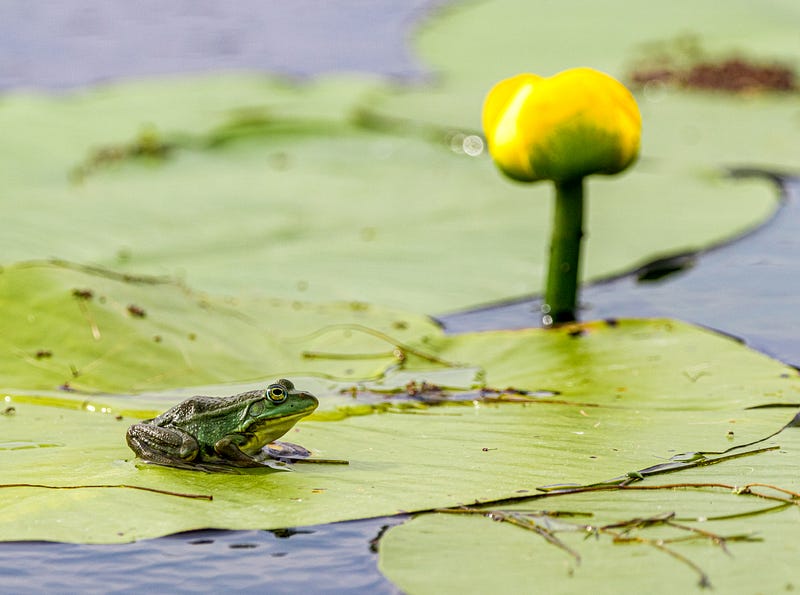
I am the mayfly metamorphosing on the surface of the river, and I am the bird which, when spring comes, arrives in time to eat the mayfly.
I am the frog swimming happily in the clear pond, and I am also the grass-snake who, approaching in silence, feeds itself on the frog.
– Thích Nhất Hạnh
Perspective. Defined by the Cambridge English Dictionary as ‘a particular way of considering something’. It is a neutral term, something that is inescapably bound up with the human experience: everybody has their own particular way of considering the world.
We can modify our perspective. We do this by learning about other people’s experiences, their pains and their problems, their opinions and their outlooks. By escaping an insular, narrow-minded existence we embrace fresh perspectives that are often contradictory to our own.
To live a free and peaceful life, we should never lose sight of the immortal words attributed to Socrates: ‘I know that I know nothing’. This doesn’t mean disrespecting your own worldview — it is as valid as anyone else’s — but rather accepting that it is far from being the only “truth”.
The second of Thích Nhất Hạnh’s fourteen precepts puts this succinctly:
Do not think that the knowledge you presently possess is changeless, absolute truth. Avoid being narrow-minded and bound to present views. Learn and practice non-attachment from views in order to be open to receive others’ viewpoints. Truth is found in life and not merely in conceptual knowledge. Be ready to learn throughout your entire life and to observe reality in yourself and in the world at all times.
Truth is an abstract concept that changes with time. What you think of as indisputable fact today may very well be proven falsehood tomorrow.
As such, clinging to one version of truth blinds us to thousands more. We all have — or think we have — fairly fixed notions of the concepts of “fairness”, “freedom” or “friendship”, but are able to adapt these subtly in response to particular situations.
Truth is perhaps the concept we believe in most ardently. It is the hallmark of a good, honest person and a degree of openness and truthfulness is a prerequisite for any human relationship.
The truth is rarely pure and never simple.
– Oscar Wilde
But as Oscar Wilde’s famous quote testifies, the truth is not an immutable certainty. It is always complicated to agree on a definitive truth when you see things differently to someone else, as anyone who has argued over what colour a jumper is will know.
Thích Nhất Hạnh’s ninth precept appeals to each of us to say only what we believe to be true:
Do not say untruthful things for the sake of personal interest or to impress people. Do not utter words that cause division and hatred. Do not spread news that you do not know to be certain. Do not criticize or condemn things that you are not sure of. Always speak truthfully and constructively. Have the courage to speak out about situations of injustice, even when doing so may threaten your own safety.
Of course, there is a good chance we may be saying “untruthful things” every time we speak. We cannot be certain of even the knowledge we most fervently defend. However, if we believe genuinely in the veracity of our utterances we are being true to ourselves and therefore are speaking as truthfully as is possible.
It is not possible — or desirable — to eliminate deceit altogether. For as long as language has existed, lies have too. There are countless reasons to communicate lies or half-truths and many of these come with good intentions.
This is why truth is such a slippery concept to deal with. One person’s truth can be another’s lie, just as a lie can be uttered in the false belief that it is true and the truth can be spoken when the interlocutor believes they are spreading a lie.
Here we should return to the quote at the beginning of this article. By acknowledging that we can be both the mayfly metamorphosing on the surface of the river and the bird which will eat the mayfly, we are aware that two distinct realities exist. We are aware that each one acts in a certain way for its own particular reasons and we can understand the situation that leads to these actions. We can feel compassion towards the mayfly, whilst simultaneously comprehending the bird’s behaviour.
Crucially, it is not a question of taking sides. The important thing is to appreciate how the mayfly and the bird are really part of the same cycle, just as the refugees and people smugglers both form part of the same broken system.
This does not mean we should ignore abuses and injustices where they occur. Thích Nhất Hạnh’s fourth precept insists:
Do not avoid contact with suffering or close your eyes before suffering. Do not lose awareness of the existence of suffering in the life of the world. Find ways to be with those who are suffering, by all means, including personal contact and visits, images, and sound. By such means, awaken yourself and others to the reality of suffering in the world.
Desiree Driesenaar wrote this article recently on the destruction that the human race causes and how we can best respond to that:
I plan to respond more fully to her arguments soon!


