
Ch. 23: There and Black Again
How a Black man lost then rediscovered the joy of being black
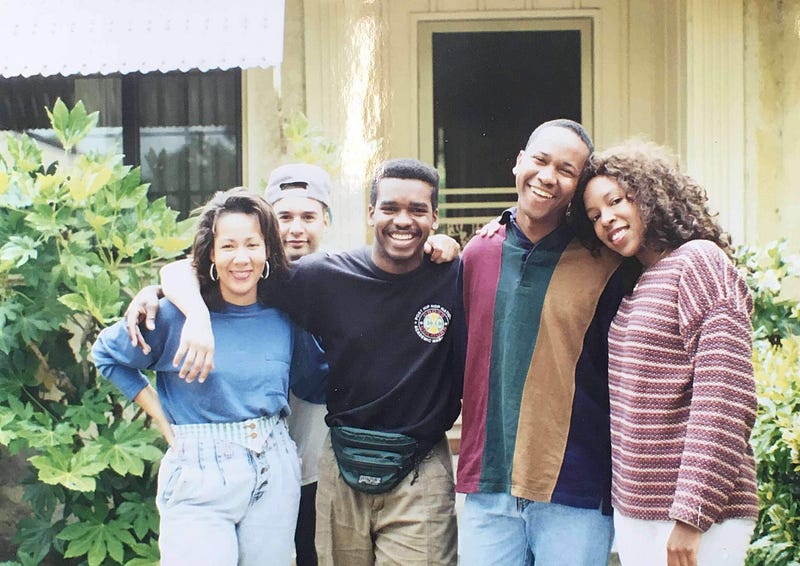
Do you remember this exchange between Sam and me back in chapter 13?
Sam: Despite your “Leave it to Beaver” childhood, I understand you actually do have some black friends?Me: First off, my childhood was actually quite black, thank you very much. But, in answer to your question, yes, I have black friends.I realized that at the time, you probably had no idea what the hell I was talking about with respect to my “quite black” childhood. If my childhood was so “blackety black,” then how did I end up writing this book?
If that question crossed your mind, I don’t blame you. So dear reader, let me ‘splain.
Omowale Ujamaa
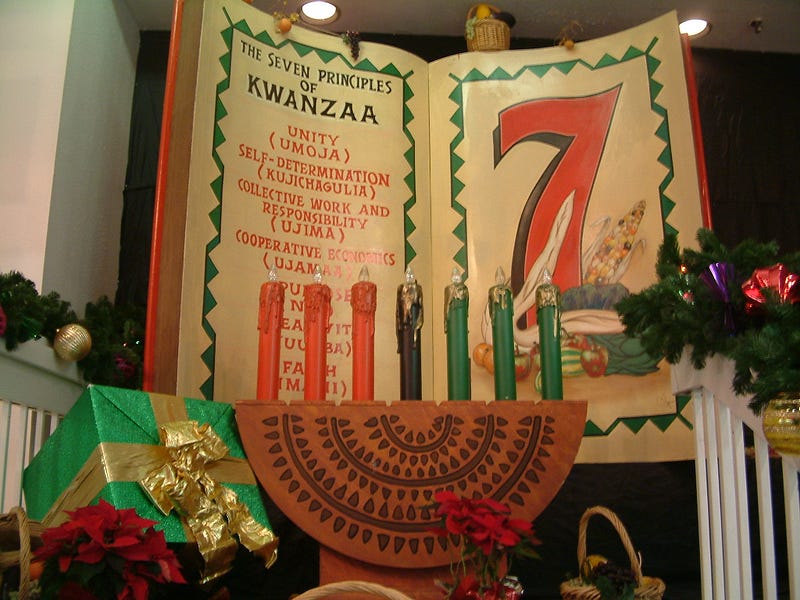
No, that’s not the name of some Wakandan Prince. It’s the name of an elementary school I attended in the third and fourth grades. In the late 60s and early 70s, there rose out of the Civil Rights movement, African-centric elementary schools whose charters were to instill within their populations, pride in African-heritage. Omowale was one such school near the foothills of Altadena, CA in the mid-to-late 70s. Omowale is Swahili for “the child has returned” and Ujamaa is the fourth principle of Kwanza, “cooperative economics.”
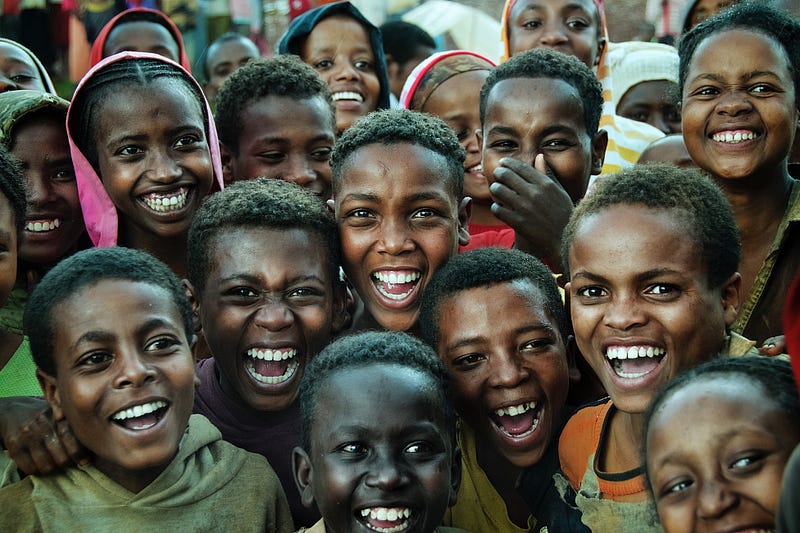
My time at Omowale is some of the most memorable of my childhood. We’d greet the principle every morning with an African dance and ceremony. Then do a similar ceremony at the end of the school day. Instead of traditional numeric grades (e.g. first grade, second grade, third grade, etc.), each grade was named after an African tribe. I was in the Ashanti grade (4th). My brother, two years younger, was a Zulu. The highest grade in the school was Watusi (7th). I actually thought all schools did this. It wasn’t until I finally left Omowale that I learned that the 5th grade was just boring old grade 5 and not Yoruba.
I remember learning about Egyptian and Nigerian gods. Since I was raised by a southern baptist mother, I naturally assumed those gods were sort of “lieutenants” to the “main” god. (It’s funny how a 4th grade, er, I mean, an Ashanti grade brain thinks.) I remember celebrating Kwanzaa at the school, but hiding the fact that we also celebrated Christmas (which, as an adult, doesn’t make sense to me now because Kwanzaa isn’t a religious holiday. The two don’t have to be mutually exclusive.)
I remember “corporal” punishment at the school. This was back in the day when parents of all races were still allowed to whoop kids. And you damn well knew black parents whooped kids. The only thing worse than getting whooped by a black parent, was getting whooped by a 6’ 2” tall, obsidian-skinned math teacher who had a 2’ long, 1–1/4” thick paddle and permission by the aforementioned black parents to take it to yo’ ass if it got out of line. And in a school like Omowale that was committed to giving their young black children discipline, “getting out of line” could be anything from talking back to being late for class.
Dear Lord in heaven. You did NOT want to be late for class at Omowale. Because before the pain and humiliation of getting your butt swatted with a thick-ass paddle, you were humiliated by your fellow classmates who would sing the theme song to the 70s cop show “S.W.A.T.” to herald in the certain pain that was coming your way. (At the end of that first melody phrase to the song, we’d add the words “You’re gonna get a, get a…SWAT!” Kids can be so cruel!)
It should be no surprise that I also remember the crushes I had at the school. (Proof positive that I did like black girls besides Tootie from “Facts of Life.”) Omowale was where I was first introduced to the infamous black woman head shake. You know the one. You can see it when you piss a sista off and she’s about to share some potent words with you.
Apparently, it is either taught at a young age, or ingrained in the blood cells of young black girls. I got it when my “girlfriend” Wendy (we held hands for a few days, I guess that made us married or whatever), got mad when she found out I also like Chini (pronounced CHEE-nee). I must have told Chini I was “broken up” (which apparently I wasn’t) because they BOTH cornered me to give me pieces of their respective minds (and respective head shakes).
Yeah. Those were the days. Surrounded by black kids, black music, black food, and black culture, every weekday for two years. My two subsequent years in public schools were pretty racially diverse as well. (As you can see from my 5th-grade class photo below.)
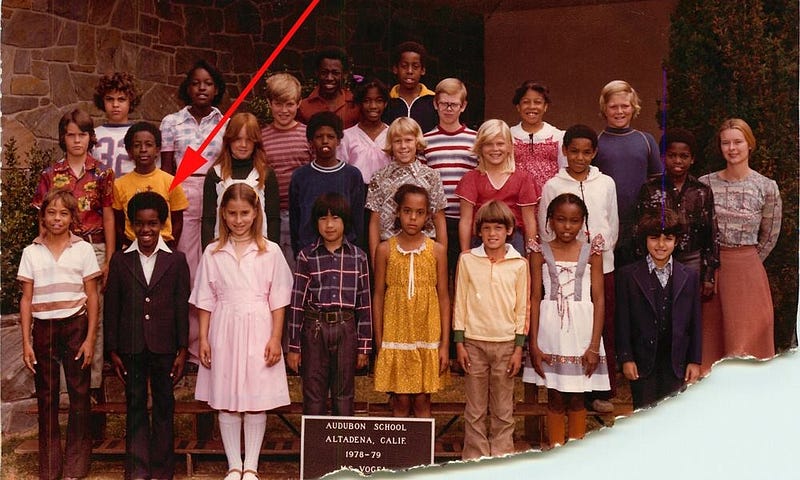
Then, I went to South Pasadena Jr. High School, and for the next 14 years, I had little to no interaction with my people.
Then, I made a movie.
Back in Black
It was the spring of ’95. I was a marketing manager at Screenplay Systems, makers of the popular Movie Magic line of film production software and located in beautiful downtown Burbank, CA. A year earlier, I had moved down from Cupertino, CA (home of Apple Computer) where I had attended De Anza Community College’s Film and Television School’s Fiction Workshop Program. Each quarter, the entire class would rally behind one chosen student’s film project. Said student would be the writer/director, and everyone else in the class would hold various other roles on a film set. It was an excellent hands-on learning experience. I had been everything from a grip to craft services to production manager. Based on past projects I had submitted, I was confident that I was on track to be a writer/director. But in the spring of ’94, I took the new job a Screenplay Systems, and never got my shot at the director’s chair.
I’ve always considered myself a go get ’em kind of person. And if you thought I was going to let a little thing like no longer being enrolled in a film school keep me from making the short film I would’ve been able to do at De Anza, well you would be sorely mistaken.
A year into my new gig I was ready to take on the mantle of writer/director and bring my vision to life. I was going to make a film called Just Friends, my “black” homage to When Harry Met Sally. It was a short rom-com about what happens when an ex-boyfriend and girlfriend try to be just friends and she learns he slept with a mutual friend very shortly after their breakup. (I can neither confirm nor deny it was based on real-life events of the writer/director.)
The problem was, I was no longer in a film school with access to free equipment and free labor. I was in the real world, and that meant using my own money to rent equipment, and somehow finding a cast and crew.
Enter Joseph DaShawn* Cochran (i.e., JD).
[*Author’s note: As of the writing of this book, nearly 30 years into my friendship with JD, I NEVER knew what the “D” in JD stood for. I remember hitting him up on our personal Slack channel and asking him when I came to this part of the book. Don’t let his biraciality mislead you. This brutha is black. He’s blacker than black. He’s like from Long Beach (Strong Beach) black. So I jokingly guessed names like Darnyell, Deyangelo, and Darryl. I was trying to come up with the blackest sounding “D” names I could think of. I actually thought his middle name was probably really something like David or Daniel, considering his first name was Joseph. Those are all strong biblical names, and considering his strict Christian upbringing (against which he long ago rebelled) I could see him having such a name. But the fact that it is DaShawn! That was fucking perfect. It’s so, so…so BLACK! It’s way blacker than anything I was guessing. This was a perfect example of real-life being better than the shit you make up. I could not have asked for a better plot twist. Well, I guess it’s not really a plot twist, but more like a literary reveal that perfectly encapsulates the role Mr. DaShawn plays in this story. And now I’ve written way more than deserves to go in a fucking author’s footnote.]
As I mentioned at the beginning of this book, JD and his wife, Yolanda, are my best friends. The whole reason I’m telling this story of how I made this film (which, when you think about it, isn’t really “on brand” for what this book is about) is to set the stage for how these two people came into my life, and the role they play in the Shakespearean melodrama that is my blaxistential crisis.
Obviously, JD and Yolanda are black. Well, technically, JD is only half black (his momma is white). And come to think of it, Yolanda has a bunch of Creole in her, so who knows to what extent her blood is pure, grade A, 100% negro (I have no doubt that if they’re reading this right now, they are rolling their eyes.) The fact that they are my BFFs is ironically poignant in my story because when I think about it, it’s probably all their fault (in a good way) that I’m writing this book, and that I’m being “haunted” by the angel/devil Samuel L. Jackson.
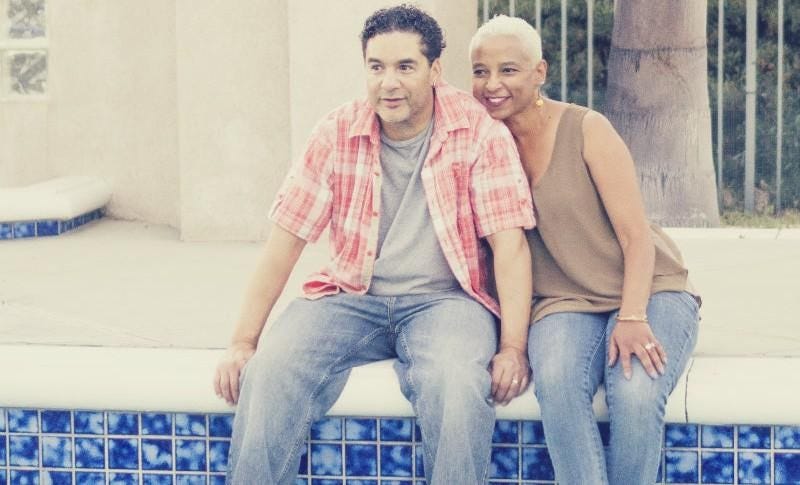
Prior to JD and Yo, the last time I had more than two close black friends (outside of my cousin) was high school and my days hanging with Chris Spencer (remember chapter 16), and then four years prior to that when I was in elementary school. Now here was this dude about ten shades lighter than me on the outside, and damn near twenty darker on the inside. He was a filmmaker and writer working as an intern at Screenplay Systems.
Black on Set
When I was ready to shoot my short-film opus, I hit him up. He was a graduate of USC’s film school and theater program and I figured he could hook me up with a cast and crew. He also happened to own a high-end Canon Hi 8mm video camera and therefore could be my DP (which may sound like an ancient relic by today’s standards of 8K RED cameras, but back in the day, it was a pretty sweet setup).
JD did indeed hook me up. He and Yo have this very special group of ‘SC friends they call “The Clique.” It’s about twenty or so African-American professionals (and two whites) who are all in the film and TV business. They’re actors in mainstream TV shows, exec producers of HBO, studio execs, editors, and the like. It’s a pretty impressive group of friends who have a special bond unlike any I’ve seen among people. They really are tighter than family.
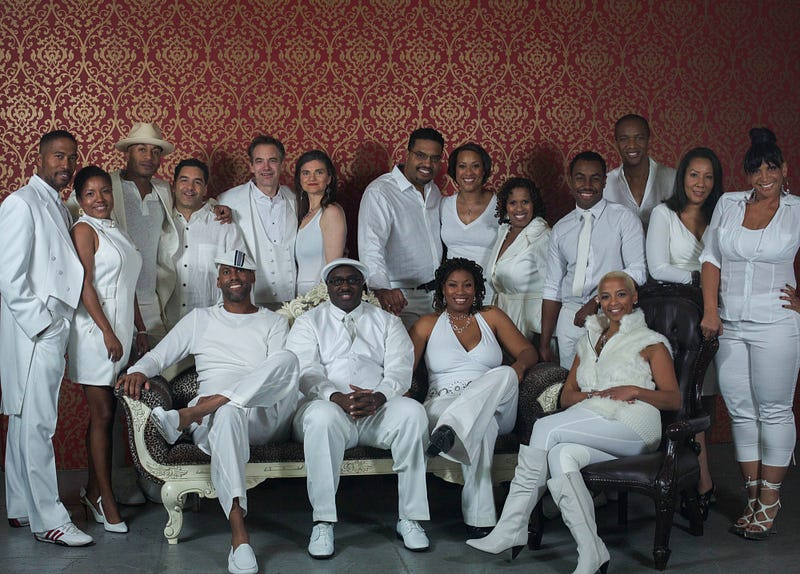
But back in 1995, they were all still film school grads at varying levels of their aspiring careers. And I got a small group of them to crew for my little film. And this is where the introduction of JD and crew represent another key turning point in the story.
For my white readers, I need to explain to you what it’s like working on a film set with a group of black friends from a university located in the middle of da hood (USC is kinda like an oasis of rich white people in the middle of some of the toughest and blackest parts of L.A.) Every shoot day was like a non-stop comedy club. Everybody would clown on each other (that is, make fun of, and tease in a harsh, yet loving way). JD and the co-producer Angela would get into it so much, I wasn’t exactly sure they really were friends. But, they were tight as two friends can be.
And it was this experience amongst my people that I had long forgotten. I had glimpses of it back in high school hanging out with Chris and his friends. I got glimpses of it during large family gatherings with my Jamaican stepdad and his crazy family. I definitely got glimpses of it back at Omowale singing the theme song to “S.W.A.T.” as a harbinger of the swats to come to the tardy. It’s one of those aspects of the African-American experience that makes it special — seemingly non-stop laughter and love expressed in the form of insults, jabs, and barbs.
And it was experiencing this unusual camaraderie that allowed me for the first time in my life to be comfortable in my non-blackness. Because you know for damn sure I too was the butt of many a barb. Whether it was my outdated Cross Colors shorts and Spike Lee jersey, my penchant for crafting sentences in ways that even white people didn’t know could be so confusing and overly complicated, or my embarrassing ignorance of the hottest hip-hop stars of the time. But, without a doubt, the most targeted aspect of my Ronness was my voice.
I don’t sound “black.” Yes, I know even saying that sentence may on the surface feel shallow (see what I did there? Surface? Shallow? No? Okay. Nevermind). Anyway, but let’s be honest, we ALL know what it means to “sound black.” I’m not just talking about speaking ebonics or something silly like that. I’m talking about the kind of thing Eddie Murphy’s character Axel Foley so classically makes fun of in “Beverly Hills Cop” when he tells the black cop who’s been following him (along with his white partner) how to say “We’re not going to fall for that banana in the tailpipe trick.”
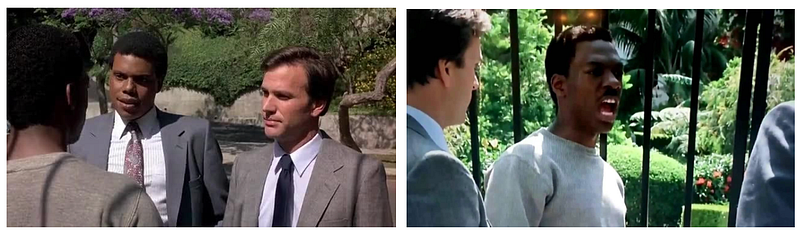
So, you take a nerdy, aspiring, Spike Lee wannabe filmmaker that dresses like the Fresh Prince (in all his 90s glory) but sounds like Carlton, and you pretty much can just put a target on my back for this group of jokesters who pull no punches.
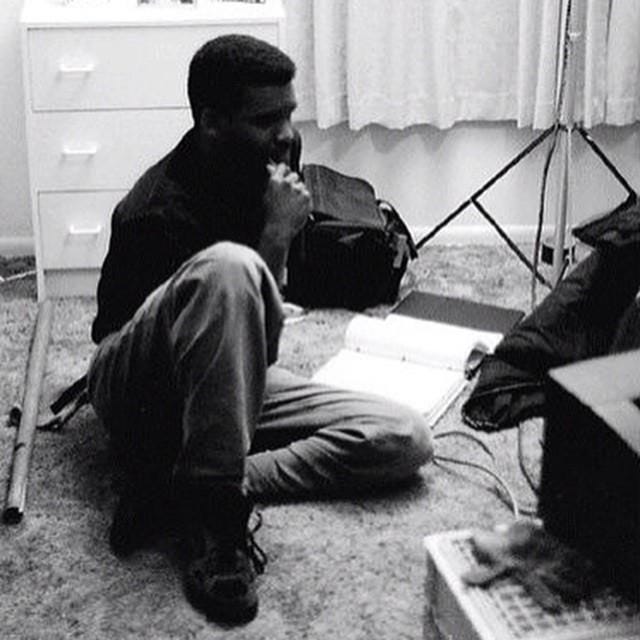
And you know what: I laughed with them. There was a time not too much earlier when being the butt of black folks’ jokes would send me as a still-sensitive college student meandering around the campus of U.C. Berkeley, feeling sorry for myself and raising fists to God asking why I was such an outcast — not black enough for the blacks and too black for the whites.
By this time, besides just being older and wiser, combined with witnessing how these friends expressed their love for one another in the form of biting repartee, momma jokes, and jabs about jacked up hair, I actually felt loved too. (If they didn’t tease me, I would’ve been worried.)
I realized what the secret was: safety. There was a profound sense that you could be fully and wholly yourself, and still be genuinely loved. You felt safe to just be you.
I wonder what this country would be like if it were like the set of Just Friends — a safe place where every man and woman, regardless of race, religion, or political persuasion, could feel safe to say what they think and feel, and know that they would still be validated, acknowledged, or loved.
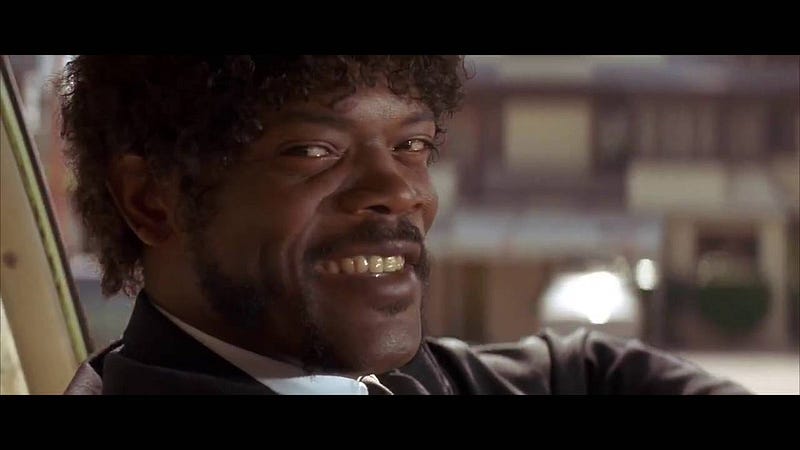
Sam: That is such a beautiful and touching sentiment Ronald.I jump back in my seat, startled, as Sam appears out of nowhere. Again.
Be sure to follow this publication to be notified when the next chapter goes online and gain insights into the book’s writing. Sign up for the DnD newsletter to learn more about the book and ways in which you can get early access to future chapters, and some of the same insights.
Next chapter
Previous chapter