
Cete
Don’t let this whale of a word badger you
Today’s New York Times Spelling Bee letters:
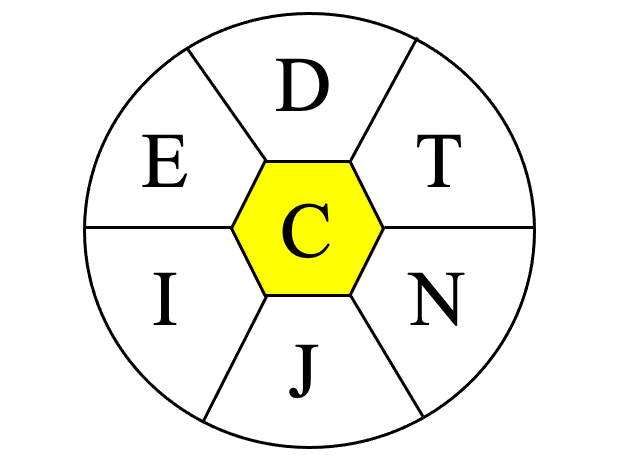
D, E, I, J, N, T, and center C (all words must include C)
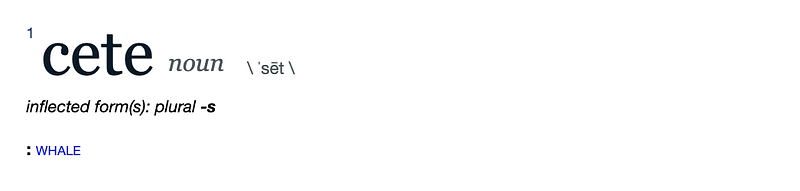
Merriam-Webster says…
…and…
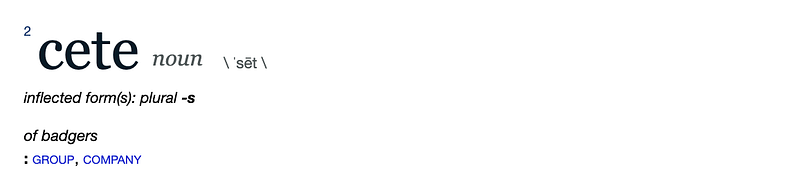
Silly little dictionary! Don’t you know that cete can’t possibly be a word if the New York Times says it ain’t?
For further fascinating facts, check out the Spelling Bee Master.
What’s your favorite dord* from today’s puzzle?
My Two Cents
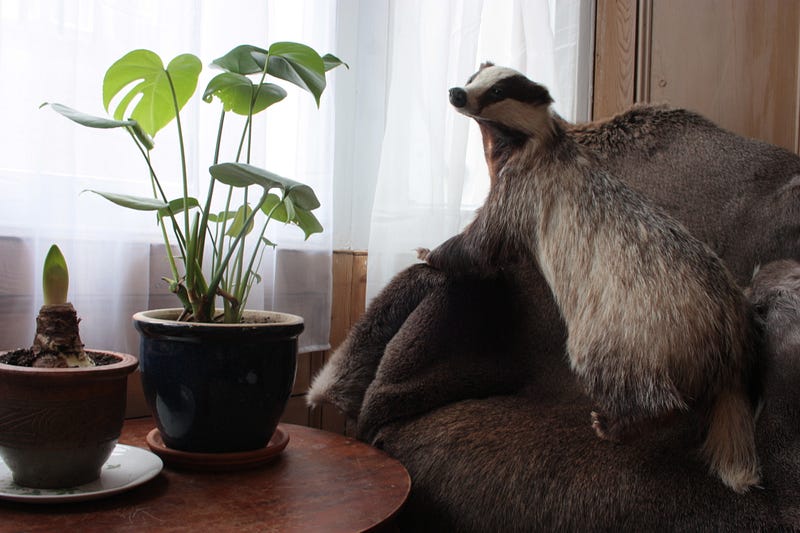
I have no idea what that badger in the photo at the top of today’s column is doing in a living room. Perhaps it’s a concerned parent waiting for their teenaged child to come back from a Saturday night party. Curfew was at 11 p.m. and it’s now 2 a.m. and there is no sign of the kid badger. Clearly it has turned its cellphone off, as all calls are going directly to voicemail. I feel bad for that poor little badger. It’s going to get a new one ripped by its parent when it finally walks through the door at dawn in a drunken stupor.
Not that I know any of the above from my own experience. I just have a good imagination, that’s all. Promise.
I’ve read articles and taken online quizzes about the names given to different groups of animals, but finding out cete is a gang of badgers was news to me today. Here’s a quiz and here’s an article if you want to hone your collective noun skills. Just promise to come back and scroll all the way down so I can earn my 13 cents today.
Of cetaceas and mustelidaes
I knew the term cetacean from Spanish, a term used more commonly to refer to whales and dolphins than it is English. But I had no idea the one-syllable “abbreviation” cete also referred to these marine mammals. And, somehow, it also means “ a group of badgers”. Hmmm… it’s another case of homonyms!
As the dictionary explains, Cetacea is “an order of completely aquatic mostly marine eutherian mammals consisting of the whales, dolphins, porpoises, and related forms, all having a very large head, a tapering body like a fish and nearly devoid of hair, forelimbs like paddles, no hind limbs, a tail ending in a broad horizontal fin, a large brain, a complex stomach of four or more chambers, and two mammae posterior in position”.
In the case of whales, the word cete comes from the Latin Cetus, a sea monster in Greek mythology that both Perseus and Heracles were tasked with slay. So I guess this Cetus had at least two lives.
But the cete related to badgers has a different etymology. Our friends at Merriam-Webster tell us that this cete comes from “perhaps… Latin coetus coming together, assembly, from coitus, past participle of coire to come together, from co- + ire to go.”
Coitus! That gives new meaning to the phrase “stop badgering me for sex”, a phrase I likely just made up.
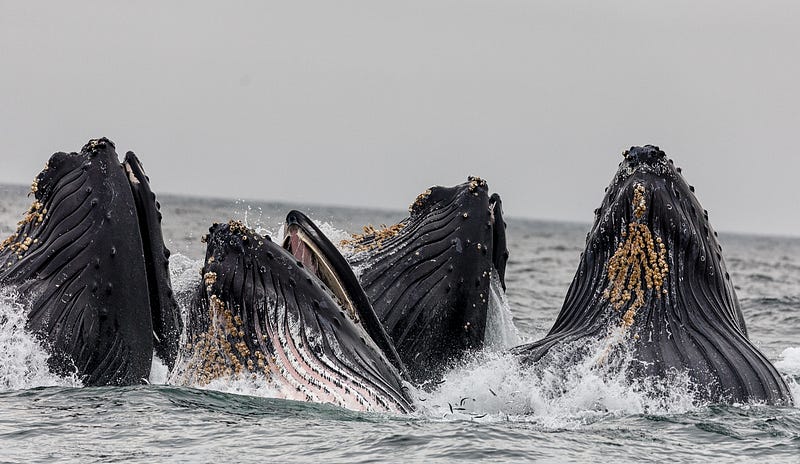
This whole double meaning of cete does bring up an interesting question. Is a cete cete a whale of a badger…
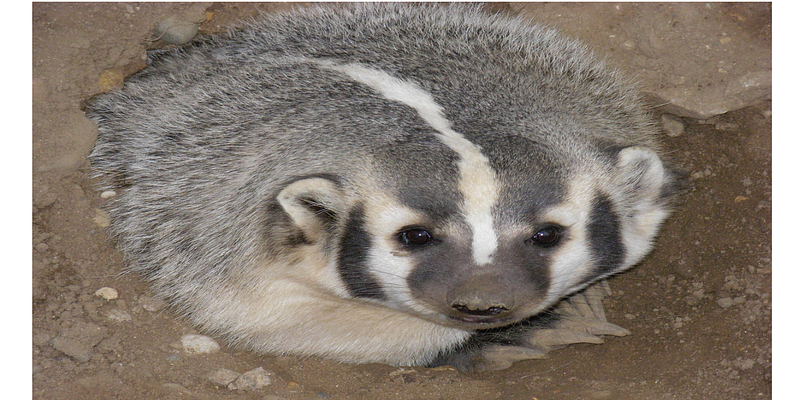
or a group of whales badgering each other?
Honey badger don’t give a #@$%&!
Perhaps the best-known badger in recent times is the honey badger (Mellivora capensis), made famous around a decade ago by a person named Randall as they overdubbed a National Geographic video showing the exploits of said animal.
The video became a sensation, generated a catchphrase (Honey badger don’t care!), a meme, an Urban Dictionary entry, and even a book. Last year the honey badger joined the NFT craze, as Randall auctioned off the original viral video to honor a friend who died in March of 2021.
The honey badger is also known as the ratel, and spends its time mostly in Africa, Southwest Asia, and the Indian subcontinent. As the online Encyclopedia Brittanica explains:
[The] badgerlike member of the weasel family (Mustelidae) [is] noted for its fondness for honey … The adult stands 25–30 cm (10–12 inches) at the shoulder and has a heavily built, thick-skinned body about 60–77 cm (24–30 inches) long, plus a tail length of 20–30 cm. … Ratels are nocturnal and live in burrows dug with their strong, incurved front claws. They feed on small animals and fruit and on honey, which they find by following the calls of a bird, the greater, or black-throated, honey guide (Indicator indicator); the ratels break open the bees’ nests to feed on the honey, and the birds in return obtain the remains of the nest. Ratels are strong, fearless fighters but in captivity can become tame and playful. A litter usually consists of two cubs.
Fearless indeed. This animal was named by the Guinness Book of World Records as “the most fearless animal in the world”.
Take that, Wolverine!
Now you know. Next time you find a badger in your living room waiting up late at night for its teenage child to return, keep calm and just ask the badger where the rest of its cete is. Of course it won’t understand a word you’re saying. Not because it doesn’t speak human… but because the editors of the Spelling Bee decided that cete is a dord*.
You can check out my previous entry on another dord* here:
*What the heck is a dord, you ask? Here’s the answer: