
Mature Flâneur Down Under
After the Quake: Christchurch Resurrected
New Zealand’s second city gets a reboot
After ten days in New Zealand’s spectacular and wild Southern Alps, Teresa (my beloved spouse) and I headed for Christchurch, the second largest city in New Zealand (pop. 390,000). As we descended from the mountains towards the Canterbury Plains and the coast, we felt our spirits sag.
I have to confess, New Zealand’s cities have left us underwhelmed. Auckland, Wellington, and Dunedin lack the historic architecture of pretty much any city in Europe. That’s not really surprising, considering the indigenous Māori built their settlements out of wood, which decays quickly in the humid climate, and the first colonists didn’t arrive until the 1820s. Earthquakes, floods and fires, plus indiscriminate development, have destroyed much of what was even slightly old. But the modern buildings (with a handful of exceptions) don’t feel particularly inspiring either. As flâneurs, we seek the city’s streets to learn its story. Sadly, it seems urban New Zealand doesn’t have all that much to say.
So imagine our surprise: we liked Christchurch! The city had us as kia ora (the Māori greeting used everywhere in New Zealand). It’s not as if the buildings had been designed by Christoper Wren or Gaudi. But the city has an energy about it, a dynamism — a vibe. This is all the more strange because the city was utterly devasted by two back-to-back earthquakes, in 2010 and 2011.
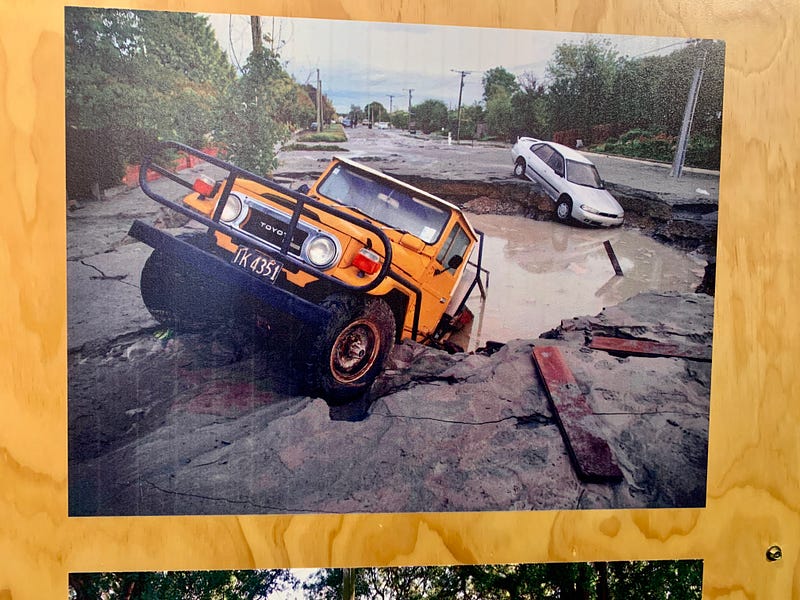
Our hotel was easy walking distance from the center of town, and just a few blocks away from Quake City, the earthquake museum, which is where we started. The story was grim: almost 200 people were killed in the quakes, and about 80% of the downtown building were destroyed or badly damaged. Thousands lost their homes. One whole eastern section of the city has been condemned forever: no one is allowed to resume living there because the ground liquefied in that area during the quake; there’s no safe way to rebuild on the mud.
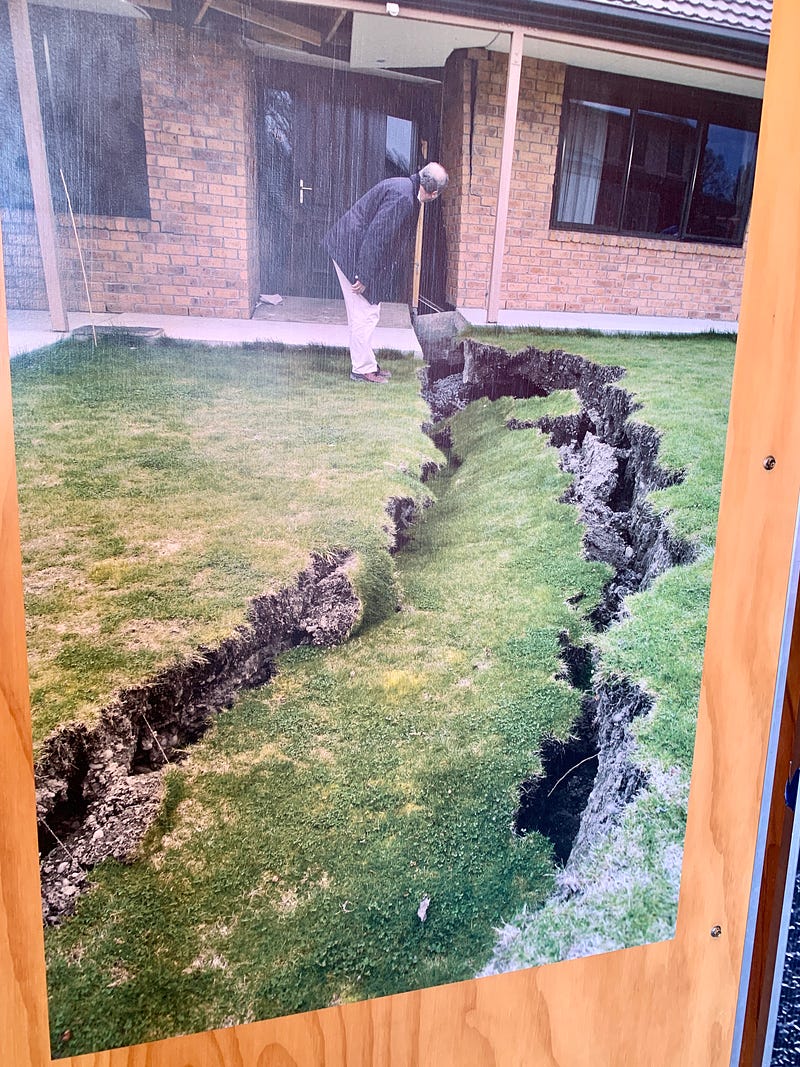
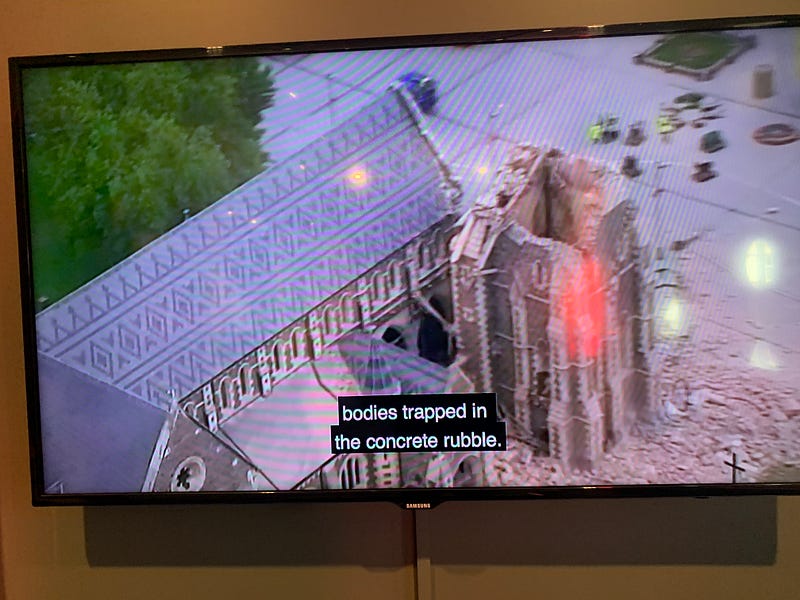
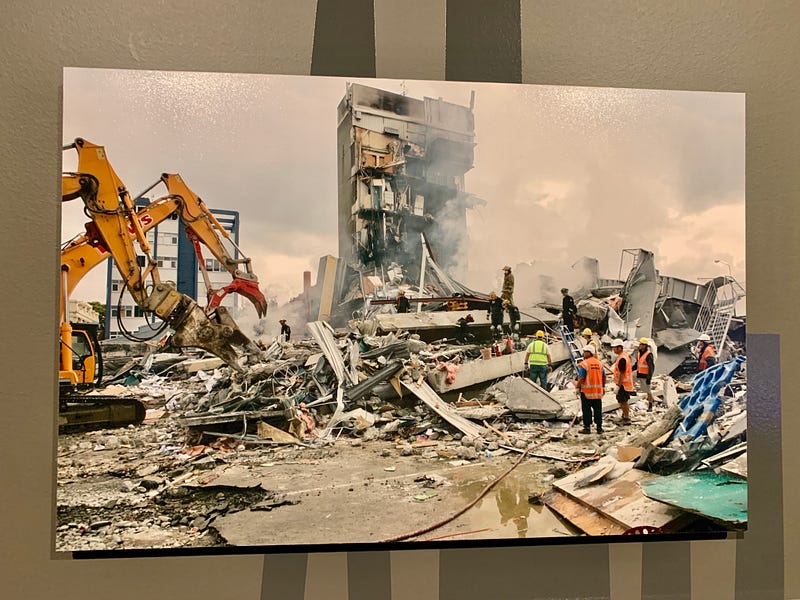
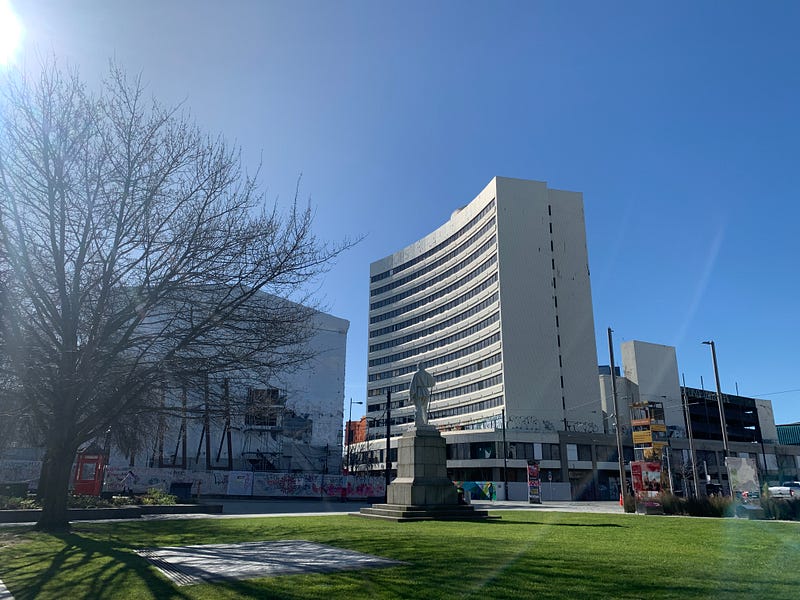
Walking around the downtown core we could see at a glance many buildings are still under reconstruction. The Christchurch Cathedral lost its bell tower, and remains shrouded in scaffolding; the city museum was destroyed. We saw one large, modern apartment building sitting on prime real-estate that remained empty — perhaps it was not safe enough to restore, but too expensive to demolish? It’s bottom floor was covered with graffiti.
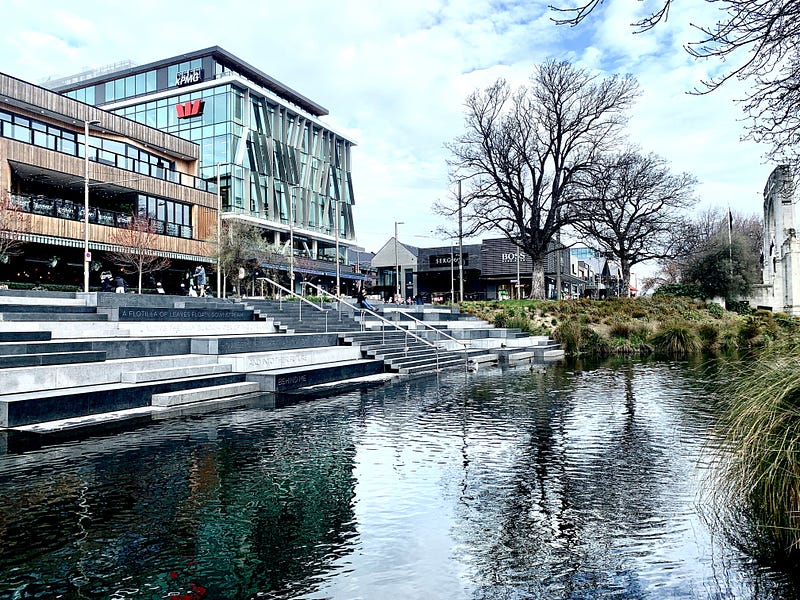
And yet, at the heart of the city center we found a renovated restaurant-and-shopping area that bustled with activity and buzzed with the conversation of a thousand diners out on the terraces at lunchtime. A beautiful river walk ran right next to the cafes, with gardens and parks all along both banks. This was the Ōtākaro Avon River. The little watercourse was pristine, clear as diamonds as it flowed from its glacial source through the city center, and then on though the suburbs to the ocean. The water was not always this pure; the whole watercourse is being brought back to life thanks to the government’s post-earthquake river regeneration plan.
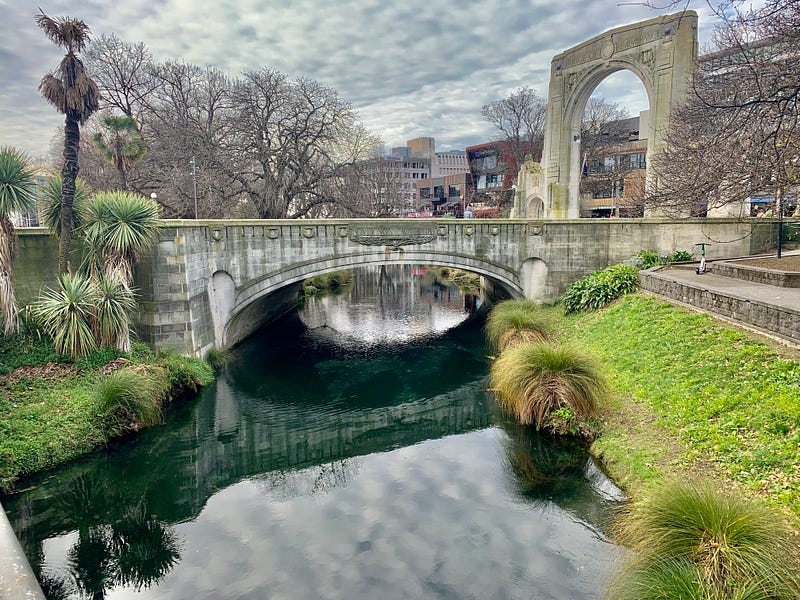
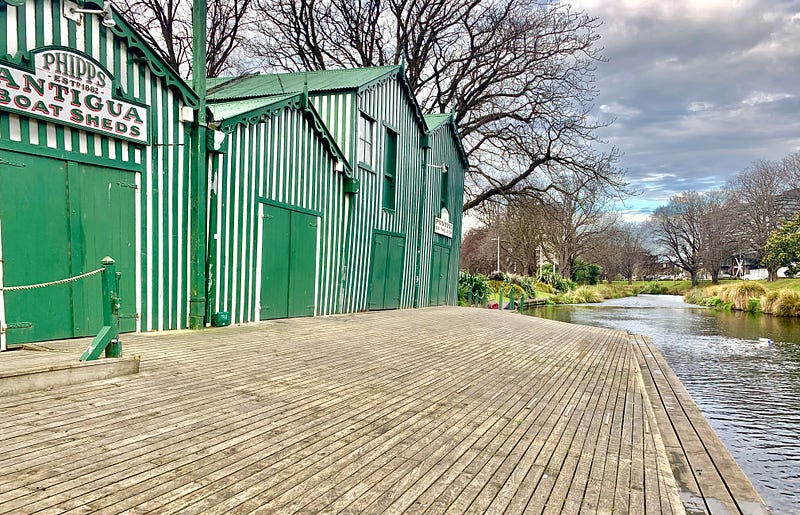
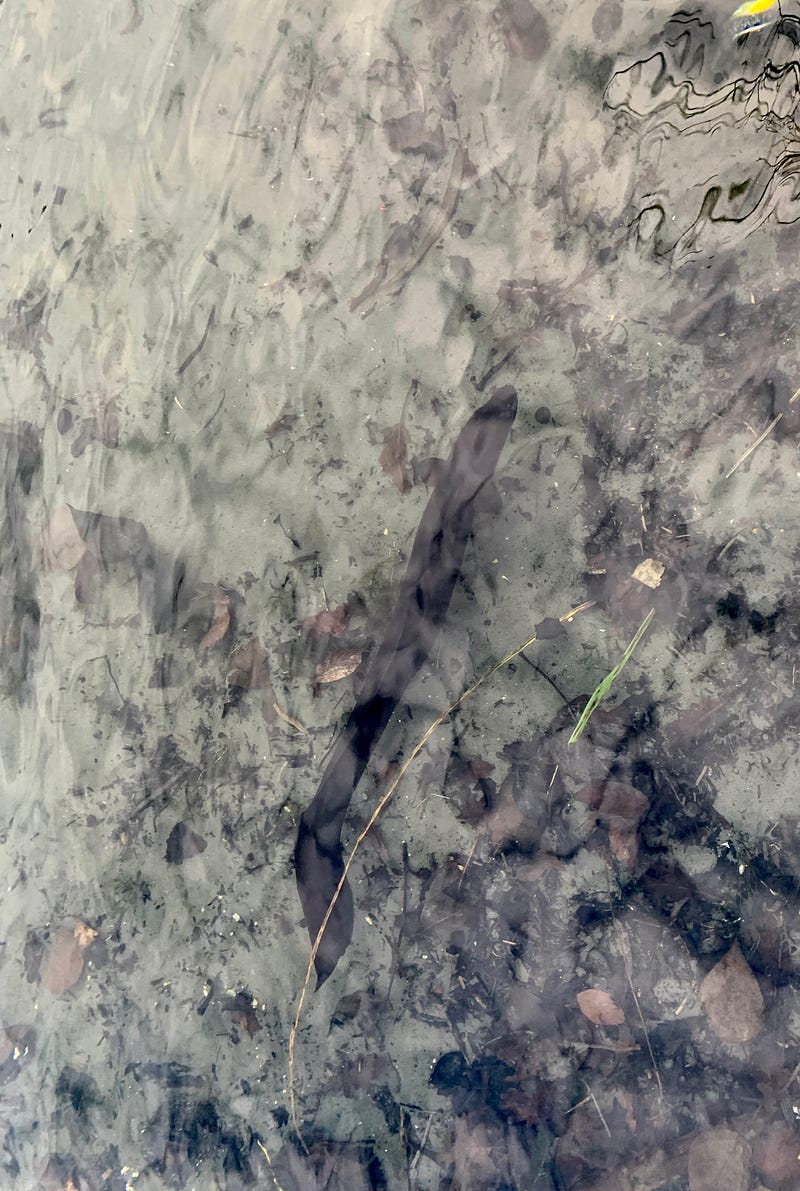
One afternoon I did an urban hike along the riverwalk. Near the quaint punting boathouse, I was astounded to discover dozens of large eels as long as my arm slithering in the water around the dock. These creatures were once an important food source for the Māori. How cool that the river is now clean enough that they have returned!
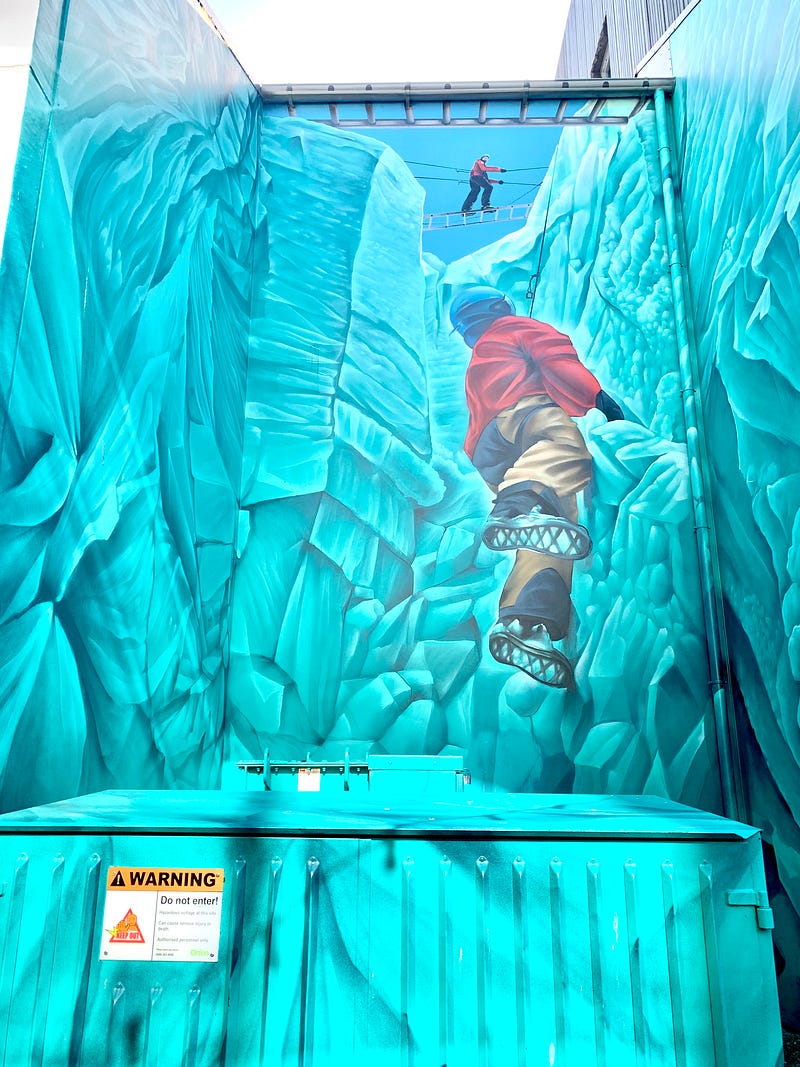
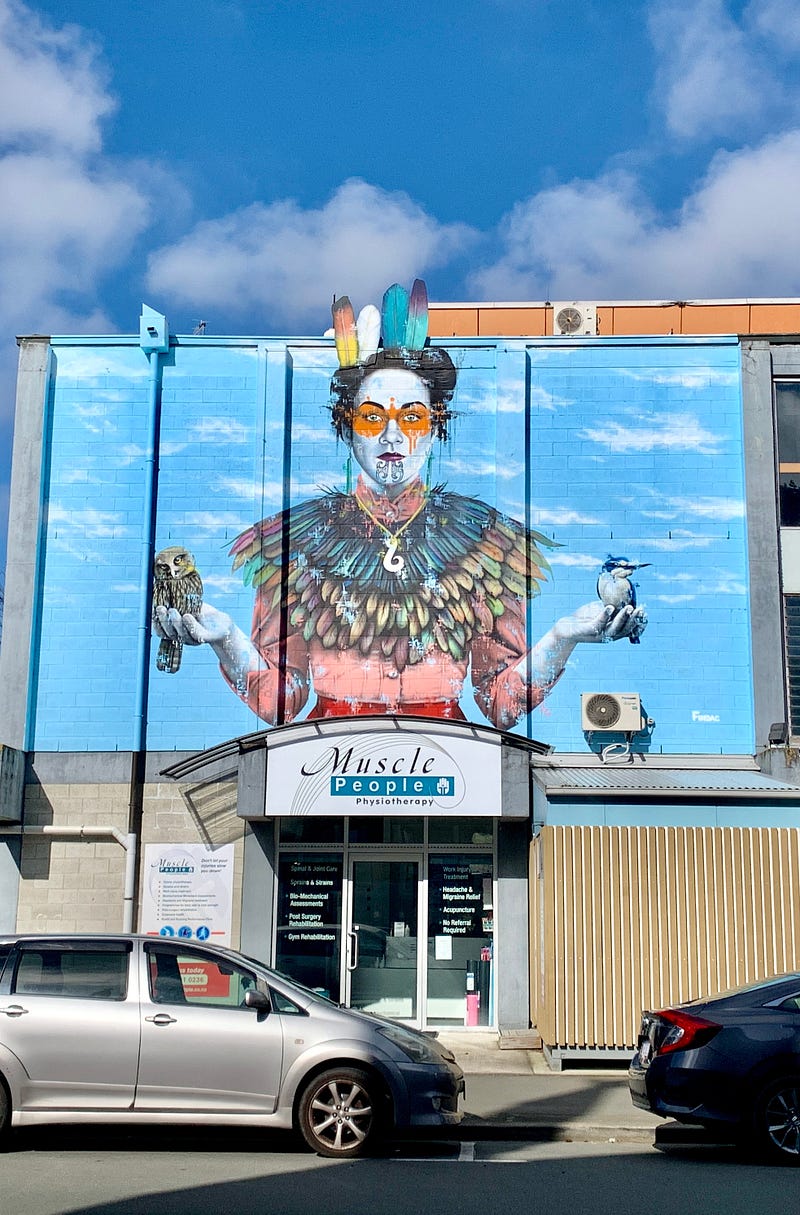
I noticed with delight some great art murals through the downtown core. These two, below, were my favorite: a traditional Māori woman with “moko” tattoo holding an owl in one and and a kingfisher in the other; and ice-climbers in a glacial crevasse (this one was cleverly painted on the sides of three walls):
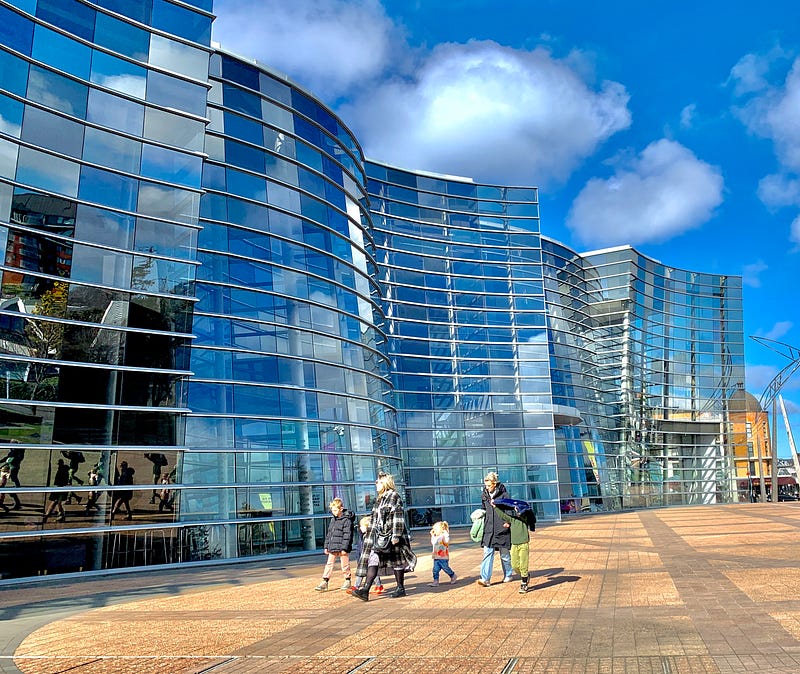
Although the history museum was still closed for repairs, the art museum was open. The building is itself a work of art; the façade is a wave of undulating glass panes that seems in motion as the clouds pass, reflected in the glass. Built before the earthquake, the art museum miraculously suffered only a few broken panels during the disaster. I can honestly say, I think it is the most creative building I’ve seen in all New Zealand.
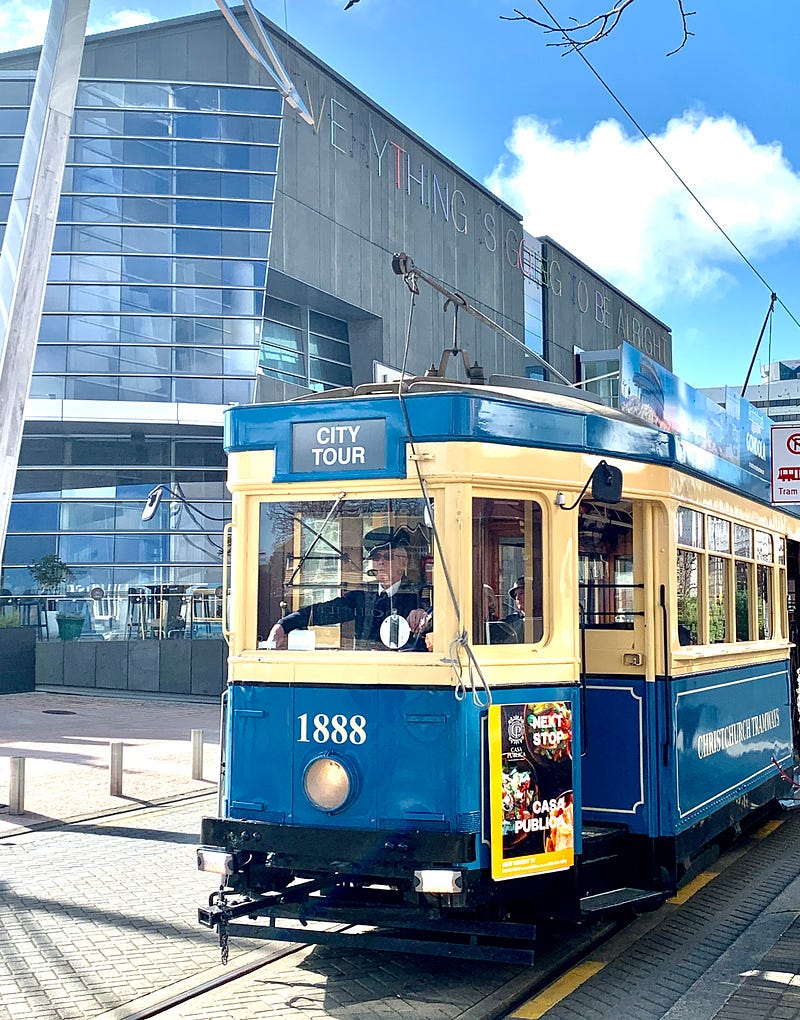
On the side wall of the museum, in large neon lights, a clear message shines forth for the citizens still shaken by the quake: “Everything is going to be alright.” I imagine passersby looking up, consciously or unconsciousnessly reading the sign, and then finding themselves humming Bob Marley's famously reassuring song, their burdens suddenly, resting bit lighter on their shoulders.
Outside the small downtown core, Christchurch is mostly one-storey homes and small businesses. This low profile must have helped a lot during the quake. But it also gives the city a homey, small-town neighborhood feel. It’s hard to explain it, but I’ve felt lots of New Zealand suburbs are really ugly, soulless wastelands (sorry!). Not Christchurch. Christchurch feels like communities.
I asked Teresa how she felt about this. She said: “Christchurch feels like a city where people have a voice in its future. It’s not a town being redesigned by city planners and developers in some back room. It feels like a town where people have a say in the kind of a place their children will grow up in.”
Perhaps my favorite place in the whole city was the old Botanic Garden, which was just a few blocks from our hotel. It was founded in 1863, the park initially served as a testing ground for introducing English plants and crops to New Zealand, to see how well they could adapt to the new colony. It has grown considerably in size and scope since then.
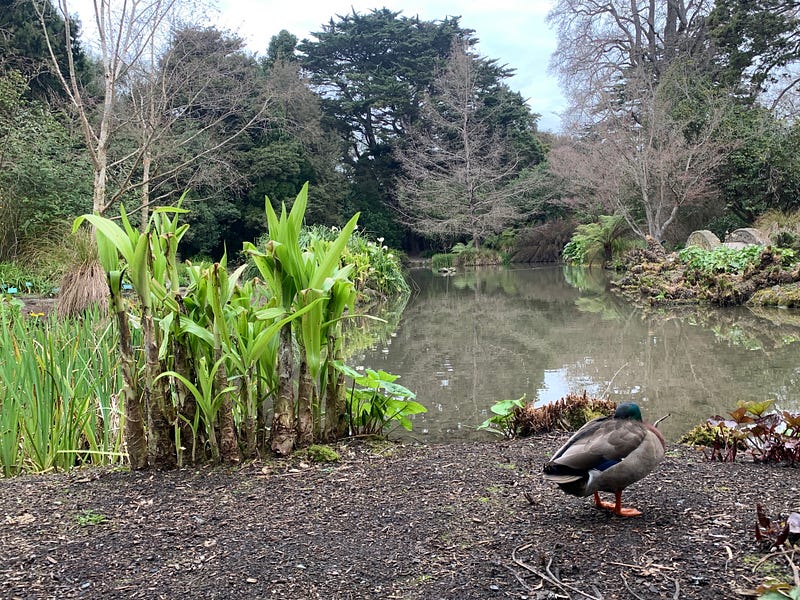
At the heart of the park I found the New Zealand Icons Garden. Hundreds of native species from across the islands have be planted here in a re-creation of various New Zealand ecosystems. Walking through these lush landscapes took me back to some of my favorite hikes in the country: one minute in a subtropical rainforest full of ferns, the next in a wetland pond with the ducks, then amongst giant blue succulants in arid scrubland. It felt like I was strolling through a “greatest hits” album of New Zealand wildernesses.
The Botanic Garden also features some giant imported trees: towering redwoods from California, eucalyptus from Australia, and a massive, century-old alpine ash with a twisted trunk planted not long after the park first opened:
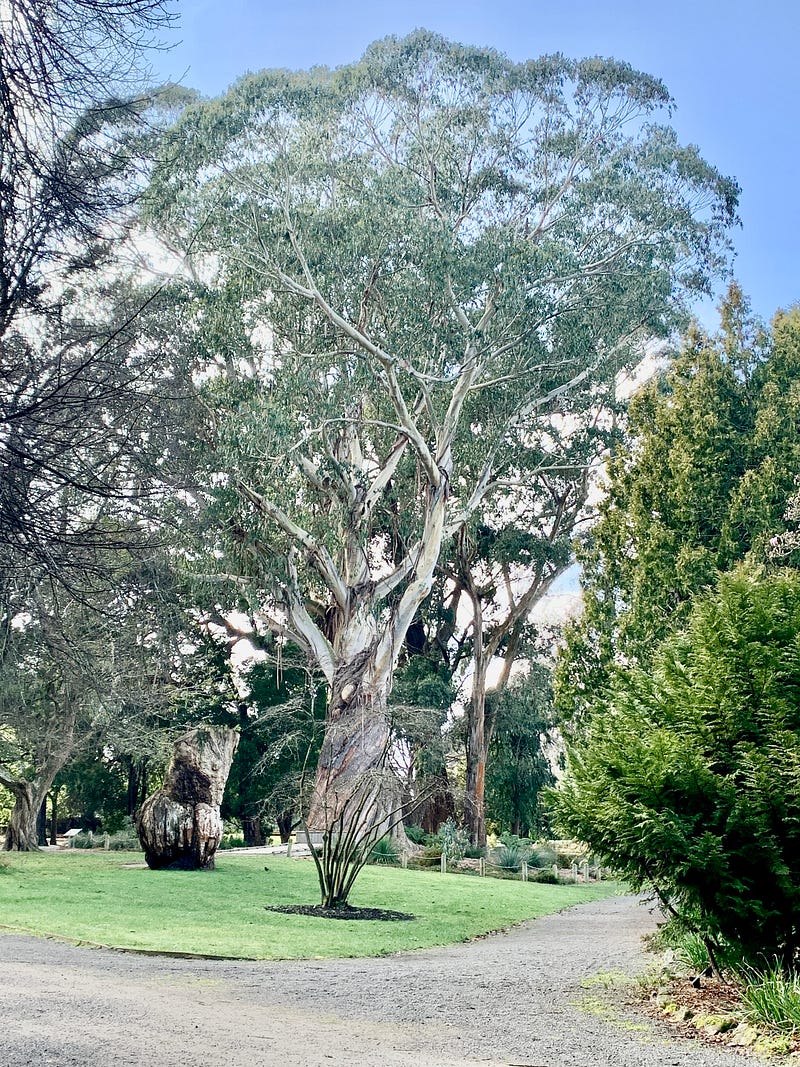
While all this foliage was a veritable world of vegetable wonders, the most astounding tree in the whole park was separated from the rest. It was a small, spindly looking tree with drooping, fern-like leaves. Not much to look at, really. Kind of a like a Charlie-Brown-pathetic-Christmas tree, compared to the others. It was encased in a circular metal fence, as if it might try to pick up its roots and run away!
This was, in fact, one of the rarest trees in the entire world — a living fossil. The Wollemi pine was thought to be extinct for many millions of years, its fossils dating back 90 million years. Then in 1994 an Australian park ranger named David Noble stumbled across a cluster of them growing in a remote canyon in the rainforests of the Blue Mountains in New South Wales. There are believed to be fewer that 100 Wollemi pines left in the wild.
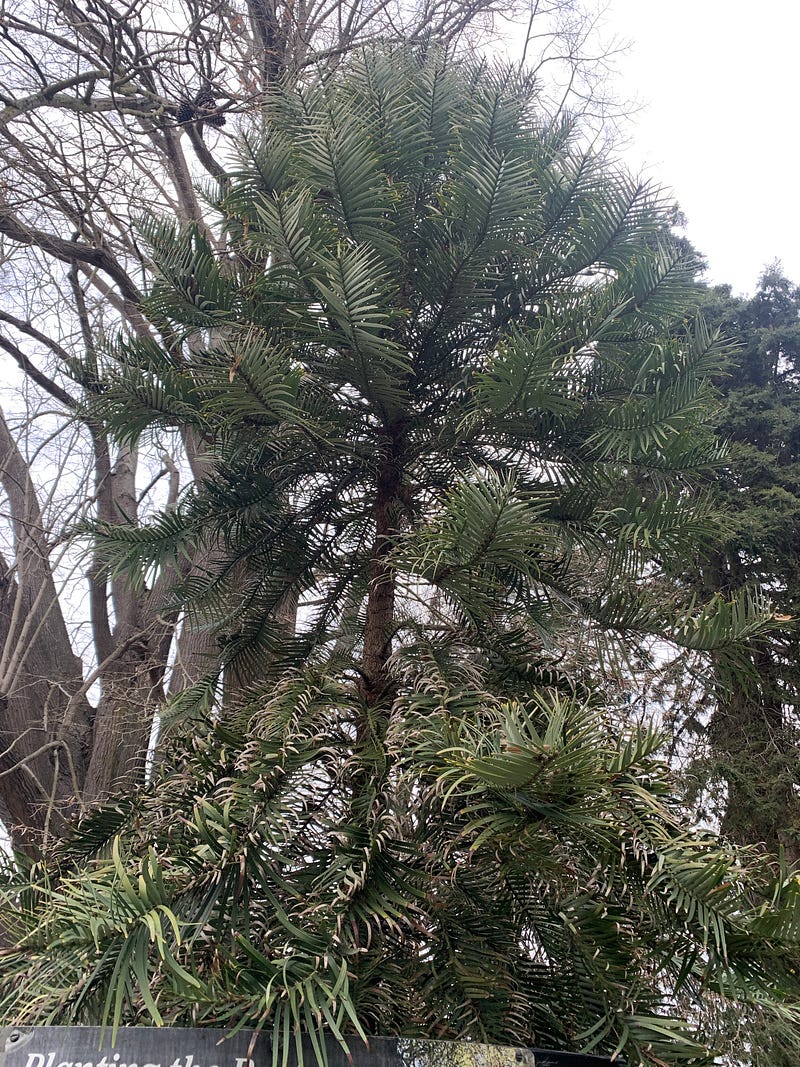
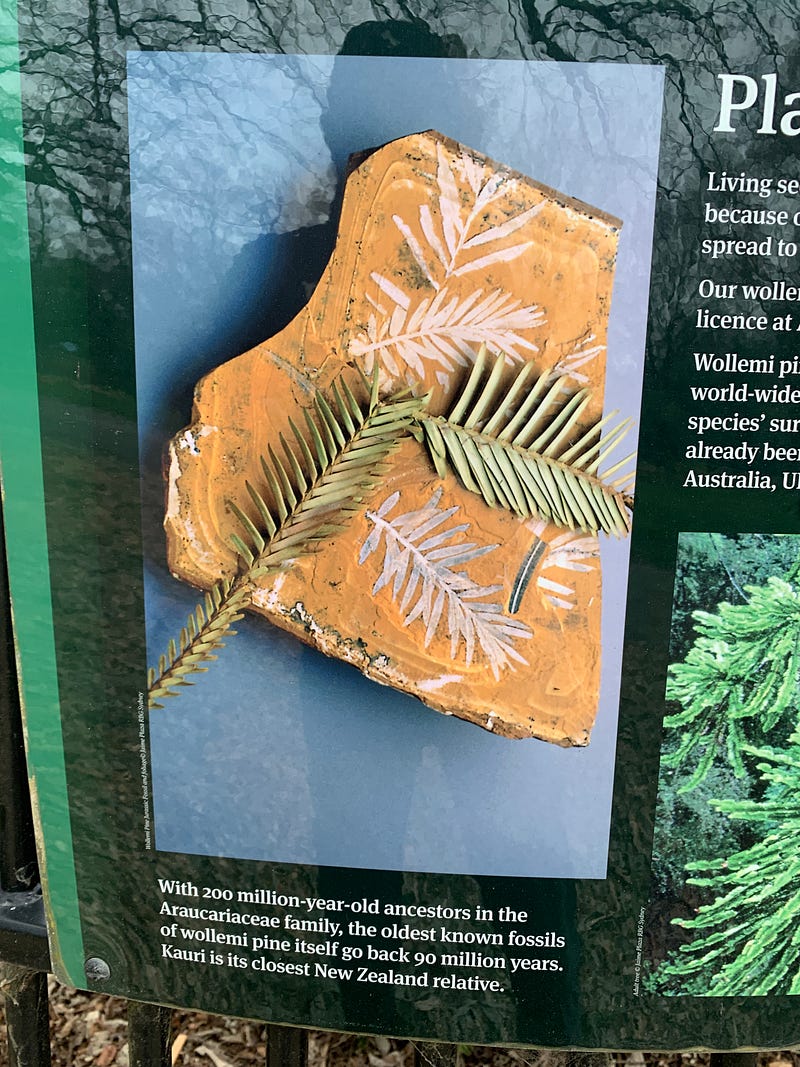
To mark the 150th anniversary of Botanic Garden, a Wollemi pine was transplanted here — part of an effort to increase the odds of this botanical dinosaur’s survival. As we have all learned from watching Jurassic Park, one has to be careful when introducing prehistoric life forms to the modern world. For this reason, rather than planting a seed, this tree was grown from sample tissue to avoid any inadvertent introduction of diseases that might have clung to an actual seed from the native forest.
The Wollemi pine is the first tree for a new section of the park called Gondwana Garden, named after the ancient, vast southern supercontinent that once consisted of what is now New Zealand, Australia, Antarctica, and India. The goal will be to populate it with other survivors of this long-gone world. And who knows, maybe clone some dinosaurs from DNA extracted from prehistoric mosquitoes trapped in amber? What could possibly go wrong?
Near the end of our Christchurch stay, I discovered that there was a temporary location of the history museum while the old building was closed for repairs. It was featuring a striking special exhibit called “Six Extinctions.” The exhibit explained the five previous mass extinctions on planet earth, illustrated with fossils and models — plus the sixth, which we are slow-rolling toward right now due to human driven-habitat loss, overexploitation of natural resources, and climate change.
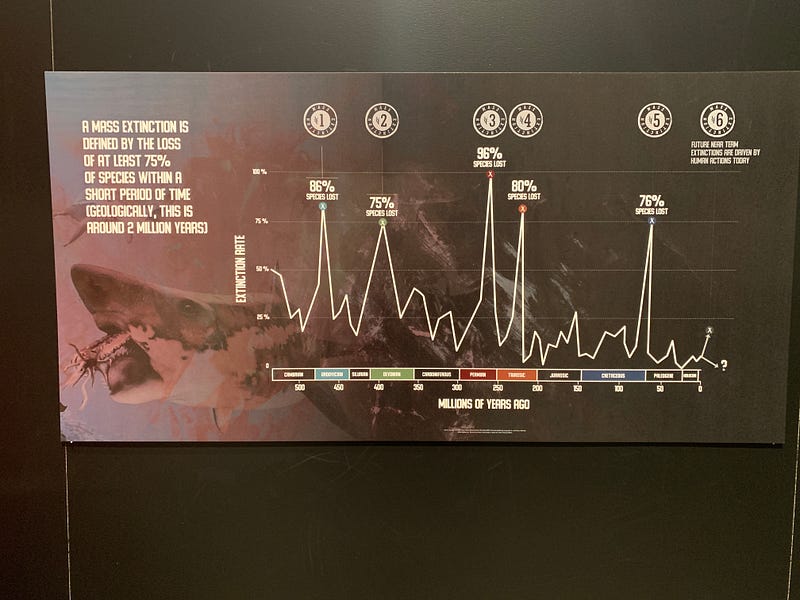
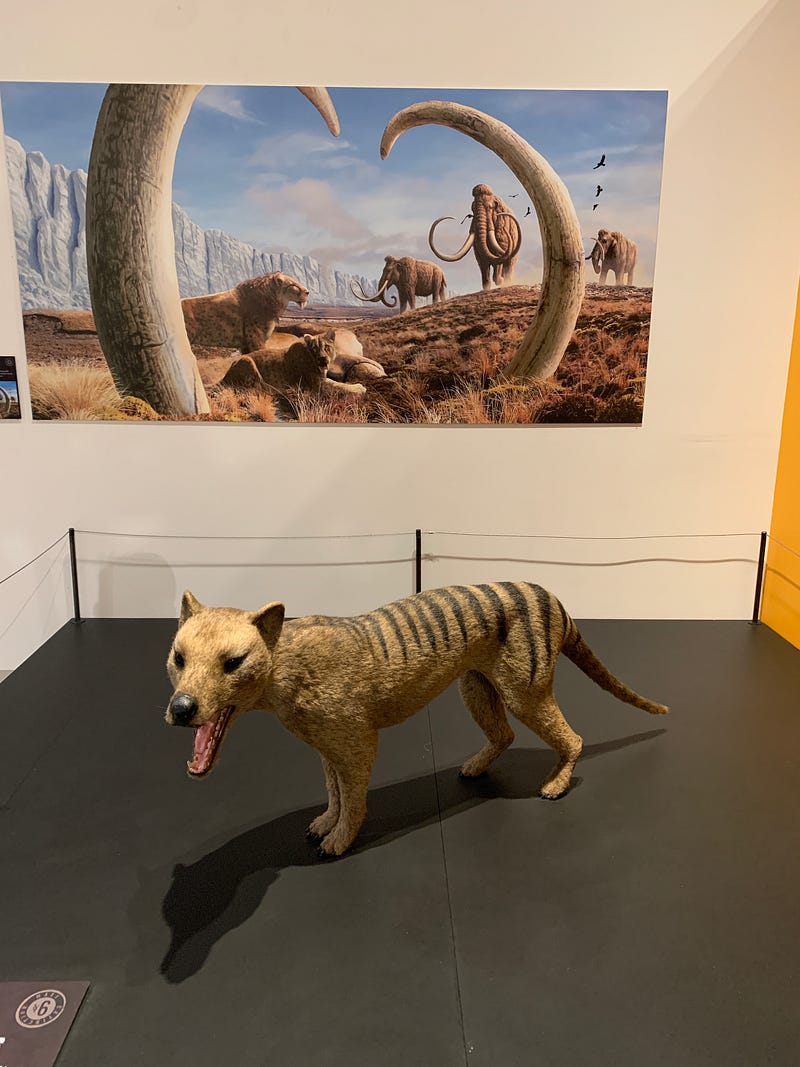
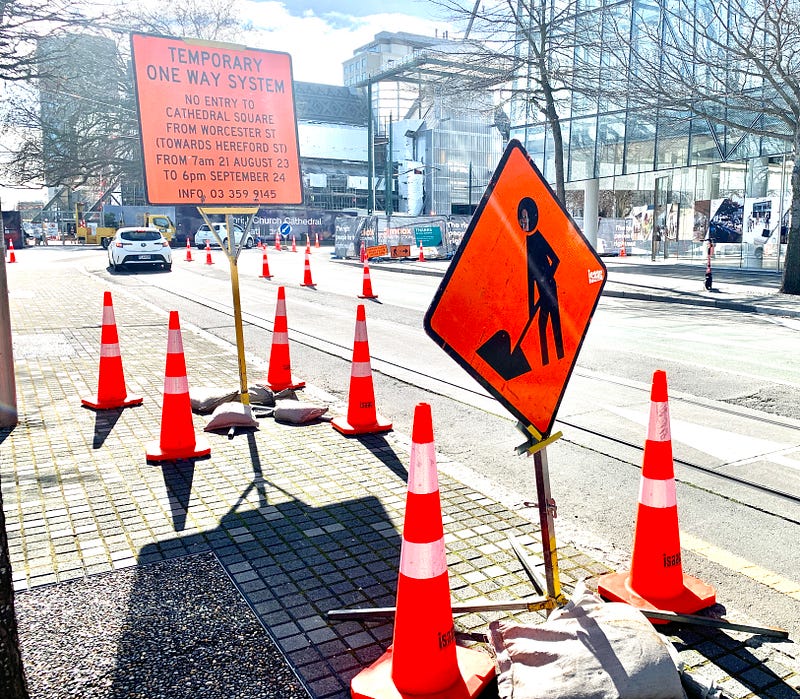
To me it seemed rather “in your face,” for the museum to launch an exhibit on extinctions in a city recently devastated by an earthquake. But I liked the ballsyness of it. I’ve come to see New Zealanders as an excessively safety-conscious lot — so many traffic cones! I think the museum has a better approach: look your existential threats right in the eye.
It made me think about just how poorly most cities prepare their citizens for disasters. In the US every year one city or another on the Eastern Seaboard gets clobbered by a severe hurricane. Floods devastated New Hampshire and the Northeast this past summer. Fires in California and Canada have killed dozens, and made the air unsafe for hundreds of millions more. Phoenix, Arizona just had 54 days of 110 degree heat in a row, with 194 confirmed heat-related deaths by early September. And yet, North Americans react as if each incident is a freak accident. Who could have seen it coming?
Maybe Christchurch’s recent earthquakes have shaken the city out of its complacency, and that, ultimately, is a positive thing? The history museum’s extinction exhibit is right across the street from the art museum’s neon sign, “Everything is going to be all right.” So which is it? I am probably expecting too much to believe this as a deliberate tension created between the two institutions. But if that were the case, I would applaud Christchurch for fostering that tension in its citizens, for it will build their psychological resilience for disasters yet to come. And we are all going to need that kind of resilience, aren’t we?
We are all going to need to develop the courage look the next disaster in the eye, feel the devastation, and then get to work, repairing, replanting and rebuilding for the next disaster, and then the next, and then the next. At the same time, we have to keep humming, Everything is going to be alright. Life on earth has survived five extinctions. Nature will shrug off the current crisis, and create more lifeforms in the billions of years our planet has left to spin on its axis before our sun implodes. Nature might even keep us around, like the Wollemi pine, longer than one might expect. The trick, then, will be to be able to live through the very difficult times ahead, which we have made inevitable for ourselves, and yet deeply know that we are also inextricably part of the resilient whole that will endure.
It’s not as if we have a choice.
***
For a deep dive on this topic, read Deep Adaptation: Navigating the Realities of Climate Chaos):
Or, for just plain fun, Bob Marley style, read my new book, Mature Flâneur: Slow Travel Through Portugal, France, Italy and Norway:
Of course, to enhance your own creative tension, you can read both.


